My first open-source library, a Rust implementation of Alexandre François' Resonate algorithm.
- real-time spectral analysis (think STFT/CQT)
- arbitrary frequency bins & per-bin time/frequency tradeoff
- no windowing or buffering
- Python & WASM bindings
- live mic browser demo
@mattpocockuk Loading full primary sources is expensive, but you can build tools to intelligently load subsets/focused primary context.
I built https://t.co/CNKx6LP6tw for Rust, a CLI that can query docs/signatures/source of my current project (or public crates), so it's always up to date.
All credit to Alexandre François for coming up with the algorithm. For anyone interested in digging deeper, his project page has the paper (ICMC 2025 Best Paper), an ADC talk, and the C++ reference implementation (noFFT).
https://t.co/TDz8w3QuwS
My first open-source library, a Rust implementation of Alexandre François' Resonate algorithm.
- real-time spectral analysis (think STFT/CQT)
- arbitrary frequency bins & per-bin time/frequency tradeoff
- no windowing or buffering
- Python & WASM bindings
- live mic browser demo
Motivated by training real-time music transcription models, I needed something that integrates with my PyTorch training and runs the same way in the browser via WASM.
Rust's portable SIMD auto-vectorizes the hot loop across NEON, AVX2, WASM SIMD128.
https://t.co/DZxZ2z1ESV
@karpathy I've been feeding agents the graveyard of abandoned weekend project repos I've accumulated over the past ~decade.
Projects I've dreamed up for years (but feared would never be realized due to lack of time) are not only coming back to life, but coming back stronger than ever!
@official_taches Tried it out, love the easy setup similar to GSD. Have been tinkering with the idea of a GSD+Ralph where questions/blockers get added to a file for later review/batch answering, but can still keep cranking in the background
@JNYBGR I made a video a few weeks ago showing off a "claude-remotion-kickstart" repo that connects it to a few useful MCP servers. It's sorely out of date now that you've released the skills, but maybe I'll find some time to update it.
https://t.co/jiqKIg8cAe
Have you ever wanted to train LLMs in pure C without 245MB of PyTorch and 107MB of cPython? No? Well now you can! With llm.c:
https://t.co/PoGTZIwASL
To start, implements GPT-2 training on CPU/fp32 in only ~1,000 lines of clean code. It compiles and runs instantly, and exactly matches the PyTorch reference implementation.
I chose GPT-2 to start because it is the grand-daddy of LLMs, the first time the LLM stack was put together in a recognizably modern form, and with model weights available.
If I had to pick one programming language to use for the rest of my life, it would be Rust.
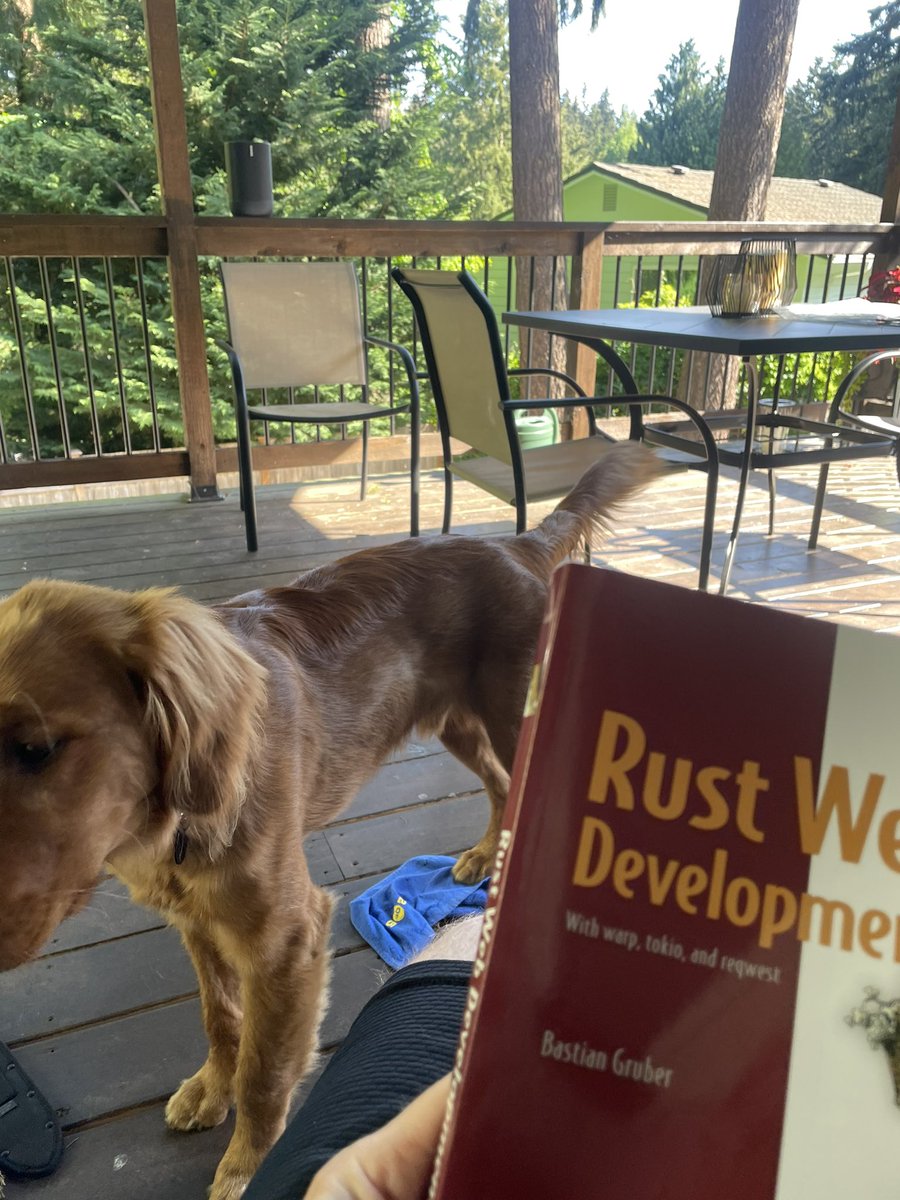
Really enjoying getting up to speed with Rust Web Development by @recvonline 🦀
@chrisalbon @bearloga Support is there.. still wayy slower than RTX.. but good enough for fastai until you are ready to train in the cloud. Generally very fast by CPU standards.. I've been very impressed with capabilities of M1 Air. That being said I'm still eying a 4090 in the near future for LLMs
Introducing AI Brainstore!
It’s a proof-of-concept of a brain for an AI agent.
Ask an agent a question, it checks its memories for an answer, otherwise it browses the web and learns the answer.
As it learns, it saves memories to its brain.
GitHub: https://t.co/5cjpEnXWvn