There is an epidemic of partisan wishful thinking.
More and more people expect their party to win.
Is that a problem?
Read the latest from @johnmsides: https://t.co/vGY5yBDp3R
New 2026 US House & Senate election forecasts, using all political science knowledge we could systematize, & our statistical methods from “If a Statistical Model Predicts That Common Events Should Occur Only Once in 10,000 Elections, Maybe It’s the Wrong Model” with @DannyCEbanks and @Jonathan_N_Katz. https://t.co/l0c0LG8deh
We make these forecasts available (including all the input data, methods, and procedures), not only for their possible public interest, but because academics learn by making themselves vulnerable to being proven wrong. We will make no changes to our post-primary forecasts (which do not use polls) but will update two other sets on this site incorporating poll results as new ones appear. Comments on the paper or forecasts are welcome!
My book, "The Fog of Accountability: How Institutions Keep Voters from Holding Their Local Governments Accountable," is here! I hope you'll grab a copy if you're interested in cities 🏙️, elections 🗳️, and how we can make them better
📚📦 https://t.co/bVCdsW9RGu
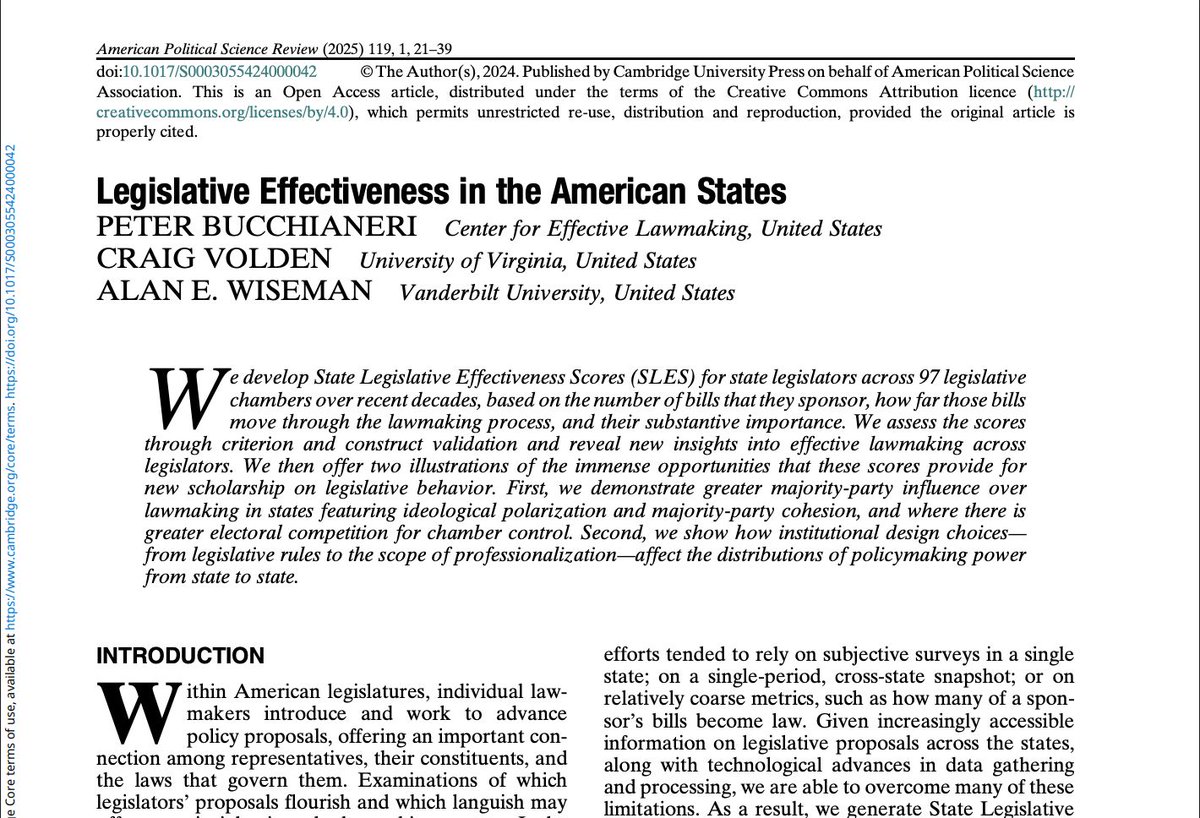
Congratulations to @PBucchianeri, @craigvolden, and Alan E. Wiseman, winners of the Best Journal Article Award for "Legislative Effectiveness in the American States," published in the APSR. https://t.co/CCPyYKG8XU
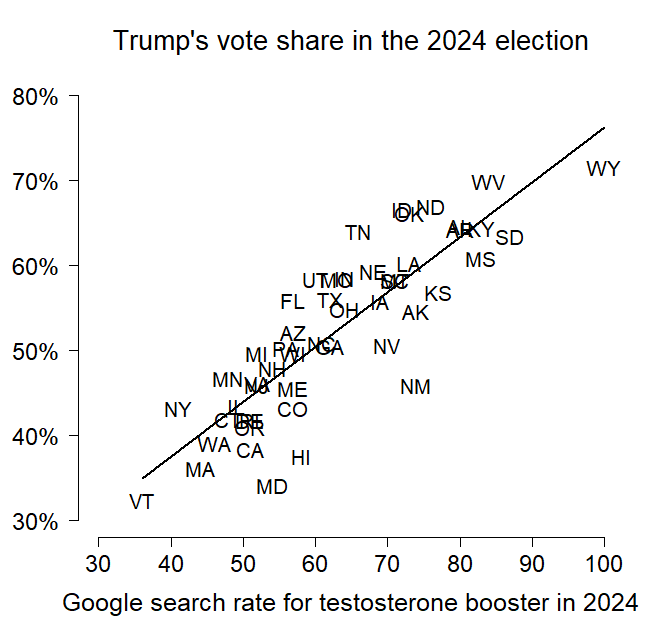
The state-level correlation between the 2024 Trump vote and Google searches about testosterone. For more, see Michael Tesler @goodauth: https://t.co/0b9vKJg7Bz
🌟 It's Job Market Season! 🌟
Over the next week we're highlighting all of our amazing PhD candidates, postdocs, and recent alumni entering the job market. You can learn more about the candidates and their research on their websites.
Today we highlight PhD Nguyen (Thao-Nguyen) Ha. Nguyen focuses on International Relations.
Website: https://t.co/7Uv56jC8fk
Nguyen's research focuses on the microdynamics of civil war and political violence
- Her JMP explores how territorial competition in civil wars can shape civilians' decisions to protest or flee.
- She also examines how network interdependencies shape violence and cooperation between armed actors.
- Her portfolio includes a wide range of methods: statistical inference, formal theory, spatial and network analysis, text-as-data, interviews, archival research, and agent-based modeling.
🌟 It's Job Market Season! 🌟
Over the next week we're highlighting all of our amazing PhD candidates, postdocs, and recent alumni entering the job market. You can learn more about the candidates and their research on their websites.
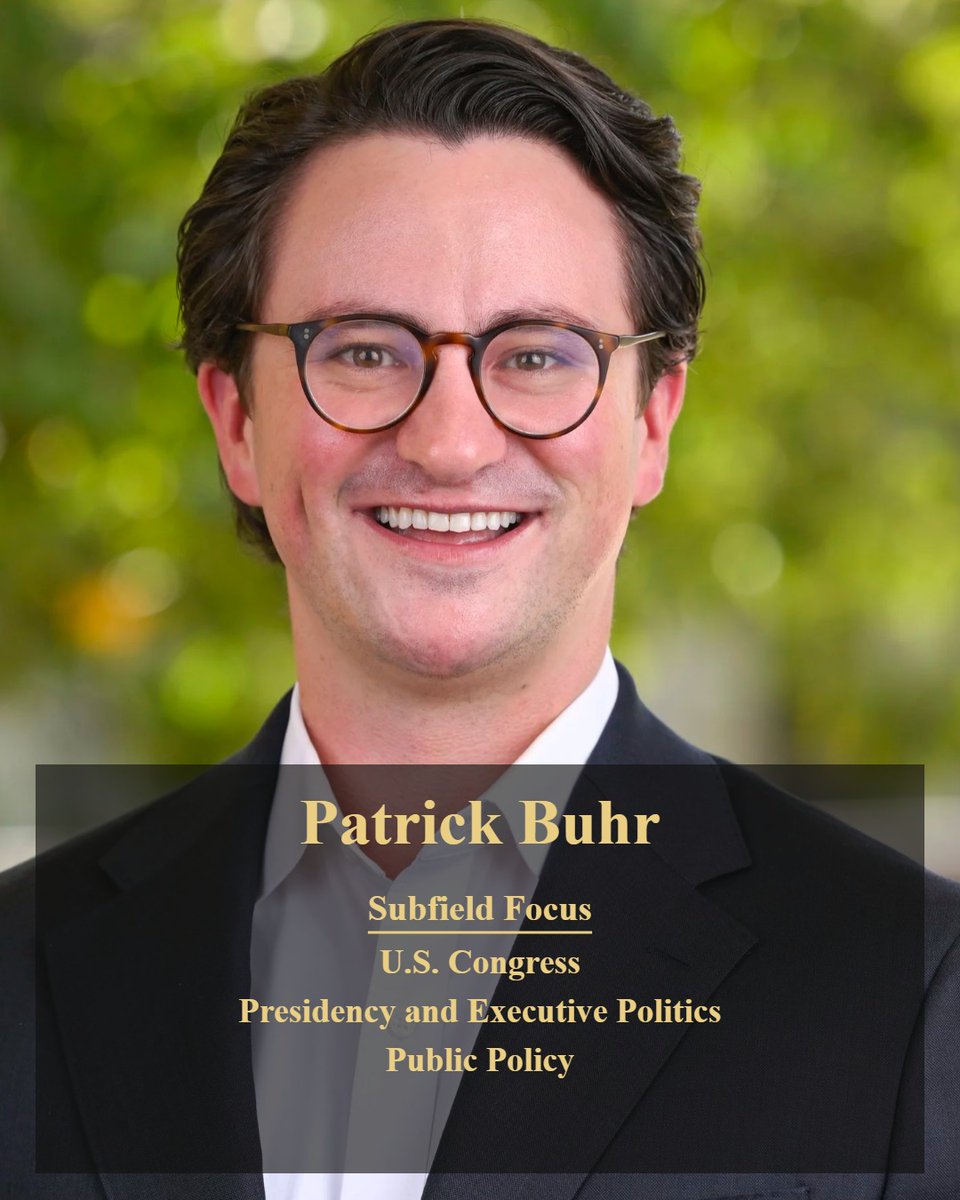
Today we highlight Patrick Buhr, a Ph.D. Candidate studying Congress, the presidency, and separation-of-powers policymaking.
Website: https://t.co/rwkDmkhOVU
- Patrick's dissertation assesses how the nationalization of congressional elections affects legislative negotiations between Congress and the president.
- He argues that nationalization undermines the president's legislative agenda by giving the opposition party electoral incentives to see this agenda fail.
- He develops and tests this argument using formal theory, quantitative methods and new data collection, and interviews with Members of Congress, their staff, and former White House officials.
You can learn more about his dissertation or read his other working papers in legislative politics and administrative policymaking by visiting his website: https://t.co/Jklo025Yhi
🌟 It's Job Market Season! 🌟
Over the next week we're highlighting all of our amazing PhD candidates, postdocs, and recent alumni entering the job market. You can learn more about the candidates and their research on their websites.
Today we highlight PhD candidate Preeti Nambiar. Preeti focuses on Comparative Politics and Political Methodology.
Website: https://t.co/EglAgES62v
Preeti's research focuses on three topics:
- How large-scale crises transform local state capacity
- The durable networks among bureaucrats, politicians, and citizens that shape local state functioning.
- 18 months of fieldwork across four Indian states, including surveys of over 3,000 citizens, bureaucrats, politicians, and social organisations, alongside over 100 elite interviews.
Does vote buying even work?
Trump offered every American $5,000. But it might not help Republicans in November.
Read the latest from @johnmsides & Kenneth Greene: https://t.co/0OJxY9BscX
🌟 It's Job Market Season! 🌟
Over the next week we're highlighting all of our amazing PhD candidates, postdocs, and recent alumni entering the job market. You can learn more about the candidates and their research on their websites.
Today we highlight PhD candidate Martín Gou Durante. Martín works in Comparative Politics, with a focus on Latin America
Website: https://t.co/0cW9FhjtZV
Martín's research focuses on:
- How citizens interpret and enforce the boundaries of democracy in Latin America
- Why democratic violations become politically consequential when citizens expect others to punish them too, tested in preregistered experiments with over 6,000 respondents across Mexico and Argentina
- Whether institutional arbiters, such as courts and electoral authorities, shape how citizens respond to violations
- How democratic institutions shape citizens on the ground, in ongoing work on Mexico's poll workers, using a natural experiment in how they are appointed, and on participatory budgeting in Mexico City
🌟 It's Job Market Season! 🌟
Over the next week we're highlighting all of our amazing PhD candidates, postdocs, and recent alumni entering the job market. You can learn more about the candidates and their research on their websites.
Today we highlight PhD candidate Lucas Borba. Lucas focuses on Comparative Politics and Political Methodology.
Website: https://t.co/qU6iyPONQt
Lucas's research focuses on three topics:
- How spatial inequalities erode citizens’ tax compliance and local state capacity (link: https://t.co/QzLamKbkbS)
- How local politics and institutions shape the consequences of policies designed by national governments (link: https://t.co/ZYZ3yRkWA1)
- Economic informality and voter politician linkages (link: https://t.co/hEWcuTLMv6)
🌟 It's Job Market Season! 🌟
Over the next week we're highlighting all of our amazing PhD candidates, postdocs, and recent alumni entering the job market. You can learn more about the candidates and their research on their websites.
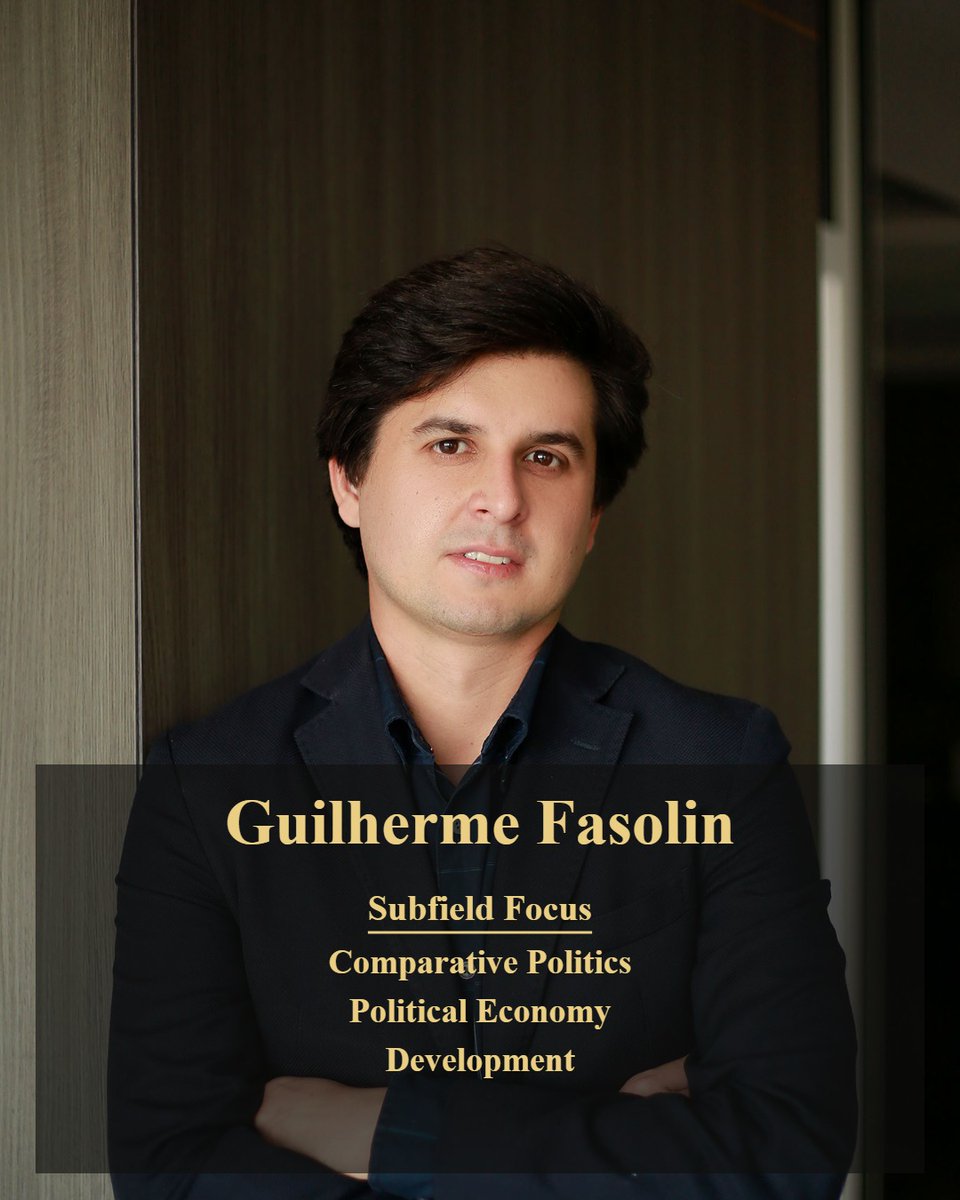
Today we highlight PhD candidate Guilherme Fasolin. Guilherme focuses on Comparative Politics.
Website: https://t.co/w8lplma3Dh
Guilherme's research focuses on three topics:
- The roots of uneven rural state development and how 20th-century agricultural mechanization shaped disparities in rural state capacity in Brazil (job market paper)
- The political consequences of variation in local institutions and state capacity (Link: https://t.co/MMxt2534sp)
- Climate-change beliefs and political behavior across Latin America (Links: https://t.co/tTg30LrpKB, https://t.co/ptfmpN9S4C)
🌟 It's Job Market Season! 🌟
Over the next week we're highlighting all of our amazing PhD candidates, postdocs, and recent alumni entering the job market. You can learn more about the candidates and their research on their websites.
Today we highlight PhD candidate Colette Marcellin. Colette focuses on American Politics.
Website: https://t.co/Vz6mKjrjPR
Colette's research focuses on three topics:
- What conditions mobilize members of marginalized groups, with a focus on American women (using survey and field experiments). Link: https://t.co/HFSdgb3Bdi
- How group identity and political context (e.g., social movements, policy changes, elite discourse) shape individuals' political attitudes and behavior (using observational data). Link: https://t.co/qEYOqtheOa
- What explains variation in public opinion on issues related to gender, race, and partisanship (using original survey data). Link: https://t.co/PQNdEegwpH
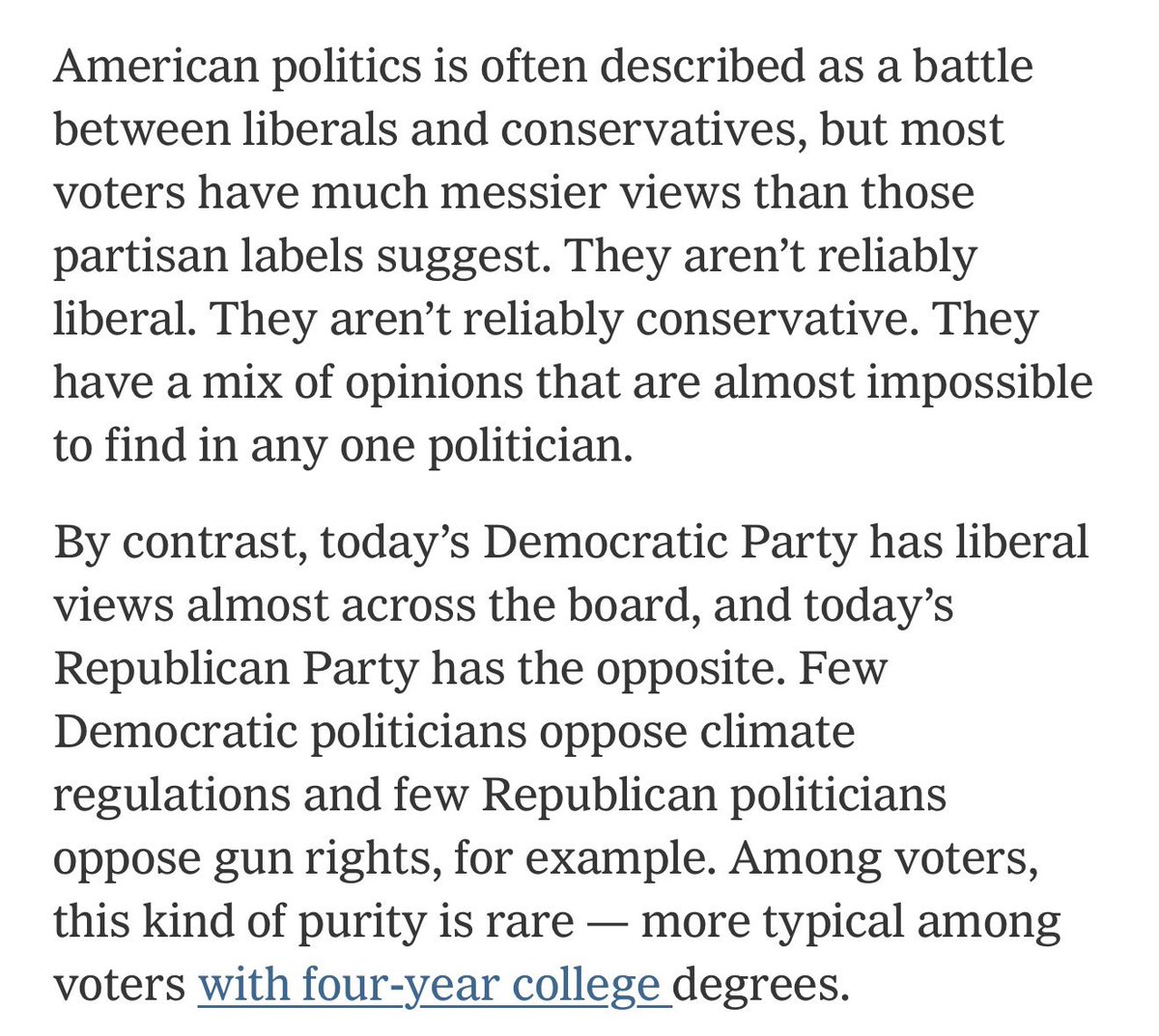
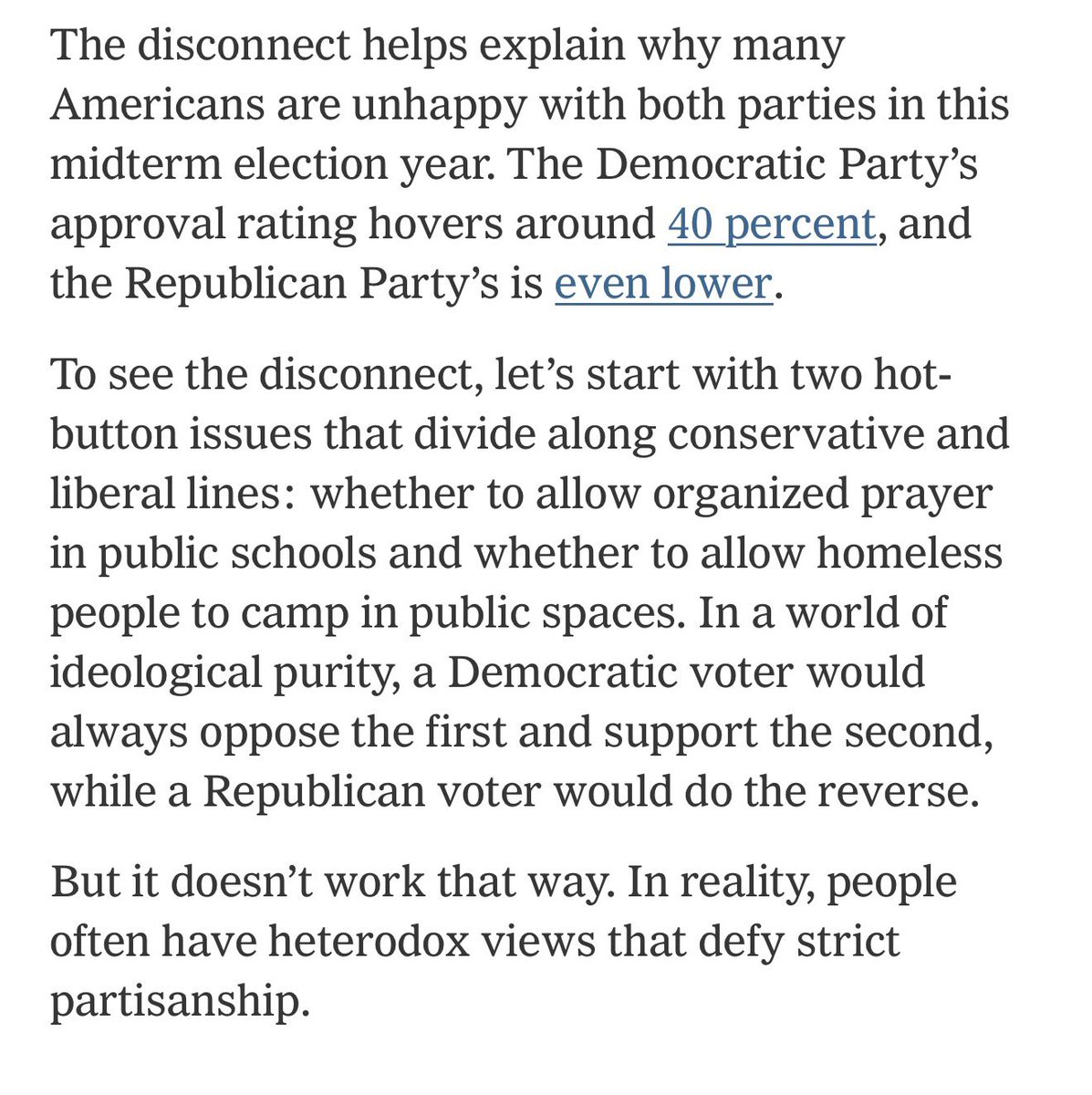
At @SearchlightInst we talk a lot about heterodoxy.
Now, partnering with @nytimes, we can show you exactly what we mean.
“In reality, people often have heterodox views that defy strict partisanship.”
Take a minute to read this—it might change how you think about politics.
https://t.co/dXgoeLvQjT
Inflation anxiety looks very different than two years ago.
Republicans tend to “cheer louder and boo harder” in their evaluations of economic conditions.
Ready the latest: https://t.co/rmtYI6jo68
I wrote a thing for @MSNOWNews about whether the Trump superPAC has waited to late to start spending to help the GOP in 2026.
Based on what we know about whether earlier or later campaigning matters more, the answer is: probably not.
https://t.co/QuSKAz6gDJ