Don't try to outsmart introverts. They're kind, but not stupid. They don't argue because they don't want any conflict. Their silence is a sign of protecting their peace, not defeat. They can read you like a book. Psychoanalyse the shit out of you. And you think you can win. Lol.
This is probably the single feature that makes China most unique as a civilization in human history: it is pretty much the only one where religion never had a say in political affairs.
We often wrongly believe that China's secularism came with Communism but this couldn't be more wrong. The roots are far, far more ancient than this.
Think about any other civilization - India, Persia, ancient Egypt, European civilization, the Incas: they all had a priestly class that held considerable political power. China? Never.
Never, ever? Actually China, in its very early history, had a brush with theocracy during the Shang dynasty in the 2nd millennium BC. And it is precisely this episode - or rather what came afterwards - that decisively de-linked religion from government affairs.
How so? Because around 1046 BC, the Zhou overthrew the Shang and immediately faced a big problem of legitimacy. The Shang had claimed to rule because Heaven had chosen them. If that were true, then the Zhou had just committed the ultimate act of sacrilege. How do you justify going against God’s will?
The answer the Duke of Zhou (who can thus be credited as the - perhaps unwitting - inventor of secularism) came up with was essentially to say that Heaven's mandate is not a birthright but a contract - conditional on the virtue of the ruler and good governance.
It might not sound like much but this idea completely changed the whole equation: suddenly the legitimacy of power didn’t rest on God’s will but on man’s moral judgement, on whether the ruler had virtue (德, Dé) and governed well. Which meant that, ultimately, the people - as opposed to a God - became the arbiter of whether a ruler is legitimate.
If there is one single decision that most shaped China's destiny as a civilization, it's probably this one. And, as I explain in my latest article, it ultimately shaped all of us in profound ways: through a chain of events involving Jesuit missionaries, Voltaire, and what French Enlightenment thinkers called "l'argument chinois" ("the Chinese argument"), it is this very idea that ended up secularizing Europe too and drove the Enlightenment movement.
That's the topic of my latest article: the origins of China's secularism, how it shaped three thousand years of Chinese civilization, and why - far from being a belief in nothing or an absence of belief as it's all too often depicted - it's on the contrary a faith in humanity itself.
Read it all here: https://t.co/XLwhKFlaNl
@wangjupaian That material should have been banned many years ago . I've worked in construction for over 30 years and seen that material catch on fire . It brings me great sadness to see this tragedy 😪
@zmx8067 That jet mesh is extremely flammable . I've seen it catch fire before in Australia . It should be banned and a better solution should be used . It brings my great sadness to see this kind of disaster that could have been prevented 😪
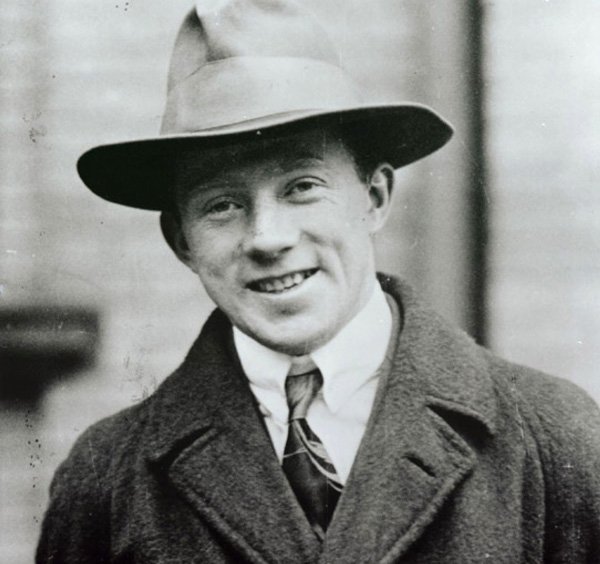
100 years ago, in November 1925, Erwin Schrödinger attended a colloquium in Zürich where Louis de Broglie’s bold idea was being discussed: that every moving particle carries a wave-like nature.
After the talk, a colleague made a casual remark if matter behaves like a wave, shouldn’t there be a wave equation for it? For most people, it was a fleeting comment. For Schrödinger, it became an obsession.
By late December, Schrödinger wrote to Wilhelm Wien admitting he was struggling with a new atomic theory, even joking: “If only I knew more mathematics!” Yet he remained optimistic, convinced that if he could solve the problem, “it will be very beautiful.”
He was not the only one wrestling with the new quantum world. Around the same time, the great mathematician David Hilbert remarked, “Physics is much too hard for physicists,” capturing the difficulty of the era.
The breakthrough arrived quickly. On 27 January 1926, Schrödinger submitted the first of four papers titled Quantization as an Eigenvalue Problem. In it, he introduced the wave equation that now bears his name and solved the hydrogen atom with it, offering the first coherent picture of atomic structure.
Meanwhile, Wolfgang Pauli, using the matrix mechanics developed by Werner Heisenberg, Max Born, and Pascual Jordan, had already derived the hydrogen spectrum. Soon, Schrödinger proved that wave mechanics and matrix mechanics were mathematically equivalent two languages describing the same quantum reality.
By mid-1926, Schrödinger had applied wave mechanics to the harmonic oscillator, the diatomic molecule, the Stark effect in hydrogen, and the processes of absorption, emission, and scattering. What began as a struggle became one of the most productive bursts of creativity in the history of physics.
A century later, this moment reminds us of something timeless: great scientific revolutions are built not on certainty, but on persistence and the belief that something beautiful lies beyond the struggle.
At this time, IMO there are already countless people around the world who believe in the Zcash vision. And if Bitcoin $BTC maxis aren’t among them? So be it.
Because here’s the thing:
Zcash isn’t here to replace Bitcoin it’s here to complete the mission Bitcoin can’t. It’s the quiet upgrade that privacy purists, cypherpunks, and hardcore builders already see coming.
Bitcoin maxis can roll their eyes, call it a “privacy altcoin,” or pretend transparent addresses are good enough, but Zcash is out here proving what’s possible:
•Actual on-chain privacy, not hopes and promises
•Zero-knowledge cryptography powering real use cases
•A community obsessed with freedom, not narratives
•Tech that pushes what decentralized money can be
Bitcoin maxis might hate on Zcash today, but history tends to love the projects that take real risks and pioneer real breakthroughs.
Zcash doesn’t need approval from the “maxi club.”
Zcash is building for the people who understand that privacy IMO “it’s the future of digital money”.
And the future always looks threatening… until it becomes obvious.
$ZEC 💯🔒
yeah, it’s wild seeing maxis freak over coins that barely move the needle.
i’ve been watching this, and privacy is honestly one of the few things that actually matters.
losing sight of fundamentals for drama is just short-sighted nonsense in crypto.
for me, more privacy = stronger network, stronger adoption, stronger everything long-term.
frustrating to see people fight over ego instead of real wins like this.
Madame Peng Liyuan and Queen Letizia of Spain visited the Beijing Demonstration Center of Service for Persons with Disabilities. @CasaReal
They learned about assistive technologies and engaged in cordial exchanges with individuals at the center. Both expressed a shared commitment to advancing disability inclusion.
The EU will inevitably try and require social media networks to implement government issued digital ID
Nothing will remain private
Not your money, not your assets, not your chats, not your browsing history, your groceries, day to day activities, your movements, medical history, taxes
Nothing, if they get their way
All compiled into a single EU database
To control your entire life, the way you think, behave and consume
If you mention this to normies, they say you are crazy
Yet every year all these required components advance in that direction, slowly deteriorating the rights of their citizens
How can this be stopped?
The Federal Reserve was established in 1913.
From 1913 to today…
The dollar has lost 97% of its purchasing power.
Think about that.
$1 in 1913 is equivalent to $34.27 in 2025.
If that’s not sabotage then I don’t know what is.
That’s debt slavery. That’s evil.
End the Fed.