Here is what you need to know about Open Source Oscilloscopes:
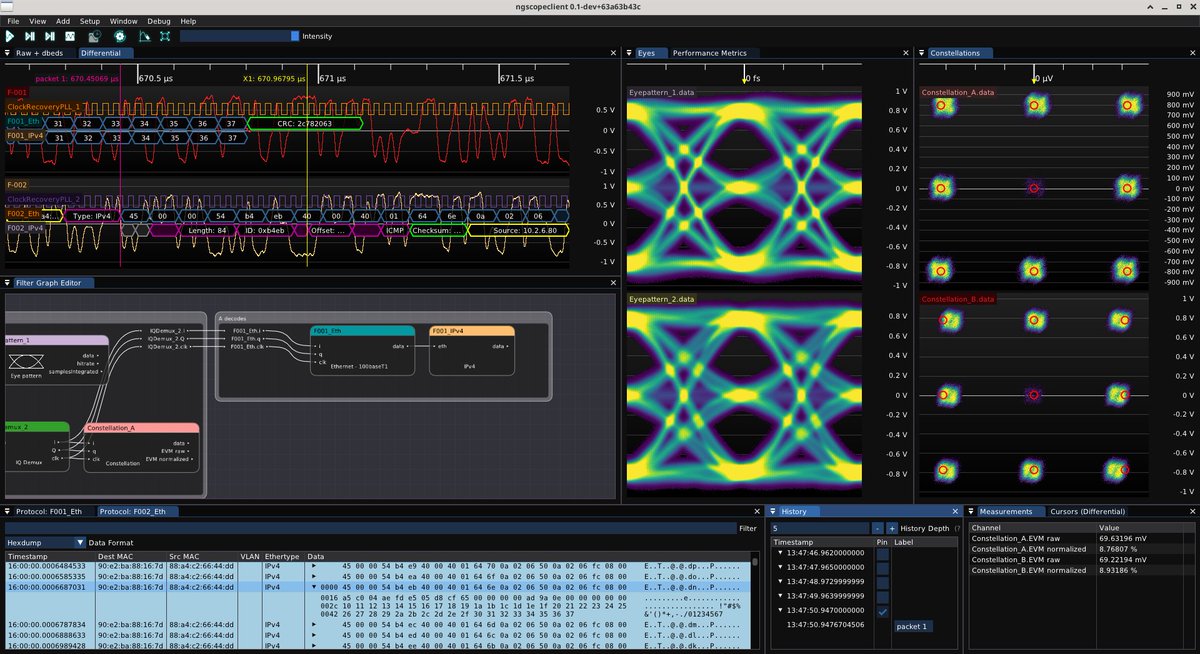
HectaScope is being built around an Artix Ultrascale+ with 50Gb/s PCIe gen4 to the host and the ADC12DJ3200 ADC, with a 6.4GSPS single channel capacity and a 2GHz frontend it will be a serious measurement machine. We'll be keeping everything open source so you will be able to learn from and improve upon the design yourself. Both HectaScope and Thunderscope are built around @azonenberg's ngscopeclient which is packed with features to analyze all sorts of signals. Normally you would pay extra for these features, but with ngscopeclient you get them included for free. We hope to even impress @DanielBogdanoff
@YossiGoldstein8 Palestinians are very misunderstood, they have brutal ways of terror wars and should be stopped and reeducated on humanitarian matters instead of coddled because war is so bad and sad. They start the wars consistently and then whine about the consequences. Very strange behavior
Me and @MozarellaPesto made this model called Oniris with 0$ in funding: It is an efficient autoregressive world-model.
We are starting to build in the open today. Turns out, we can improve current methods by making the training sample efficient.
All that we did so far was achieved with just a single 4090 and 0$ in funding.
Now imagine what we could achieve with some serious compute.
The era of big research labs is coming to an end. We can out-innovate them with just a fraction of the funding.
I have read the full paper of Andrew’s research on fault-tolerant FPGA (SoC) design and it is very informative and interesting. Definitely reach out to him if you are interested in the field and techniques, Andrew is extremely knowledgeable on the subject.
Though I won't be at the conference, my poster of Fault-tolerant Soft #RISCV SoC is at @risc_v RISC-V in Space. This uses @enjoy_digital Linux-on-Litex with TMR, DDR ECC, and Placement contraints to get a 40x improvement in MTBF. Have a look and ask questions!
@CocoaNilsson@Purring_Lynx That said, writing your own is a good learning exercise to learn about security and good practices, and you should know how to do it/have done it (once) as well. Just don’t put your from-scratch work into production. 3/2
@CocoaNilsson@Purring_Lynx 100s or 1000s of hours on to do it better, safer and with less bugs than you can. Know what libraries and frameworks you pick and learn their limitations and how to integrate them well but don’t reinvent technology honed over decades just because you don’t know the landscape. 2/2
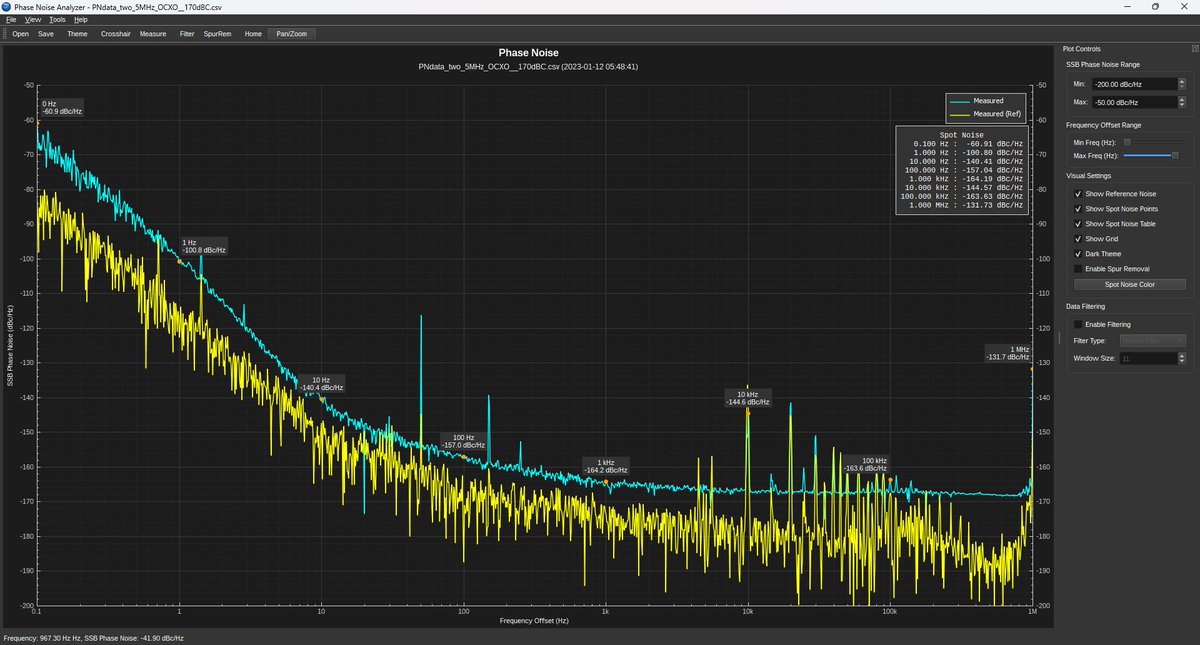
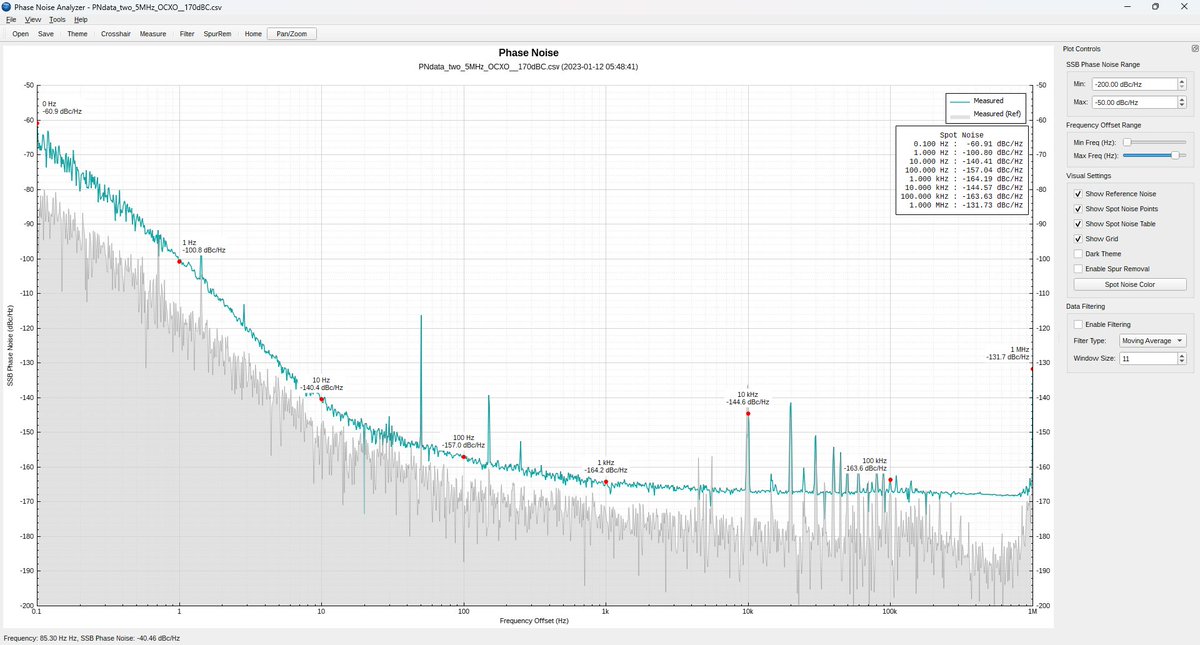
I have just released a fully open source (GPLv3) Phase Noise Analyzer App (pna_qt)
It's a C++/Qt desktop application for visualizing and analyzing phase noise data from CSV files.
https://t.co/ynzSrmQxKi
@groarkboysbbq It went all wrong at 1:11 :( should have waited for the juices to settle instead of having them leak out from the cutting. Always rest your steaks friends
@CarsWithBrad@sama Is a way for CPUs to do parrallel operations as well by having up to even 512bit wide operations that will do 64 int8 operations at once. So they are growing towards each other in a way. But for now, nvidia gpus, interconnects and software beat the rest by a margin.
@CarsWithBrad@sama Second to that is the support for lower precision number formats like bfloat16 and even 1.58bit that still produce good results allowing again more operations per clock cycle. Note that GPUs do run at ~1-2GHz instead of the ~5GHz CPUs run at as well as the fact that AVX 1/2