We are people serving people to promote health and alleviate suffering by delivering exceptional care, developing future leaders and driving innovation.
“While the iodine swab can reduce bacteria in the lab and can lower bacterial load for a short time, there is no high-quality evidence that using an iodine swab can reduce your risk of developing a clinical respiratory infection such as flu, COVID, or RSV.”
Dr. Ashraf Fawzy has been studying bias in pulse oximeter readings and the cascading impact on patient care. In a recently awarded NIH grant, he is expanding his research to look at how other real world clinical factors affect a vital diagnostic tool. https://t.co/sL7PQ5XHmv
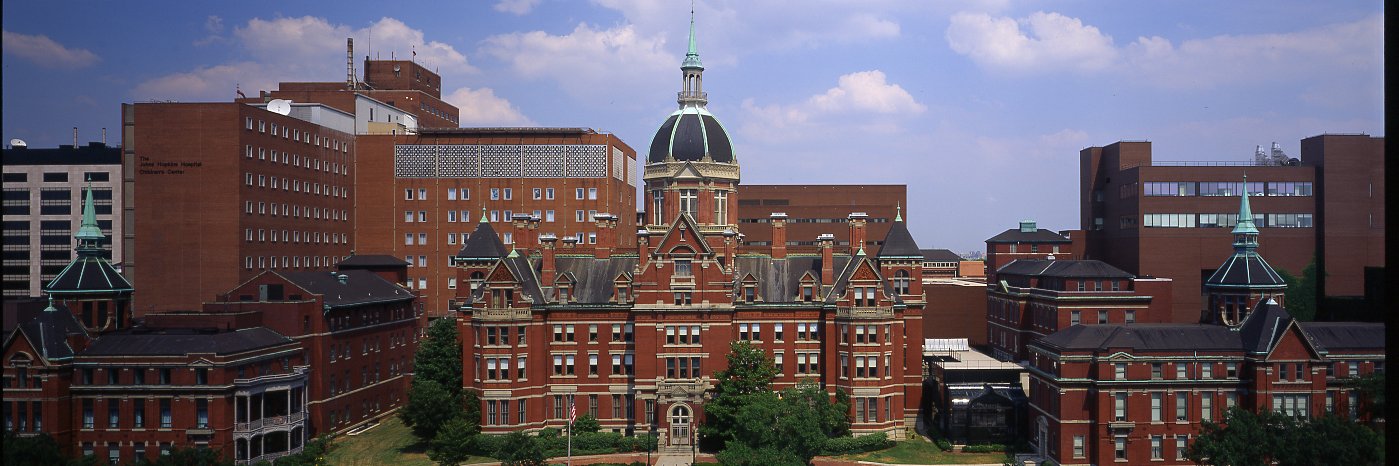
World Chronic Obstructive Pulmonary Disease (COPD) Day took place earlier this week to raise awareness, share knowledge, and discuss ways to reduce the burden of COPD worldwide. In honor of it, the Johns Hopkins Hospital Dome was lit up. https://t.co/ZmL1ZeCyiH
New research out in @ScienceMagazine about BCG vaccine (administered to protect against TB) and cognitive function in mice. Co-authors include Dr. Shichun Lun, Sandeep Tyagi, Dr. Eric Nuermberger, and Dr. William Bishai. https://t.co/IMUPdO2I7k
"Knees contain receptors that react to the GLP-1 hormone, and, in recent mouse studies, she said, GLP-1-agonist drugs improved the health of cartilage and other tissues in the animals’ arthritic knees, even if they lost no weight while on the drugs."
.@HopkinsMedicine rheumatologist Kristen Mathias explains how a new GLP-1 drug is not just being used for weight-loss but is also helping ease knee pain as well. @washingtonpost
https://t.co/mF1U11LfO4
Dr. Ramana Sidhaye and Dr. Eileen Scully were recently awarded a Stimulating Access to Research in Residency Award from the National Heart Lung and Blood Institute (NHLBI). Open to @OslerResidency interested in research, read more about it 👇
https://t.co/tG6xoqUHke
New research out in @AMJPublicHealth about the relationship b/w socioeconomic disadvantages & the care continuum for people living with HIV. Co-authors include Lauren Zalla, Joyce Jones, Richard Moore, Oluwaseun Falade-Nwulia, Jeanne Keruly, Anthony Fojo, and Catherine Lesko.
In fact, Derek M. Fine, MD, a nephrologist at Johns Hopkins Medicine, says that if you were to test creatine kinase (a.k.a. CK, a blood marker of muscle breakdown) in marathon runners after the race, “most” of them would show elevated levels of the enzyme.
"Another hypothesis was that the patients’ other risk factors — blood pressure and L.D.L. cholesterol — were so well controlled that their risk was about as low as it could go"
.@HopkinsMedNews cardiologist @rblument1 discusses the failure of two new heart drugs that were supposed to help prevent heart disease. @nytimes
https://t.co/VN0XZLq4Z6
Check out the Department of Medicine recipients of the inaugural Life Sciences Research Initiative including Dr. Felipe Andrade, Dr. Victor Chen, Dr. Chad Hochberg, Dr. Sarah Khan, Dr. Sangwon Kim, Dr. Sarath Raju, Dr. Larissa Shimoda, and Dr. Qian-Li Xue. @HopkinsMedNews
New research out in @ScienceMagazine about a therapeutic option for inflammatory bowel disease. Co-authors include Waliul Islam, Haiming Chen, Ling Li, and @FlorinSelaruMD. https://t.co/5kRDTuGA3l
.@HopkinsMedicine cardiologist Payal Kohli discusses what's next when you encounter treatment-resistant hypertension. @EverydayHealth
https://t.co/ngOkJYy8Cq
“BCG seems to be reducing the degree of hyperinflammation in the brain — which is a good thing — and it may be doing it through a trained immune cell mechanism,” says Bishai.
ID in the News: Early research by @BishaiLab & colleagues is expanding what's known about links between BCG vaccine for #tuberculosis and reduced risk for #dementia, and the potential role of trained immunity. https://t.co/cED4OeyNoM
New research out in The Lancet Global Health sharing results from a randomized control trial measuring whether phone-based screening is non-inferior to home-based screening for people who complete TB treatment in India.