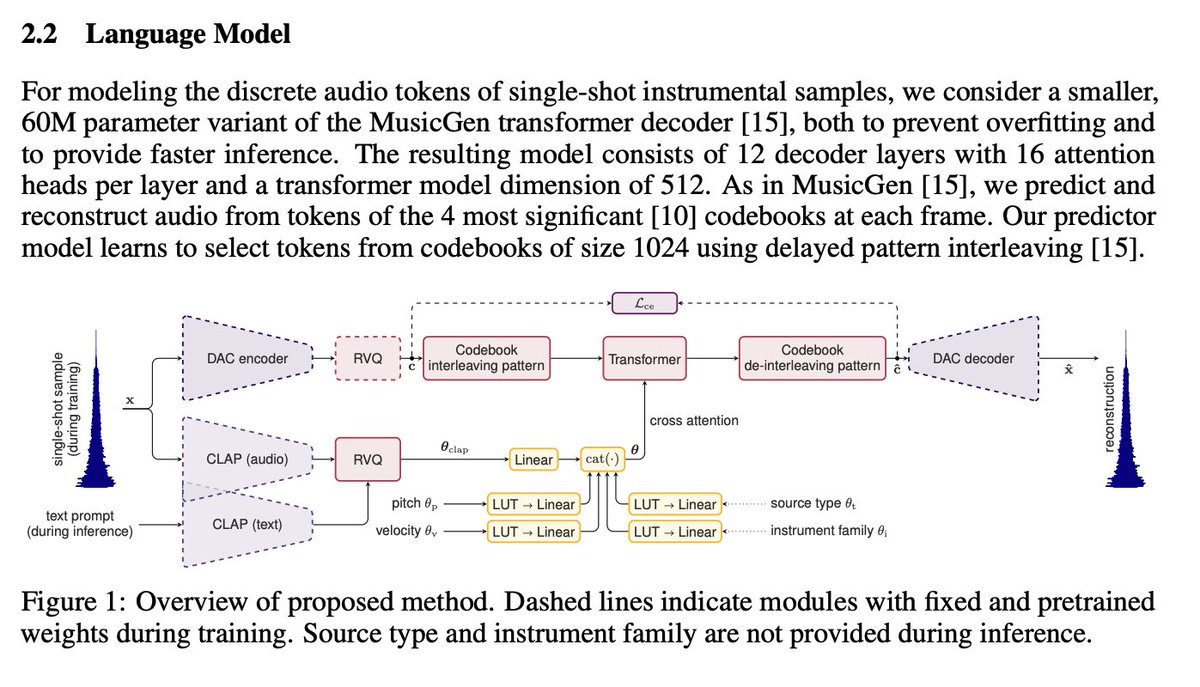
🥳 Excited to share that our latest work on generating sample-based instruments from text or audio prompts has been accepted at #ISMIR2024! 🎹 — Our take on making AI-based music generation models useful for musicians!
🔊 https://t.co/NNjYl1jKvb
📜 https://t.co/sSluHNWSrS
(1/6)
@jeonchangbin49 Was super fun building a real-time version with some improvements for Ozone 12! Gave you a shoutout + shared more details here: https://t.co/Wm6rCfzXxs 🙌
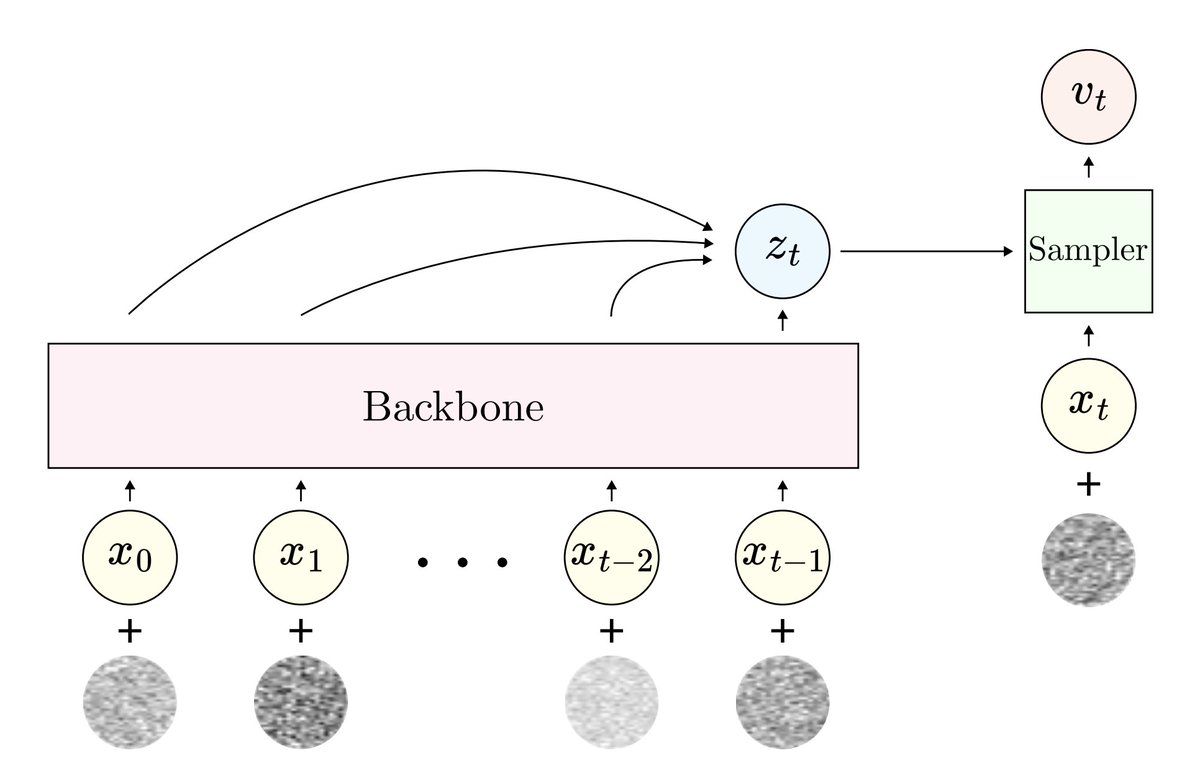
✨ Train language models directly on continuous data - without tokenization ✨
We propose an easy way to train GPT-style autoregressive models on continuous data, without error accumulation.
We test it on audio 🔊, but this method can easily work with other modalities 🎆
👇🧵
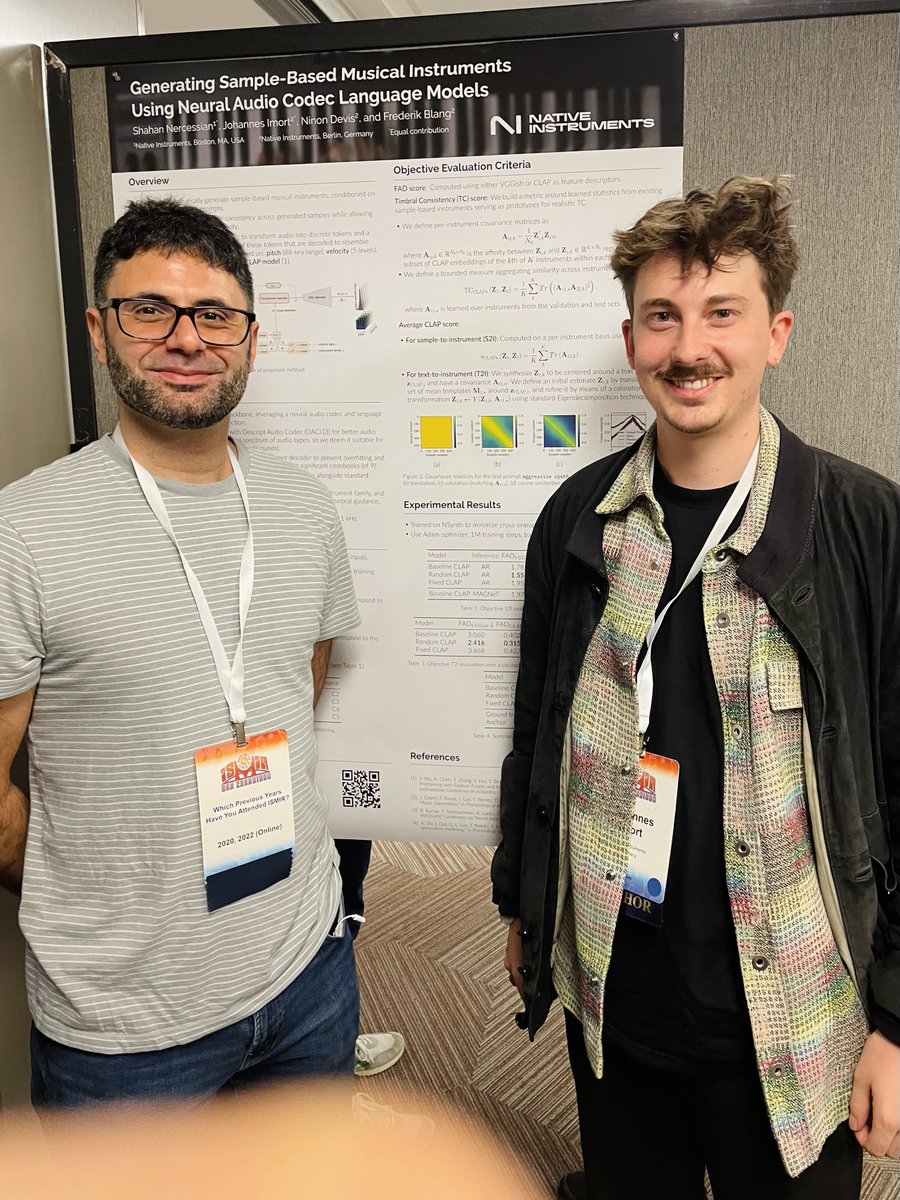
#ISMIR2024 in San Francisco was an absolute blast! 🌉 Big thanks to the organizers and attendees for creating such an inspiring event. Looking forward to see you all in South Korea next year, titans!
``FINALLY: fast and universal speech enhancement with studio-like quality,'' Nicholas Babaev, Kirill Tamogashev, Azat Saginbaev, Ivan Shchekotov, Hanbin Bae, Hosang Sung, WonJun Lee, Hoon-Young Cho, Pavel Andreev, https://t.co/OBo46pUihI
AFX-Research: an Extensive and Flexible Repository of Research about Audio Effects
All the research on audio effects of the last few decades. A table with lots of metadata. Search. Filter. Order. Contribute.
repo: https://t.co/NPGj6g28on
web: https://t.co/sU92smDy45
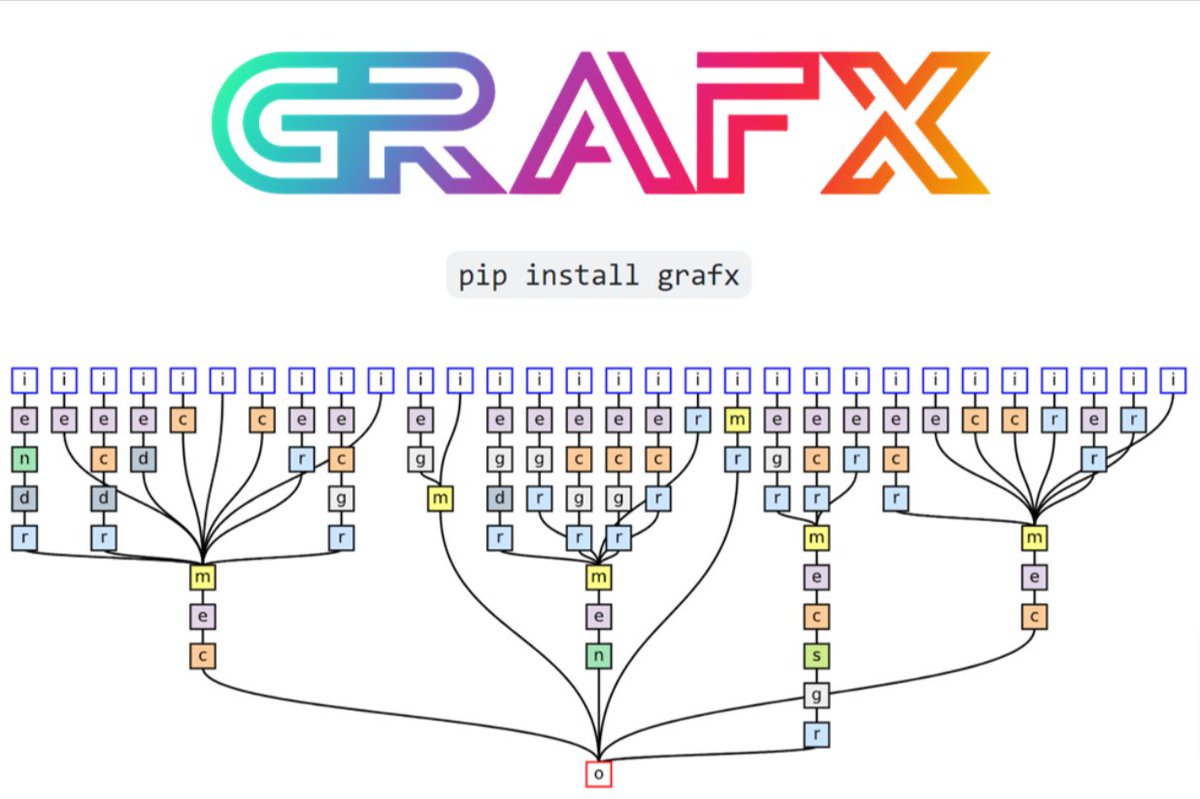
GRAFX is an open-source library for audio graphs in PyTorch. Audio processing can be efficiently done on GPU with batched processing and various differentiable audio effects, including a multitap delay and zero-phase EQ
Great work by @SunghoL10754073 !
https://t.co/pkHYSvUk0y
🙌 A big thank you to my collaborators Shahan Nercessian, Ninon Devis, and @f_blang at Native Instruments/@NI_News for their incredible work. Can’t wait to see you all at #ISMIR2024/@ISMIRConf in San Francisco! 🌉 (6/6)
🥳 Excited to share that our latest work on generating sample-based instruments from text or audio prompts has been accepted at #ISMIR2024! 🎹 — Our take on making AI-based music generation models useful for musicians!
🔊 https://t.co/NNjYl1jKvb
📜 https://t.co/sSluHNWSrS
(1/6)
🎶 We deliberately chose this task as an alternative to more conventional prompt-to-audio systems and we hope to expand sound synthesis possibilities for music creators in order to realize their artistic visions. (5/6)
Excited to share our latest work: Distortion Recovery: A Two-Stage Method for Guitar Effect Removal, published at #DAFx 2024! 🎸 This work is in collaboration with @PositiveGrid.
🔗 Demo page: https://t.co/8D1z0TyE8U
📄 Paper: https://t.co/EBy9ObSSZD
We hope to establish a foundational baseline, paving the way for further research in automatic sample-based instrument generation as a complementary approach to DDSP-based methods.
Had a blast working on this with Shahan Nercessian at Native Instruments/@NI_News! (4/4)
🎹Ever wondered what a certain word or phrase might sound like if it were transformed into a musical instrument?
🎉We are excited that our work on #InstrumentGen has been accepted at the #NeurIPS2023 ML for Audio Workshop!
📄https://t.co/YOHlC8HPLU
🔊https://t.co/M3JRTTEl1h (1/4)
🎶 To achieve this, we propose InstrumentGen, which leverages components of MusicGen, Descript Audio Codec, and CLAP!
📊 Plus, we're introducing a new differentiable loss function for assessing timbral consistency within sample-based instruments. (3/4)
InstrumentGen: Generating Sample-Based Musical Instruments From Text
Introduces the task of text-to-instrument. By leveraging components of MusicGen, Descript Audio Codec, and CLAP they propose a model for this task.
abs: https://t.co/tJMt7k5idP
web: https://t.co/uhAzcop7oU
What if we had a way to remove audio effects from a signal?
It may seem a bit strange at first, but Johannes I. of AudioShake shows some compelling use cases for removing effects, as well as how he pulled it off for his internship at Sony.
https://t.co/JdL9Gq0t6w