🏗️ Building the future of scientific communication
📋 Public BETA is live!
🔗 Link in bio!
🩺 The social media for scientists and healthcare professionals
Today we've officially launched the public beta for Kana.
In short: Kana is a social media platform for scientists and healthcare professionals, with verified credentials, AI summaries, and plenty more to cut through the noise.
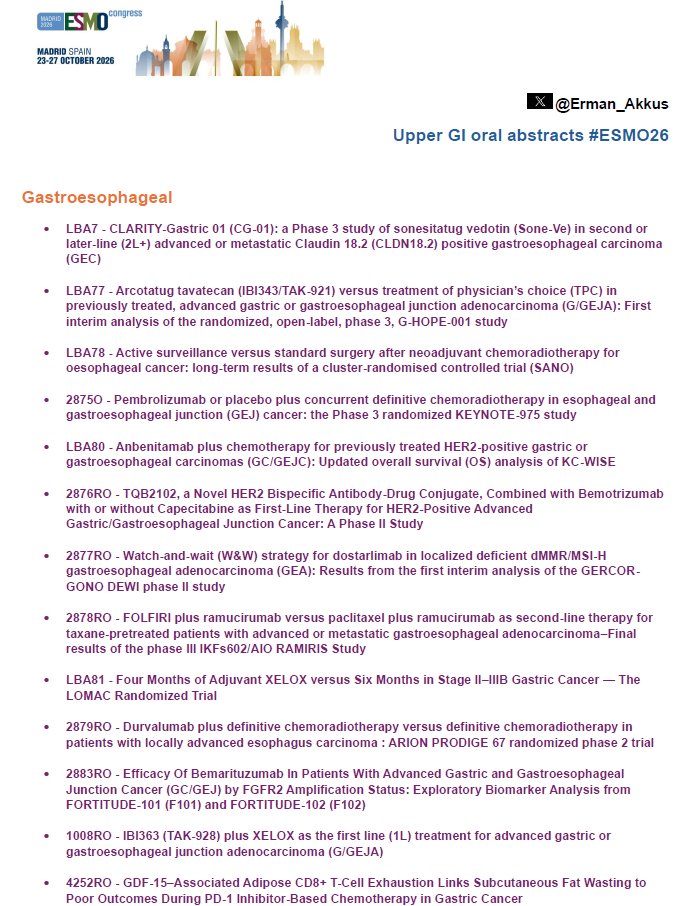
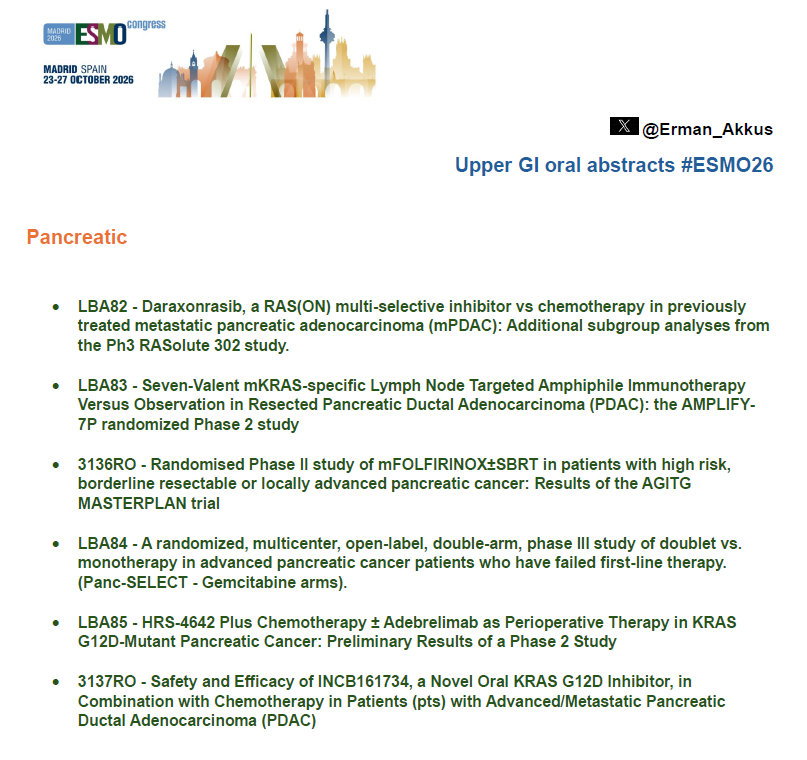
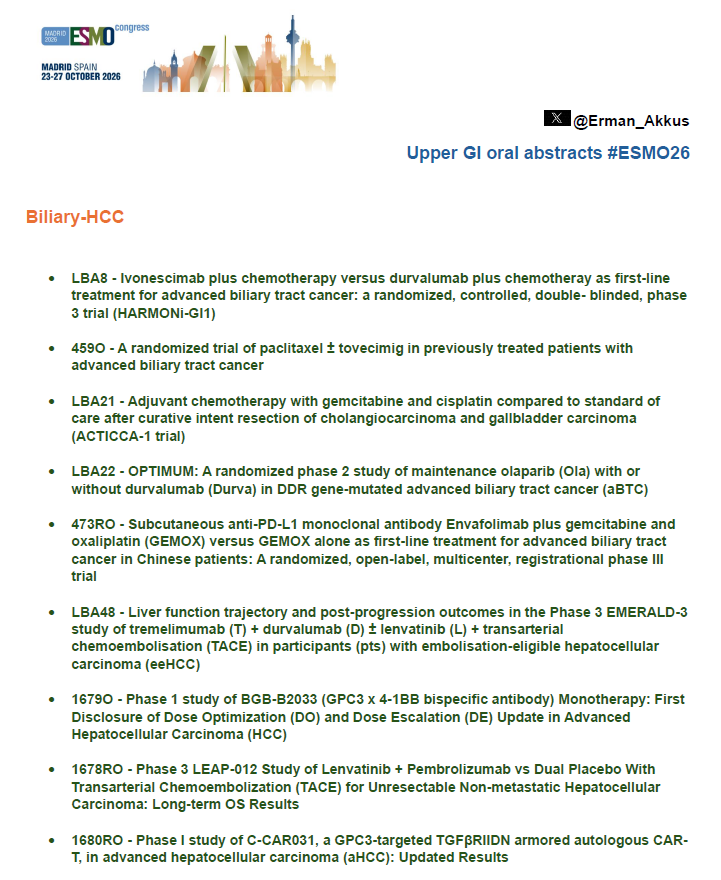
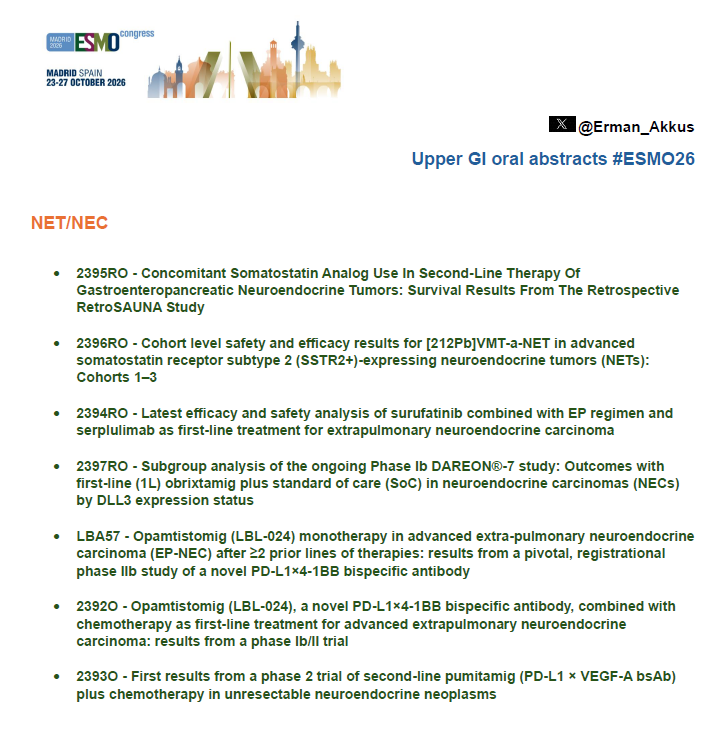
You'll be able to catch coverage from ESMO - European Society for Medical Oncology GI on the platform. If this sounds like you, or someone you know, jump in via the link in the comments.
Let's build something awesome 🚀
https://t.co/YMRXBQ6B1m
As I sit here on a Saturday, doing peer review for free, as a good citizen of the scientific community... 🫤
At least, giving us "store credit" such as "do one (or maybe 2-3) review, get a submission for free" would go a long way.
🔥off the press🔥
Precision oncology in GI-cancer: Mechanisms of action, indications and ongoing strategies to overcome primary and secondary resistance
Seminars in Cancer Biology
👉PO is fascinating , but complex
👉No magic bullet, much to consider: vertical & sequential pathway inhibitions, persister & resistance mechanisms, rechallenge...
Our thoughts👇
https://t.co/T2AA1lAlqw
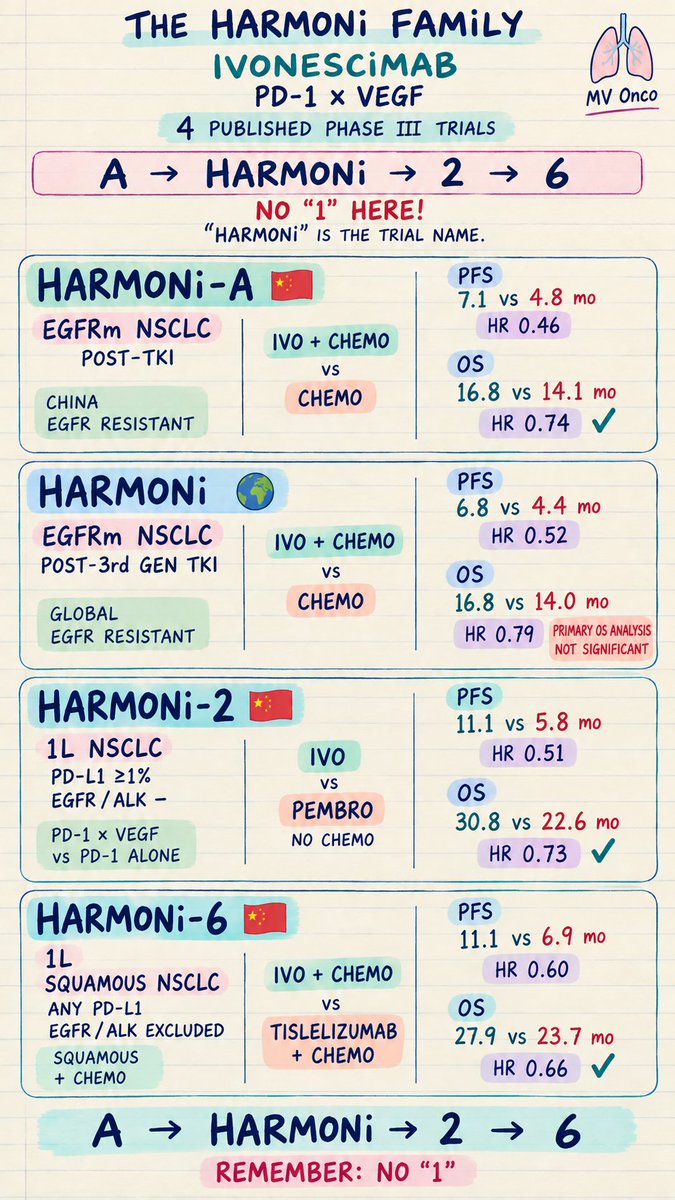
🫁 Meet the HARMONi family of ivonescimab trials.
First, the naming trick:
A → HARMONi → 2 → 6
There is no “1” — HARMONi itself is the trial name.
Four Phase III stories:
🔹 HARMONi-A → EGFRm, post-TKI
🔹 HARMONi → global EGFRm, post-3rd-gen TKI
🔹 HARMONi-2 → 1L PD-L1 ≥1%, IVO vs pembrolizumab
🔹 HARMONi-6 → 1L squamous, IVO + chemo vs tislelizumab + chemo
Different settings. Same central question:
Can dual PD-1 × VEGF targeting move the needle in NSCLC?
One page to remember the whole family. 📝
#LungCancer #NSCLC #Ivonescimab #HARMONi #Immunotherapy #Oncology #ThoracicOncology #MedicalOncology #MVOnco
To Whom It May Concern
All are related to topoisomerase I inhibition:
- Irinotecan
- Govitecan
- Deruxtecan
HOWEVER:
- Irinotecan = conventional chemotherapy. Its active metabolite is SN-38
- Govitecan = ADC linker/payload delivering SN-38
- Deruxtecan = ADC linker/payload delivering an exatecan-derived topoisomerase I inhibitor
Therefore, irinotecan and govitecan are mechanistically related because both involve SN-38.
BUT WHY DOES THIS MATTER?
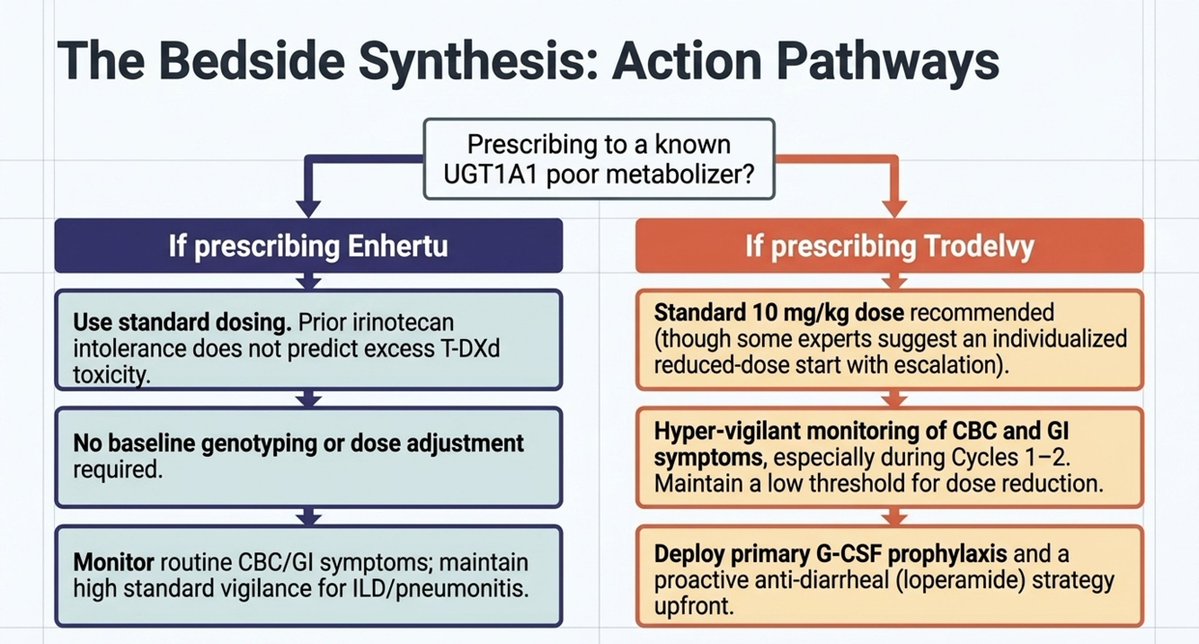
Because this is the reason why UGT1A1 poor metabolizers can struggle with Irinotecan and Govitecan. (SN-38 → UGT1A1).
DXd is NOT a substrate of UGT and is instead primarily metabolized by CYP3A4.
No standing ovation but this is a very good-looking Kaplan-Meier.
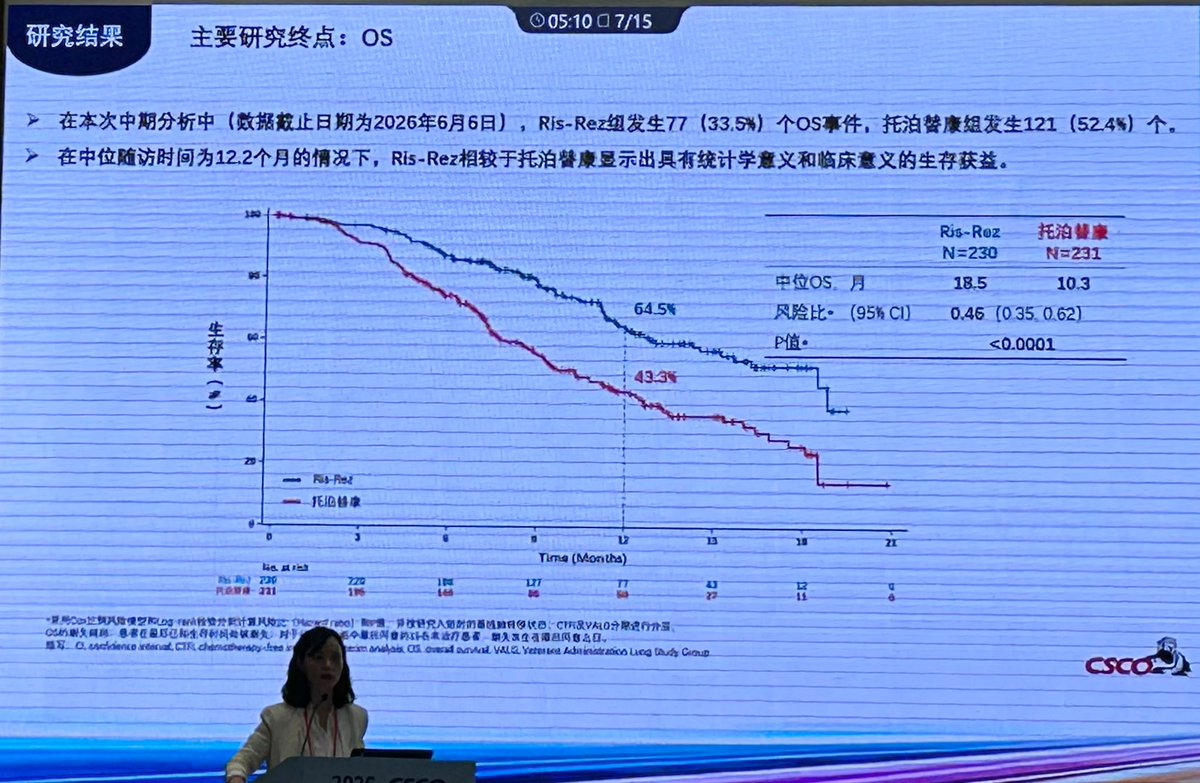
An antibody-drug conjugate targeting the cancer antigen, B7-H3 (called risvutatug rezetecan: Riz-Rez) vs. topotecan in second-line small cell lung cancer: improved overall survival from 10.3 to 18.5 months.
This was discovered and developed by the Chinese pharma, Hansoh, and was licenced to GSK for the rest of the world.
The trial uses a now slightly out-of-date control arm (topotecan rather than the DLL3×CD3 T-cell engager, tarlatamab). GSK are replicating this trial ex-China, and they're also running the Ris-Rez + tarlatamab combo in phase 1.
Notable safety: hematalogical toxicity and interstitial lung disease (though overall fewer grade ≥3 than chemotherapy).
This is the first phase 3 trial to show an overall survival benefit for a B7-H3 ADC in any cancer.
Ivonescimab beat pembrolizumab on overall survival in first-line PD-L1+ NSCLC!
Next chapter is longer follow-up from the separate global HARMONi study, including Western patients.
Different trial. Different population. But critical for understanding geographic translatability. @OncoAlert@OpenMedicineHQ@StephenVLiu@JackWestMD #WCLC26
Highlighted Studies at #WCLC26
1️⃣ HARMONi-2
In treatment-naïve, advanced NSCLC with PD-L1 ≥1%, ivonescimab improved PFS (11.1 vs 5.8 months; HR 0.51) and OS (30.8 vs 22.6 months; HR 0.73) compared with pembrolizumab.
This is a genuinely positive trial, but it does not tell the same story for all PD-L1-positive patients. The OS benefit was clear in the ≥50% subgroup, whereas the HR was 0.85 with a confidence interval crossing 1 in the 1–49% subgroup. Moreover, pembrolizumab monotherapy is not the real comparator for most patients in this group; chemo-IO is.
2️⃣ SWOG S1827/MAVERICK
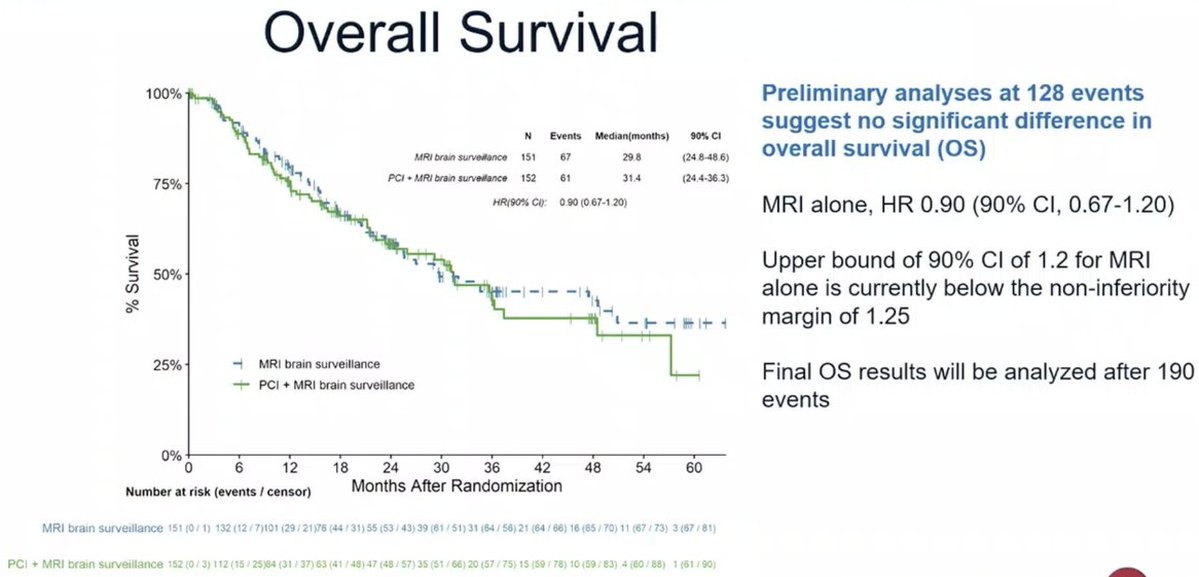
In patients with SCLC who had completed initial treatment and had no brain metastases, MRI surveillance was compared with MRI plus PCI. MRI alone reduced the risk of cognitive failure or death (HR 0.60); grade ≥3 toxicity was 0.8% vs 7.9%. Interim OS and brain metastasis-free survival were not different.
The study does not show that MRI prevents brain metastases more effectively. It shows that adding PCI has so far caused cognitive and serious toxicity without demonstrating a survival benefit. If regular MRI and prompt salvage treatment can be provided, routine PCI is now difficult to justify. Still, it is too early to say that PCI is completely dead before the final OS analysis.
3️⃣ TAISHAN-302
In relapsed SCLC, the B7-H3 ADC Tam-Peli improved OS from 9.4 to 13.3 months versus topotecan (HR 0.46); PFS was 7.4 vs 2.8 months and ORR was 59% vs 10%. Grade ≥3 treatment-related toxicity was also lower.
ARTEMIS-008
In relapsed SCLC, another B7-H3 ADC, Ris-Rez, also outperformed topotecan: OS was 18.5 vs 10.3 months (HR 0.46), PFS was 7.2 vs 3.0 months, and ORR was 58% vs 13%.
Together with TAISHAN-302, this result strongly confirms that B7-H3 is a genuine target in SCLC. However, the median OS figures from the two trials cannot be used to conclude that Ris-Rez is better. The choice between the two ADCs may be determined more by ILD, hematologic toxicity, and ease of administration than by efficacy figures. The efficacy of either agent after tarlatamab maintenance also remains unknown.
5️⃣ EVOKE-03/KEYNOTE-D46
In metastatic NSCLC with PD-L1 ≥50%, sacituzumab govitecan plus pembrolizumab increased ORR compared with pembrolizumab (%56 vs 44%) and numerically prolonged PFS, but the prespecified statistical threshold was not met. OS was 21.5 vs 22.8 months, duration of response was almost identical, and grade ≥3 toxicity was 56% vs 17%.
Adding the ADC shrank tumors in more patients but did not change the natural course of the disease. Considering the similar duration of response, lack of OS benefit, and substantial toxicity, this combination has no place in clinical practice.
HARMONi-2: PFS benefit — now an OS benefit
Ivonescimab (PD-1 × VEGF) vs pembrolizumab in 1L PD-L1+ advanced NSCLC:
• PFS: 11.1 vs 5.8 mo | HR 0.51
• OS: 30.75 vs 22.57 mo | HR 0.73
• OS signal strongest in PD-L1 ≥50%
• More overall/serious TRAEs, but no new safety signal identified.
Take-home: A chemotherapy-free PD-1 × VEGF strategy has now beaten pembrolizumab on both PFS and OS.
Zhou C et al. | HARMONi-2 | WCLC 2026 | OA14.01
#WCLC2026 #HARMONi2 #NSCLC #LungCancer #Ivonescimab #Immunotherapy #MVOnco
In a world of 300-pages protocols and standardized metrics
Let’s please leave the truck test as it is
No methods. No p-values. Just one rule.
If you can drive a truck through the Kaplan-Meier curves, it passed the truck test. 🚒
We now have TWO studies showing B7-H3 ADCs vastly superior to standard topotecan for relapsed SCLC: tam-peli and ris-rez. These studies were different - different agents, different baseline demographics of pts, etc - but the outcomes were similar, control arms performed similarly. These trials reinforce each other. Looking forward to global studies and to first-line studies. The ADC era soundly here for SCLC and these will replace chemotherapy across lines, in my opinion. #WCLC26
MAVERICK — CAN MRI SURVEILLANCE REPLACE ROUTINE PCI? 🧠
SWOG S1827 MAVERICK was a randomized Phase III trial in 304 patients with limited- or extensive-stage SCLC, with no brain metastases on baseline MRI.
Patients were randomized to:
• MRI surveillance alone
vs
• MRI surveillance + PCI (25 Gy/10 fractions)
Serial brain MRI was performed in both arms.
THE RESULTS:
• Primary endpoint — cognitive failure-free survival
MRI alone was superior
HR 0.60 | 90% CI 0.46–0.78 | P = 0.001
• The trade-off: PCI reduced brain metastases
12 months: 15% with PCI vs 30% with MRI alone
sHR 2.19
• BM-free survival numerically favored PCI, but was not significant
HR 1.25 | P = 0.18
• Preliminary OS: no significant difference
29.8 vs 31.4 months | HR 0.90
Final OS awaits 190 events.
TAKE-HOME:
MRI surveillance emerges as the preferred approach — better cognitive failure-free survival, but at the cost of more brain metastases.
PCI still does what it was designed to do: reduce brain metastases.
#MVOnco #MAVERICK #SWOGS1827 #WCLC2026 #SCLC #LungCancer #ThoracicOncology #MedicalOncology
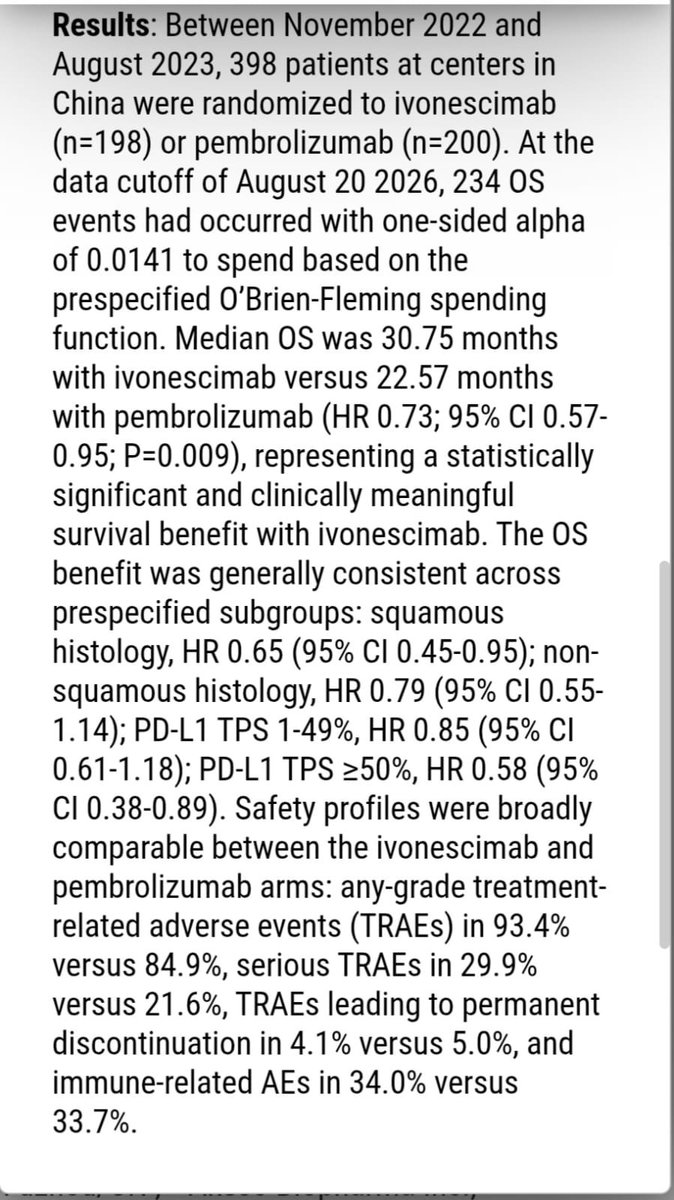
🚨 HARMONi-2: OS data .
Ivonescimab vs pembrolizumab:
🔹 OS: 30.75 vs 22.57 mo
🔹 OS HR 0.73 (95% CI 0.57–0.95; P=0.009)
🔹 PFS: 11.1 vs 5.8 mo
🔹 PFS HR 0.51 (95% CI 0.38–0.69; P<0.0001)
OS by subgroup: • Squamous: HR 0.65 (0.45–0.95)
• Non-squamous: HR 0.79 (0.55–1.14)
• PD-L1 1–49%: HR 0.85 (0.61–1.18)
• PD-L1 ≥50%: HR 0.58 (0.38–0.89)
Looking forward to full presentation and discussion. @IASLC@dr_yakupergun@StephenVLiu@RManochakian
Is pembrolizumab as safe and efficient as neoadjuvant treatment in localized dMMR/MSI esophagogastric cancers? Results from the IMHOTEP phase II study - ESMO Open https://t.co/uG8zQaZ7fc
Groundbreaking data at #WCLC26 , MAVERICK! So honored to play a small role in this practice changing study!
⭐️Close MRI surveillance in all SCLC (q3 mo) is essential!
-PCI with no clear OS benefit, however real toxicities. In era of Tarlatamab and novel ADCs even more relevant.
@ALLIANCE_org@SWOG@SclcSMASHERS@IASLC
Landmark, practice changing study at #WCLC26. The phase III MAVERICK study shows no improvement in OS with PCI for SCLC, across limited and extensive stages, with worse cognitive failure free survival and increased toxicity in PCI arm.
The end of the PCI era.