שלושה אירועים שהתרחשו כולם ב-24 שעות האחרונות:
סנאטור רפובליקאי ופרו-ישראלי מאשים את ישראל בהפרת התחייבויות שלה לנשיא טראמפ בנושא עזה.
שני סנאטורים דמוקרטים מאשימים את ישראל במכתב לרוביו באחריות לאסון הומניטרי בחורף הקרוב בעזה.
חבר קונגרס יהודי-דמוקרטי, אחד הכי מתונים ואוהדי ישראל במפלגה (בראד שניידר, מדינת אילינוי) מבהיר שגינויים רפים של נתניהו והשגריר לייטר לטרור היהודי בשטחים לא מרשימים אף אחד, וישראל חייבת לעבור לאכיפה וסיכול אגרסיביים. אחרת, עוד סנקציות בדרך.
אה, וכמעט שכחתי, ג'ארד קושנר, אחד האנשים הכי מקורבים לנשיא טראמפ, מזהיר שמדינת ישראל הופכת למצורעת וחייבת שינוי כיוון דחוף.
כתבתי את זה יום אחרי בחירות האמצע בארה"ב, כותב שוב: להשאיר את נתניהו וקואליציית המחדל בשלטון, זו התאבדות לאומית. אין סכנה גדולה יותר לישראל.
Is it socialism when the government takes a stake in a private company and then the President overrides the company's board after they fire the possibly criminal CEO?
Today J Street is releasing our policy agenda, which we hope can be embraced by the incoming U.S. Congress, primary candidates, and ultimately the next President of the United States. Our hope is that this eventually becomes the new consensus around U.S policy towards the Israeli-Palestinian conflict and the Middle East.
The United States needs a fundamental reset of its approach to the Middle East, one that redefines the U.S.-Israel relationship and reorients American policy toward the Israeli-Palestinian conflict and the broader region. American policy should reflect U.S. interests in a secure, stable, and prosperous Middle East that no longer draws the U.S. into costly wars. This future is only possible if all Israelis and Palestinians can live in freedom, dignity, security, and prosperity. America must prioritize the twin goals of Palestinian statehood living alongside a Jewish, democratic Israel with freedom and equal rights for all citizens of both countries. And it must put forward a clear choice to Israel: moving toward a 23-state solution with Israel at peace with all of its neighbors, including the State of Palestine, or a much more limited U.S.-Israel relationship.
1. Pursue a U.S.-Israel security relationship that is consistent with U.S. values, law, and policy goals, conditioning U.S. support on Israeli actions. Rapidly and responsibly phase out direct U.S. financial subsidies for Israeli weapons. Pause delivery of offensive weapons until it is confirmed that Israel is no longer violating U.S. laws and values, including allowing the free flow of aid and recovery materials to Gaza. Evaluate arms sales on a case-by-case basis according to U.S. interests and Israeli actions in Gaza, Lebanon, the West Bank, and elsewhere, while continuing to ensure Israel is able to obtain Iron Dome and other exclusively defensive systems. Link implementation of any new significant U.S.-Israel defense and technology cooperation programs to Israeli cooperation on U.S. policy goals in Gaza, the West Bank, Syria, and Lebanon, including MOUs or other agreements signed by the Trump Administration.
2. Recognize the State of Palestine and help the Palestinians build it. The United States must help the Palestinians establish a government that enjoys legitimacy among its own people. This begins with recognizing Palestinian statehood, which would confer political legitimacy, strengthen Palestine’s ability to pursue its interests through international institutions, and help overcome U.S. legal barriers to normal diplomatic relations. Washington should press for free and fair Palestinian elections, requiring all participating parties and candidates to renounce violence, while advancing a Gaza plan that includes the phased disarmament of Hamas. It must also press Israel to stop undermining Palestinian statehood by demanding the release of billions in withheld Palestinian tax revenues under threat of U.S. economic penalties. Finally, the United States should repeal remaining legal restrictions on U.S.-Palestinian relations and work with the Palestinian Authority and international partners to strengthen Palestinian institutions and combat corruption.
3. Pursue a regional vision of a 23-state solution in which a secure Israel lives at peace with all of its neighbors, including the State of Palestine. America should make the choice clear to the Israeli people: a comprehensive, regional agreement in which Israel has a secure and prosperous future inside its own borders alongside a Palestinian state and full acceptance by its neighbors – or continued occupation, conflict, and growing isolation, including from the United States. It must also be clear to all in the region that the United States will pursue a new Middle East strategy that emphasizes diplomatic and economic tools and that while the U.S. is not militarily abandoning the region, it will no longer serve as a backstop for regional security.
4. Reverse Israel’s occupation of the West Bank and the settlement project using economic pressure. Use targeted economic sanctions and other economic pressure tools to prevent and punish settler violence and to deter and reverse settlement construction and other steps towards de facto annexation. Israeli individuals, businesses, and government officials should have to choose between living in, doing business in, and subsidizing settlements and remaining fully connected to the U.S., Europe, and the rest of the international economic and financial system.
5. Disarm Hamas and replace it with Palestinian security and governance institutions in Gaza. Work with Egypt, Qatar, and Turkey to press Hamas – a terrorist organization – and Israel to agree to a plan for Hamas disarmament, Israeli withdrawal, and the gradual introduction of Palestinian Authority security forces and governance institutions that have legitimacy with the local population, bringing an end to Hamas’s repressive rule in Gaza. Work with Gulf states and the international community to invest in and help reconstruct Gaza, starting with an immediate surge in early recovery and humanitarian assistance. Phase out the Board of Peace and impose real consequences on both Hamas and Israel for failure to cooperate.
6. End the unnecessary war with Iran. Use diplomacy to secure U.S. interests, including freedom of navigation and preventing Iran from obtaining a nuclear weapon. Terminate the destructive war of choice with Iran. Work with Gulf states to pursue an agreement with Iran that ensures the reliable, free flow of energy and goods through the Strait of Hormuz while building resilient alternatives that bypass the chokepoint and pursuing energy policies that reduce dependence on oil. Seek verifiable restrictions on Iran’s nuclear program in exchange for sanctions relief. Encourage regional efforts to engage Iran and de-escalate tensions. Deter and contain the destabilizing regional activities of Iran’s proxies. Make clear that the U.S. will not support offensive Israeli military action against Iran unless there is a clear and imminent threat.
7. Vote according to U.S. interests and values at the United Nations and support international accountability. Vote in favor of resolutions that are consistent with U.S. policy, values, and interests, even when they are critical of Israel. Vote against actions at the United Nations that unfairly single out Israel. Remove U.S. sanctions on the International Criminal Court, allowing it and the International Court of Justice to pursue their work.
8. Take a strong stand against antisemitism and all forms of hate while protecting legitimate debate and free speech. Support a comprehensive national strategy against antisemitism to protect and support American Jews. Speak out forcefully against antisemitic rhetoric and actions from the right and the left. Oppose efforts to label legitimate criticism of Israel as antisemitism or to use antisemitism as a justification for attacks on free speech, universities, or immigrants. Recognize that a critical component of fighting antisemitism is to stand up against all forms of hate and discrimination and work in coalition with other minority groups, including with the Muslim community to combat Islamophobia and with the Black community to counter racism.
https://t.co/bccgxL7usY
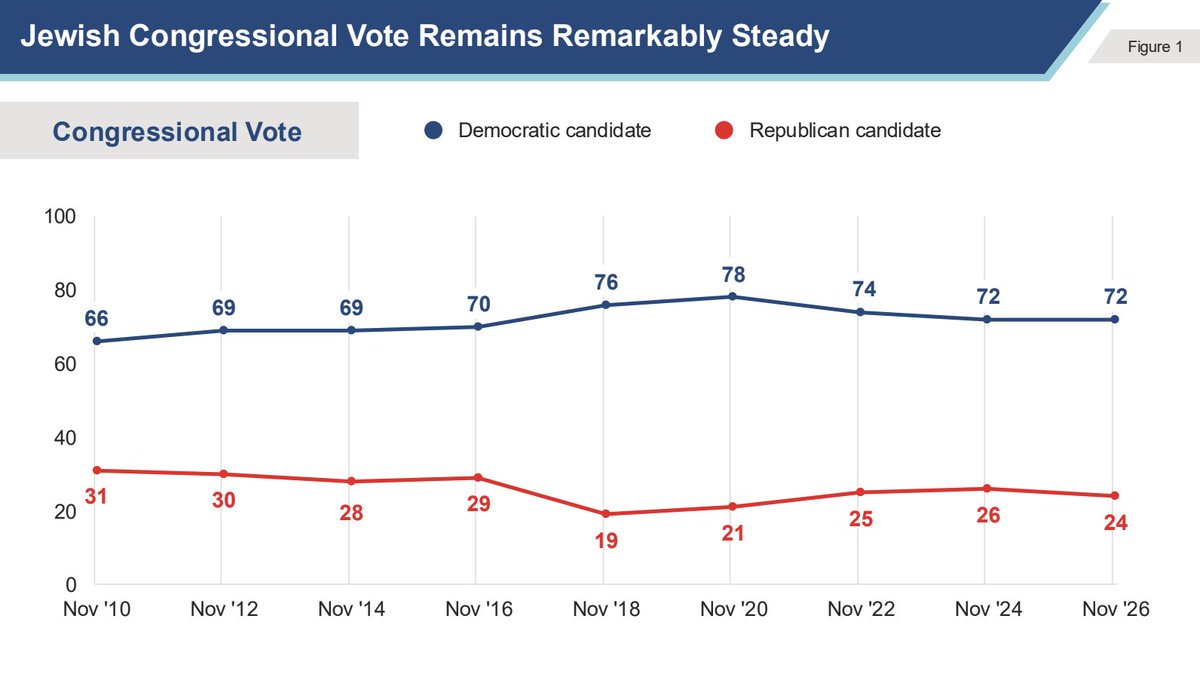
NEW J Street/GBAO poll of Jewish voters:
-72% voted Dem (same as '24)
-Jews view Zohran more favorably than Dem party, Trump, + Netanyahu
-80% think Israeli action in Gaza+West Bank increase antisemitism
-Only 13% of Jews view AIPAC-support for a candidate positively
The Democrats: the historic victory of the Democratic Party is a win for our shared values and will strengthen the US-Israel relationship
Congratulations to the Democratic Party and to its candidates on their historic victory in the elections to the House of Representatives and the Senate.
The fight against corruption, the demand for accountability and good governance that serves national interests and the needs of citizens, and the defense of fundamental constitutional values and the rule of law – these are at the heart of the democratic agenda. The struggle for these principles is ongoing, both in the United States and in Israel.
Tonight’s Democratic victory marks a historic milestone in this struggle.
The strategic relationship between Israel and the United States, which deteriorated to a serious low point under Netanyahu, as well as U.S. policy toward Iran and the Middle East as a whole, were also on the agenda in these elections.
We are committed to working together with Democrats in the United States to rapidly restore the critically important relationship between our two countries and our two peoples, Israelis and Americans.
In the government we are working to form, we will place this issue at the center of our agenda, alongside a change in Israel’s policy on the Israeli-Palestinian and Israeli-Arab conflicts. Ending the conflict is a paramount Israeli interest and a cornerstone of U.S. policy in the Middle East. It will also make possible the establishment of a new regional security architecture to counter the Iranian threat and the threat of terrorism.
Today, November 4, 31 years after his assassination, we remember the strategic legacy of Yitzhak Rabin, who pursued security through diplomatic agreements and an uncompromising struggle against the enemies of peace, while maintaining close cooperation and aligned interests with our most important ally, the United States of America.
I’m waking up struck by the amount of firsts with these midterm elections:
-First black female governor in US history
-First Muslim Senator
-First openly gay Senator
-First female Native American Governor
-First female Native American Senator
-First Latina Governor in Texas history
-First female Governor in Ohio history
-First elected female Senator in South Carolina history
-First Black Governor in Florida history
-First elected Latino governor in California history
-First Kansas Democratic Senator this century/in 94 years
-First Congress set up for Black Speaker of the House
According to our 2026 Election Survey of Jewish voters, 72% of American Jews voted Democrat last night. There was no exodus.
We'll have deeper results at our briefing tomorrow at 1 PM ET - RSVP here: https://t.co/FpZZe4mAOm
It's official! Jewish voters played a key role in Democratic victories, and Dems are WINNING. JDCA endorsed more candidates this year than ever before because there has never been a stronger slate of Democratic candidates in a single election.
We look forward to working with a new Democratic majority to deliver on the issues that matter most to Jewish Americans in the new Congress.
DEMS HAVE FLIPPED THE HOUSE 💙
A massive win for our Jewish values, working people, and the future of our democracy. While the fight against Trump’s authoritarianism is far from over, we’re ready to provide a crucial check on Trump’s cruelty, chaos, and corruption.