The PHP security team is giving advance notice: Upcoming security release Wed, Oct 21st 2026, 14:00UTC, two critical vulnerabilities, both rated CVSSv4 9.2.
PHP users are encouraged to prepare to update. Earlier release if details become public or active exploit evidence.
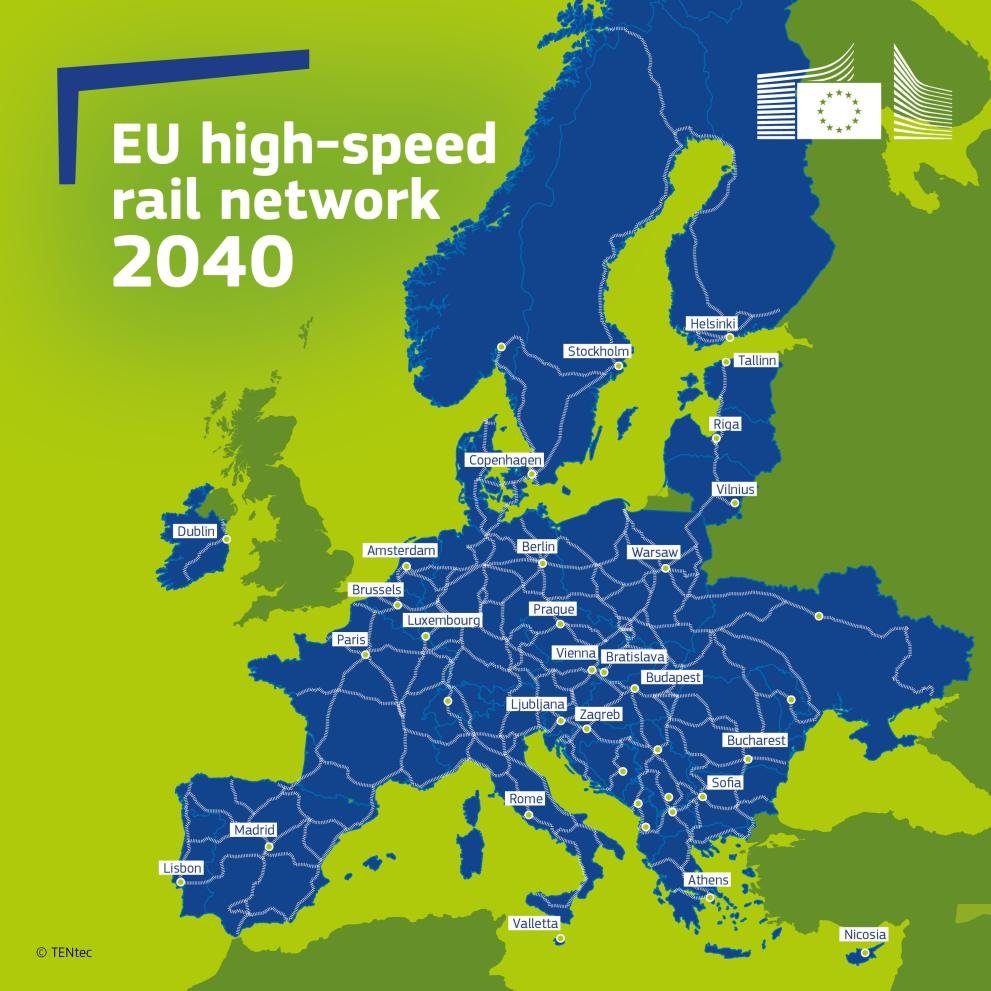
The EU parliament has approved the plan for a continental high-speed railway.
This plan will integrate our current high speed lines and expand to new areas to create a truly European network ready for the future of travel.
Europe, the railway continent 🇪🇺
Your SEO rank tracker is lying to you.
Ahrefs, Semrush and Moz are showing sites vanishing from page 1. Meanwhile Search Console shows zero change in impressions or clicks.
Google is at war with scrapers: IP blocks on proxy networks, more CAPTCHAs, new /goto/ redirects for bot detection, and poisoned SERPs that feed trackers wrong results instead of blocking them.
This might recover (search syndication deals, private APIs, antitrust ruling), but until then:
→ Trust GSC for your own rankings
→ Cross-check every “drop” against the live SERP
→ Pull GSC API data past the 16-month limit
→ Keep building pages that actually satisfy intent
For now: A dip in your rank tracker ≠ a dip in your visibility.
Google quietly rewrote its helpful content guide on Oct 1. If AI touches your content pipeline, pay attention.
What changed:
→ Raters now judge content on 4 things: effort, originality, skill, accuracy
→ Fake authors (AI headshots, made-up credentials) are officially "deception"
→ Fact-checking all AI content before publishing is now "critical", down to titles, meta descriptions and alt text
Who's exposed:
→ Scaled, templated pages outside your expertise
→ "Human reviewed" AI drafts that add nothing new
→ "Best X" listicles with your own product at #1
→ Paid spots in other sites' best-of lists
What to do instead:
1. Start with something AI doesn't have: your data, a customer call, a test
2. Check every number, quote and link by hand
3. Rewrite anything that sounds like an LLM
4. Put a real author on it
5. Don't scale past what you actually know
tldr: You can still use AI for content but you need to put in genuine effort.
step 1: copy this tweet and ask claude to write a letter including your personal experience
step 2: send an email to your local member of the EU parliament
this is a generational chance to make building a startup in Europe A LOT easier... and takes just 5 mins
A call to all entrepreneurs, founders, small business owners in Europe and anyone else who aspires to star a company at some point. This is the moment to act and let your voice be heard on EU Inc.
EU Inc is the proposed legislation to make it easier to start and grow a company across Europe. It is now in front of the European Parliament and also being negotiated by governments.
The objective should be very clear: you should be able to start and grow your company in Europe as your home market.
What this should mean is, I think, at a minimum this:
1, You should be able to start a company online and cheaply.
2. You should be able to have a simple registration that you can fill out by yourself, with secure identity checks built in. You should not be forced to hire and pay a notary for this process.
3. The basic rules should be the same across Europe and should be common. There should be one registry with common rules and you shouldn't have to go to the lawyers of each country to set up different subsidiaries.
4. There should be a simple way to give employees a share in what they are helping you build, through stock options. They should only pay the tax when they sell those shares and when they receive the money.
5. The paperwork should be much simplified. There should be one channel for doing the VAT across borders and use the time saved to do your job and not to do paperwork.
6. The rules should support the entire life of the business; raising money, growing, going public, and also liquidating a failed business should all be done under the European common rules. Opening a bank account in another country, hiring across borders should be seemless.
The European Commission made an initial proposal that was not sufficiently ambitious in my view but that was a useful start: it had online registration in 48 hours for less than €100 and measures to facilitate the taxation of employee stock options. It had some rules on common liquidation of the companies.
In my view it was not ambitious enough because it allowed national authorities to impose further requirements, such as notaries. It was already falling short on tax and employment, but the reforms that the other institutions are introducing are making it even less ambitious.
The draft that is being discussed by the governments eliminates the European company register and replaces it with a website that is just a portal to underlying national systems. This does not improve the creation of companies in any way. They're also eliminating the common procedures to liquidate failed companies, which was very useful because it facilitates the financing of these companies.
The danger in the legislation is that it will require so many national exceptions that the founders will, in fact, end up facing still all the different regimes and it will make absolutely no difference.
What I suggest here is that you write to your member of the European Parliament this week. Tell them about the obstacles your business is facing: the paperwork, the difficulty of giving shares, of raising money across borders. Explain what it costs and why it makes it difficult to create employment. Ask them what they will do to help you to make this legislation useful.
Your MEPs work for you. Here are their contact details: https://t.co/ZKGDwD795c
The MEP leading Parliament’s work is René Repasi. The other political-group negotiators are Axel Voss, Pascale Piera, Mario Mantovani, Pascal Canfin, Sergey Lagodinsky, Kira Marie Peter-Hansen, Arash Saeidi and Marcin Sypniewski.
Share this with other entrepreneurs. Help make sure that the people writing the law hear from the people that the law is meant to help.
@tibo_maker if it hasn’t burned domains yet, it just means outrank is too small for Google to care
eventually they discover every backlink network and shut it down
@SebastianRoehl Yes. It’s draining so much more energy.
Previously I could work 10-12 hours a day. Now my brain gets tired after 6.
I still get more done ofc.
@helloitsolly AI will never do your marketing. Whatever AI does, it does it for your competitors as well.
So you have no advantage to get undervalued attention.
@peer_rich@TweetsOfSumit i was thinking about something like this today
next step after centralizing knowledge would be to build agents for all transcations, so that you personally would never have to deal with the government again 😀
Jev doesn't write anything. Still, it's a breakthrough for SEO/AEO.
You give it a question and a set of options, and it picks one, very fast and very cheap, with a confidence score.
Which is essentially what a big part of SEO work is — lots of small decisions over long lists.
Some ways to use Jev for SEO:
1. Classify keyword intent. Give it your keyword list and the options informational / commercial / comparison, and you get an intent map without burning your expensive model's tokens on it.
2. Decide the page format per keyword. Does this one want a listicle, a comparison page, a guide, or a glossary entry? That's a pick-one decision, so it fits.
3. Triage what to refresh. Feed it a page's target keyword plus its search console trend and let it sort your content into refresh / leave / consolidate, then you only look at the refresh pile.
4. Filter backlink and outreach prospects. Relevant to your niche or not — going through 500 sites by hand is exactly the kind of work this should take over.
5. Sort community threads. Pull Reddit and X threads for AEO research, and most of the filtering question is just "could you add value in this discussion or is it noise?" A cheap classifier in front means the good threads reach you and the junk doesn't.
6. QA programmatic pages before they go live. On-topic and substantial, or thin? Better to catch that with a half-second check than with a ranking drop later.
One caveat: the accuracy depends a lot on how you phrase the question and the options.