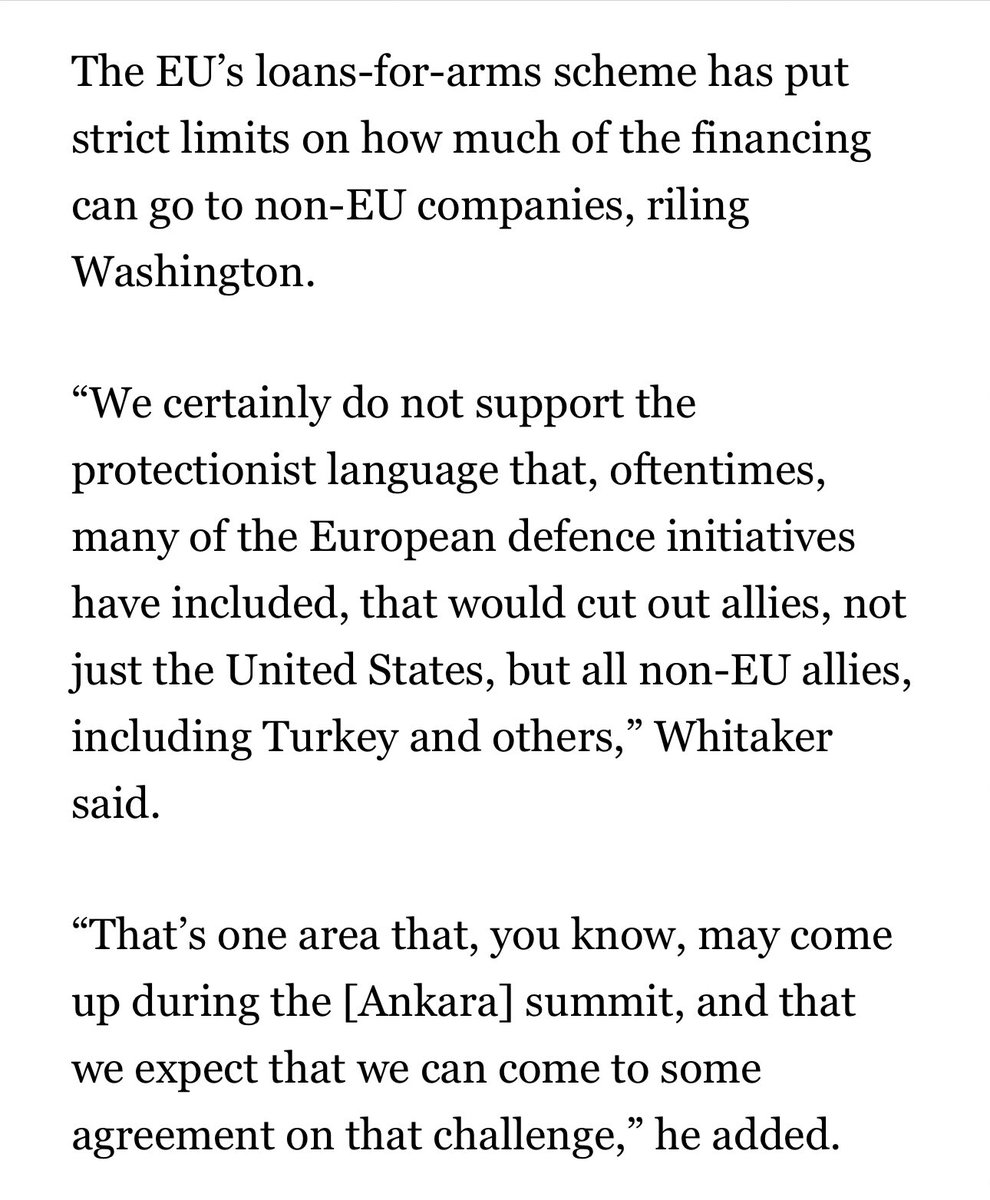
On tärkeää, että 🇪🇺 investoinnit puolustusteollisuuteen kohdistuvat pääosin🇪🇺.
Idea on tulla riippumattomammaksi 🇺🇸, johon ei voi täysin luottaa.
Ja nyt Whitaker valittaa protektionismista. Trumpin keittämän tullisopan ja muun sekoilun jälkeen.
Uskomatonta, mutta totta.
Päivän korjaus: Jutussa todettiin aiemmin virheellisesti, että valtiovarainministeriö olisi suosittanut tekemään sopeutukset pääosin leikkaamalla. Todellisuudessa ministeriöllä ei ole kantaa siitä, miten sopeutukset tulisi toteuttaa.
📊 When labour supply constrains growth, fiscal policy needs a new playbook.
As Europe ages and labour markets tighten, traditional fiscal stimulus is losing effectiveness and can fuel inflation instead of boosting output.
In the latest #ESMBrief, ESM's Kai Behrens and University of Turku's @jonleh show that without labour market reforms, fiscal multipliers can fall below 0.5. But combine public investment with structural reforms and multipliers can exceed 1.5—even in tight labour markets.
🔑 Timing matters. Reforms must precede or accompany investment, as they need time to reduce long-term unemployment and create productive capacity.
This is especially urgent as Europe faces major investment needs in climate transition, digitalisation, and security—all while labour supply becomes more limited. The path forward requires coordinating fiscal policy with structural reforms to ensure public investment translates into real economic growth.
🔗 Full Brief: https://t.co/VE8NzrwZc0
In this new publication with @jonleh, we examine public investment in ageing societies. 🧵
We find that labour-market reforms in ageing societies can be very powerful in raising fiscal #multipliers and supporting growth. [1/5]
https://t.co/D1b11uvEz5
📊 When labour supply constrains growth, fiscal policy needs a new playbook.
As Europe ages and labour markets tighten, traditional fiscal stimulus is losing effectiveness and can fuel inflation instead of boosting output.
In the latest #ESMBrief, ESM's Kai Behrens and University of Turku's @jonleh show that without labour market reforms, fiscal multipliers can fall below 0.5. But combine public investment with structural reforms and multipliers can exceed 1.5—even in tight labour markets.
🔑 Timing matters. Reforms must precede or accompany investment, as they need time to reduce long-term unemployment and create productive capacity.
This is especially urgent as Europe faces major investment needs in climate transition, digitalisation, and security—all while labour supply becomes more limited. The path forward requires coordinating fiscal policy with structural reforms to ensure public investment translates into real economic growth.
🔗 Full Brief: https://t.co/VE8NzrwZc0
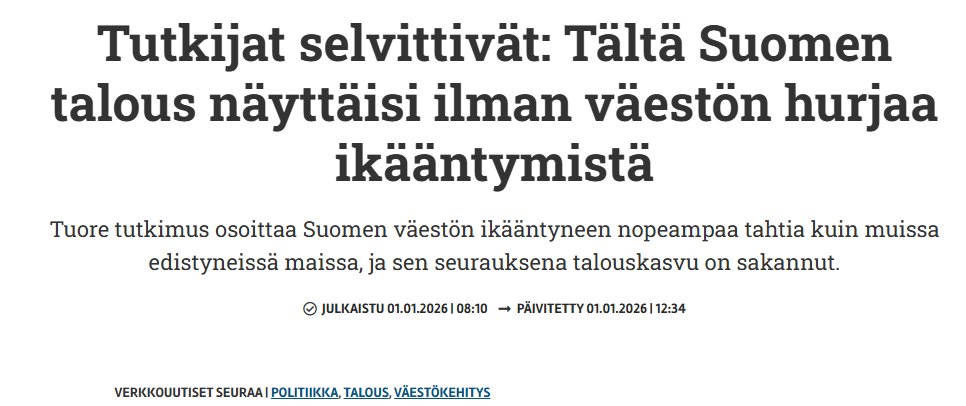
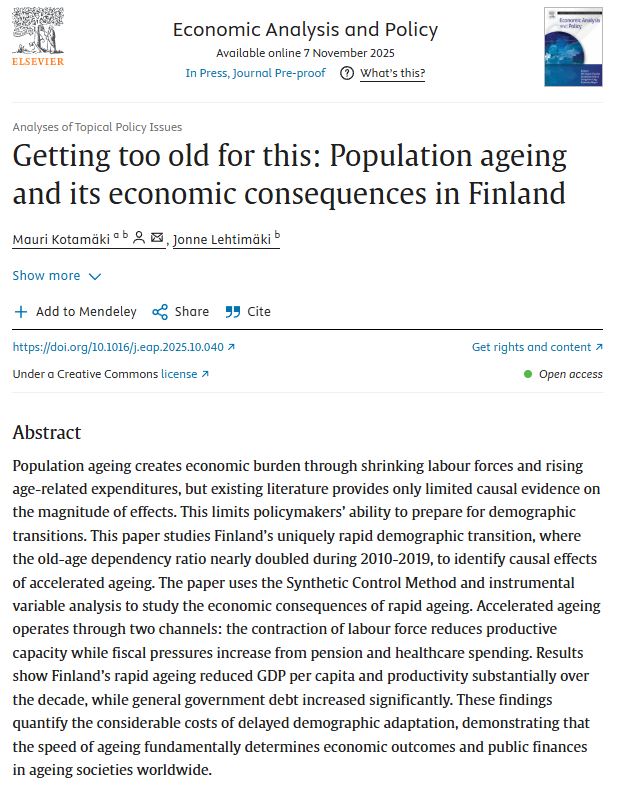
Julkaistiin tutkimusartikkeli @jonleh kanssa asiaan liittyen.
Suomen heikon talouskasvun yhtenä syynä väestön ikääntyminen.
Tavoittelun arvoinen asia, kansantaloudellisesti haastava juttu.
Keskustelu jatkukoon.
#ikääntyminen#kasvu
@KauppalehtiFi käsittelee kovin ajankohtaista asiaa, osittain myös @Mau_And ja allekirjoittaneen jokin aika sitten ilmestyneen yhteispaperin näkökulmasta.
#taloustiede#julkinentalous
https://t.co/G11tGCYzHB
@DanielKral1@zzelenika1 In the RRF the Commission's preliminary assessment is only the first step in the payment request approval process. Actual disbursements take place after several committee stages, usually roughly two months after the Commission assessment.
With one year left for the 🇪🇺 pandemic-era Recovery Fund, more than 40% remains to be absorbed (with the low-hanging fruit long gone). Focus on it has also delayed the absorption of the structural funds. Again shows the issue is not the lack of funds but absorption capacity.
This is seismic.
When the Telegraph - the house paper of Brexit - publishes a 2,000-word obituary admitting:
📉 Brexit has cut UK GDP by up to 8%
📉 Investment down 18%
📉 Productivity down 4%
📉 Employment down 4%
📉 No trade benefits
📉 No regulatory freedom
📉 No immigration control
📉 No growth
…it’s over.
This isn’t Remainers talking.
This is the Telegraph saying Brexit has been an unmitigated economic failure.
The numbers are now so bad, so undeniable, that even the architects of the project can’t keep pretending.
Brexit wasn’t a reset.
It wasn’t sovereignty.
It wasn’t taking back control.
It was a slow economic strangulation: a textbook case of national self-harm, dragging investment, wages, growth and confidence down with it.
We can’t build a future on a foundation of lies.
Time to repair the damage.
Time to rejoin the single market.
Time to put the country first.
💡New journal article👨🦳
Very excited to announce that a new paper co-authored with @Mau_And "Getting too old for this: Population ageing and its economic consequences in Finland" is now available in Economic Analysis and Policy.
#econtwitter#economics
https://t.co/8hA3enemw5
💡 New article 💻
"Digitalisation, institutions and governance, and diffusion: mechanisms and evidence"
In this paper we study the diffusion of digital technologies & how it is affected by institutions.
#digitalisation#diffusion#economics
Full article: https://t.co/HupjfLtc4i
💡 New publication
Recently published in Journal of Economics: The fiscal and macroeconomic effects of fiscal rules
The paper studies effects on government debt, budget balances, public investment and economic growth.
#economics#fiscalrules#taloustiede
https://t.co/bjjfNj8aTt
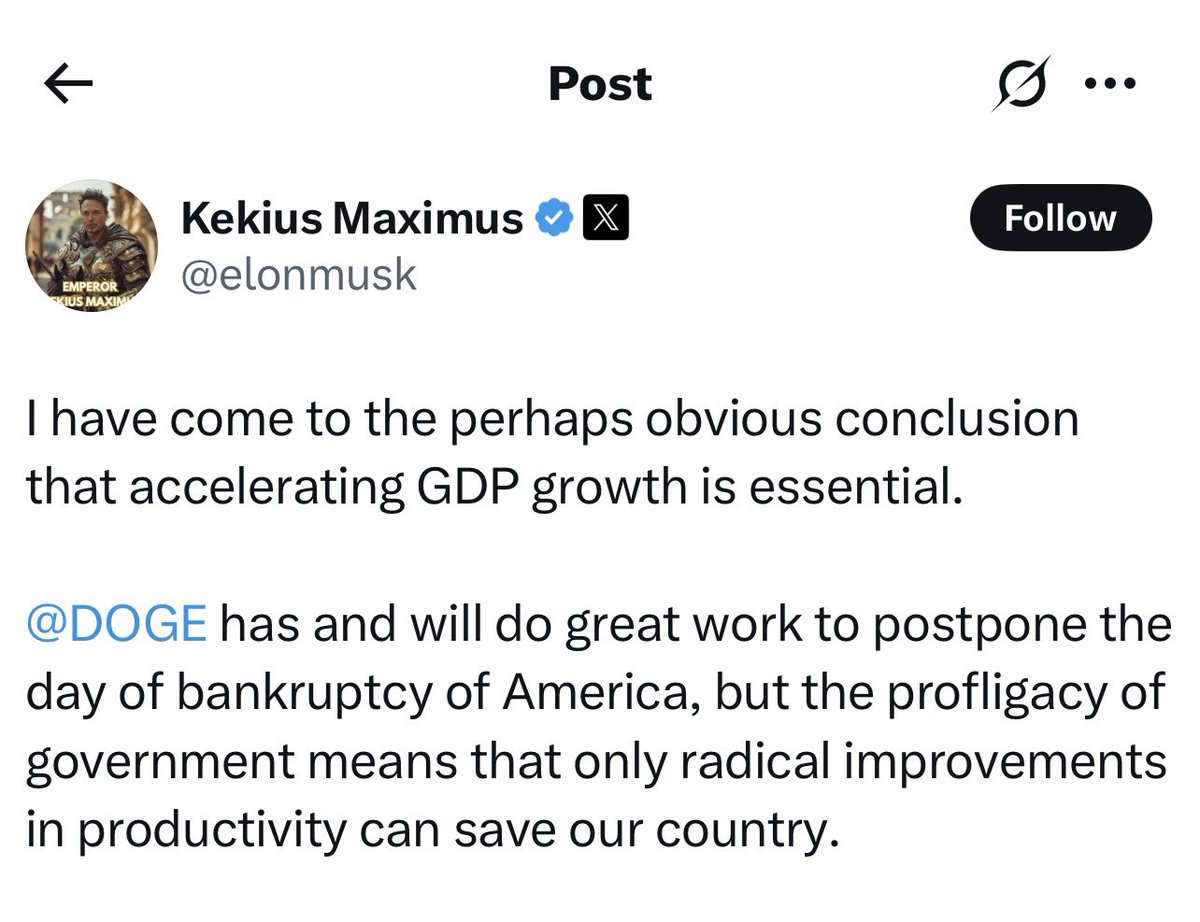
Elon waves the white flag on fixing the deficit.
DOGE goes down in American history as the most ineffective initiative ever.
Obvious 6 months ago.
Obvious now.
Was going to write a paper on the economic effects of Brexit with the title "The Greatest Unforced Economic Error in History" but suddenly that does not seem 100 % accurate. #economics#tariffs
💡 New working paper 💡
Published today in the @ecb@ECB_Research working paper series, we study the diffusion of climate technologies and policies and how the effects of institutions and governance aspects.
#economics#climatetechnology#climatepolicy
https://t.co/M13OTrx8IM