The first Logos testnet saw Logos protocols converge into a single stack: modular, interoperable, and built for privacy.
As we reach the next stage on the roadmap, we take a look back on Testnet v0.1:
https://t.co/qkZv4TLz8e
I remember being introduced to and later working on @ethstatus in 2017. The Ethereum "Holy Trinity" and vision was enough for me to drop everything else I was doing and go all in with Status. It just made sense.
@Logos_network now implementing years of research and experience.
Ethereum’s original vision was never just a blockchain.
It was a complete stack:
- EVM: consensus
- Whisper: messaging
- Swarm: storage
- Mist: the interface
They abandoned it
@Logos_network picked up the torch & modules converged in testnet v0.1. It gets even better in v0.2
"In some other neighbourhoods, 38% of homes were bought by Wall Street.
A city employee in Fishers, Indiana, started writing personal letters to homeowners, begging them to sell to families before investors came. And that's where we are.
Public servants writing love letters to strangers. Pleading them to not sell to BlackRock."
- @jarradhope_
@Corpetty "Every layer in the stack you're about to see — Runtime, Network, Modules, App Backends — runs on your machine. Not on a cloud server you rent, not behind an API you call, not in a data centre that logs your queries, graphs your social connections, and sells the patterns."
“In Iran, with the extreme internet cut-offs… Tor is one of the few tools that works and gets people online.”
@torproject’s Pavel Zoneff shared what drives builders of privacy-protecting infra at Parallel Society.
We’re supporting them. Will you?
#FundInternetFreedom – 19 May
In 1971 the US abandoned the gold standard and started endlessly printing money.
*They* took on debt they knew they couldn't repay (US is $39 trillion in debt).
*They* left us with crushing debt on interest (US alone owes $1 trillion in interest).
*They* don't care.
So we are building new systems. Pioneering new frontiers. Building infrastructure that we own.
Charting a new path.
Logos is that infrastructure. Go explore with Testnet v0.1
Crypto has drifted from its roots.
Satoshi called out TradFi in the genesis block: "Chancellor on brink of second bailout for banks."
But today, legacy finance has co-opted Bitcoin and the wider space. CEXs dominate trading volume. And DeFi protocols bake in surveillance mechanisms to appease the very entities crypto was supposed to disempower.
Normies don't take any of it seriously, seeing crypto for what it's become: a casino for speculation on monkey jpegs and celebrity-endorsed vaporware.
Not a technological movement for human emancipation.
But the cypherpunk vision wasn't about leverage. It wasn't about memecoins. And it certainly didn't pander to BlackRock.
It was about building technologies that let us live on our own terms. Tools that allow us to transact freely, organize without asking permission, exit systems that don't serve us, and enable us all to take part in society on an equal footing.
I'm still here because I still believe in blockchain's potential. And I know my peers at @Logos_network, @Logos_tech, and @ethstatus agree.
The cypherpunk values that birthed crypto still influence every line of code we write, every architectural decision we make.
And we won't compromise to appease others.
Big thanks to @Cointelegraph for letting me vent.
https://t.co/oFVIlWGCgK
If you understand Linux, you understand Logos.
Here’s how Logos fits together as a private-by-design operating system: microkernel, networking, and pluggable storage, messaging, and blockchain modules.
https://t.co/UrULLE2Hy3
The United Kingdom is considering banning young people’s access to VPNs.
Beneath the usual rhetoric of “protecting the children”, the move is yet another affront to the right to private communication.
The proposal comes via an amendment to the Children's Wellbeing and Schools Bill, and could require VPN providers to enforce age verification.
In practice, that means forcing all users to upload government-issued ID to access tools designed to protect their privacy.
“Protecting the children” costs everyone their privacy.
As @BigBrotherWatch points out:
“Having to provide ID or a biometric face scan to access a VPN utterly defeats the point of a technology designed to enhance privacy online.”
Under the proposals, VPN providers would have to collect users' identity documents.
That creates:
✵ Centralised databases of privacy-conscious citizens
✵ Honeypots vulnerable to data breaches
✵ Permanent records of who sought anonymity
The ability to receive and share information without monitoring is fundamental to a free society.
Without it:
✵ Sources won’t speak
✵ Abuse victims can’t seek help safely
✵ Young people can’t explore ideas freely
✵ Citizens self-censor
Surveillance shapes behaviour.
Centralised privacy tools, like traditional VPNs, are inherently vulnerable. (Study alternatives like @nym)
If a government can compel them to log users, verify identities, or restrict access, they become chokepoints.
And chokepoints can be regulated.
And regulated systems can be weaponised.
The UK government recently dropped plans to make digital IDs mandatory for UK workers.
A big win for civil liberties in the nation.
But efforts like age-verification for VPN users show that its surveillance ambitions are far from satisfied.
True digital sovereignty requires systems that do not depend on the goodwill of any single state.
Our response to creeping surveillance cannot depend on outrage alone.
The world needs infrastructure that cannot be amended into obsolescence.
We've got work to do: https://t.co/LHZgtr6sML
"There has been a complete shift in how societies function. There aren't the same kinds of social clubs, civic participations, trade unions, and so on. The notion of participatory democracy has gone in sway of party politics and consumer politics."
- @jarradhope_@Logos_network
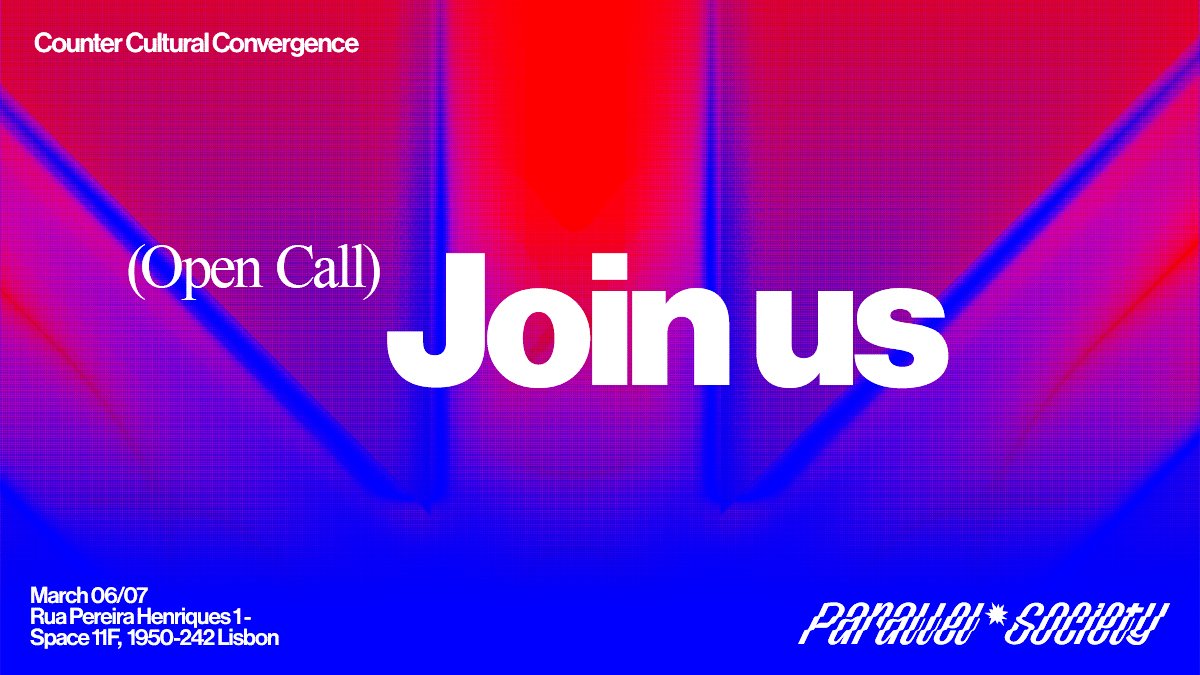
Calling builders of the parallel.
PS is more than a festival, it’s a coalition shaping a future where privacy, autonomy, and culture thrive together.
And we’re inviting aligned communities to co-curate this year’s gathering.
To create zones, experiences, workshops, rites, and rituals for people who care about digital freedom and want to build a better world.
If your work sits at the intersection of underground culture, open source tech, human sovereignty, or artistic subversion - join us.
Apply on the site or drop us a DM.
https://t.co/j8PYBCtrJX
@Logos_network Private-by-default. Built for real life.
Logos has been pushing privacy from day 1. Glad to see others finally jumping on board.
https://t.co/ejzbybXKSW
The system is no longer working for us, so we are charting a new course.
The Logos technology stack is now a unified ecosystem.
Private-by-default. Built for real life. Designed to revitalise civil society.
https://t.co/C2FNXT0Wr8
Meebits are fun.
Our integration with @weareplayerzero is LIVE! You can now bring your Meebit into any of the games on the PlayerZero platform.
We are beyond excited for this partnership and can't wait to see you at our upcoming game nights to celebrate!