Personal update: I've joined Anthropic. I think the next few years at the frontier of LLMs will be especially formative. I am very excited to join the team here and get back to R&D. I remain deeply passionate about education and plan to resume my work on it in time.
@hydroquebec bientôt 8h de coupure, aucune tempête, des températures normales. La même panne qui revient depuis plus de 4 ans dans notre quartier sans jamais avoir été vraiment réglé. Aucun motif ou raison donnée juste un report interminable.
Radiant is the first nuclear startup to generate electric power!😉 Check out our Turbine-Alternator-Compressor: Using nuclear reactor heat, it can generate over 1.25MW. Using a drill, just a tiny light blinks...but everything begins with first light! Merry Christmas to all!
Wonderful news. 🌟💫✨
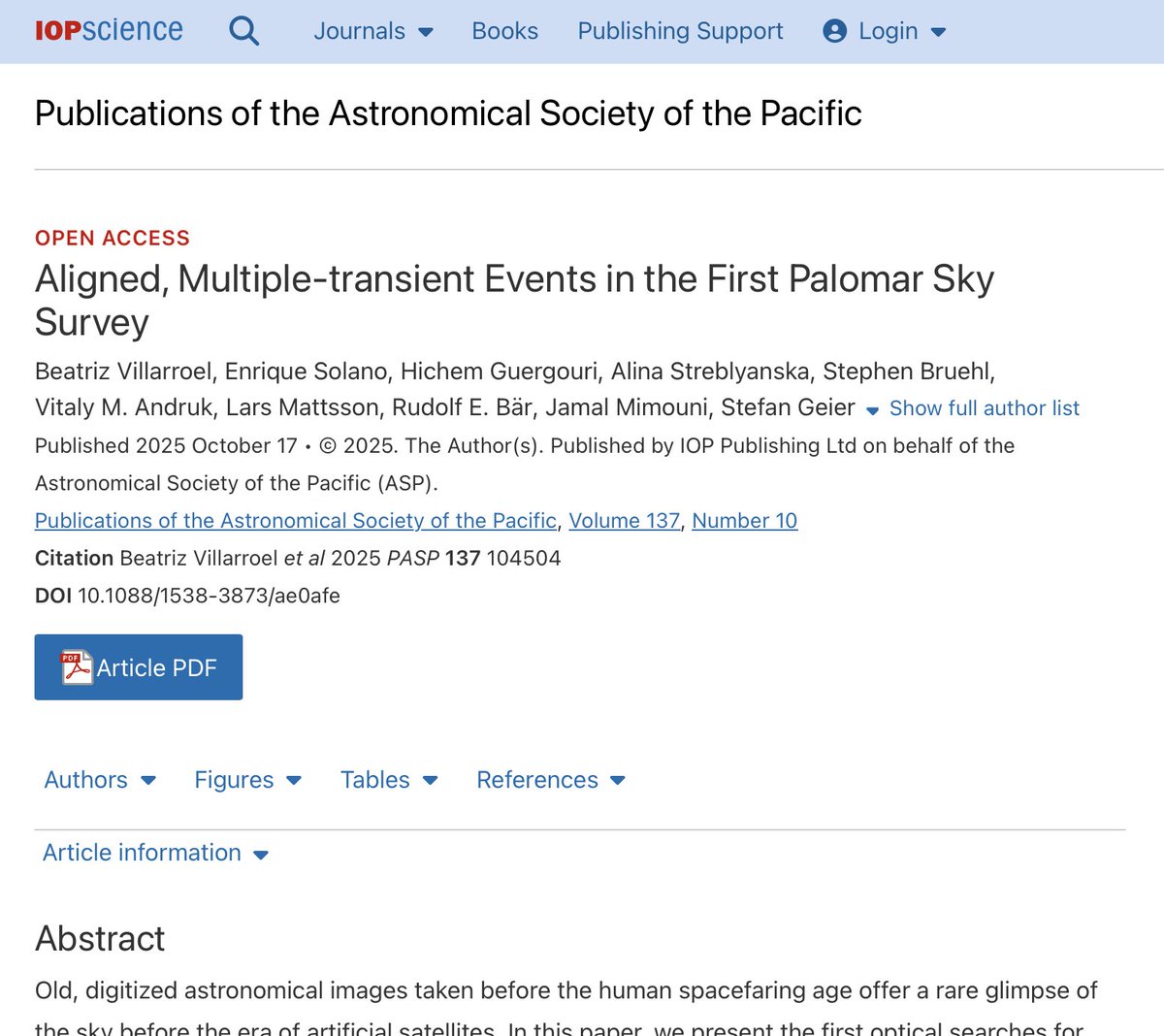
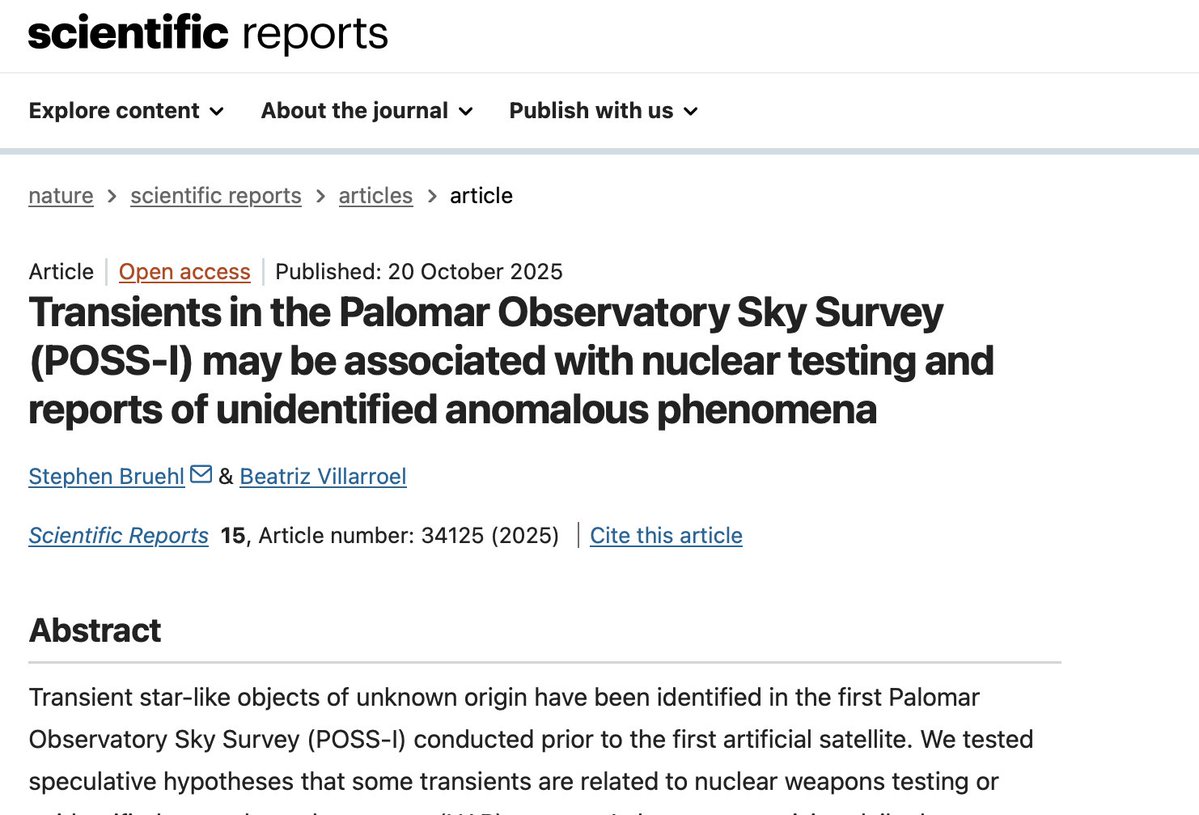
Our two new VASCO papers are now peer-reviewed, accepted and published — and they reveal some extraordinary things:
- We find statistically significant correlations between short-lived transients on pre-Sputnik sky plates, UFO sightings, and above-ground nuclear tests.
- We show a 22σ deficit of transients inside Earth’s shadow — consistent with a fraction of these events originating from solar reflections from flat, highly reflective surfaces in orbit before the human Space Age began.
Together with our earlier MNRAS paper, these results form a triptych of new methods to investigate UAP using astronomical data. Three independent high-level journals — and three independent peer review processes.
These latest results raise a bold question.
And yes… you know which.
Press release (Stockholm University): https://t.co/zr2nvFUs8b
Scientific Reports: https://t.co/GE7TDo4HyN
PASP: https://t.co/6vnbOIJGqR
Wonderful news. 🌟💫✨
Our two new VASCO papers are now peer-reviewed, accepted and published — and they reveal some extraordinary things:
- We find statistically significant correlations between short-lived transients on pre-Sputnik sky plates, UFO sightings, and above-ground nuclear tests.
- We show a 22σ deficit of transients inside Earth’s shadow — consistent with a fraction of these events originating from solar reflections from flat, highly reflective surfaces in orbit before the human Space Age began.
Together with our earlier MNRAS paper, these results form a triptych of new methods to investigate UAP using astronomical data. Three independent high-level journals — and three independent peer review processes.
These latest results raise a bold question.
And yes… you know which.
Press release (Stockholm University): https://t.co/zr2nvFUs8b
Scientific Reports: https://t.co/GE7TDo4HyN
PASP: https://t.co/6vnbOIJGqR