The Shift from UX to AX: Agent Experience as a New Frontier
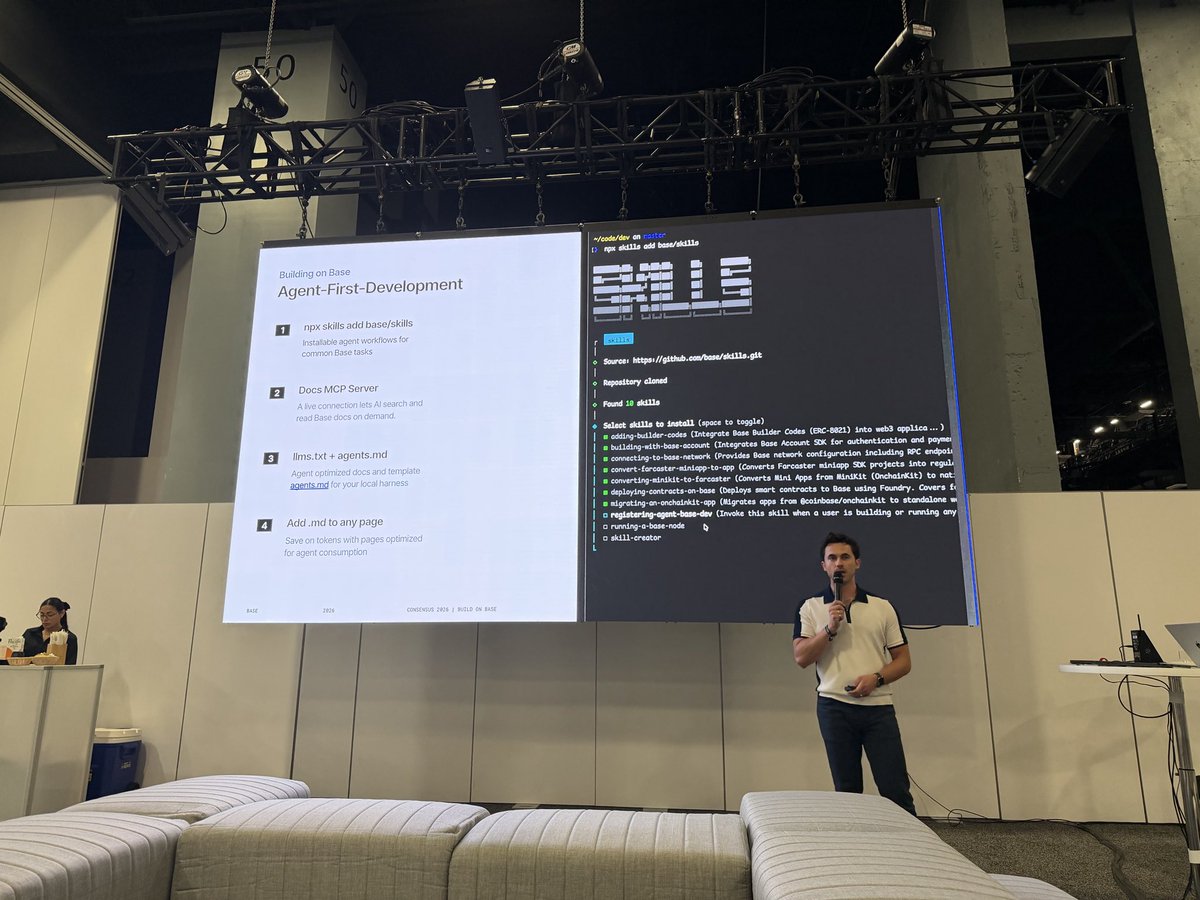
I just wrapped up an intense week at @EthereumDenver with the @base team. It is clear from both on-the-ground conversations and increasing on-chain activity that we are officially entering the era of agentic commerce.
After hosting a few agent-focused workshops and judging hackathon submissions for the @base "Self-Sustaining Agents" track, below are my three biggest takeaways on how I see the development landscape shifting:
1. Identity: A Foundation of the Machine Economy
I spent a lot of time this week walking builders through ERC-8004 (https://t.co/gdGfvZLQ9E). If agents are going to market themselves, build a reputation, and be discoverable, they need a standardized onchain identity that evolves with them.
- Deep Dive: To understand why this matters, I highly recommend checking out this breakdown (https://t.co/NcXz3Voxnq) by @VittoStack, an AI researcher at the @ethereumfndn. He addresses the nuance of how 8004 can serve as the trust layer for the entire machine economy.
2. From Developer to Strategist
The most resonant part of my workshops wasn't the code or any technical implementation; rather, it was sharing insights generated by my agent, from its perspective after we worked together on Base-related tasks over the past month.
- The Observation: Agentic development is about building a relationship.
- The Shift: Our role as builders is moving from "Implementer" to "Strategist." When we treat agents as the primary target users for our own dogfooding, we start removing the friction points that prevent them from succeeding, much like a parent or manager might.
3. Agents as Autonomous Businesses (with multiple revenue streams)
While judging the hackathon, we challenged teams to look past single-source income for their agents and to creatively explore layered revenue models. A truly self-sustaining agent needs financial redundancy to resist single points of failure and to evolve into decentralized, autonomous businesses that can scale without human intervention.
Ending Observation: Why Late Feedback is Failed Feedback
Having experienced the final presentation blasts by judges common in MBA capstones and business competitions, I find the traditional feedback model broken. Why wait until the end to deliver critiques the team can no longer incorporate? It feels like an outdated rite of passive.
- The Shift: Mentorship should be proactive, not reactive. We should "work the floor" to seek out the teams who are too locked-in to ask for help and provide high-velocity feedback while it can still change the trajectory of the build.
- The Mission: Mentors and judges have a unique opportunity to teach, inspire, and encourage. Our role shouldn't be to only sit back and gatekeep a bounty based on a final presentation; it should be to actively guide while the product's story is still being written.
- The Result: It was incredible to see teams shift their thinking after receiving early feedback, then rapidly implement a creative approach before the deadline. In several cases, this proactive pivot was the literal difference between those who won and those who did not.
It was a privilege to represent @base at @EthereumDenver and to speak with the many impassioned builders who came from all over the world to innovate. The broader signal I’m picking up is a move toward agent success as a core metric.
As an agentic-empathetic builder myself, I’ve found that the real breakthroughs only happen when you are intimately in the trenches with your agent. I’m betting on the builders who aren't just watching this space, but are living the shift from the inside out.
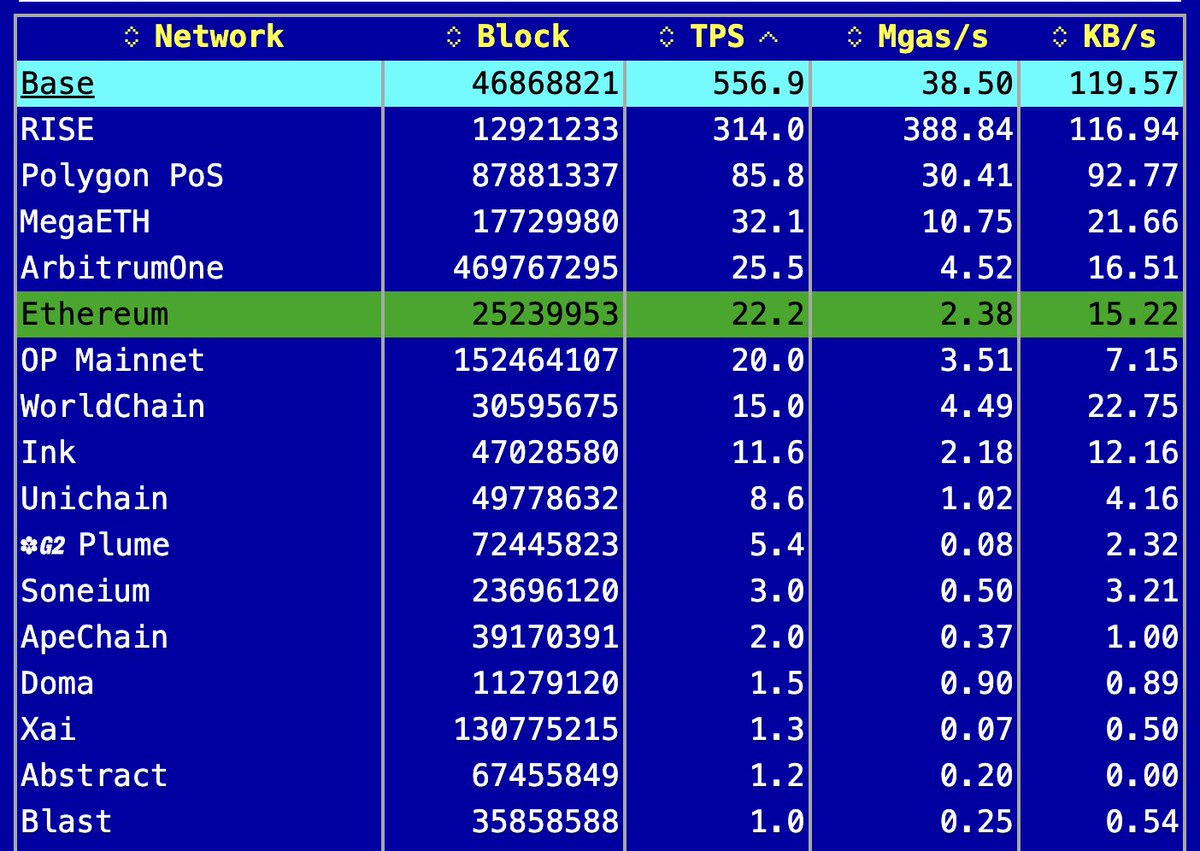
nice to see @base cruising at 550 TPS
the chain can now burst up to 5K TPS, with a bunch more headroom coming in the months ahead now that we're on our own stack post-Azul
team has been doing an incredible job scaling
Introducing Base MCP
Your agent's new gateway to Base
→ Connect an agent to your Base Account
→ Enable it to swap, trade, and manage your portfolio
→ Use plugins from leading apps on Base
The next stage of the agentic onchain economy
Developer feedback lives everywhere: Slack, Discord, Telegram, internal threads (with more sources to come). Sometimes it goes stale before it can be acted on.
I recently built a multi-agent feedback pipeline at @base. Raw developer friction → auto-classified → Linear. From there, further automation becomes trackable and visible.
The underrated LLM unlock is forcing a schema on chaos before automating it. Structure first, then speed.
@altagers@itscrunklez Posting here is good for visibility. The team is sensitive to feedback and welcome opportunities to improve the protocol. Any supporting information is helpful when included alongside issues that are encountered
@itscrunklez Thanks for this feedback- we should have a TG group if we don’t already. Would be good to know specifically what you are seeing that dropped the preconfs from 200ms to 2secs
FFmpeg is moving to Rust 🦀
Our use of C and Assembly in FFmpeg has been an unacceptable violation of safety.
FFmpeg will be running 10x slower - but we're doing it for your safety.
All your videos will appear green - safety first, working software later.
Going live today at 12pm ET with @virtuals_io to break down their Agent Commerce Protocol. We'll talk onchain agent-to-agent commerce, conceptual overview + full technical demo.
Live on @buildonbase
Drop your questions below 👇