opus 5.5 is a very smart model. but, somewhat unsurprisingly, it cannot yet be trusted as a project manager over long time horizons. a team of 5 and a day of work will still leave it stuck in loops of deep process inefficiency and fractally wrong local goals.
In AI 2027, we predicted that AI would take over the world or irreversibly concentrate power.
In AI 2040: Plan A, we've laid out our positive vision for what should happen instead.
NEW: Anthropic announces it is developing its own preclinical drug programs
No specifics provided beyond a focus on neglected diseases
"To build the right models, products and tools, we need to live it along with all of you," Eric Kauderer-Abrams, Anthropic life sci head, says
- i'm angry about this because i personally and for others want access to fable, and simultaneously believe anthropic's safeguards were sufficient and the US government badly misunderstood the information they were presented
- but in abstract this is in fact exactly what I want. it's heartening to see the USG treat artificial intelligence with the seriousness and immediacy it deserves. this kind of swift action is what might have a chance of saving us from unaligned RSI.
- but i also very much don't trust *this* government to handle this well, to take sane unilateral action, to chart any kind of correct path.
- and this escalates the global race enormously. this is as strong a signal as you can get to, not just China but the EU and even our closest allies, that the US will not be sharing this advantage. that if they want sovereignty they're going to have to fight for it
- obviously, that was always the case, and it was always going to happen eventually. but i don't think now was the time to send that signal. it would have been better to delay as long as possible.
very mixed feelings today
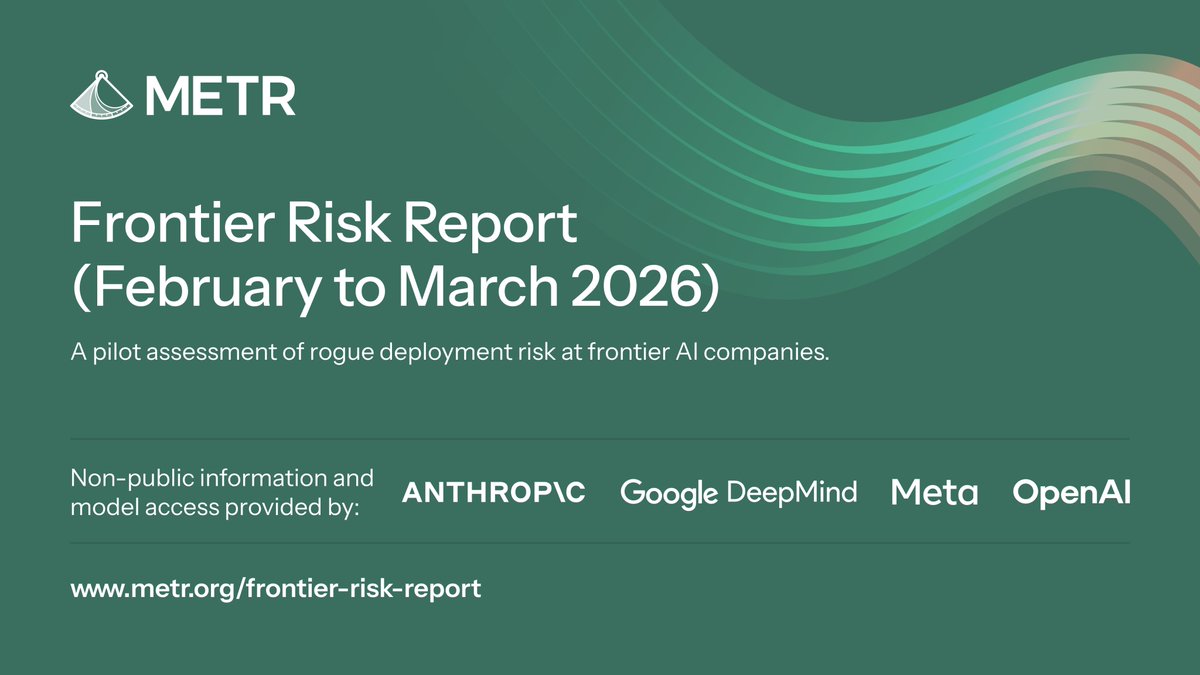
Could an AI company lose control of its own agents? To find out, Anthropic, Google, Meta, and OpenAI let us (1) test their best internal models with CoT access, (2) review non-public info about capabilities, alignment, and control.
The result: our first Frontier Risk Report.
I've spent the past few weeks reading 100s of public data sources about AI development. I now believe that recursive self-improvement has a 60% chance of happening by the end of 2028. In other words, AI systems might soon be capable of building themselves.
In yesterday's FT interview Dario Amodei said that he suspects open-source models and Chinese developers will be able to replicate Mythos's capabilities within six to 12 months.
Kind of crazy. I had a rough idea for an Erdős problem, gave it to GPT-5.4 Pro, went for a walk, came back to a solution. I verified it, formalized it with Aristotle from @HarmonicMath together with @Tomodovodoo. Incredible how powerful these tools are in the right hands!
We are pleased to share that we have successfully demonstrated the ability to increase lucidity in dreams.
This critical milestone opens the door for our devices to ship soon.
🚀 Muse Spark Safety & Preparedness Report for Meta AI is out.
We start with our pre-deployment assessment under Meta's Advanced AI Scaling Framework, covering chemical and biological, cybersecurity, and loss of control risks. Our assessment flagged potentially elevated chem/bio risk, so we implemented safeguards and validated mitigations before deployment - bringing residual risk to within acceptable levels.
Beyond the Framework, we also share findings and early explorations of model behavior (honesty, intent understanding, etc.), jailbreak robustness, eval awareness, and more.
We're sharing this report to give a closer look at how we evaluate advanced AI safety. Always more work to do, and we welcome feedback from the community.
https://t.co/azpKHwu7x9
"Mythos found a 27-year-old vulnerability in OpenBSD—which has a reputation as one of the most security-hardened operating systems in the world and is used to run firewalls [...] The vulnerability allowed an attacker to remotely crash any machine running the operating system"
We do not plan to make Mythos Preview generally available. Our goal is to deploy Mythos-class models safely at scale, but first we need safeguards that reliably block their most dangerous outputs.
We’ll begin testing those safeguards with an upcoming Claude Opus model.
1/ Excited to share our new Nature paper: Functional hierarchy of the human neocortex across the lifespan
We built a continuous normative reference for the brain’s major functional connectivity gradients from 16 days after birth to age 100.
https://t.co/PqeN4tvbde
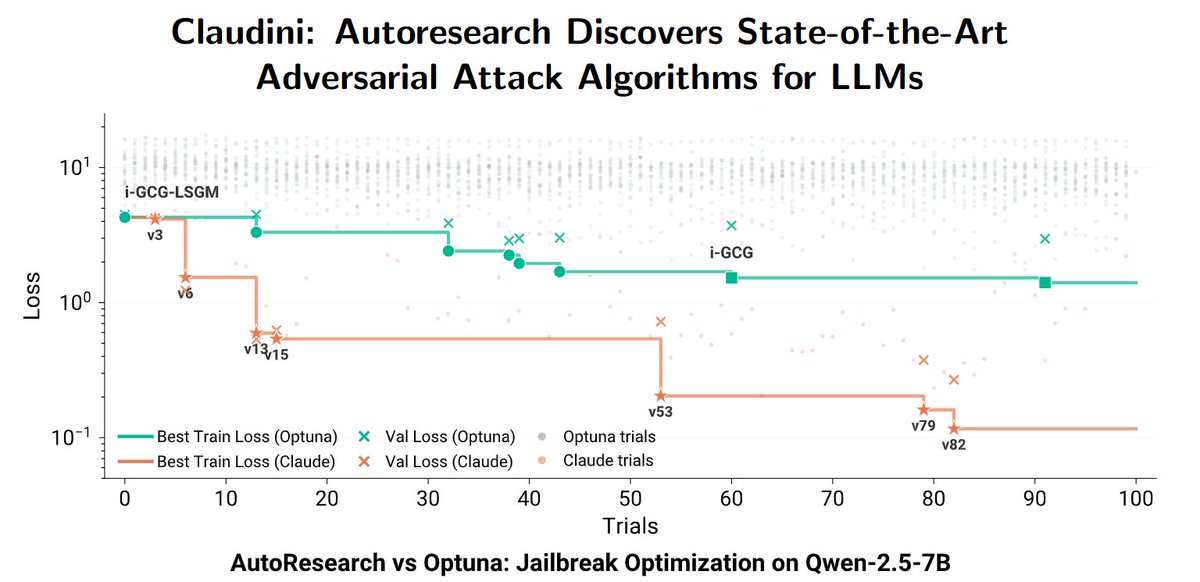
New paper: We deploy Claude Code in an autoresearch loop to discover novel jailbreaking algorithms – and it works. It beats 30+ existing GCG-like attacks (with AutoML hyperparameter tuning)
This is a strong sign that incremental safety and security research can now be automated.