It's really, really important to have organized and conceptually worked discourses to establish anything in the discoursiv circuits. It's not just an intellectual play, it gives representational structure to phenomenons that could not even be perceived if there weren't the text.
Why Beeple Isn’t the Disruptor and The Hidden Power Struggle Behind 0.10 @ArtBasel
I’ve read many posts calling the Beeple piece, and the digital art at 0.10 more broadly, “disruptive.” That feels overstated. Art Basel Miami 0.10 show will probably be remembered as a major step forward for this scene, yes.
The Beeple piece was a clever, attention-grabbing, ironic work that plays with public figures while hinting at the power structures they embody. But art history is filled with far more radical breaks. Anyone with a modest grasp of contemporary art knows this isn’t where disruption sits. Which is perfectly fine. It doesn’t need to be.
The problem is that these conversations risk distracting from the real disruptive story behind these artists. Their success emerged through decentralised networks and NFTs. The true disruptive force is not the aesthetics of a single artwork but the architecture that empowered them. That disruption is twofold, and the second point is the one that still lacks proper acknowledgement:
1. A new collector class emerges
Collectors began acquiring digital art without the validation from the traditional art world, often at prices many galleries only dream of. If 0.10 in Miami felt “disruptive,” it was because a long-brewing tension between NFT collectors and the old guard finally surfaced publicly, both in the fair and on social media. Seeing NFT artists shown alongside traditional ones signalled a symbolic power shift, one that carries a quiet question beneath it: will traditional art players now retroactively validate the high valuations that emerged entirely outside their influence?
2. A new set of digital-native narratives
Blockchain opened a space where artists could develop practices outside the control of the traditional players. These narratives are still forming and rely on tools the traditional art world has little to no understanding of.
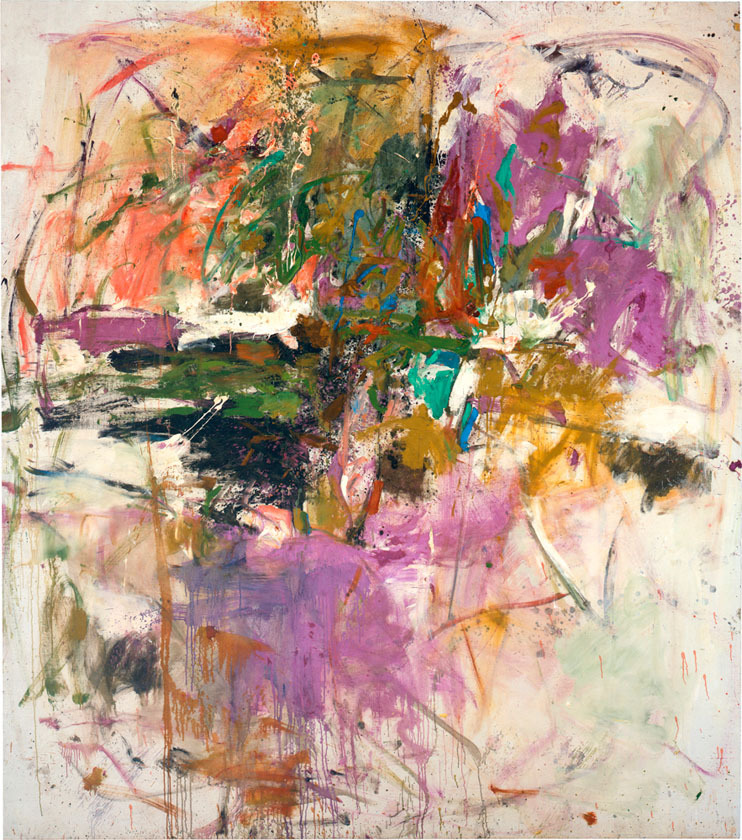
For me, these past years in digital art echo the moment when modernist painters stopped treating the canvas as a site for mostly representation and instead turned it into a field for impressions, gestures, and personal expression. Today’s digital artists do something analogous: they treat the screen as an open expressive field, and the network, software, interfaces, and computational systems as material to be critiqued, manipulated, and transformed. The screen is finally severing its utilitarian function as a display window and becoming an artistic surface in its own right.
Artists work with pure tokenised pixels, glitch, dither, compression, browser logic, and the aesthetics of digital error to expose the systems behind the image, or to use those digital errors and limitations as creative tools (@kimasendorf , @andreasrau_eu , @ALCrego_ , @lennyjpg , @5tr4n0 , Waffles, @ttiimmees , @martnbruc , @YuranYakon , @ex_mortal_ , @Nicolas_Sassoon , @uncertaingaze , @kerimsafa , @sabatobox , @cydr ,RusticDigitArt, chepertom and many more).
Others explore how politics of perception are embedded in software and apps in many different ways (@SHL0MS , @_wetbox , @JanRobertLeegte , @mayaonthenet , @lm_netwebs , @Yuri_jjjj , Waffles, @alexmayarts , @GregNikshumika , @daniloxhema ,@100o111 , madebyoona, 777humdrum777 and many others).
Some reinterpret cultural history, memory, and identity through digital frameworks to see what remains once it is filtered through the computational lens (@RJ16848519 , @nikitadiakur , @pocobelli , @__scerbo__ and many others).
Long-standing questions around representation in art need to be fundamentally rethought once image-making passes through code or AI (@pointline_ , @qubibien , @zancan , @REAS , @manoloidee , @quasimondo , @skomra , @skygolpe ,@VanArman ).
Networks themselves become creative material rather than infrastructure (@crashblossom1 , @kevinabosch , @_deafbeef , @mitchellfchan , @SHL0MS , @isthisanart_ ,).
And once a digital object becomes an on-chain NFT, its ontology and phenomenology shift in ways that have never been explored before by artists like mitchellfchan , @mathcastles , Rutherford Chang, and @sovrnart .
Or some artists who simply use these new distribution railways to make art and talk about our world and how digital systems shape us (@toadswiback , @beeple , waffles, SHL0MS , and many others)
This list barely scratches the surface, but it already shows how rich, varied, and intellectually ambitious this decentralised scene has become. And how largely unknown all of this still is to the outside world, even though many of these developments rhyme with moments from art history.
Art Basel Miami was an impressive achievement, and @eli_schein , fellowshiptrust, artblocks, @redbeardnft , AspreyStudio , bitforms , artxcode_io , heft_gallery , miminguyenmimi , onkaos__ , , leyla_solos, UBS , jackbutcher , created something meaningful.
But as their work paves the path, we also carry a responsibility. We should learn to look past the sensational stories that dominate the feeds and give our attention instead to the quieter, deeper narratives in this space. In the end, the culture we build will reflect the parts of the movement we choose to elevate.
* A sincere apology to the many important artists I haven’t mentioned here but whose work speaks directly to the themes I’ve raised. And apologies to the artists I mentioned here, the categories are rough, and your practices are far richer than these brief descriptions suggest. My aim is simply to give a face to some of the developments unfolding in this scene.