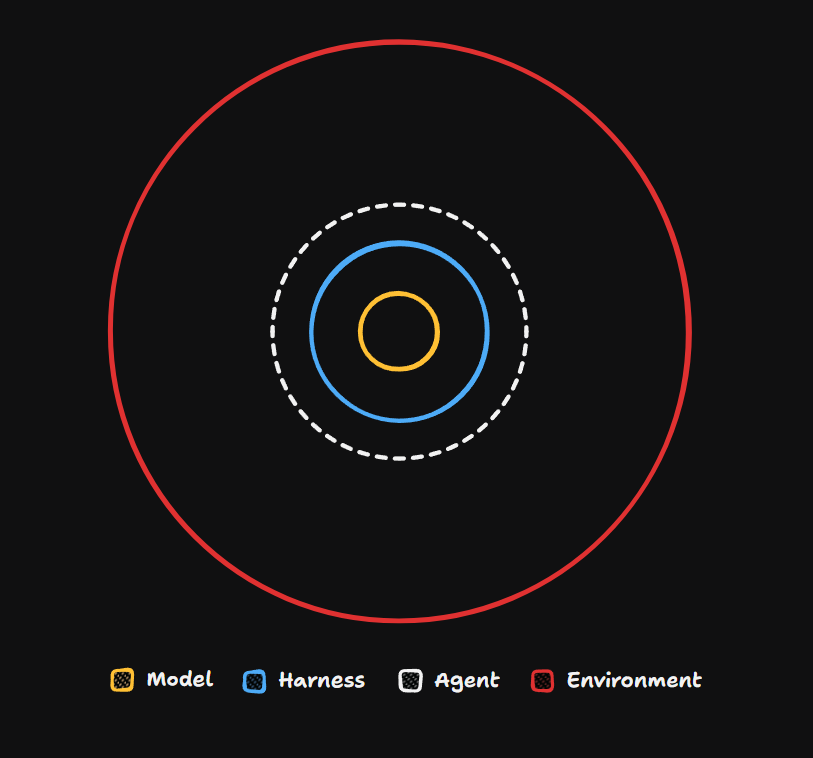
When using agents, ensure that everything that can be deterministic, is done with a deterministic tool. Don't try to get the poor agents to follow a deterministic process.
We're starting to leave the territory where you'd test an LLM by e.g. "create an svg of pelican on a bicycle". As one idea to generalize it, I was interested what Opus 5 would do if I gave it the first paragraph of the Lord of the Rings, a 1M token budget (~$10) and asked for three js render of it. Opus went off for ~2 hours and wrote 5500 lines of code that (procedurally) rendered the story. It's kind of janky but fun. But it's a bit mindboggling that the LLM has to place and orchestrate various polygon assets in (x,y,z) coordinates and write code that animates it all, and that it even does anything at all.
I also like this kind of examples because no one in their right mind would ever spend the time to write something this custom but LLMs have all the stamina and patience in the world, so it's an example where we go from "no one would ever do this" to "sure, why not, it's ~free". There might be a lot more. But I'm excited about creating hyper custom worlds that you can imagine dropping players into, e.g. here to participate in the LoTR story as a spectator NPC, or one of the characters, or etc. Something like an ephemeral GTA of X on demand.
Last thought is that the domain of worlds/games exposes a weakness in LLMs: they can't easily audit their work because they aren't able to efficiently and natively perceive videos or play games within them. Here, Opus 5 had to very slowly and painstakingly take screenshots at different points, and it messed up a few times and created a bunch of jank. An example of raw capability (multimodal, gameplay) that I think is still quite lacking.
🔴 ¡10 DESCUBRIMIENTOS POR OPENAI!
OpenAI acaba de publicar diez avances relevantes en problemas de diferentes áreas de matemáticas y computación descubiertos autónomamente con la próxima evolución de sus modelos GPT, Astra.
La nueva normalidad es que la IA sea extraordinaria a nivel de investigación matemática, en cada iteración mejorando sus capacidades y hoy se vuelve a demostrar.
Hay resoluciones completas, refutaciones de conjeturas, mejoras en asíntotas, etc. Un poquito de todo.
Fijaos que el ritmo de frecuencia de la llegada de estos avances se está acelerando. De titulares sueltos cada 2-3 meses, a anuncios semanales. Erdos Problems. First Proof. Frontier Math Open Problems. Y ahora con 10 avances originales de golpe, donde la idea matemática y el argumento procede directamente de la IA.
¿Cuánto ha costado esto? Pues dicen sólo 2000 dolares a precios de API de Sol para los 10 problemas! Esto claro entiendo se refiere a la generación de los argumentos, formalización, etc, y no la búsqueda inicial de posibles problemas que puedan ser fructíferos.
Pero wow aún así!
Como llevo repitiendo los últimos meses, esto es quizá lo más importante que está pasando este 2026 en el mundo de la IA, aunque no se le suela dar el foco que merece.
Vivimos pensando que las cosas son inmutables, pero basta con mirar un mapa de Europa de hace 110 años. 110 años no son nada, son 3 generaciones.
Voy a contaros qué es el “sesgo de estabilidad”.
El sesgo de estabilidad, que va de la mano de la ilusión de permanencia y del sesgo de status quo, es una de esas trampas mentales que nos pone el cerebro. Es la tendencia automática a asumir que el mundo tal y como lo tenemos ahora (político, económico, tecnológico o personal) es lo normal, lo natural, y que más o menos se va a quedar así. Es exactamente por lo que en 1910 a casi nadie se le pasaba por la cabeza que el Imperio Austrohúngaro se iba a descojonar en cuatro años. Por lo que en 1985 la gente miraba la URSS y pensaba “esto es para siempre”. Y por lo que hoy nos cuesta un huevo imaginar un mundo sin smartphones o sin internet. Como si esto de ahora fuera el final del camino y no otro tramo más.
No es que seamos tontos. Es diseño evolutivo. Nuestra cabeza está hecha para calcular cosas simples( Elleón corre a X, llega en Y segundos). Trayectorias rectas. El problema es que la historia, la tecnología y la geopolítica no funcionan así. Van a saltos, por puntos de inflexión y por disrupciones que se van acumulando hasta que de repente todo se mueve.
Estar todo el rato imaginando que las reglas del juego pueden cambiar mañana es un gasto brutal de batería mental y genera ansiedad. Asumir que “mañana va a ser más o menos como hoy” te permite vivir el día a día sin volverte loco. Es eficiente… hasta que deja de serlo. Además, psicológicamente tendemos a ver el presente no como un paso intermedio, sino como el destino final. Reconocemos que el pasado cambió un montón, pero de forma inconsciente sentimos que “ahora ya hemos llegado”. Que esto ya es lo definitivo.
Ese sesgo nos deja ciegos en puntos clave. En los negocios y la tecnología hay ejemplos mil. Kodak dominaba la fotografía química y pensó que lo digital tardaría décadas. Nokia tenía el móvil en el bolsillo de medio planeta y no vio venir la pantalla táctil. En las finanzas personales y la economía pasa igual; después de años de bonanza la gente se endeuda como si no hubiera un mañana, porque el cerebro asume que el empleo y la estabilidad van a durar siempre. Y en la vida personal nos cuesta preparar contingencias (salud, cambios de carrera, lo que sea) porque sentimos que nuestro estilo de vida actual es una constante inmutable. Hasta que no lo es.
Para combatir esta ilusión de permanencia hay un par de ejercicios mentales que funcionan bastante bien. El primero es ampliar el zoom histórico y recordar que lo que llamamos “normalidad” suele ser solo una ventana de 30 o 40 años en un mar de cambios convulsos. El segundo es el análisis Pre-Mortem. En vez de preguntarte “¿cómo mantengo esto estable?”, te preguntas: “Si todo este sistema se fuera a la mierda en tres años, ¿cuáles habrían sido las causas que hoy estoy ignorando por exceso de confianza?”.
Al final la estabilidad no es la regla del universo. Es la percepción que tenemos de la velocidad del cambio mientras está ocurriendo.
Generalmente los cambios son graduales, pero en determinado punto la suma de cambios graduales genera una aceleración que suele venir de la mano de violencia y otras fricciones motivadas por el cambio (que en ese punto es inevitable). Mi consejo es que asumáis que es inevitable y os preparéis para la fricción.
As much as i love automation with Hermes and ai agents, i agree- post your own slop yourself. If someone wanted llama 5b’s responses to their thoughts, theyd ask it themselves.
El tío Bob, uno de los programadores más influyentes de la Historia, autor de Clean Code, ya no lee ni una línea del código que producen sus agentes pero tú Manolo sigues sin confiar en la IA para programar.
La gran noticia de ayer es esta, una nueva evidencia de algo que llevamos tiempo defendiendo: que las capacidades de razonamiento matemático de la IA ya excede a la mayoría de humanos hasta el punto de ofrecernos breakthroughs relevantes.
Todo comenzó con este tuit aparentemente inocente de un investigador de Anthropic, que anunciaba que una IA había encontrado un contraejemplo para una famosa conjetura matemática planteada en 1939.
Hablamos de un problema que llevaba casi 90 años abierto, que había resistido numerosos intentos de demostración y que ocupaba un lugar importante dentro del álgebra y la geometría.
Bueno.
La IA se la ha ventilado :)
Empieza a ser la norma y no la excepción ver cada 1-2 meses titulares como este. Y a más mejoren las capacidades de los futuros modelos, más nos acostumbraremos a algo que en realidad es de película de ciencia ficción.
La frontera empieza a desplazarse: la IA ya no se limita a aprender las matemáticas descubiertas por los humanos, sino que ya participa activamente en el proceso de descubrir otras nuevas
(os comparto algunas reacciones de la comunidad)
you'll call this cringe and then you'll find this tweet in 7 yrs so that's fine
with live voice api and the intelligence of current models i can feel how we gonna eventually fuse with technology, it's inevitable
i can speak about a 3d model i have in my head and it will come alive in my 3d printer. very slowly, but it will
i can speak out loud and things happen in my house from lights to switches etc, i can pair and rename new devices just by speaking about them
i speak out loud and get instant answers about anything in real time. my brain and memory are not the limit anymore
i speak out loud and new apps appear on various devices across my home
i speak out loud and new home automations are getting wired in the background and i don't even know where or how and i dont care they just work
one day all of these processes will be super seamless and instant and we'll just be one with technology
there's never been a better time to be in it and so deep in this ai bubble
most ppl have no idea what's going on and what's possible
generational wealth is being created now
it's just so hard to think clear and do the right thing from all the things going on :D
Added a little something to help you if you’re working on multiple projects.
Your favicon now shows when:
🔵 Lovable is building
🟠 Your input is needed
🟢 Task is completed
I'm pretty bad at a lot of things but one thing I've (accidentally or not) have been pretty good at is being early at trends
A lot of these trends are in my head in some way and I wanted to visualize those on a chart. So I built another dynamic blog post (on my new vibecoded blog platform that lets me do these kinds of pages) with this chart above. The first disclaimer of course is this is completely subjective and essentially a chart based brain dump. And the second disclaimer is I don't think I'm right, it's just my own beliefs visualized!
I'll keep updating the chart
You can select different trends on the legend or by clicking on a line, and you can also go fullscreen! Also you can select [x] indexed view which is pretty cool too :D
Let me know what I should add or change!
https://t.co/9CCFoSj7Gf
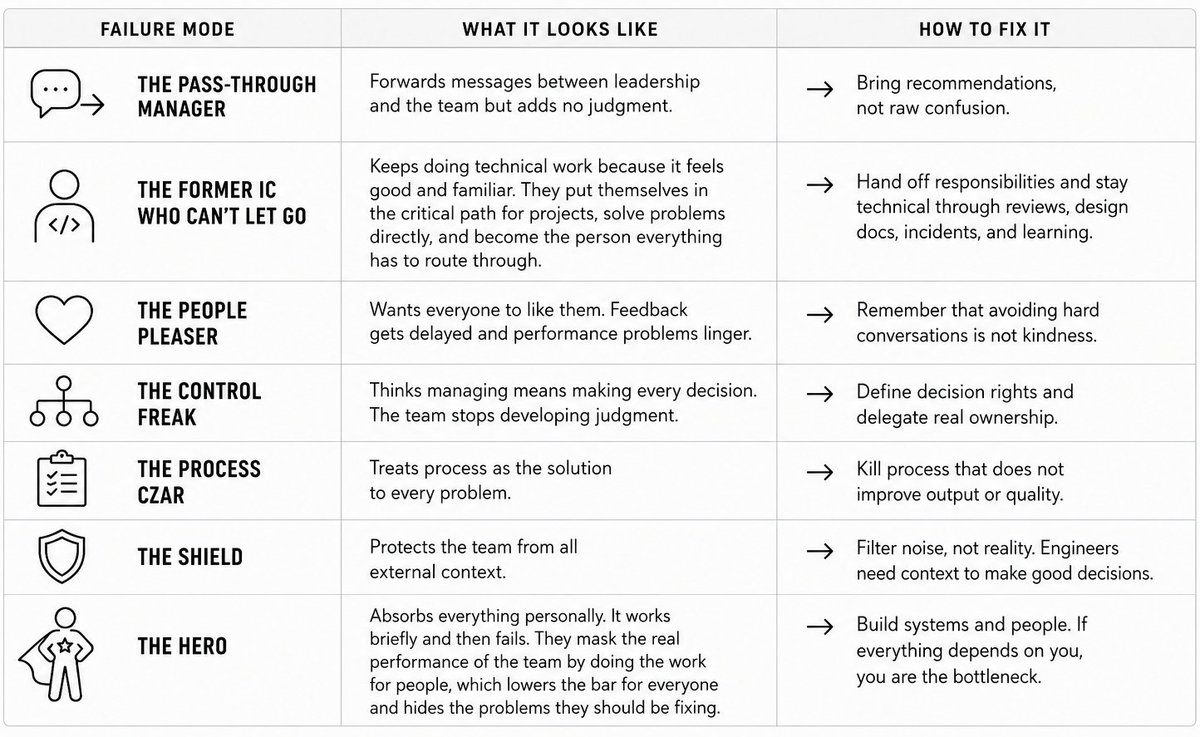
These are the management mistakes I see over and over. Doesn’t matter whether you’re new or have years of experience. Also not uncommon to fall into more than one at the same time.
New block in Notion: HTML.
Build interactive HTML right on your Notion page. Ask AI to turn your content into interactive explainers, prototypes, or diagrams.
Share with your team to use and tinker together.
OpenClaw is now on iOS + Android 🦞
📱 Native mobile apps, finally
💬 Agents in your pocket
🔔 Channels, tasks, replies on the go
Run agents from wherever your thumbs are.
iOS: https://t.co/7LHHc9htgM
Android: https://t.co/X0Wuh2uA8w
We fill our days mostly on things that are trivial next to what we ultimately care about. We know, deep down, however, that in the noise of it all, health is easily forgotten until it’s the only thing that matters.
We spend a fraction of our lives truly sober to the preciousness of life. We feel it when someone we love dies, when a child is born, when we come close to death ourselves, or when a diagnosis marks our limit. In those moments, we are sobered, and the rarity of it all becomes self evident. Imagine the existence we’d build together if that clarity didn’t fade.
I wish all of you the very best. Care for yourself, care for others, care for the planet and care for our animal friends. Care for life as it’s the most precious gift there is.
Remote work has A LOT of problems. The biggest one is that people assume anyone can do it.
Everyone wants to wfh, but only a minority are self-motivated enough to thrive. That means you need better screening, more perf management, and ultimately better managers.
Overall, in-person (or at least same-timezone) is a lot less painful.
But when you get the people, processes, and culture right across 8–10 time zones, something pretty magical starts happening.