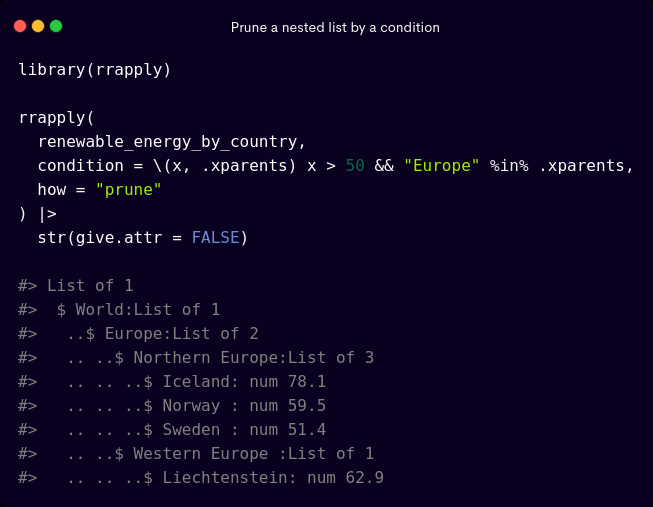
A new {rrapply} 📦-version is available on #cran: a minimal (dependency-free) revisit of rapply() for efficient recursion through nested lists and expressions in #rstats.
🔗: https://t.co/EIifmldLov
This week's #TidyTuesday on #Eurovision: Country biases in televoting ☎️
Nordic countries consistently award extra points to their closest neighbors. Balkan countries are generally not big fans of the Nordics...
code: https://t.co/08VgD42iAA
#RStats#ggplot2#dataviz
@WillBall12 Interesting! For nose-dives one could check for large negative first-order differences/derivatives. For e.g. double peaks I guess you could remove the global/mean trends and then check for specific local artifact structures in the residual time series
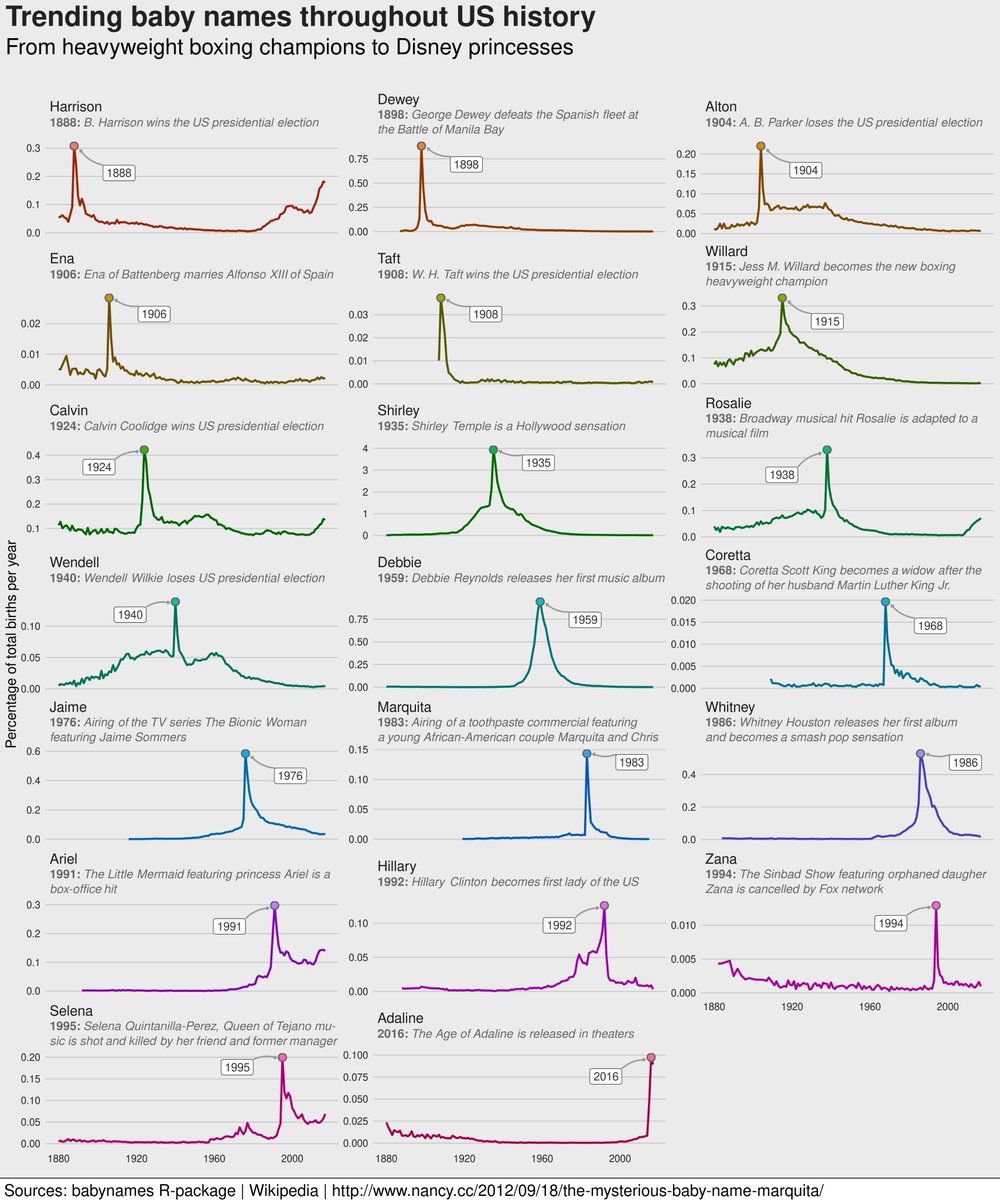
For this week's #TidyTuesday:
Highlighting several baby names with short peak popularity throughout US history.
My personal favorites:
🪥 1983 - Marquita (https://t.co/RBO8zdHRwB)
🧜♀️1991 - Ariel
Code link: https://t.co/7SPmNltn7q
#RStats#ggplot2#dataviz
@richard_vogg Thanks! I took second-order differences of all time series and then looked for the names with a maximum absolute value that was very large relative to the standard deviation (of the second-order differences).