This new review challenges one of nutrition’s most popular beliefs: that gluten is the primary cause of “gluten sensitivity.”
A 2025 review in The Lancet Gastroenterology & Hepatology looked at more than 50 studies on non-coeliac gluten sensitivity (individuals who report intestinal or extraintestinal symptoms after eating gluten but test negative for coeliac disease and wheat allergy).
Findings:
- Approximately 10% of adults self-report gluten or wheat sensitivity.
- Yet, in blinded challenge studies, only 16–30% of these individuals experience symptoms when given gluten alone.
- For most, symptoms are triggered by fermentable carbohydrates (FODMAPs) such as fructans found in wheat, onions, and garlic; or by nocebo effects, where the expectation of discomfort produces real physiological distress.
Mechanism:
When the brain anticipates that a meal will cause harm, gut sensory pathways amplify normal sensations, making minor distension or gas feel like pain or urgency.
This interaction between the gut and brain [mediated by attention, anxiety, and learned responses] explains why symptoms are genuine, even when gluten is not the trigger.
Clinical relevance:
non-coeliac gluten sensitivity remains a diagnosis of exclusion. True gluten sensitivity appears uncommon, and in many patients, symptoms align with gut–brain interaction disorders such as irritable bowel syndrome.
Effective management often combines low-FODMAP dietary strategies with psychological support to reduce hypervigilance and food-related anxiety.
Unnecessary gluten avoidance can carry costs.
Gluten-free products are 139% more expensive on average, often lower in fibre, iron, and B vitamins, and can reduce microbial diversity.
For most who feel unwell after bread or pasta, gluten isn’t the culprit; gut–brain sensitivity and, to a possibly lesser but still notable extent, short-chain fermentable carbohydrates are.
At the NASA space science center, there's a poster with bees that reads:
"The aerodynamic body of a bee is not suited for flight, but it's good that the bee doesn't know this."
The law of physics, the aerodynamic principle, states that the wingspan is too small to keep its massive body aloft in flight, but the bee doesn't know—she knows nothing about physics or its logic—and yet she flies anyway.
This is what we all can do: fly and triumph at any moment, in the face of any difficulties and under any circumstances. Bees—regardless of the size of your wings, fly and enjoy life.
French engineers in Normandy have developed a vertical, bladeless wind turbine known as a vortex wind generator or "aeroleaf". This innovation generates energy from vibrations caused by wind, rather than from traditional rotating blades.
Traditional wind turbines are large, noisy, and often pose risks to wildlife.
This design is quiet, safe for birds, and perfectly suited for urban environments.
Without blades, the turbine can be installed on rooftops or tight city spaces, providing clean, decentralized energy without disturbing residents or ecosystems. Its innovative mechanism captures wind energy in a compact, efficient, and environmentally conscious way.
Dogs who experience neglect as puppies are more likely to be fearful and aggressive in adulthood, suggests research in @SciReports. https://t.co/scOsyvaDuo
The gut-brain axis is a bidirectional communication network between the gastrointestinal tract and the central nervous system. This dynamic system integrates neural, endocrine, immune, and metabolic signals, many of which are modulated by the gut microbiota.
🧠 1. Neural Pathway
The vagus nerve and enteric nervous system (ENS) transmit afferent signals from the gut to the brain. Microbial metabolites and host-derived neurotransmitters (e.g., serotonin, dopamine, GABA) influence mood, cognition, and stress responses. Enteroendocrine and enterochromaffin cells release neuroactive compounds in response to microbial cues.
🧬 2. Endocrine Pathway
The gut microbiota modulates HPA axis activity through changes in gut barrier integrity, circulating metabolites, and stress hormones. Cortisol, released from the adrenal cortex, affects both systemic inflammation and brain function. Microbiota-regulated hormones such as GLP-1, CCK, and ghrelin further influence appetite, mood, and behavior.
🦠 3. Immune Pathway
Microbial antigens (PAMPs) and metabolites interact with intestinal immune cells (e.g., Th1, Th17, dendritic cells), influencing systemic and neuroinflammatory tone. Elevated cytokines like TNF-α, IL-1, and IL-6 have been linked to blood-brain barrier disruption, depression, and cognitive impairment.
🔁 4. Metabolic Pathway
The gut microbiota ferments dietary components (e.g., fiber, protein, bile acids) into signaling molecules including:
-SCFAs (butyrate, propionate)
-Secondary bile acids
-Branched-chain amino acids (BCAAs)
These metabolites affect energy regulation, neurotransmission, and epigenetic signaling within the CNS and peripheral tissues.
The Fourier series is a way to represent any periodic function as a sum of simple sine and cosine waves.
In essence, it breaks down complex signals into a combination of basic trigonometric functions, making it a powerful tool in mathematics, physics, and engineering for analyzing waveforms, heat transfer, vibrations, and more.
📹 Credit : mathswithmuza
Want to build a better understanding of how LLMs work? Shuyang Xiang’s hands-on guide provides a practical experiment to find universal neurons, helping you to interpret the function of neurons within a transformer’s MLP block.
https://t.co/cpakcXBZ0R
*The Origins of Representation Manifolds in LLMs*
by Modell et al.
They study the presence of "interpretable features" in LLMs embedded as manifolds and how their geometry connects to the internal representations of the models.
https://t.co/htskNJCllc
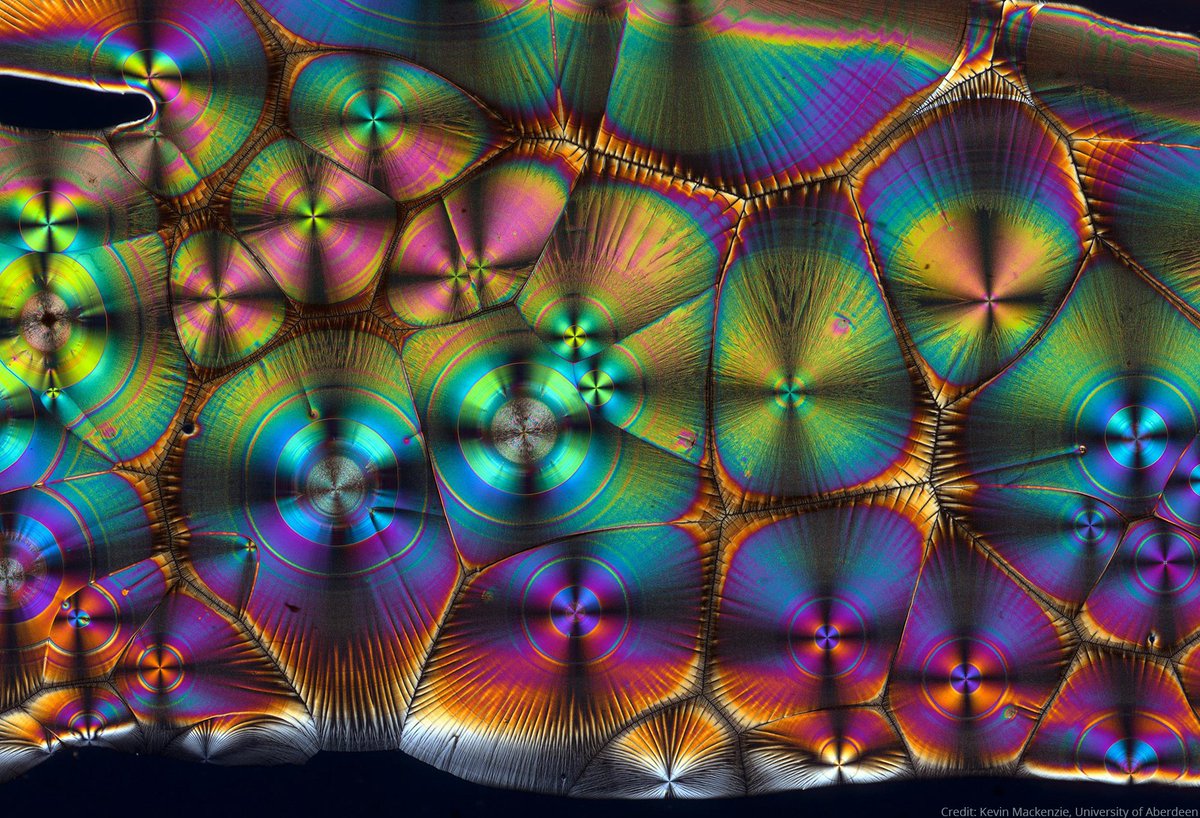
Can you guess what this picture is? It's an image of vitamin C, taken with polarised light.
Vitamin C led to both the 1937 medicine and chemistry prizes: to Albert von Szent-Györgyi who first isolated it, and Norman Haworth for determining its molecular structure.
While generative AI is widely accessible and useful, businesses need to know when to use other AI tools, like traditional machine learning.
Learn more: https://t.co/D6qs0oeKij
An exquisite Ilkhanid dynasty bowl from Iran 🇮🇷 (late 13th–mid 14th Century AD). This period followed the Mongol invasions, and Ilkhanid art is known for its blend of traditional Persian and Chinese artistic influences.
The bowl is made of stonepaste, a type of fritware or composite ceramic body developed in the Islamic world. The process involved mixing finely ground quartz or glass frit with a small amount of white clay and glaze, which resulted in a very hard, white body that was a good substitute for Chinese porcelain. The intricate designs on the bowl were created using a technique called black-under-turquoise glaze. This method involved painting black pigment onto the unfired stonepaste body and then covering it with a transparent turquoise glaze. When fired, the black designs would show through the vibrant blue-green color of the glaze, creating a striking visual effect.
The bowl reflects sophisticated ceramic techniques and aesthetic of the Ilkhanid period, blending Persian, Mongol, and Islamic influences. The interior is adorned with a swirling pattern of fish, a common motif in Islamic art, possibly symbolizing fortune and wealth.
The bowl's creation during Ilkhanid dynasty is particularly significant. The Mongol conquest of Persia led to new artistic exchanges, with Chinese motifs such as dragons and phoenixes appearing in Persian art. However, this bowl's style, with its elegant floral and geometric patterns, more closely aligns with established Persian decorative traditions, showcasing the continuity of Islamic art forms even under new rule.
This significant piece of medieval Persian craftsmanship is currently on loan to the Museum of Fine Arts, Houston, highlights its importance to the study of Islamic art and the history of ceramics.
#archaeohistories
Dabous Giraffe Petroglyphs, Neolithic Sahara (c. 6,000–8,000 years ago): two life‑size giraffes engraved and pecked into a sandstone outcrop at Dabous in the Aïr Mountains, Agadez Region, Niger. Photo credit : David Coulson / Trust for African Rock Art (TARA); the British Museum catalog lists Coulson as the photographer for the Dabous series.
Being kind boosts mental health more than seeking joy.
Evidence: Doing 3 random acts of kindness a week is enough to reduce depression, anxiety & loneliness. It's more beneficial than doing nice things for yourself.
Self-care feels good, but generosity builds lasting bonds.


![WilliamWallace's tweet photo. This new review challenges one of nutrition’s most popular beliefs: that gluten is the primary cause of “gluten sensitivity.”
A 2025 review in The Lancet Gastroenterology & Hepatology looked at more than 50 studies on non-coeliac gluten sensitivity (individuals who report intestinal or extraintestinal symptoms after eating gluten but test negative for coeliac disease and wheat allergy).
Findings:
- Approximately 10% of adults self-report gluten or wheat sensitivity.
- Yet, in blinded challenge studies, only 16–30% of these individuals experience symptoms when given gluten alone.
- For most, symptoms are triggered by fermentable carbohydrates (FODMAPs) such as fructans found in wheat, onions, and garlic; or by nocebo effects, where the expectation of discomfort produces real physiological distress.
Mechanism:
When the brain anticipates that a meal will cause harm, gut sensory pathways amplify normal sensations, making minor distension or gas feel like pain or urgency.
This interaction between the gut and brain [mediated by attention, anxiety, and learned responses] explains why symptoms are genuine, even when gluten is not the trigger.
Clinical relevance:
non-coeliac gluten sensitivity remains a diagnosis of exclusion. True gluten sensitivity appears uncommon, and in many patients, symptoms align with gut–brain interaction disorders such as irritable bowel syndrome.
Effective management often combines low-FODMAP dietary strategies with psychological support to reduce hypervigilance and food-related anxiety.
Unnecessary gluten avoidance can carry costs.
Gluten-free products are 139% more expensive on average, often lower in fibre, iron, and B vitamins, and can reduce microbial diversity.
For most who feel unwell after bread or pasta, gluten isn’t the culprit; gut–brain sensitivity and, to a possibly lesser but still notable extent, short-chain fermentable carbohydrates are.](https://pbs.twimg.com/media/G4CZeXkWAAAvtLw.jpg)