A thread about mental health.
We keep hearing it's good to talk but how do we enable this? Saying 'how are you?' or 'just ask and I'm willing to listen' doesn't quite work. People need to feel safe and have 'permission'.
So what does that actually look like? (/1)
@parishrecluse Your picture positioning would make them cramp the space. Something fabric would soften things (the photo is great but probably starker in situ). Perhaps Roman blinds in a natural colour to match the sofas, unless you happened to find a simple modern fabric with a dash of orange
Karen Hao on why "empire" is the right framework for understanding AI companies:
Karen Hao argues that the AI industry can only be properly understood through one specific lens.
"Empire is the only metaphor that I've ever found to fully encapsulate all of the dimensions of what these companies do and the scale that they operate and what motivates them to do what they do."
She draws direct parallels between what she calls "the empires of AI" and the empires of old, identifying three specific patterns.
First, resource extraction.
"They lay claim to resources that are not their own in the pursuit of training these models. That's the data of individuals, the intellectual property of artists, writers, and creators."
She adds that this land-grabbing extends to physical infrastructure, with companies seizing resources to build the supercomputer facilities needed to train next-generation models.
Second, labor exploitation.
"They contract hundreds of thousands of workers all around the world, including in the US, to ultimately make these technologies."
But the labor dimension goes deeper than just contracting workers. Hao explains that the technology itself is designed with a specific intent:
"They also design their tools to be labor automating so that when the technologies are deployed, it also affects labor rights because it erodes away labor rights. And this is a political choice that they have."
Third, knowledge monopolisation.
"They monopolize knowledge production. So they project this idea that they're the only ones that really understand how the technology works. And so if the public doesn't like it, it's because they don't actually know enough about this technology."
According to @_KarenHao, this monopolisation operates on multiple fronts directed at the public, at policymakers, and through the research community itself:
"They've also captured the majority of the scientists that are working on understanding the limitations and capabilities of AI."
Hao's framework suggests that when we evaluate AI companies, we shouldn't just look at their products or their stated missions. We should ask the same questions historians ask of empires whose resources are being claimed, whose labor is being exploited, and who controls the narrative about what's really happening.
If she's right, the most important debates about AI aren't technical ones. They're political.
@gerrylynch@ChurchTimes Can't say I've seen that. If anything, the opposite: lots of post-evangelicals become charismatic catholics, which is probably where I am. We retain doctrinal orthodox but are progressive ethically, and the a/cs welcomed us and our questions in
@dieworkwear It was also a school rule in the UK to have dark socks with normal school uniform, because otherwise boys would wear their white sports socks all day after doing games and they were sweaty and stank!
@LindaBerman4 Curious. I normally love Yalom, but no.2 is the perspective of affluence, and no.4 ignores attachment theory. I think you can nuance them and refine them, but as bold statements I find them a little wanting
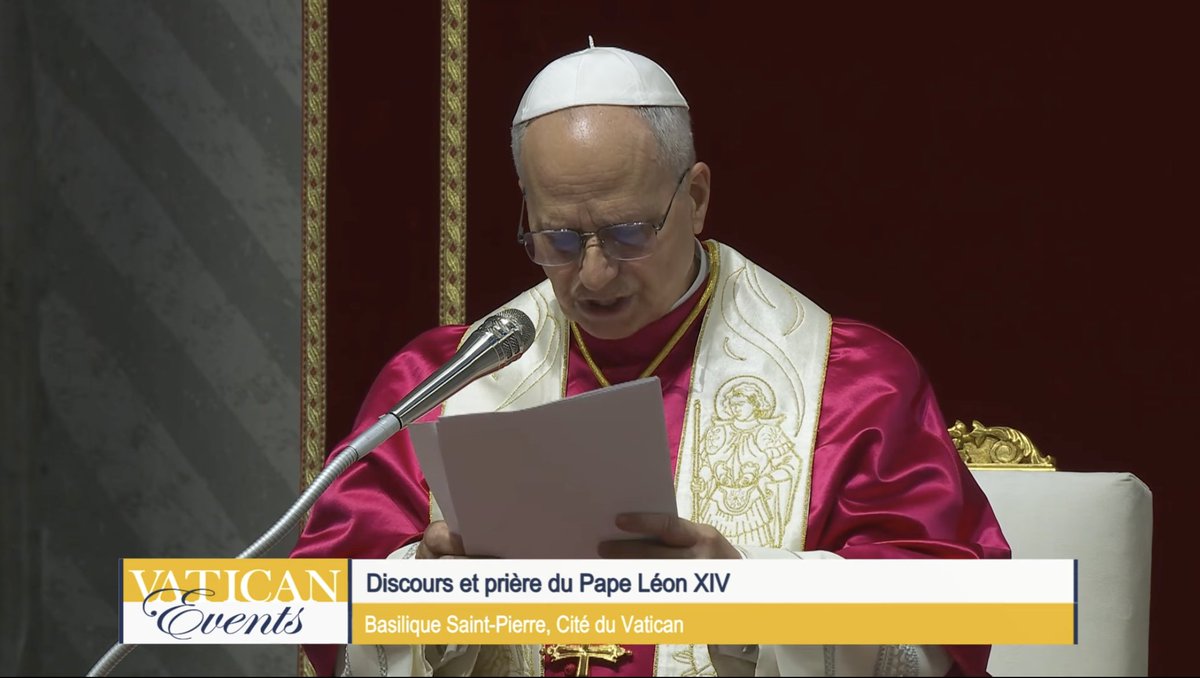
Wow. The Pope was just asked his stance on migration. His answer is amazing:
“I would change the question: what is the global North doing to help the global South in its situation that forces them to migrate.”
@Rgt71Robert@kimleadbeater@churchofengland Indeed, and our democratically elected house has generalists in it. This was the other house at its best: experts in their fields (of which the bishops are ethicists and theologians) addressed a deeply flawed bill. I'm for reform to avoid a chamber of political cronyism
God’s heart is torn apart by wars, violence, injustice and lies. But our Father’s heart is not with the wicked, the arrogant, or the proud. God’s heart is with the little ones and the humble, and with them He builds up His Kingdom of love and peace day by day. Wherever there is love and service, God is there. #ApostolicJourney #Algeria
“I receive letters from children in war zones every day. They tell of the pain and sorrow of war, while grown-ups boast of its effects.
“We must instead listen to the children.” — Pope Leo XIV
@KingCrawa@2D0XPS@liambeadle@thevicarswife@tapanisimojoki@liturgicalben people stay in church even if the former get them in the door. Of course we want the perfect package, compassionate inspirers. We see that in the ads for clergy! But let's pray for the Holy Spirit, let's disciple our congregations so people want to join them. It's multifactorial
@KingCrawa@2D0XPS@liambeadle@thevicarswife@tapanisimojoki@liturgicalben I've been a tutor at a TEI and probably heard more sermons than most. I just don't think sweeping judgements on our colleagues explains lack of revival. There are multiple factors. Average preachers can be fantastic pastors and vice versa. The latter is probably what makes...
@liturgicalben@liambeadle@2D0XPS@thevicarswife@tapanisimojoki I'm certainly not saying it's all brilliant, and I've marked student preaches ranging from not bad to very good. But the implication given in this discussion is: those other priests are failing, hence no revival. I'm not convinced the Holy Spirit is quite so formulaic
@2D0XPS@liambeadle@thevicarswife@tapanisimojoki@liturgicalben How have you managed to make this assessment when presumably you're in your parish every week apart from holidays? There are 16,000 churches in the CofE. That's quite the sweeping statement.