This Nov, @agingbiomarkers are collecting feedback from clinicians of ANY specialty/country to better understand perspectives&opinions about how biological age measurements could be helpful in clinical practice.
Please consider contributing&sharing: https://t.co/G5XtxmMm1Y
Join our first official event on #aging this Wednesday at 5 pm, featuring our own @kejunying and domain experts @jpoganik & @jinyeop_song. Sign up here: https://t.co/zpQei3zxfr.
Non-harvard participant:https://t.co/1sU3uTYqmM
Out now in @AgingCell! Our work detailing a longevity-specific bank of PBMCs and resultant iPSC lines from #centenarians and their offspring. https://t.co/Nn6rlXF9kD
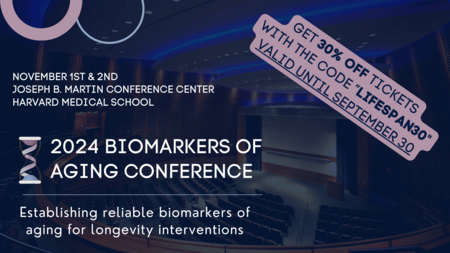
The 2024 Biomarkers of Aging Conference is coming up in November, & we’re excited to offer an exclusive 30% discount on tickets, courtesy of our friends at @agingbiomarkers.
Use LIFESPAN30 at checkout. But act fast—offer available until Sept 30!
🎟️https://t.co/fl4QGeECbr
Research Spotlight: Addressing Challenges to Clinical Translation of Biomarkers of Aging Tools https://t.co/SgWj1Mf9Y9 @jpoganik@gladyshev_lab@agingbiomarkers
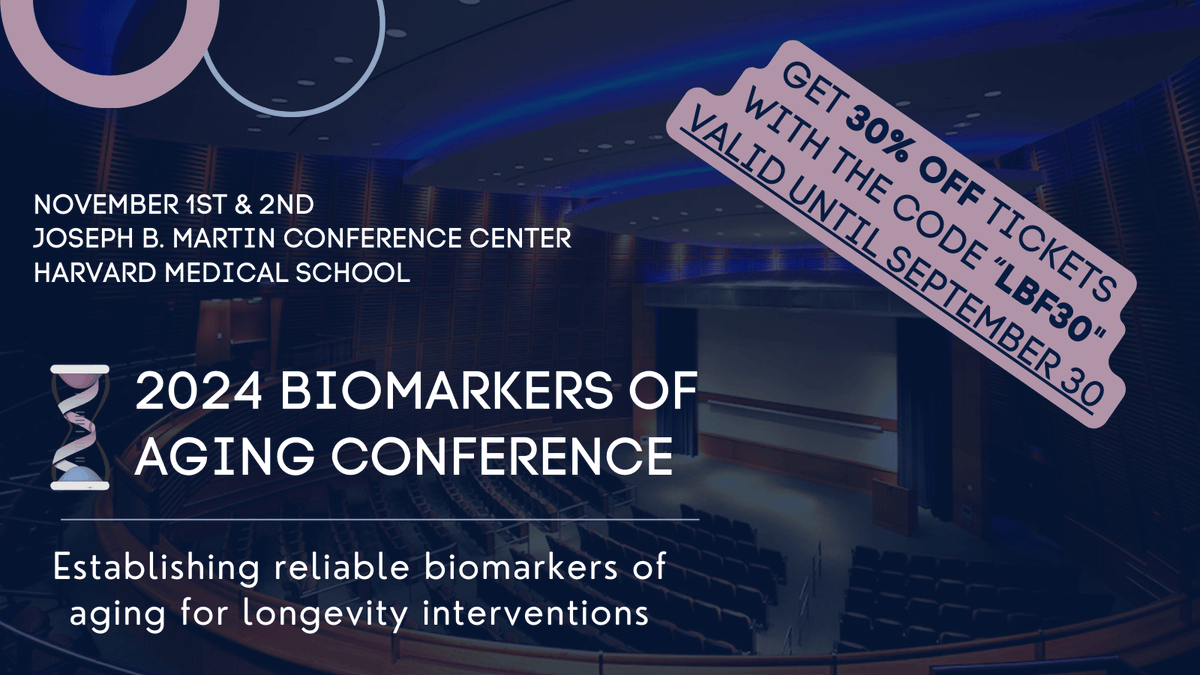
🗓️2024 Biomarkers of Aging Conference is coming up soon (Nov 1/2 in Boston)!
- two days
- awesome speakers
- networking!
all focussed on one of the most important areas of research for longevity.
(PS: Use code "LBF30" for 30% off tickets https://t.co/SlGPCqz13k)
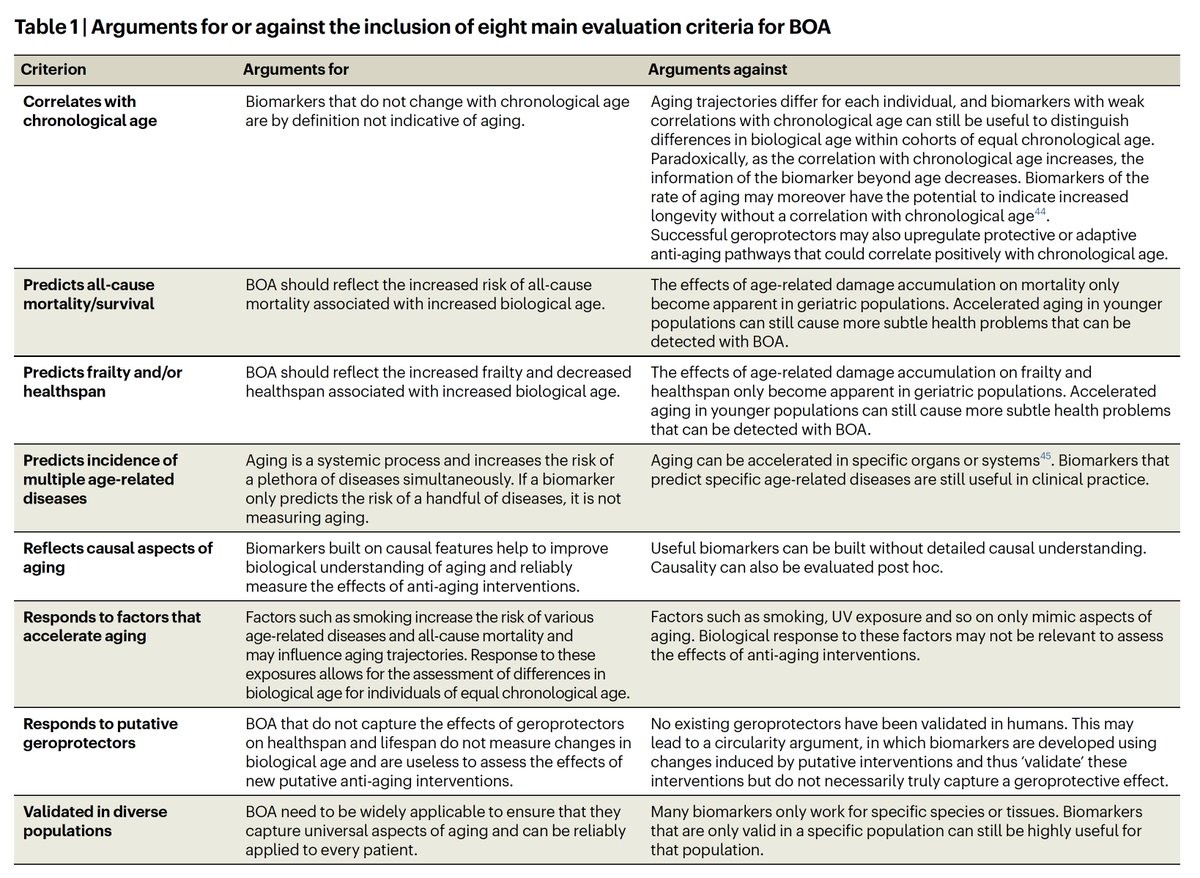
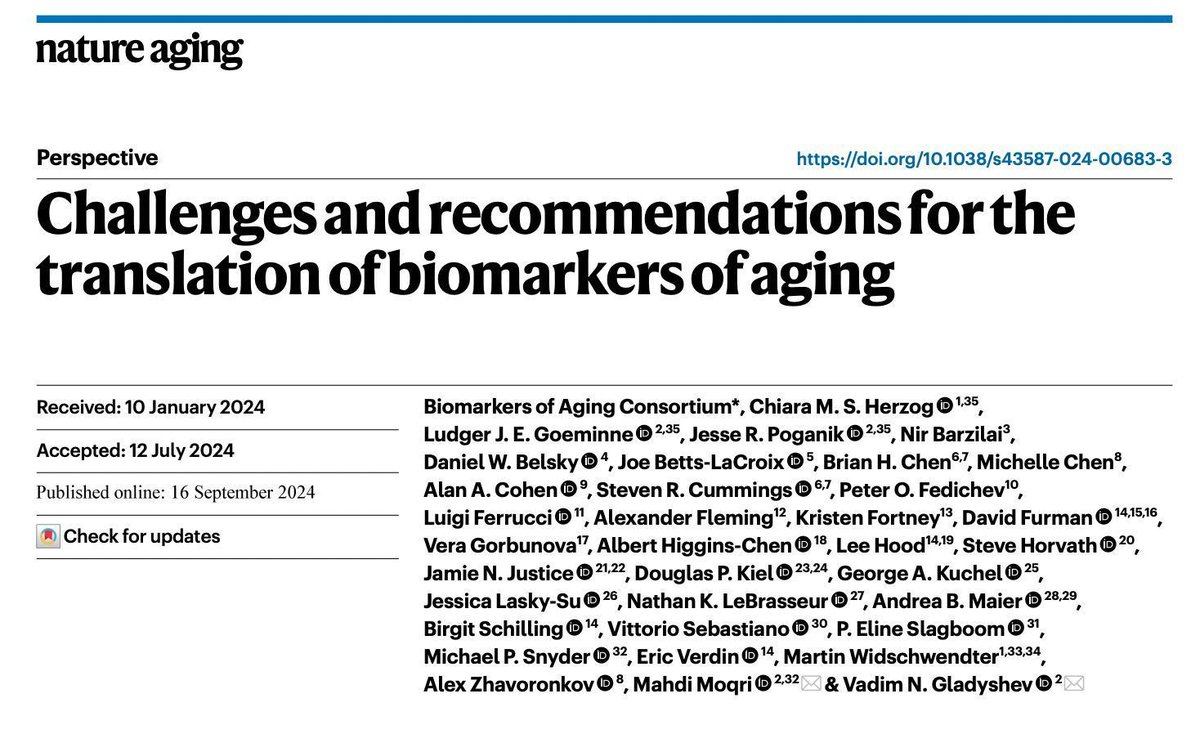
There's no shortage of biomarkers of aging—epigenetic, proteomic, transcriptomics, lipidomics, glycomics, metabolomics—but their translation to the clinic is limited. A new, frank appraisal of the challenges @NatureAging
https://t.co/xbj6XW0rCF @LudgerGoeminne@gladyshev_lab and colleagues
🧵 1/8 🎉 Our latest collaborative publication, "Challenges and recommendations for the translation of biomarkers of aging", has just been released in Nature Aging (@NatureAging). Biomarkers of aging predict biological age and its response to interventions but face challenges in clinical translation. Our study identifies six key barriers and provides strategies to overcome them.
Epigenetic aging clocks have become a commonly used metric in medical research and are being marketed to consumers. The new Ground Truths with @prof_horvath, who discovered these clocks a decade ago, provides a frank appraisal of their progress, limitations, and promise. With transcript and links to relevant citations.
[Link in my profile]
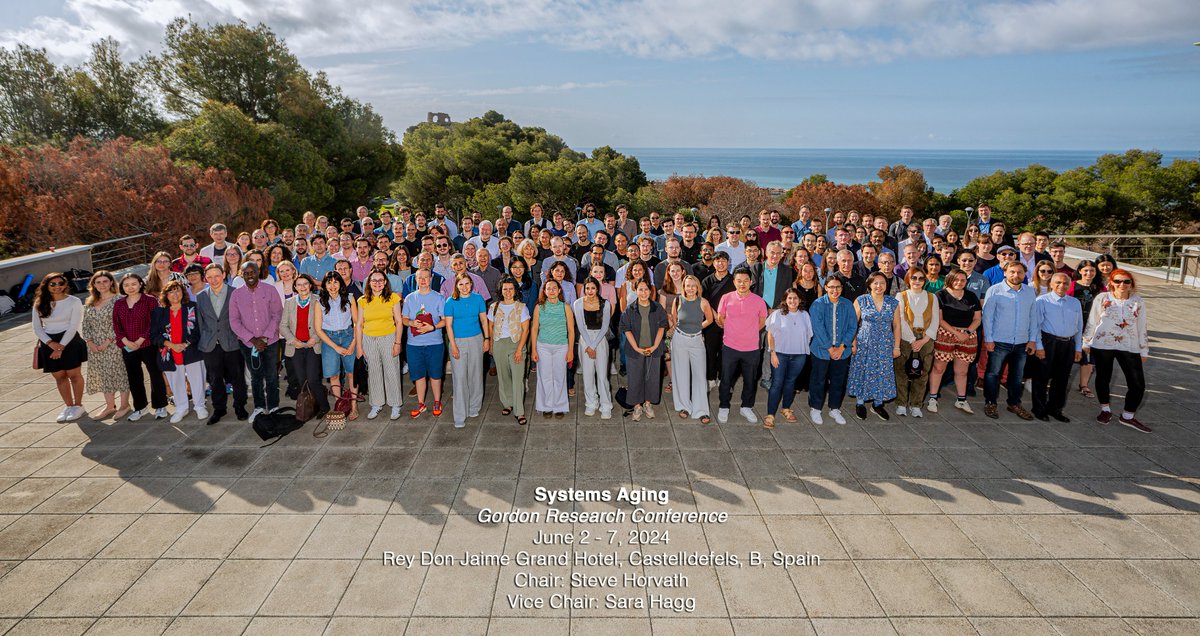
Thanks to all who made the @GordonConf in Systems Aging such a lovely meeting! Looking forward to the next one in two years in the US. Stay tuned for updates!
Online now!✨RESEARCH: @JPCastro_Aging, Shindyapina et al explore how aging promotes B-cell lymphoma in mice, identifying a population of age-associated clonal B cells that drive malignancy https://t.co/LUO8Z67fDN https://t.co/x3JEUapfND
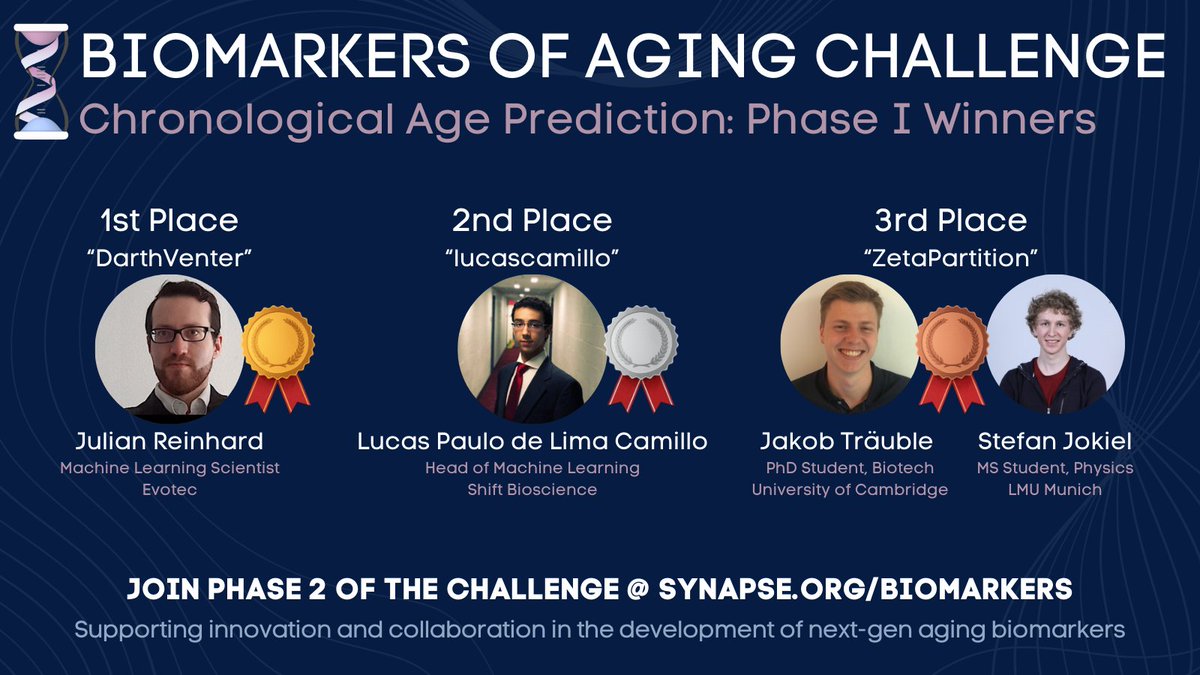
🏆 Congratulations to our Biomarkers of Aging Challenge Phase 1: Chronological Age Prediction winners!
Our participants showcased remarkable predictive accuracy, achieving an average error of less than 3 years.
🥇 1st Place: Julian Reinhard, also known as “DarthVenter,” Machine Learning Scientist at Evotec, achieved a final score of 2.45 years age error. Julian will receive $15,000 USD in cash prizes!
🥈 2nd Place: Lucas Paulo de Lima Camillo, Head of Machine Learning at Shift Bioscience, achieved a final score of 2.55 years age error. Lucas will receive $10,000 USD in cash prizes!
🥉 3rd Place: Team “ZetaPartition”, comprising academics Jakob Träuble and Stefan Jokiel, achieved a final score of 2.46 years age error. The team will receive $5,000 USD in cash prizes!
Check out our Age Prediction Leaderboard on Synapse for the final rankings here: https://t.co/kuuiuPVSz4
ℹ About Our Challenge & Why Evaluate Chronological Age:
The Biomarkers of Aging Challenge aims to generate and benchmark the best prediction models for chronological age, mortality, and multi-morbidity.
📊 The challenge leverages a unique, high-quality dataset that includes DNA methylation and aging outcome data for over 500 diverse individuals. DNA methylation and other first-generation biomarkers of aging are often trained to predict chronological age. Deviations between predicted and actual age (prediction errors) can indicate 'higher' or 'lower' biological age, which has been linked to age-related health outcomes, including mortality.
Phase 2 of our Challenge, evaluating mortality, has now launched. You can join Phase 2: https://t.co/CjIJSVlyZ8
Once again, congratulations to our winners, and thank you to all participants for their outstanding contributions!
🚀 Announcing the launch of Phase 2 of the Biomarkers of Aging Challenge Series: Mortality Prediction!
Phase 2 focuses on identifying and benchmarking the most promising predictors of mortality, aiming to advance our understanding and validation of aging biomarkers. This Phase will run until November 1, 2024.
☠️ Why Mortality Prediction?
Mortality is a crucial outcome for aging biomarkers due to its clear and binary nature. Both first-generation biomarkers and newer models trained specifically to predict time to death have shown significant promise in predicting mortality and age-related diseases. Phase 2 benchmarks predictors of mortality to identify the current limits of accuracy and prediction, while also harnessing this potential to provide valuable insights and foster innovation in mortality prediction.
💰 Prize: $70,000 USD in rewards
👉 Join Phase 2: https://t.co/7gtnYOHT4T 👈
🏆About The Biomarkers of Aging Challenge Series:
Systematic benchmarking and validation of aging biomarkers are essential for their use in clinical research and longevity interventions. However, limited access to high-quality omics datasets and disparate biomarker implementations present significant challenges. The Biomarkers of Aging Consortium addresses these issues by hosting a series of challenges designed to drive innovation and collaboration.
🎯 Challenge Objectives:
Our Challenge spans three phases, with the goal of identifying and benchmarking the best predictors of chronological age, mortality, and multi-morbidity. We aim to discover cutting-edge biomarkers that can reliably predict aging-related outcomes, supporting ongoing technology development and enabling large-scale longitudinal studies.
🙏 Many thanks to our partners for their support of the Challenge including:
@mfoundation@AlamarBio@xprize Healthspan
@Sagebio@CompetitionSci@VoLoFoundation
🩷 We also want to thank all the fantastic competitors who have participated in our Challenge so far and those who will join us in this phase and beyond. Your dedication and innovative spirit are driving the future of longevity research.
🙌 Together, we can drive the future of biomarkers of aging, unlocking a better understanding of the aging process and making significant strides towards extending healthy human lifespan: https://t.co/7gtnYOHT4T
Kat and I are hosting an @age1vc longevity biotech mixer this Thursday in Boston! There’s already 100+ founders, investors, and students attending - join us for a night of fun (pickeball?), food, and friends as we discuss the future of cell therapies ⚡️
https://t.co/ssFWPRCtDx
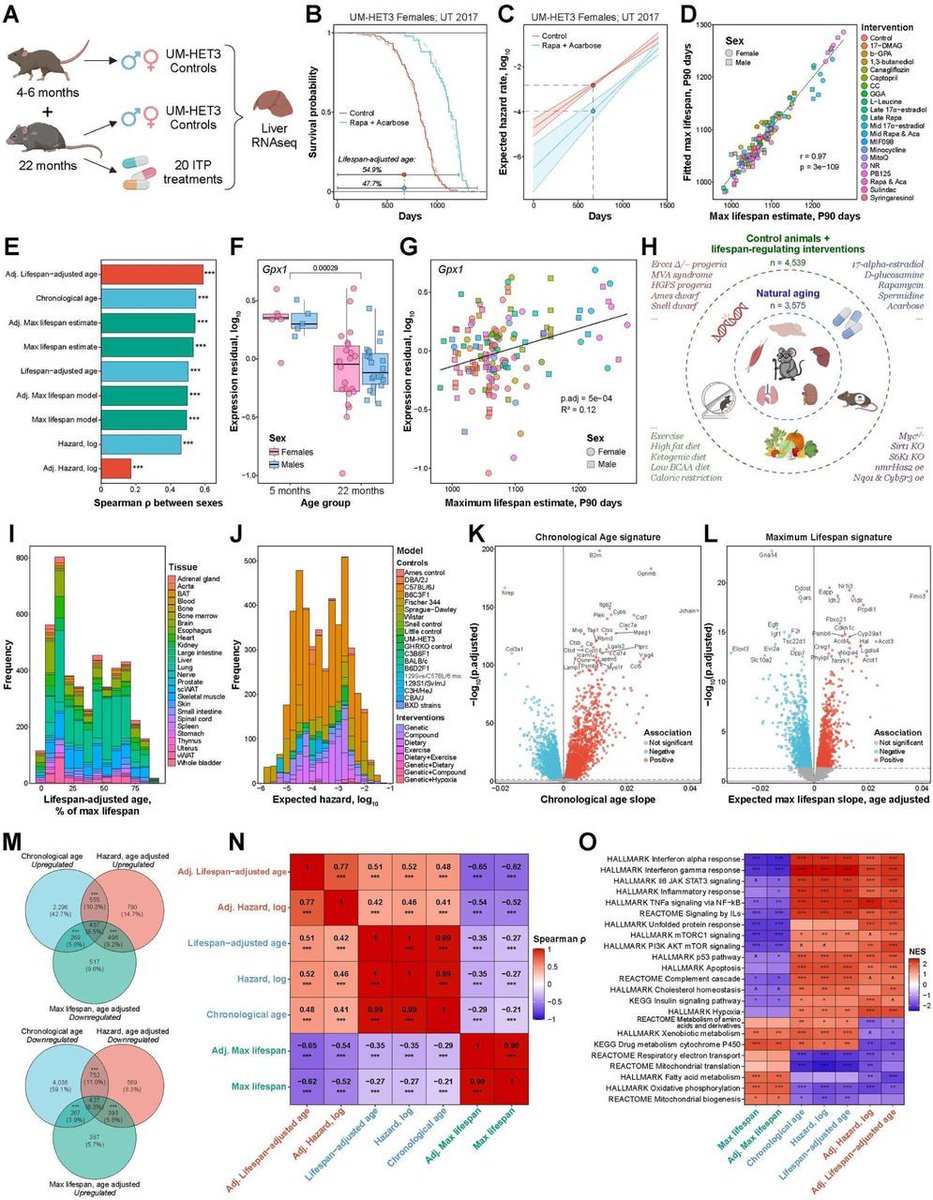
🧵 1/6 In this landmark collaborative study, several Consortium colleagues, including @KejunYing, @mahdi_moqri, & @gladyshev_lab, explored molecular mechanisms of aging and mortality using RNA-seq analysis on mice treated with 20 compounds, utilizing 4,000+ mouse tissue samples.
📬 The Consortium's June & July 2024 newsletter is out!
In our latest edition:
🎟 2024 Biomarkers of Aging Conference: Updated Speakers, Panels and Topics
📊 Biolearn: v0.4.4 Release + How to Get Involved
🏆 Biomarkers of Aging Challenge Series: Phase I & Phase II Updates
🤝 Partnerships and Research Highlights
😃 Upcoming Events We're Excited to Attend
Read it here: https://t.co/azVfS8um4q
To stay up to date, sign up for our monthly newsletter here 👉 https://t.co/3gfrZTBuSv








![EricTopol's tweet photo. Epigenetic aging clocks have become a commonly used metric in medical research and are being marketed to consumers. The new Ground Truths with @prof_horvath, who discovered these clocks a decade ago, provides a frank appraisal of their progress, limitations, and promise. With transcript and links to relevant citations.
[Link in my profile]](https://pbs.twimg.com/media/GVrYokuaoAA6YO6.png)