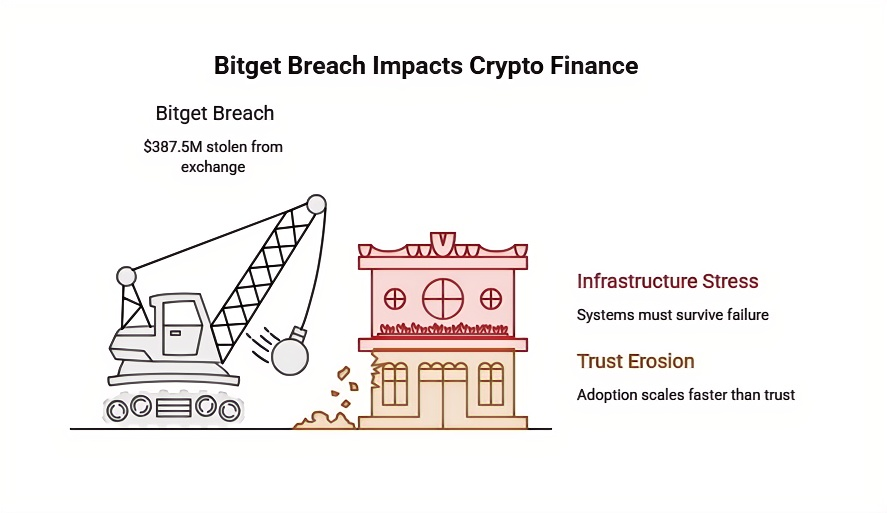
Bitget’s $387.5M breach is more than a security story—it’s a stress test for crypto finance. Adoption can scale fast, but trust only scales when custody, transaction controls, asset segregation and recovery systems can survive failure. Infrastructure is the moat.
@aleabitoreddit The exact timeline is debatable, and Anthropic frames these as scenarios rather than a firm forecast, but the investment logic is clear: if 2026–28 is the buildout phase, the real bottlenecks will be compute, power, networks and enterprise adoption—not just better models.
@KobeissiLetter Copper at record highs is only half the story. The key question is how much of the move is structural demand versus policy-driven positioning and inventory flows. If the COMEX-LME spread starts to narrow, that could reveal how durable this rally really is.
@blknoiz06 Agreed. Markets reward adaptability, not attachment to missed opportunities. The real edge is staying curious, building skills, and using tools like AI to shorten the learning curve. You can’t change the trades you missed, but you can improve how prepared you are for the next one
@BullTheoryio The $84K breakout matters, but what happens after the liquidation fuel fades matters more. A short squeeze can lift price fast; sustained spot and ETF demand is what makes it durable. Holding above $84K without heavy leverage would be the stronger signal.
@CNBC AI safety shouldn’t be reduced to speed vs. regulation. Engineering can address many failures, but misuse, incentives and accountability go beyond engineering. The stronger model is faster innovation with measurable safeguards built into deployment—not added after the fact.
@Bitcoin The key isn’t $81K itself — it’s Bitcoin rallying despite tighter U.S. policy.
Higher rates are a headwind for liquidity, yet spot ETF demand is returning.
If inflows persist, that would be a stronger sign of institutional accumulation.
@AshCrypto Bitcoin’s rebound above $80K is being backed by ETF flows, not just sentiment. U.S. spot BTC ETFs took in $433M Friday, led by Fidelity; BlackRock added $108M. The key now is persistence: sustained inflows would be a stronger signal that institutional demand is returning.
@charliebilello $4.43 gas is a reminder that inflation risk can return through energy even as other pressures cool. With crude near $100, higher fuel costs can feed into transport, goods and inflation expectations — making the Fed’s job harder, not easier.
The next crypto boom may not look like crypto.
It may look like stablecoins becoming payment rails, RWAs moving on-chain, and capital markets adopting programmable settlement.
At JQ, we track where digital assets meet real financial infrastructure — with data, not hype.