I wish this interview had been longer, but I’m glad we agree on the key points, including that post-quantum signatures for Bitcoin are a nuanced topic, there are real tradeoffs, and there is no plug-in solution.
I didn’t hear an argument against SHRINCS itself. Rather, Dan prefers lattices because they support HD derivation and efficient threshold schemes.
But with today’s schemes, once you add those features, signatures are no longer small — e.g. 25+ kB with HD derivation. Lattice-based signatures still need more research before they are clearly the better choice for Bitcoin.
I disagree that hash-based signatures “stifle” anything. They are a pragmatic choice today, and they will always retain fundamental advantages: no new cryptographic assumptions and conceptual simplicity.
Lattice-based signatures are a promising candidate for the future, once their advantages are clear enough to justify the added complexity and assumptions.
Iran demanding $BTC for Hormuz tolls proves it: censorship-resistance IS the intrinsic value.
- USD? Frozen by SWIFT.
- Yuan? Beijing's control.
- Stables? Issuer blacklists.
- Gold? Try emailing it.
Bitcoin is the only truly unstoppable, neutral money on earth.
With an increasing number of discussions around the BIP54 “Consensus Cleanup” soft fork proposal, I helped put together an information site about BIP54.
“Bitcoin has four known vulnerabilities that have gone unfixed for 15 years. BIP54, "Consensus Cleanup", proposes four narrowly-scoped changes to address these issues in Bitcoin's consensus rules that date back to the original version of Bitcoin in 2009.”
https://t.co/ysNChR35Ib
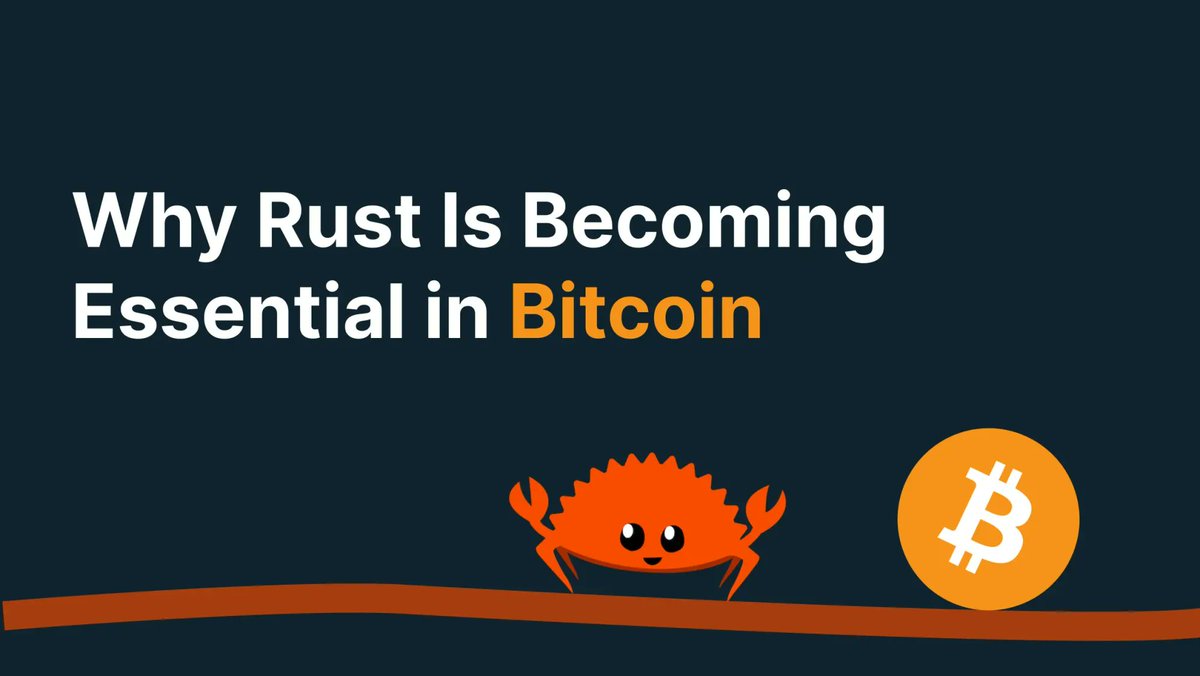
Rust 🦀 is quickly becoming one of the most important languages in the Bitcoin ecosystem. From wallet libraries to Lightning implementations, more projects are adopting Rust for its safety, performance, and reliability, traits that align perfectly with Bitcoin’s need for secure and predictable software.
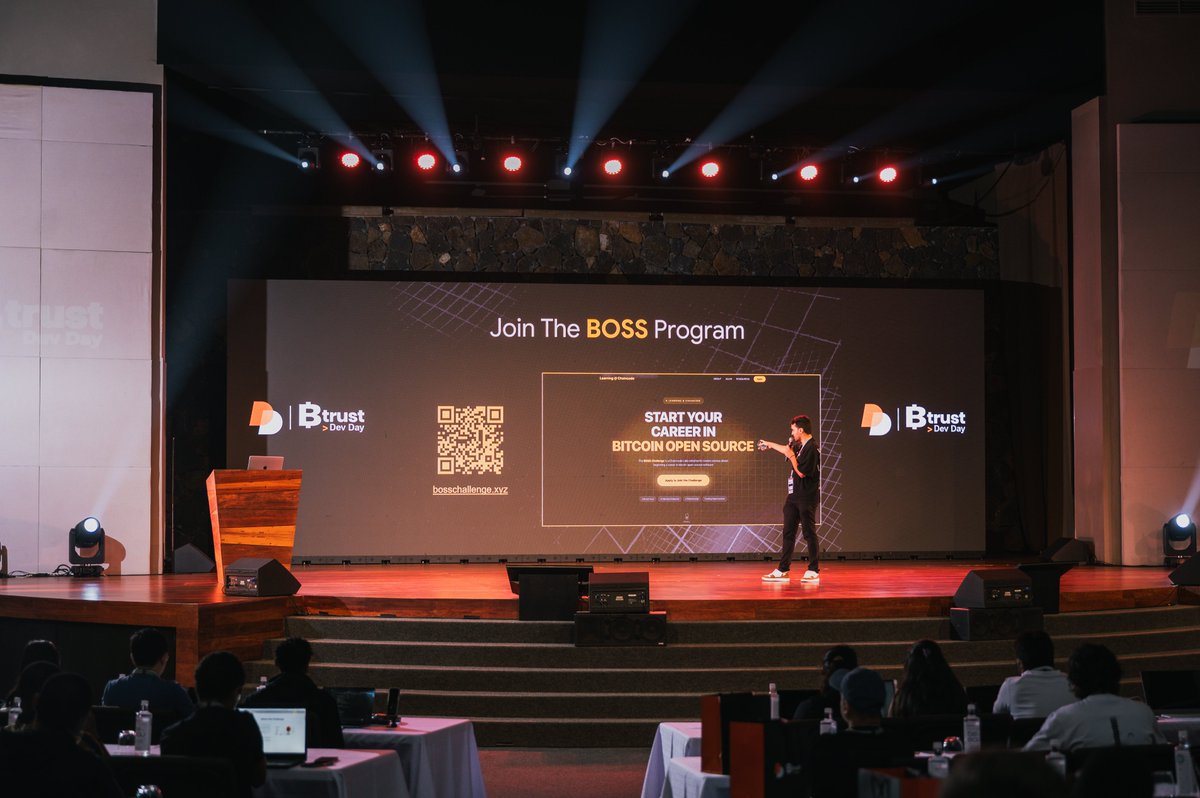
At the 2025 #BtrustDeveloperDay, @jrakibi explored this growing trend in his talk, breaking down what makes Rust different from other languages and why it’s reshaping how Bitcoin software is built.
🎥 Watch the session recording here: https://t.co/0a4thVK19K
In our latest blog, Jamal expands on that talk, diving deeper into how Rust’s memory safety, high performance, and strong type system power projects like rust-bitcoin, BDK, rust-lightning, and Fedimint.
He also shares lessons from contributing to Rust-Bitcoin and practical advice for developers looking to get started or contribute.
👉 Read the full article here:
https://t.co/Lbf7nYITMz
🎉 Interactive SHA-256 visualizer
SHA-256 is everywhere: bitcoin, TLS, Git, proofs, ...
Yet most explanations skip the internal mechanics and jump straight from input → hash.
We built a visual tool that shows what happens under the hood