Methane emissions from fossil fuel operations rose slightly to nearly 120 million tonnes in 2023
Satellite monitoring has been vital to improve transparency on where & when methane leaks are happening around the world & strengthen accountability ➡️ https://t.co/4DWemOPJg9
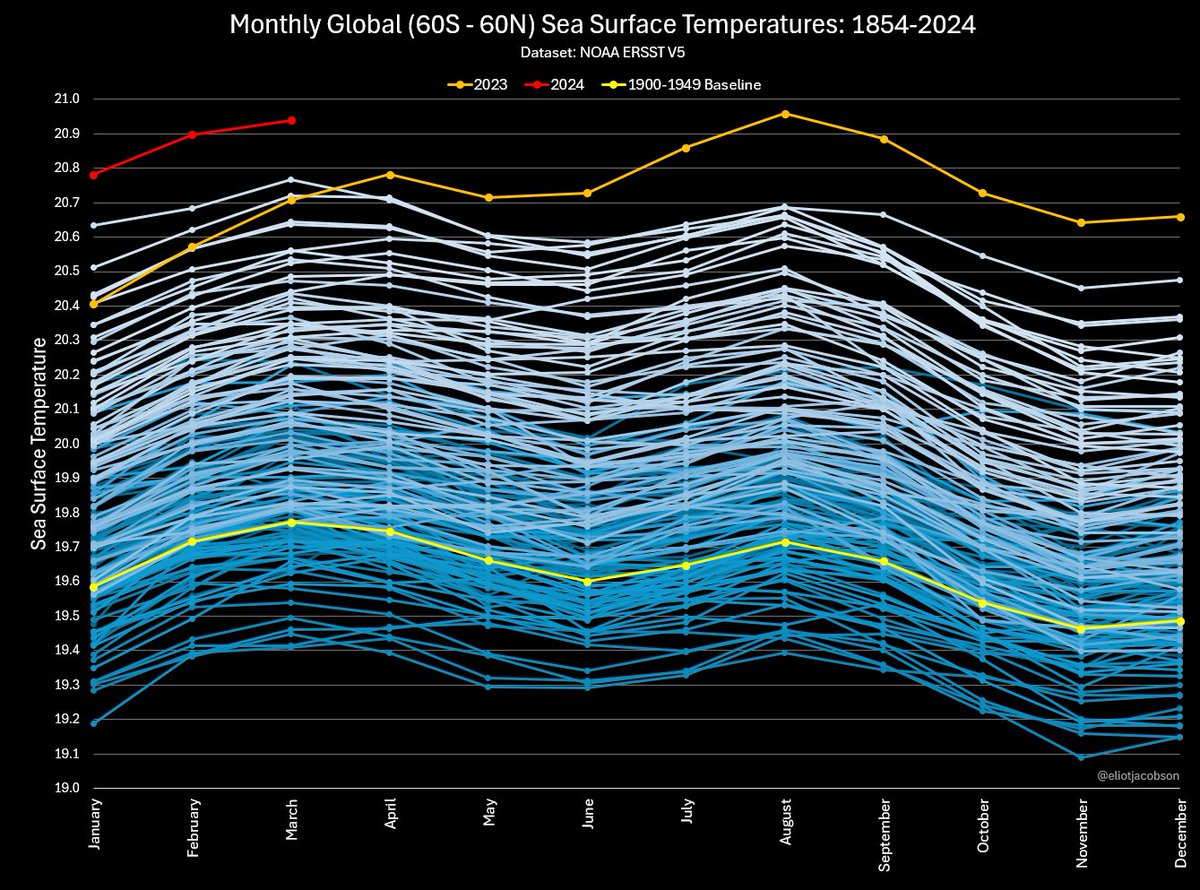
It may be too much to take in all at once, but h/t to @leonsimons for pointing me to NOAA ERSST V5 SST monthly data beginning 1854, current through March, 2024.
I included the 50 year average for 1900-1949 for good measure.
This really is the beginning of the end of everything.
El 1926 el rugby va entrar en una profunda crisi i va estar a punt de desaparèixer de Catalunya. Des de L'Esport Català es reclamava més presència als diaris. "És certament de doldre que uns dels esports més complets que es practiquen tingui reservat [...] un espai tan petit".
👇
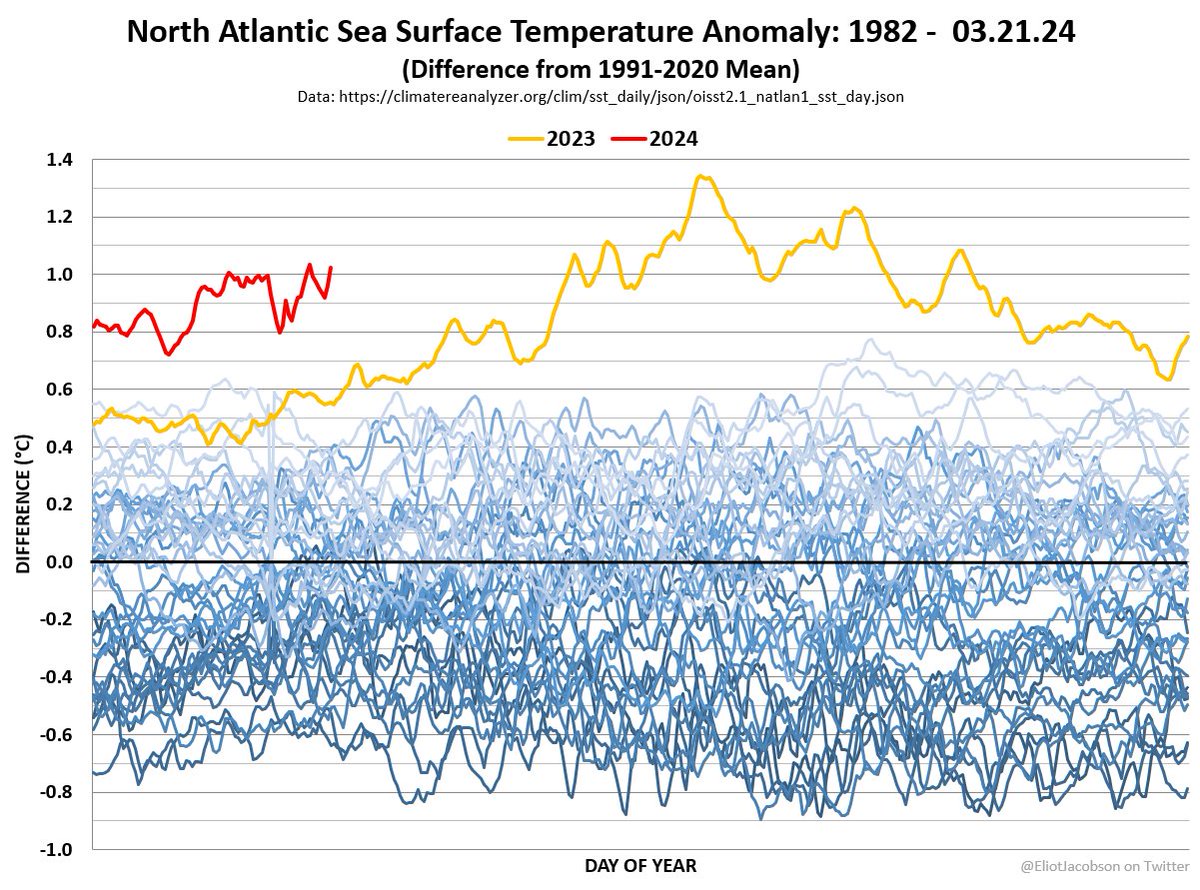
Things are not improving in the North Atlantic. The new records being set every day are crushing the previous highs set just last year.
For example, yesterday the North Atlantic SST was 20.41°C, beating last year's record 19.94°C by almost 0.5°C.
🚨 The first preliminary analysis from the Japan Meteorological Agency highlights 2023 as the warmest year on record globally since at least 1891. Additional datasets will be released during the first two weeks of January.
Data and methods by https://t.co/IE37y4d7fu
It's like someone is taking a flamethrower to the Northern Hemisphere over the Christmas period. Here are the 2m temperature anomalies for the next few days. The heat over the #US is incredible for this time of year. The steady #climate of the Holocene is over. #GlobalWarming
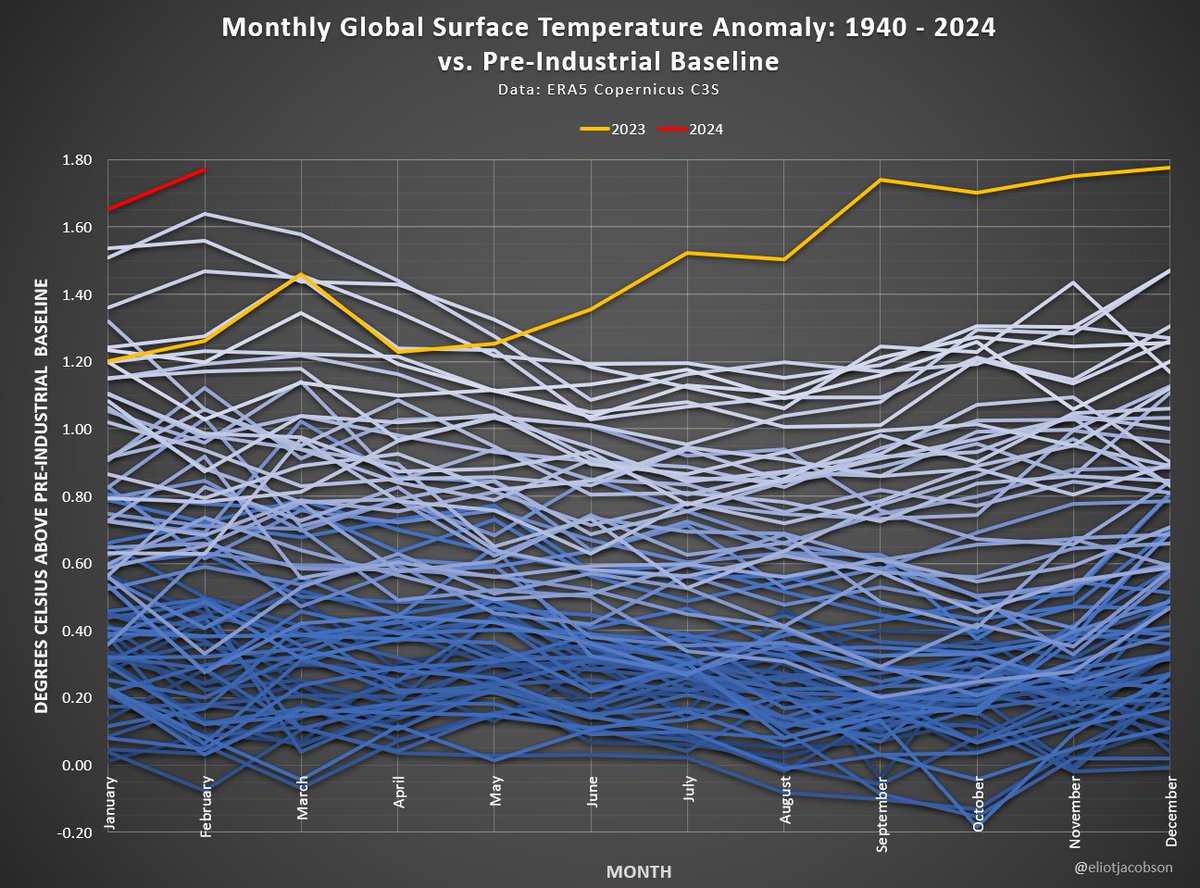
Three #ERA5-based charts you shouldn't miss this month:
📈World hits briefly 2ºC above the preindustrial era - #C3S
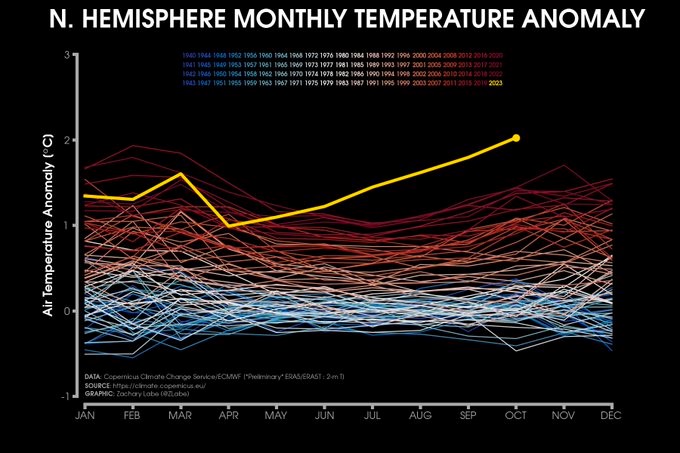
📈October, most anomalous temperature in the NH - @ZLabe
📈Daily global mean temperature anomaly distribution 2014-2023 - @mikarantane
Top 5 warmest October global temperatures since at least 1891 - using data from the Japan Meteorological Agency (https://t.co/U8Rr0xYguf)
1. *2023*
2. 2015
3. 2019
4. 2022/2021
No, I did not make this graph, so plz don't complain to me about the regression line.
#Arctic sea ice extent is currently the 9th lowest on record (JAXA data)
• about 120,000 km² above the 2010s mean
• about 560,000 km² below the 2000s mean
• about 1,200,000 km² below the 1990s mean
• about 1,570,000 km² below the 1980s mean
Plots: https://t.co/tBkW5GBOxd
Our oceans have been record warm over the last three months due to human-caused climate change and an (unlucky) combination of other factors (e.g., La Niña to El Niño, atmospheric circulation forcing)
Data via @NOAA ERSSTv5 averaged over August-October: https://t.co/V8F2MhaASY
Segur que ja tens vist aquest vídeo de la @NASA sobre #escalfamentglobal. Però has vist el curs que hem preparat per a treballar eines i estratègies per a combatre el canvi climàtic?
Comença en 3 setmanes! Apunta't!👉🏼https://t.co/kpJ18pHxRj
#canviclimàtic#emergènciaclimàtica






![mpc12341's tweet photo. El 1926 el rugby va entrar en una profunda crisi i va estar a punt de desaparèixer de Catalunya. Des de L'Esport Català es reclamava més presència als diaris. "És certament de doldre que uns dels esports més complets que es practiquen tingui reservat [...] un espai tan petit".
👇 https://t.co/x4sFVv0spS](https://pbs.twimg.com/media/GM8xhSjXoAANHKT.png)


![ZLabe's tweet photo. Last month was the most anomalous on record for temperatures in the Southern Hemisphere...
[Data from @CopernicusECMWF ERA5 reanalysis] https://t.co/nWW1R5Mzij](https://pbs.twimg.com/media/F77Di9wW8AAAxss.jpg)




