For years, good-faith efforts to engage @SECGov were met with subpoenas instead of solutions – forcing @coinbase to sue to compel basic regulatory clarity.
Today, that era officially ends.
Kudos to @SECPaulSAtkins for ending regulation by enforcement and delivering what we've long sought: regulation by rulemaking.
Now it's up to the Senate to secure onshore innovation with the certainty that only CLARITY can provide.
Kudos to @SECPaulSAtkins and @SECgov for taking a long-awaited step toward modernizing our financial system for the 21st century with progress on token taxonomy. We’ve been calling for clear crypto rules for years and this is exactly what's needed to keep innovation in America.
I look forward to the SEC also releasing the Innovation Exemption to unlock onchain trading of tokenized equities.
Progress is happening and it’s time to move quickly on both passing Clarity and moving our markets onchain before the rest of the world gets to it first.
The crypto industry is actually asking to be regulated. @MajorCBS called it unusual - I’d call it unprecedented.
The Clarity Act brings clear federal rules and consumer protections that don't currently exist.
It's a no-brainer—the Senate must act.
Thanks @cbsnews and Major Garrett for the conversation.
@dorvonlevi Happened to me a few years ago after I came to a full stop, waited for the traffic to pass and then crossed on my bike. Cop told me “sorry, this city is all about money.” Telling it like it is.
Lots of questions about if and when CLARITY passes. The answer is: at the point when policymakers realize that the perfect can't be the enemy of the good. We've been walking the halls for years to get to this moment. We welcome the dialogue and the hard questions, but it's time to get this done.
That didn’t take long. Schwab has joined Goldman Sachs and Fidelity in supporting CLARITY.
When firms with tens of trillions in retail investor $$ publicly back CLARITY, Washington should listen.
Momentum keeps growing. So I'll ask again, who’s next?
There’s more desire and momentum than ever to get Clarity across the finish line. It's time for America to lead on this issue - and bring clear, broad protections to the tens of millions of crypto users in our country.
It's time to get this done.
For the first time, these are real 1:1 backed tokenized stocks you can trust. You own an actual chunk of the company onchain.
Other current solutions are some form of derivative or IOU - not real ownership.
Our product will give all the benefits of true ownership, with all the benefits of tokenized assets. This is a great step towards unlocking global access to U.S. markets
Major areas where the financial system still needs an update:
1. Tokenization of real-world assets - Real estate, stocks, bonds, funds, etc. onchain for instant settlement, fractional ownership & massive distribution.
2. 24/7 Global trading - Pooled global liquidity, every asset, every person, with great leverage and capital efficiency.
3. Next-gen payments - Near-instant, low-cost global transfers using stablecoins, including for Agentic payments.
4. AI-powered risk, credit, compliance, and advice - Better decisions, less fraud, and broader access to capital. Everyone gets access to a great financial advisor.
5. Innovation friendly regulation - Move from one-size-fits-all to risk-based rules that encourage innovation and competition instead of stifling it.
6. Expanded access - Open protocols that reduce middlemen and self-custodial wallets to expand access to everyone with a smartphone.
7. Capital formation - Low cost and turnkey for anyone to raise money for a good idea, increasing the number of startups.
8. Sound money - A refuge from inflation, when discipline is lost in fiat money.
Jobs not done until we get these working for all.
Will require lots of tech innovation and policy work to get there.
I'm super proud of the work of this XFN team led by @dorvonlevi. AI automation - when planned and executed properly - increases compliance effectiveness, efficiency and operational resilience all at once. That's what we've accomplished for fraud cases and the best part is that we're only getting started!!!🚀🚀🚀
Building an AI-native @Coinbase means rebuilding everything, especially the hardest parts. We've put a lot of time into redefining compliance, where the stakes are incredibly high, and we have to be extremely thoughtful about implementation.
We have invested heavily in rebuilding our compliance ops around AI with that reality as our starting constraint, not an afterthought. Here is an overview of what we've learned and what we built.
Most people assume compliance work is mostly checking whether a name appears on a sanctions list. That is the easy 5%. The other 95% is interpretive judgment under uncertainty: a customer claims their wealth came from real estate. Do the property records actually support it? Does the timeline hold? Is the documentation legitimate, or does it feel too polished? You need compliance staff and investigators who understand what “suspicious” actually looks like in context.
That's part of why compliance is so hard to automate—and so expensive.
The first obvious AI approach is to hand the model the existing procedures and ask it to run them faster. That approach misunderstands what procedures are for. Good procedures are not bad investigations; they are deliberately incomplete investigations. Their job is to create consistency, auditability, and a minimum standard across thousands of cases. They excel at saying what must happen. They are far worse at capturing everything a strong analyst actually notices: which sources they trust, when they widen the search, when a document feels off, when an explanation technically fits but still does not feel earned.
Procedures also carry the shape of the old operating model: fragmented systems, time pressure, queue pressure, and the hard limit of how much one human analyst can read, cross-reference, and hold in working memory at once. That is not a flaw in the procedure. It is how you design a process for humans.
AI changes the constraint set. Reading, searching, comparing documents, and tracing inconsistencies no longer have to be treated as scarce analyst time. Done carefully, with proper controls and human review, models can explore more context, test more hypotheses, and surface more inconsistencies than any single analyst could reasonably do case by case.
So if you simply automate the procedure exactly as written, you may gain efficiency. You will not unlock the full value of AI. You will just make the old bottleneck run faster.
The better question is not “Can AI follow the analyst playbook?”
It is: once the cost of reading, cross-referencing, and testing hypotheses collapses, what should the investigation become?
A second tempting approach: feed it historical Suspicious Activity Reports (SARs) and let it learn from outcomes. This breaks down too. You rarely have the full state of what the analyst actually saw during the investigation. A case that looks straightforward today might only look that way because information surfaced later. A fraud indictment that didn't exist when the original analyst made the call, news articles that hadn't been published yet. Hindsight can contaminate your training data. Also, regulators themselves acknowledge that SAR decisions can be subjective.
The architecture has four layers. The first is data: continuously enhancing the coverage, quality, and architecture of the signals the system depends on. The second is classical machine learning models that cluster and classify alerts to determine what type of investigation needs to run. The third is the investigation agent itself: a multi-agent system that orchestrates specialized agents to execute the investigation end to end. The fourth is a safety filter that runs independently of typology, ensuring no risk vector is missed regardless of how the alert is classified. Each layer is independently auditable and learns from the feedback provided by human reviewers.
Inside the investigation agent, specialized sub-agents run across the full case surface: alert context, customer and identity signals, access patterns, risk indicators, transaction behavior, source-of-funds, onchain activity, and public adverse media. Each writes its findings into a shared case memory. A coordinator agent reconciles and challenges them. When sub-agents disagree, such as when source-of-funds marks activity as “explained” while adverse media surfaces a recent indictment, the coordinator attempts to resolve these disagreements knowing the common patterns. The narrative agent prepares the final report with all collected evidence and suggested resolution. The last self-validation agent acts as a guardrail: if the system cannot support its conclusion with sufficient confidence or data quality, the case is routed to manual investigation instead of being surfaced as an automated result.
Before any of this touched a real customer case, we built what we call a “Golden Set” - historical cases with known right answers. "Known right answers" in compliance is harder than it sounds. It meant re-investigating old cases, getting multiple senior analysts to independently agree on what the right call would have been, then debating the disagreements until consensus. Months of work before we could even start measuring.
Here's an important part (for now) - cases currently get BOTH the AI's full investigation AND a senior human review. We didn't reduce scrutiny, in fact, we added more of it until it no longer proves valuable. Cases resolve significantly faster AND get more eyes than they ever did before. Every human correction feeds back into the model as a training signal. It gets better because it's wrong in front of people who know how to fix it.
None of this would have shipped without clearing structural blockers most financial institutions are still stuck on. Security and privacy sign-off to send customer data to LLMs at all. Senior compliance officer alignment on AI-assisted human decision making. Model Governance team embedded since December - they observed the entire Golden-Set Evaluation process and are running a formal validation review with our Internal Audit team now.
Today this handles roughly 55% of our US fraud case volume with significantly less analyst time per case. Time freed goes to the harder cases AI can't yet handle - and to teaching it.
Our internal compliance and quality teams are the ones who are building this system with the engineers, training it, validating it, and continuing to shape how it improves. In the process, they've developed skills that are incredibly valuable: how to design evals, how to think about model bias, how to think about human bias, how to architect human-in-the-loop systems, skills that are becoming among the most valuable at any company.
This entire project started ~6 months ago with a whiteboarding session between @galpa42 and I, and was built by an AI-pilled cross-functional and it’s just the first pod - there's a multi-month roadmap,rebuilding compliance from the ground up with AI. Huge thanks to everyone involved and congratulations to @galpa42 for shipping two babies to production this month :)
The future of high-stakes work is not AI replacing judgment. It is AI making judgment scalable, auditable, and continuously improvable.
What an honor to join one of my favorite podcasts and hosts - Money Talks with Felix Salmon - to talk about trends in money laundering, how we've been losing the battle to stop it, and how the convergence of blockchain and AI gives hope for a brighter future. #Coinbase#AML #MoneyTalks
https://t.co/79NK01XQyh
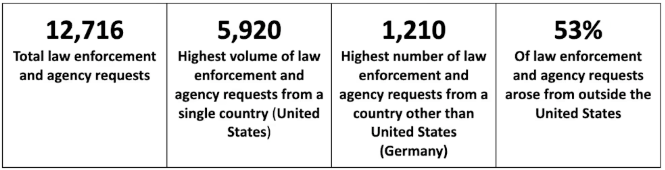
Powerful report from @coinbase. We take our obligations to law enforcement and their requests–all 12,716 of them from the last year–as seriously as we take the privacy of our customers. Transparency is the foundation of trust.
We got nearly 13,000 law enforcement requests last year, more than 50% from outside the US. We take every request seriously and work closely with law enforcement to keep crypto safe. See for yourself in our 7th Annual Coinbase Transparency Report. 1/4
We @coinbase talk about tokenization quite a bit, particularly its built-in features for better compliance. @trmlabs is exactly right: “risk doesn’t disappear, it becomes transparent and traceable.” Really important points in this blog. This is the future, and compliance teams will need to meet the moment.
Stablecoins proved money could move on-chain. Now Treasuries, credit, and real estate are following. Tokenized 𝗿𝗲𝗮𝗹-𝘄𝗼𝗿𝗹𝗱 𝗮𝘀𝘀𝗲𝘁𝘀 (𝗥𝗪𝗔𝘀) are transforming how assets are issued, settled, monitored, and safeguarded.
Read how RWAs work and key considerations for compliance teams ➡️ https://t.co/DBi6mHM4jt
Crypto is an exponential game changer. The joint task of lawmakers, regulators and companies like Coinbase is to drive up the exponent in favor of good over bad. It then becomes a mathematical certainty that good prevails. We need to steer, not fear.