Valvular heart failure: evolving pharmacological approaches. A State-of-the-Art review just published in #EHJ 👉 https://t.co/inTzAgS6p1
@RoccoMontone@ehj_ed#heartfailure
CONFIDENCE trial: In persons with chronic kidney disease and type 2 diabetes, combination therapy with finerenone and empagliflozin led to a greater reduction in the urinary albumin-to-creatinine ratio than either drug alone. Full trial results and Research Summary: https://t.co/4Gf0LboOCp
In frail, elderly #AFib patients previously on a vitamin K antagonist, switching to standard-dose direct-acting oral anticoagulant reduced stroke, fatal/intracranial bleeding, and death, despite more GI bleeding. https://t.co/VueCCDedLL #JACC#DOAC
🚀 #Finerenone now FDA‑approved for #HFpEF / #HFmrEF, yet key gaps remain.
MOONRAKER (REDEFINE, CONFIRMATION, FINALITY) is enrolling to test early use, combo therapy & options for MRA‑intolerant #HFrEF.
Join in—search finerenone at https://t.co/sCtTxamxsX.
U.S. FDA Approves Finerenone for New Indication in Patients with Heart Failure with Left Ventricular Ejection Fraction of ≥ 40%
Bayer announced today that the U.S. Food and Drug Administration (FDA) has approved finerenone (Kerendia™), a non-steroidal, selective mineralocorticoid receptor antagonist, for the treatment of adult patients with heart failure (HF) and a left ventricular ejection fraction (LVEF) of ≥40%. Finerenone (10mg, 20mg, 40mg) is now indicated to reduce the risk of cardiovascular death, hospitalization for heart failure, and urgent heart failure visits in adult patients with heart failure with LVEF of ≥40%.
https://t.co/rmn5kzHHHq
Growing evidence demonstrates that a lower systolic blood pressure of <120 mm Hg significantly reduces #ASCVD risk for patients at high risk.
Check out the expert analysis to learn more ➡️ https://t.co/Sfws9M5dVQ #cvPrev
Presented at #ADASciSessions:
The MariTide phase 2 trial of once-monthly maridebart cafraglutide, a peptide–antibody conjugate, showed substantial weight reduction in participants with obesity with or without type 2 diabetes. Full trial results: https://t.co/Pt0vfahZbe
@ADA_DiabetesPro
GLP-1 RA & Gastrointestinal Adverse Events
A new systematic review & meta analysis
1️⃣ GLP-1RAs raise the risk of cholelithiasis by 46% and GERD by 119% compared to placebo.
2️⃣ Little to no effect on the risk of cholecystitis, cholangitis, cholestasis, pancreatitis, or other GI events.
3️⃣ Risks were higher in people with obesity, NASH/MASLD, or those on high-dose GLP-1RAs.
@NutritionMadeS3@DrNadolsky@DrKarlNadolsky@drmatthewnagra@MichaelAlbertMd@MichaelMindrum
Link: https://t.co/0FL9BN6zD7
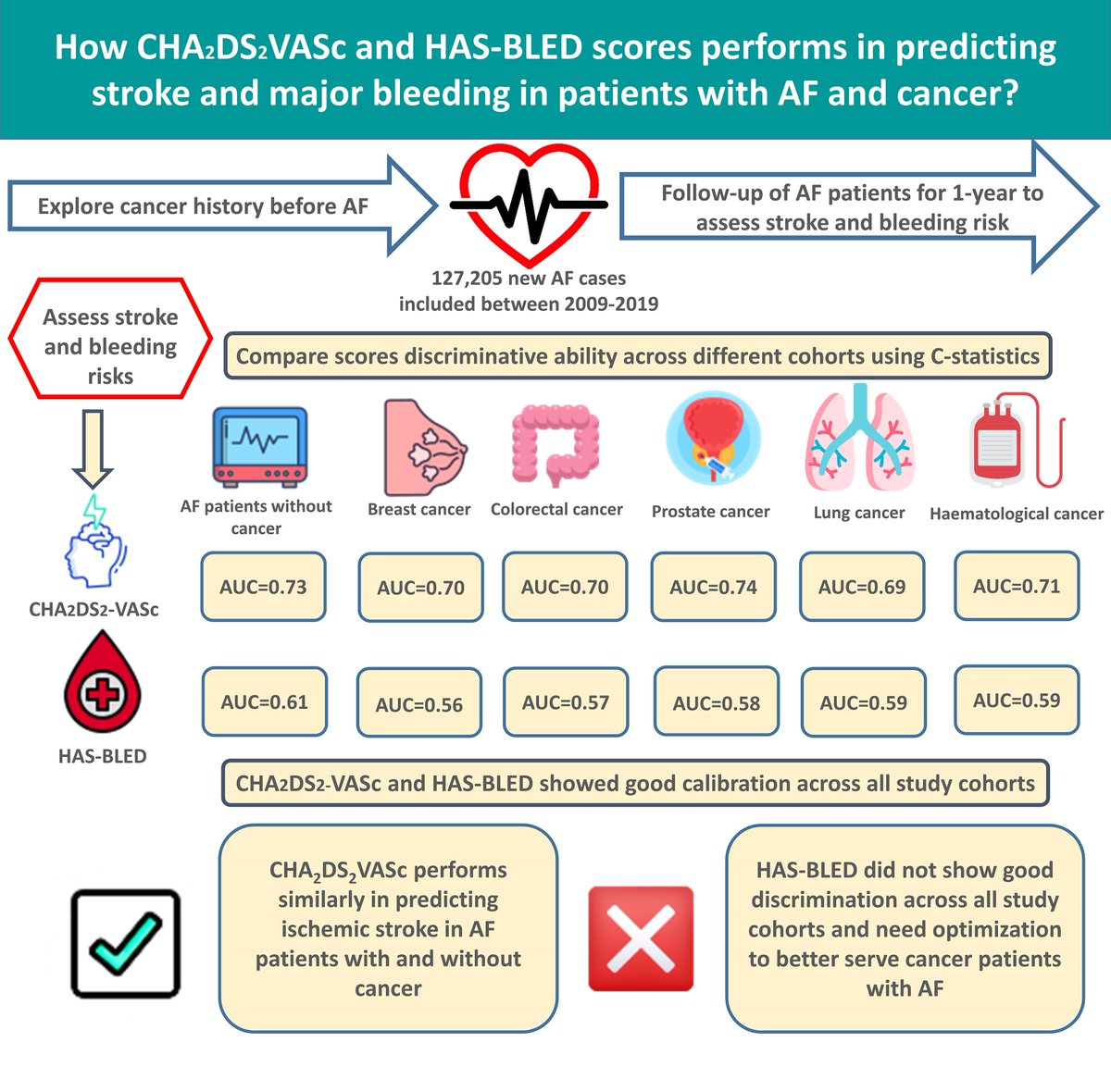
How CHA2DS2-VASc and HAS-BLED scores perform in predicting stroke and bleeding in #afib and cancer?
This and so much more in the #EHJOPen collection on advances in #cardioonco👉https://t.co/nhVz17F0gj
For all the latest in cardio-oncology be sure to join us in Florence for #ESCardioOnco2025👉https://t.co/4PrWDhGuVg
In an interim analysis of a phase 3 trial involving 800 patients with metabolic dysfunction–associated steatohepatitis, once-weekly semaglutide improved liver histologic results at 72 weeks. Full ESSENCE trial results and Research Summary: https://t.co/8zxann2S8C
The interrelationship between kidney disease, cardiovascular disease, and cognitive decline represents a significant challenge to the ageing population.
Check out latest #CardioPractice article on kidney disease as a burden for CV disease in older patients https://t.co/5XJeWZf1W6
@ESCCCPChair@leventpy
Individuals with elevated Lp(a) show significantly higher prevalence of site-specific subclinical #atherosclerosis—especially in severe or multisite cases. Findings indicate that Lp(a) plays a role in the early stage #ASCVD. https://t.co/MruHSyHru8
#JACC#ACCIntl