클레어의 프롬프트 - 도시위로 바람이 분다
서울 한강부터 뉴욕, 도쿄, 홍콩까지
매번 다른 스카이라인을 골라
초고층 옥상 위의 순간을 만화로 담았어.
휘어지는 피시아이 구도
촘촘한 건축물의 펜선
머리카락과 옷자락을 스치는 시원한 바람.
🩵남녀, 캐릭터 모두 사용가능, ChatGPT전용
🩷 사용시 출처를 꼭 남겨주세요 😉
⸻⸻⸻⸻⸻⸻⸻
Original prompt concept by @clairedit.
Use the uploaded portrait photograph as the sole, fixed, and authoritative identity reference for the subject.
Preserve the subject’s real identity with maximum consistency while translating the person into a fully hand-drawn monochrome manga illustration. Keep the exact face shape, facial proportions, forehead, eyes and spacing, eyebrows, nose, lips, cheekbones, jawline, chin, age impression, natural asymmetry, hairline, recognizable hairstyle, hair length and volume, body proportions, and natural gender expression.
Treat the facial structure as fixed identity geometry. The subject must remain unmistakably recognizable as the same individual. Facial identity takes priority over the illustration style, expression, pose, wind, clothing, and camera perspective.
Do not beautify, rejuvenate, idealize, slim, glamorize, feminize, masculinize, enlarge the eyes, reduce the nose, narrow the jaw, sharpen the chin, enhance the lips, simplify the facial structure, or replace the subject with a generic manga character.
Create a vertical 4:5 composition.
Place the subject on the rooftop of an extremely tall residential or mixed-use skyscraper, overlooking a vast city far below.
Position the camera slightly above and close to the subject, looking steeply downward through an extreme ultra-wide fisheye lens, approximately 12–16mm full-frame equivalent. The subject raises their face and looks directly into the camera.
Apply the strongest perspective distortion to the rooftop, railing, body perspective, surrounding buildings, and outer edges of the frame. Let the skyline curve gently toward the edges and the body extend naturally downward through perspective, while keeping the central face naturally proportioned and free from fisheye distortion.
The subject lightly leans forward while casually holding the rooftop railing behind the body with both hands. Keep the pose relaxed, balanced, spontaneous, and candid.
Give the subject a bright, warm, and naturally cheerful expression with a gentle smile and lively, friendly eyes. The smile may change the expression only and must not alter the subject’s facial structure or recognizable features.
Show a noticeable but refreshing rooftop breeze. Let several loose strands and the ends of the hair lift and flow naturally to one side, with subtle movement in lightweight parts of the clothing. Preserve the original hairline, hairstyle, length, volume, and overall silhouette. The wind should feel cool, airy, and pleasant, not violent or stormy.
For every generation, select exactly one skyline environment from the following options with equal probability:
- New York-inspired Manhattan skyline with Art Deco towers, glass skyscrapers, brick buildings, rooftop water tanks, and deep street canyons
- Seoul-inspired skyline overlooking the Han River, with bridges, riverside apartments, office towers, dense neighborhoods, and distant hills
- Tokyo-inspired skyline with tightly layered buildings, rail infrastructure, compact residential blocks, rooftop structures, and modern towers
- Hong Kong-inspired skyline with dense narrow high-rises, steep hills, harbor water, and dramatic vertical architecture
- London-inspired skyline overlooking the Thames, combining historic rooftops, contemporary towers, bridges, and varied urban blocks
- Shanghai-inspired skyline with river views, dense residential districts, modern supertall towers, and layered waterfront architecture
- Singapore-inspired skyline with tropical high-rises, marina water, contemporary towers, rooftop gardens, and dense urban greenery
- Dubai-inspired skyline with varied supertall towers, broad roads, contemporary architecture, and a distant desert horizon
Do not prioritize, default to, or repeatedly favor Seoul, Korea, or any East Asian city. Every listed environment must have an equal chance of selection.
Use only one city type per image. Do not combine landmarks, rivers, architecture, or skyline characteristics from multiple cities.
Make each skyline visually distinct through varied building heights, silhouettes, rooftop shapes, materials, street patterns, bridges, waterfronts, hills, or infrastructure appropriate to the selected environment. Include clear foreground, middle-ground, and distant layers. Avoid repeated or cloned tower designs.
The rooftop railing should curve through the lower foreground and naturally frame the composition. The city fills most of the image and creates an immense sense of height, while the subject remains the immediate focal point.
Use bright overcast daylight or softly diffused daytime illumination with open midtones, gentle facial shadows, restrained black areas, and sufficient white space. Keep the mood expansive, refreshing, calm, and slightly exhilarating.
Render the entire scene as one unified, fully hand-drawn monochrome pen-and-ink manga illustration. The subject must not appear photorealistic or pasted into a drawn background.
Use refined black ink linework, delicate pressure-sensitive contours, clean facial drawing, precise architectural lines, fine cross-contour details, light selective hatching, restrained crosshatching, minimal screentones, and balanced areas of black and white.
Render the subject with softer, cleaner, and more economical linework than the city while retaining enough facial detail for strong identity preservation. Render the background with denser architectural detail and varied line weight to create depth without overpowering the face.
The final result should resemble a sophisticated contemporary urban pen manga, editorial graphic-novel illustration, or bright cinematic youth-manga scene—not horror, thriller, or dark webtoon artwork.
Maintain strong identity preservation, dramatic vertical scale, immersive fisheye depth, varied world-city architecture, natural wind movement, and a cool, refreshing emotional tone.
Negative prompt: horror manga, horror webtoon, psychological thriller, creepy or ominous atmosphere, apocalyptic city, disaster scene, falling person, terrified expression, vacant stare, dead eyes, dark eye sockets, sinister smile, uncanny face, generic anime character, incorrect identity, face replacement, identity drift, beautified or rejuvenated face, enlarged eyes, narrowed jaw, doll-like face, photorealistic face, mixed visual styles, fisheye-distorted face, caricature, malformed anatomy, extra limbs, extra fingers, broken hands, stiff pose, violent wind, chaotic hair, changed hairstyle, flat perspective, missing fisheye effect, repeated buildings, multiple cities combined, misplaced landmarks, harsh contrast, horror crosshatching, heavy screentones, watercolor, full color, cel shading, 3D render, CGI, text, captions, logos, watermark
심박수를 135 미만으로 '눌러서' 뛰세요. 느려도 지루해도, 이렇게 뛰어야 나중에 똑같은 심박수 135에서 페이스가 올라갑니다. 이런 천천히 뛰기를 전체 러닝의 80프로 정도로.
나머지 20프로는 심박수 155 정도를 유지하면서 뛰는 것. 이 구간이 소위 템포tempo 런 구간입니다.
가장 애매하고, 별 효과없는 구간이 "영역3"입니다. 여긴 일종의 '회색지대'로 평상시 러닝에선 건너뛰는 구간. 이 구역에서 숨꼴까닥은 영양가가 없다고 합니다.
*
꾸준한 존2러닝이 미토콘드리아 개체수, 미세혈관을 늘리고, 부상없이 다리근력 만들고, 호흡과 자세 등을 스스로 교정하고 만들어가는데 좋아요.
템포런은 심폐기능과 다리에 자극을 주는 용도로.
"과거가 고정된 물리적 사실들로 이루어져 있다는 점에서 우리는 과거에 대해 유물론자이고, 미래가 열린 가능성과 관념들로 이루어져 있다는 점에서 미래에 대해서는 관념론자입니다. 그리고 자유는 우리가 전자(과거)에서 후자(미래)로의 이행을 협상하는 방식입니다." https://t.co/3YTIzfvLVA
Original prompt concept by
@clairedit
*
Use the uploaded portrait photograph as the sole facial identity reference.
Preserve the subject’s real facial identity with high accuracy, including the actual face shape, facial proportions, eye shape and spacing, eyebrows, nose, lips, cheekbones, jawline, chin, skin tone, age impression, natural asymmetry, and natural gender expression.
Do not beautify, rejuvenate, idealize, enlarge the eyes, reduce the nose, narrow the jaw, sharpen the chin, enhance the lips, or replace the person with a generic illustration face.
The uploaded portrait controls facial identity only. Do not copy its pose, expression, hairstyle, clothing, lighting, background, or photographic rendering.
Create a fully hand-drawn two-dimensional East Asian editorial fashion illustration.
The illustration style must closely follow this specific visual system: delicate dark-brown and charcoal ink linework, fine pressure-sensitive contours, smooth pale marker-like color areas, subtle colored-pencil accents, flat peach-beige skin coloring, muted blue-gray shadows, restrained desaturated colors, and a refined handmade finish.
This is not a watercolor painting. Do not use wet washes, pigment blooms, paint bleeding, splashes, watery edges, or fluid color transitions.
Render the face as a carefully completed illustration, not a rough pencil sketch and not a realistic painted portrait. Apply a thin, even peach-beige color across the face, neck, and ears. Add only a few pale blush, warm beige, and cool gray shadow areas.
Preserve the uploaded person’s real facial geometry while using tapered dark upper-eyelid lines, lighter lower-eyelid lines, restrained individual eyelashes, small muted irises and pupils, softly filled warm-brown eyebrows, a simplified partial nose contour, delicate nostril marks, softly parted dusty-rose lips, and a thin elegant jaw and cheek contour.
The eyes and lips should be more precisely drawn than the clothing and flowers, but the face must remain visibly illustrated rather than photographic.
Use dark black-brown hair arranged in as photo. Build the hair primarily from broad, irregular dark ink-like masses rather than hundreds of uniform pencil strands. Break up the dark hair with narrow muted beige, olive-brown, warm gray, and pale cream highlight streaks that follow the direction of the locks. Add several very fine loose strands across the forehead, eyebrow, outer eye, cheeks, ears, and neck. The hair should feel layered, graphic, airy, slightly tangled, and expressive.
Do not make the hair glossy, silky, softly airbrushed, uniformly scratchy, or completely solid black.
Create a vertical 3:4 composition. Leave generous pale negative space above the head and across the upper-left background.
The subject looks quietly toward the viewer beneath relaxed eyelids, with softly parted lips and a calm, distant, faintly wistful expression.
Dress the subject in as photo shows and it must look light, breathable, matte, and clearly suitable for summer.
Use a flat, minimal pale mint-blue background with only a subtle paper surface.
Every element must use the same unified ink-line and pale marker-color illustration technique.
No photographic regions. No face-swap effect. No photorealism or semi-photorealism. No anime or manga. No watercolor. No rough charcoal sketch. No text, logo, watermark, or signature.
*
<러닝노트>
단거리에 소질이 있지 장거리는 힘겨운 거라고 생각했었다. 10여개월을 해보니 러닝은 내게 맞춤형 그 자체. 일단 체형이 근육빵빵 벌크한 타입이 아니다. 제법 오랫동안 해온 단식으로 세포청소가 제대로 되어 있었고 (특히, 미토콘드리아), 러닝 6개월 전부터 해온 하체 중심 스트레칭과 빠르게 걷기가 기초 체력을 만들었다.
매일 달린 처음 몇개월은 힘들고 (지금 생각하면) 무식한 러닝이였지만, 그 ‘미쳤던’ 시간들이 고맙긴하다. 올해부터 일주일 3-4일 러닝으로 바꾸고, 체계적인 스케줄을 짰다. 10K는 몸풀기 러닝이 되었고 일주일 한 번 LSD로 해프마라톤을 뛴다. 모두 Zone2 러닝이라 힘든 건 없고, 조금씩 몸이 가벼워지는 기분 좋은 느낌. 월요일 Tempo 러닝이 가장 힘들다. 쉬는 날엔, 클로드Claude 코치의 말대로, 러닝의 일부라고 생각하며 산책을 한다.
시계를 보면서 심박수와 페이스를 체크하면서 뛰는데, 지난 주부턴 걍 몸 가는대로 기분 좋은대로 달렸다. 이젠 몸이 안다. 적당한 속도와 페이스의 조절. 뭔가 족쇄 풀린 듯, 머리띠를 던져버린 손오공 마냥.
내년 마라톤을 염두해두면서 LSD 때 sub4 페이스를 익히고 있다. 마지막 5K를 5분 40초 전후로 뛰는 연습을 처음 해봤다.
무라카미 하루키가 매일 10K를 뛴다는 걸 읽고, 그게 가능하다고? 했는데. 10K는 매일 뛰기 딱 좋은 러닝이 되었다. 스피노자Spinoza의 말처럼, 몸에 어떤 기회를 주었을 때 우리는 몸이 성취할 수 있는 감응의 최대치가, 그 탈영토화deterritorialization의 과정이, 무엇이 될 지 (아직) 너무나도 모르고 있다.
*
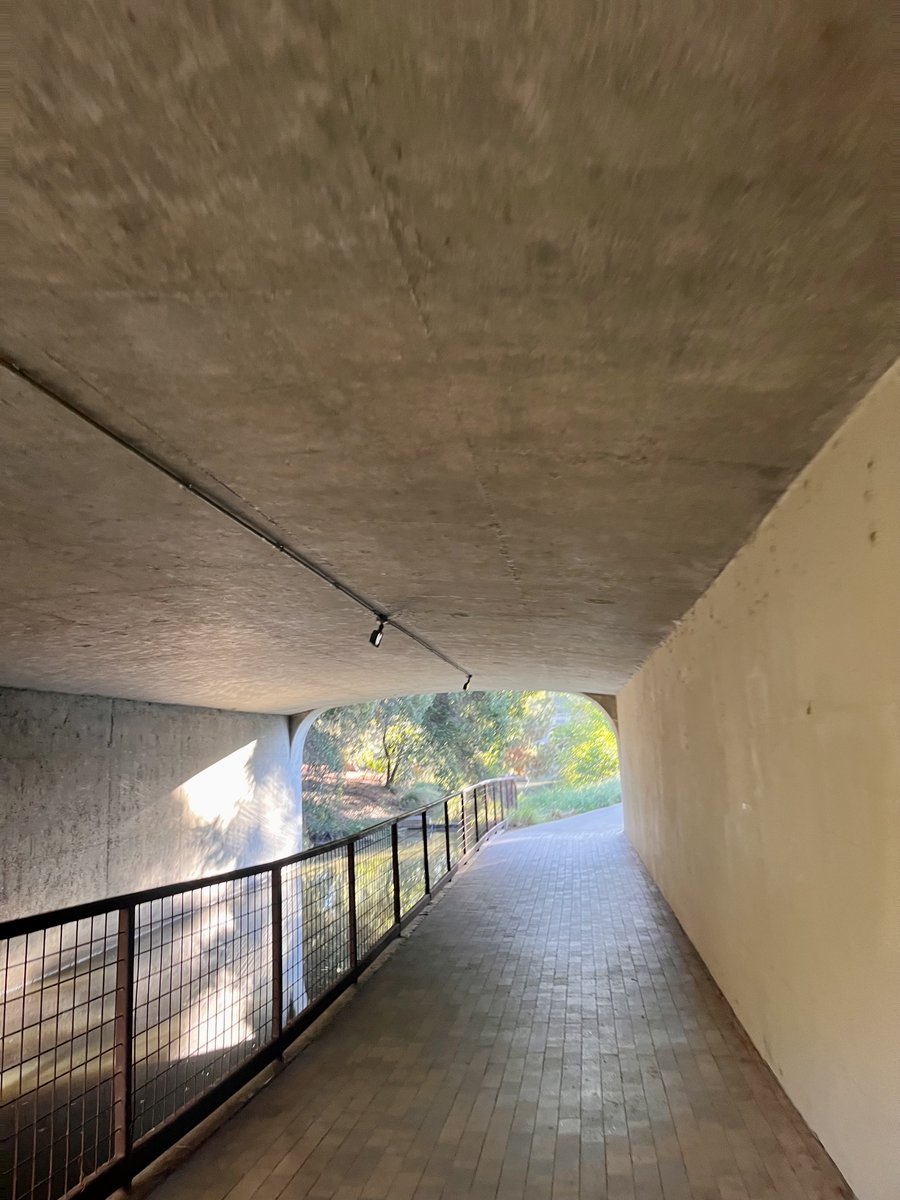
20K 중 UCD 캠퍼스 남쪽을 끼고 도는 샛강/개울creek 길이 있는데, 높낮이가 있어 트레이닝 코스로도 좋다. 이 동네에 사는 동안 뽕을 빼리라.
일본군 위안부에 조선 여성이 가장 많았던 이유
일본인 군의관의 보고서 내용.
조선인 여자들은 정조 관념이 강해서 성경험이 적고 성병이 거의 없으니 일본군 병사들한테 안전하다
어리고 건강할 수록 좋다는 건의에 따라 14~20세 사이 우리나라 여성들을 집중적으로 잡아감
역겨워서 할 말을 잃음 군의관이었다는 아소 테츠오 저거 대대손손 지옥불에 떨어지길 기도할게
> The vividness of life lies in the transition, with its forms aiming at the issue. Actuality in its essence is aim at self-formation. < _Whitehead, Modes of Thought
“삶의 생생함은 이행에 있다.” 생생生生함은 도달점이 아니라 지나가는 중에 만나는 무늬고, 분위기다.
개운하게 달린 10K 아침, 글 쓰던 중 문장 하나가 열리는 순간, 책 읽다 내용이 술술 풀리던 그때, 산타바바라의 그 건물들, 오전 9시 동네의 한가함… 이것들은 무엇을 위해 있는지 묻는 순간 오히려 민망해진다. 의미意味를 찾지 않아도 미味는 있는 것. 순간순간을 즐기는 게 삶의 미美라고 할까. 어쩌면 그게 화이트헤드가 “향유enjoyment”라고 부르는 것이리라.
노래가사 처럼, “The secret of life in enjoying the passing of time.”