This is it.
Everything learned spending millions on longevity.
From: Your Immortal Unc and Auntie.
To: Our Immortal nieces and nephews.
0. Sleep is the world's most powerful drug.
1. Be in your bed for 8 hours
2. Same bedtime every night, any time before midnight
3. Don’t eat right before bed
4. Calm foods for dinner
5. No screens 1 hour before bed
6. Avoid added sugar (be aware it’s in everything)
7. Avoid all things in an American convenience store
8. Avoid fried foods
9. Shoes off at the door
10. Eat whole foods, particularly veggies fruits nuts legumes berries
11. Walk a little after meals or air squats
12. Get your heart rate high routinely
13. Lift heavy things
14. Stretch daily
15. Water pik, floss, brush, tongue scrape, morning and night
16. Make an effort to drink water
17. Get sunlight when you wake up (UV is low)
18. Protect skin in midday sun
19. Stand up straight
20. See at least one friend once a week
21. Avoid plastic where you can (in all things)
22. Circulate air in rooms
23. When stressed, breathe, learn to calm your body
24. Go to the dentist
25. Avoid sitting for long times
26. Protect your hearing, the world is too loud
27. Alcohol is bad for you
28. Finish coffee before noon
29. Avoid bright lights after sunset
30. If obese, look into a GLP
31. Sleep in a cold room
32. Texting while driving is dangerous
33. Turn off all notifications
34. Limit social media use
35. Don’t smoke anything
36. If you struggle to sleep, read a physical book before bed
37. 1 hour before bed have a calm wind down routine: bath, read, light walk, listen to music
38. The body is a clock and loves routine. Have a daily morning and evening schedule.
39. Avoid long distance travel where you can
40. Baby steps first: incorporate new things slowly
41. Do less… most things don’t work.
Bonus points if you get your blood checked.
Start here, it will change your life.
I built a tool that ranks health influencers by how well their claims match 150,000 research papers.
Here's the leaderboard.
Will post more results soon!
Look guys, it's actually really straightforward, a bunch of people staked their ETH on the Ethereum blockchain to earn yield, except they didn't want their capital to be locked up, so they actually staked with a liquid staking protocol called Lido who provided them a liquid staking receipt token called stETH, except they decided to juice their yield further by depositing their stETH receipt tokens into a restaking protocol called Eigenlayer, except they didn't want to lock up their capital, so they actually restaked with a liquid restaking protocol called KelpDAO who provided them with a liquid restaking receipt token called rsETH, except they decided to juice their yield further by depositing their rsETH tokens into a lending protocol called Aave so that they could open a leveraged looping position that borrows ETH against the rsETH collateral and restakes the ETH into rsETH which is then deposited as collateral, except it turns out rsETH used a cross-chain bridge called LayerZero that was hacked by north koreans causing rsETH to become undercollateralized and now these looping positions are stuck and unprofitable, and everyone is pointing fingers at each other, and also DeFi is a very serious industry
Photonics is the trade of the decade
We got in early.
The AI bottleneck keeps moving.
First it was compute → $NVDA won
Then memory → $MU and SK Hynix ran
Now it’s interconnects
Moving data between chips at AI speed.
Copper is done.
Light is next.
We positioned across the photonics stack before the crowd showed up, from materials to lasers to foundries to transceivers.
Here’s what I’m holding:
$SIVE / $SIVEF
The one nobody was watching.
Now confirmed as a laser supplier for 1.6T transceivers going into hyperscaler data centers. Tied into next-gen architectures.
NASDAQ listing plans just hit. Institutions starting to move in.
Feels like the last undiscovered chokepoint.
$AAOI
Fully vertically integrated transceivers and even makes its own lasers.
Serious hyperscaler demand already showing up.
April 30 earnings = big moment.
$AXTI
This is upstream.
Indium Phosphide = critical for AI lasers.
No InP → no lasers
No lasers → no photonics
No photonics → no scaling
Most overlooked part of the chain.
$COHR
Picks and shovels.
Scaling advanced InP wafers. Backed and booked out years.
Positioned across multiple optical growth areas.
$LITE
Could be sold out through 2028.
Massive growth, strong backlog, already landing early CPO orders.
Watch this closely; it’s a signal stock.
$SOI
Quiet monopoly.
Every silicon photonics chip needs SOI wafers.
Huge IP moat. Market still catching on.
$TSEM
Key foundry for silicon photonics.
Scaling capacity hard with long-term demand locked in.
Critical piece of the ecosystem.
$SMSN.L
Only one doing memory + logic + packaging + photonics.
As AI scales, full-stack players win.
Still cheap vs peers.
$EWY
Memory is the other bottleneck.
SK Hynix leading HBM. Demand not slowing.
This gives broad Korea semi exposure.
This isn’t hype. It’s physics.
AI isn’t just about compute anymore.
It’s about moving data.
And the shift from copper to light is happening now.
Institutions are just starting to figure it out.
Shoutout to the leaders in the space on X.
I have got most of my education from them.
They are a must follow in the space
@crux_capital_@PhotonCap@damnang2@aleabitoreddit@ParadisLabs@jukan05
3 progi dzielą nas od miejsca w którym ludzie staną się zbędni w każdym sektorze gospodarki.
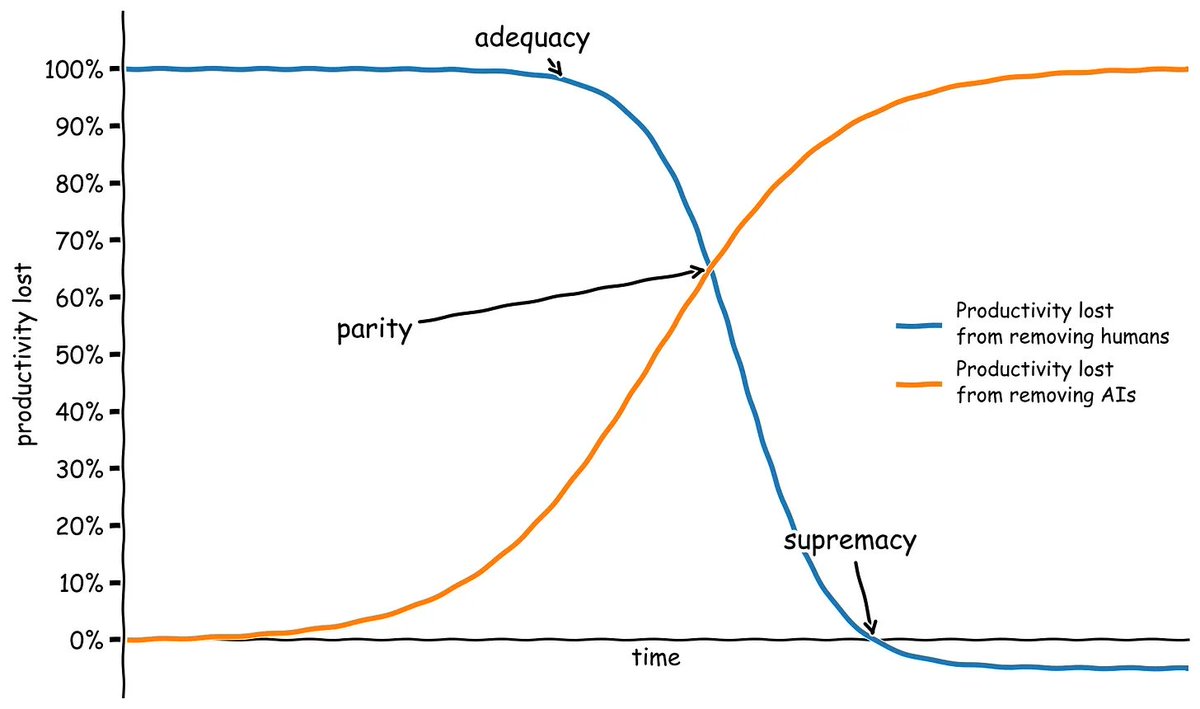
Planned Obsolescence (jeden z najlepszych newsletterów o AI) opublikował framework, który wskazuje ścieżkę do miejsca, w którym AI potencjalnie zastępuje ludzi.
Autorka dzieli framework na trzy progi i dwa sektory:
1. Adekwatność - LLM-y mogą po raz pierwszy tworzyć cokolwiek bez ludzi. Powoli, kiepsko, ale samodzielnie. Jak robot, który uprawia ziemię mniej efektywnie niż średniowieczny chłop - ale robi to samodzielnie.
2. Parytet - usunięcie AI z zadania boli bardziej niż usunięcie ludzi. Ludzie nadal robią rzeczy, których AI nie potrafi, ale sumarycznie to AI wnosi więcej wartości.
3. Supremacja - ludzie przeszkadzają w procesie. Jak w szachach dzisiaj: człowiek w drużynie z AI to balast. Koszty koordynacji przewyższają jakąkolwiek wartość, którą wnosi.
Te trzy progi autorka nakłada na dwa sektory, które napędzą całą resztę:
- Badania nad AI (tworzenie lepszych modeli)
- Produkcja AI (chipy, fabryki, energia, roboty)
Jej szacunki?
Adekwatność badań nad AI - 2028.
Parytet - okolice 2030.
Supremacja badań - krótko po parytecie. Autorka przewiduje 2031.
Według analizy, supremacja w badaniach uruchamia kaskadę.
Powstają systemy AI, które same projektują lepsze AI i szybko uczą się obsługi fizycznego świata - wkraczając w górnictwo, inżynierię i produkcję półprzewodników.
Dla mnie najważniejsze w analizie Planned Obsolence to, że to kolejne źródło, które prowadzi do podobnego wniosku.
Samorozwijające się AI to kwestia kilku lat. I nie ma znaczenia, czy to kwestia dokładnie 2029 czy 2032 roku.
Co wydarzy się po tym - jest wielkim znakiem zapytania, na które nikt nie zna odpowiedzi.
👉 Czy Twoim zdaniem to science fiction? Czeka nas jakaś konkretna blokada w rozwoju AI, czy płynne przejście do supremacji sztucznej inteligencji?
Ekipa! słuchajcie tego uważnie 👀
🍖🍖
Citrini właśnie rozwalił narrację Wall Street o Cieśninie Ormuz🤯
Wysłali gościa z 15k$ w gotówce, okularami nagrywającymi i paczką kubańskich cygar prosto w ogień. Facet podpisał papier, że nie będzie szpiegował. Zignorował ostrzeżenia omańskiego strażnika.Po czym przemycił sprzęt do filmowania i podjechał motorówką bez GPS 18 mil od irańskiego wybrzeża.
Co odkrył?
Dane AIS, na których handlują wszystkie fundusze makro, banki i „eksperci” z CNBC nie widzą połowy ruchu tankowców.
Statki gaszą transpondery, fałszują destynacje, piszą „CHINESE CREW OWNER” i płyną dalej. Irańska flota widmo przerzuciła od początku wojny ropę wartą ~3 miliardy dolarów do Malezji z wyłączonymi AIS-ami.
(Jak to mówią wojna to najlepszy biznes😉)
Cały rynek wycenia ryzyko zamknięcia cieśniny na podstawie nie prawdziwych (nie kompletnych) danych.
To oznacza jedno: zakłócenia w dostawach ropy są obecnie przeceniane.
Kiedy wszyscy patrzą na dashboardy, prawdziwy przepływ dzieje się poza ekranem.
Czyżby właśnie największa niedowartościowana zmienna na rynku energii właśnie wyszła na jaw?🤔
Mięso podane na drugi dzień świąt😉🔥 jak się podobało zostaw ♥️🔁🫡
Cała relacja w linku poniżej 👇🏻👇🏻
$BTC #crypto
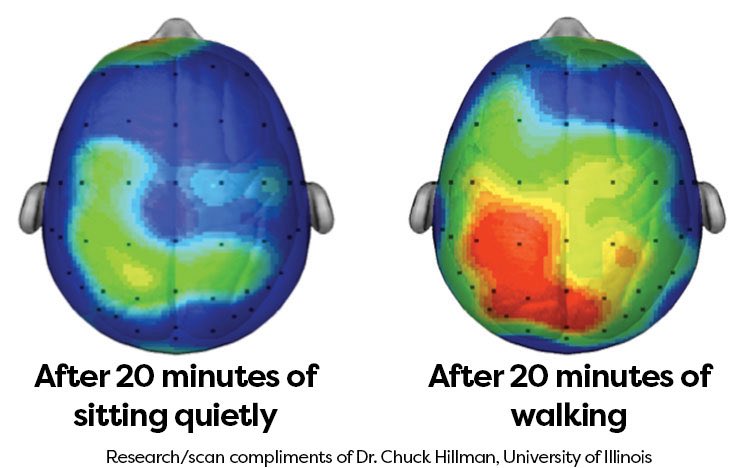
Your brain goes dark when you sit still.
Dr. Chuck Hillman at the University of Illinois put people in brain scanners and measured neural activity after 20 minutes of sitting versus 20 minutes of walking. The difference was notable. The sitting brain showed lower activation in key cognitive control areas. The walking brain showed increased activity across attention and executive networks.
Twenty minutes. Same people. Completely different brain responses.
What you’re seeing in these scans reveals something unsettling about modern life. We’ve built a world that systematically limits optimal brain function. Every chair, every car ride, every hour spent motionless is missed neurological enhancement happening in real time.
The enhanced zones in the walking scan represent areas responsible for executive function, spatial processing, memory formation, and creative problem solving. These regions show stronger engagement when you move. Movement doesn’t just change your body. Movement turns on your mind.
The implications go far beyond fitness. Every major decision you make while sitting is being made without the full acute boost that prior movement can provide. Every problem you try to solve from a desk is being processed with cognitive resources that benefit from activity. Every creative project you attempt while sedentary is running with added support available from movement.
Think about where our most important mental work happens. Board meetings around conference tables. Students taking exams in classroom chairs. Writers staring at screens. Programmers debugging code. Therapists conducting sessions. All of it happening in environments designed to minimize movement.
Hillman’s research suggests we’ve accidentally limited cognitive potential through environmental design. The walking brain and the sitting brain show meaningful functional differences. One operates with enhanced cognitive control. The other runs without that acute boost.
Ancient humans walked 12 miles daily while thinking, planning, and problem solving. Their brains evolved under constant movement. Our brains carry the same neural architecture but we’ve imprisoned it in furniture.
The most productive people throughout history understood this instinctively. Aristotle taught while walking. Darwin took daily thinking walks. Dickens walked 30 miles through London every night. Tesla walked 10 miles daily to stimulate ideas. They weren’t just exercising. They were unlocking cognitive potential that remains less activated when stationary.
The business world talks endlessly about optimizing performance through better tools, systems, and strategies. Meanwhile, the most powerful cognitive enhancer costs nothing and requires no equipment. Just get up and move.
Every step triggers a neurochemical cascade that increases BDNF, boosts dopamine, and activates neural networks that show less engagement during stillness. The effect peaks around 20 minutes and persists for hours afterward.
You can literally watch improvements in cognitive performance turn on and off depending on whether you’re moving or sitting.
The next time you face a difficult decision, a creative block, or a complex problem, pay attention to your position. If you’re sitting, your brain may be operating without the full acute boost available. The solution might require neural resources enhanced by activity.
Stand up. Walk around. Let the enhanced zones activate.
Your best thinking happens when your brain has the support of movement.