What are some notable features of “AI-Native Firms”? They are smaller, flatter and more exper-dense. They have a greater share of engineers and a lower share of managers than their non AI-Native peers.
A delightfully lucid and useful new working paper from @orgRem and Hyunjin Kim.
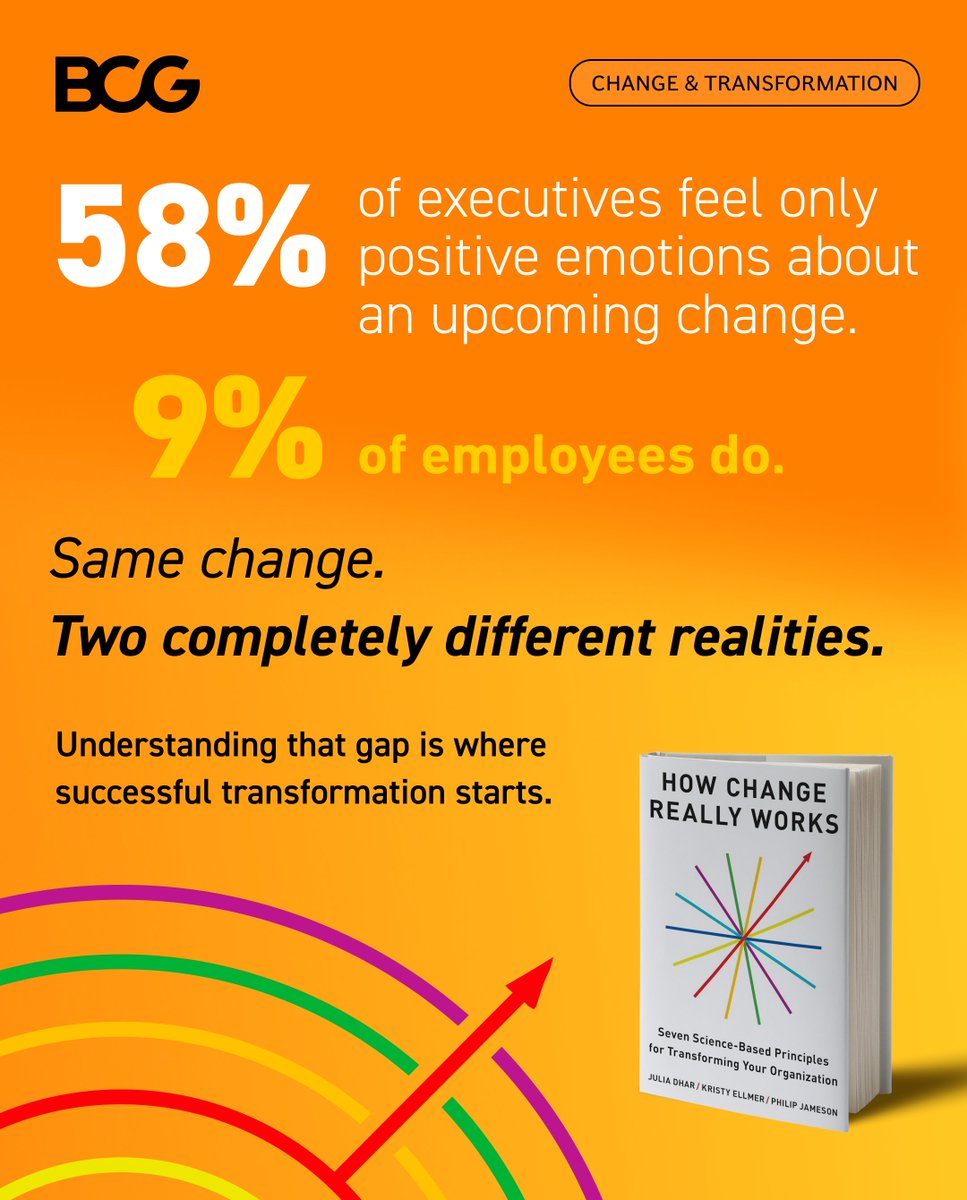
The people *most responsible* for instigating organizational changes are usually the *most positive* about those changes. Employees on the receiving end of those changes see things differently. @julia_dhar
Insight #1: @AlexisRen Alex and @m_ccuri at @axios broke the story blocking “foreign governments, companies and individuals” from accessing Anthropic’s most advanced models, leading Anthropic to cut off all customer access. Not hostile actors, not military labs, but governments, companies, and individuals. Maria - we touched on the idea that this might happen in our keynote together at NACD!
https://t.co/skKet3FXXp
Major developments tonight in the back-and-forth between the U.S. government and Anthropic, with wide-ranging implications for AI governance. What you need to know is in this sharp 🧵 from @vilasdhar
Breaking: The U.S. government just used national security authorities to order Anthropic to cut off its most advanced AI models, including the just-released Fable 5. The company revoked model access for everyone, worldwide, within hours.
One day AI is a product. The next day it is too dangerous to access. 🧵
It’s been a busy week on Mount Everest. As more and more people seek the satisfaction of the summit, my friend @EllmerKristy writes about what she learned from her own Everest-height journey. Today in @CNBCMakeIt https://t.co/8UWloPNUJJ
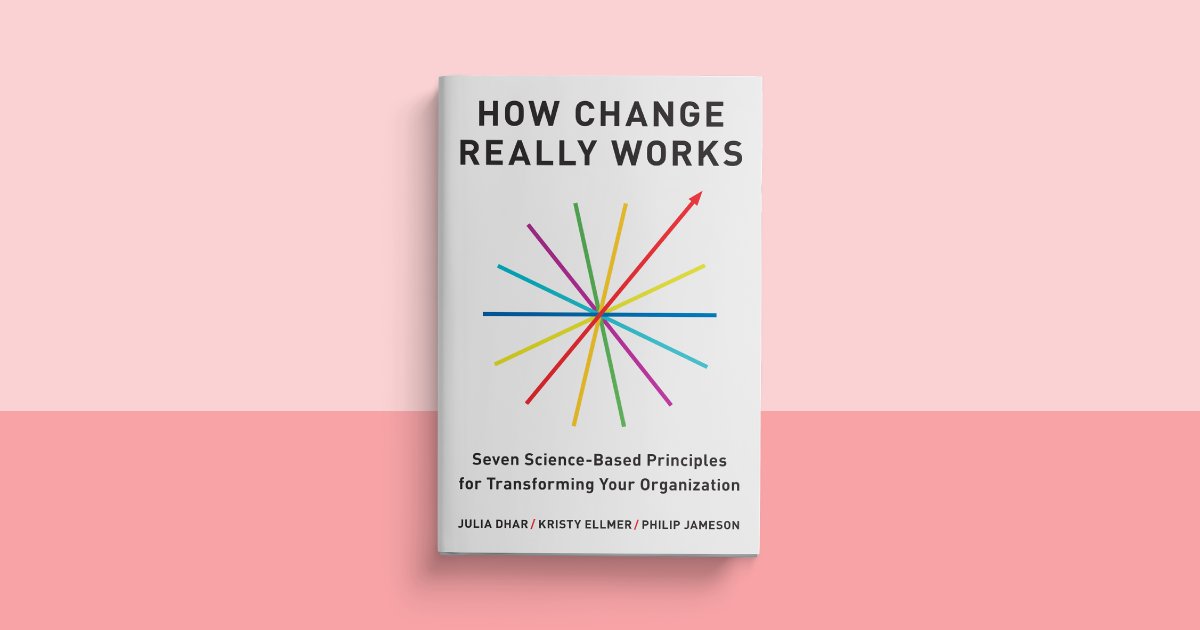
Companies are investing more than ever in transformation—yet too many efforts are still failing. In “How Change Really Works,” three BCG experts reveal why change so often falls short and what leaders can do differently, drawing on behavioral science and real-world experience to show how progress actually takes hold.
The authors argue that change fails not because people resist, but because leaders misunderstand how people really change. With practical principles, this book offers a more human approach to transformation—and a better path to results.
Get the book at the link in our comments.
Today, How Change Really Works has officially launched.
We wrote it for the leaders and employees who have felt the weight of a transformation and wanted a better playbook. It is built from behavioral science and tested across dozens of industries. Out now with @Julia Dhar and @Philip Jameson.
Our deepest gratitude to @BCG , @HarvardBiz . Link to order in replies.
#HowChangeReallyWorks #Transformation #Leadership #change
Tomorrow, How Change Really Works is in your hands.
Three years. Dozens of industries. One question: why does the human side of transformation keep breaking down, even when the strategy is solid?
We built a playbook to help you solve it. With @julia_dhar Philip Jameson. Out tomorrow.
#HowChangeReallyWorks #Leadership #Transformation
🎧 Why do so many organizational change efforts stall or flat out fail?
@julia_dhar, managing director and partner at Boston Consulting Group, says the problem often isn’t strategy. It’s behavior. Leaders spend enormous time designing change, but far less understanding whether employees are willing, motivated, and equipped to adopt it.
Dhar shares research around how leaders can create genuine alignment, and what it takes to sustain momentum once the novelty fades. https://t.co/FLiP5hxY9q
I’m a fan of everything @SahilBloom has written, and his best three words might be these: “Just start moving.”
In “The Clarity Curve”, Sahil argues that waiting for clarity before acting is a totally upside down way to approach the world. Clarity only comes FROM acting.
But he makes one more point that most of us miss. Clarity doesn’t come from taking a single action…it comes from continuing to act, gather information, refine, update, act some more.
Sahil warns us that the clarity curve takes work. He says “In the beginning, the curve is painfully flat. You take action and feel like nothing is happening. No insights, no breakthroughs, no direction. It’s frustrating and disorienting. This is the point where most people quit. They assume the lack of immediate clarity means they’re on the wrong path.
But the truth is that the flat part is the cost of entry. It’s necessary.”
Thank you @SahilBloom for all your wise words, and especially these: just start moving.
Dig deep into the Clarity Curve here: https://t.co/O1N45mrhgd
Change efforts fail more often than they succeed. In fact, 75% of transformations fail. And that success rate hasn’t improved in decades.
BCG’s new book lays out seven science-based principles to help overcome the issues that can derail a transformation.
Find out more: https://t.co/nrGrKlcnTE
Change doesn’t fail because people resist it. It fails when leaders misread reality. Julia Dhar shares how to close the gap and make change easier to adopt in the latest episode of On Leadership. Listen now on Apple Podcasts: https://t.co/bA3WujKrXg