I'm very happy to share that my first first-author paper was published today! 🤩 We show how atmospheric and oceanic teleconnections cause an observed warming below an East Antarctic ice shelf. Check out the thread for more details!
New paper out today in @NatureGeosci: Lauber et al. show how large-scale anomalies in wind and sea ice contributed to an observed increase in water temperatures and basal melting below an East #Antarctic ice shelf after 2016: https://t.co/hHgEHNQ59o
Find more info below!
A detailed 14-year record of ocean circulation beneath #Fimbulisen ice shelf in #Antarctica reveals that ice shelves in East Antarctica may be less stable than previously assumed.
https://t.co/7vmOwhsy5K @JournalPolar @BAS_News
The full hourly mooring time series of temperature, currents, dissolved oxygen, pressure, and salinity from 2009 to 2023 are now also publicly available: https://t.co/GJr7wMa2q9
The third paper of my PhD was published today, with detailed analyses of the longest continuous oceanographic mooring time series beneath an Antarctic ice shelf 🌊🧊
New paper in @EGU_OS: Lauber et al. (@julzhh11, @DareliusElin, @flagneta) have evaluated 14 years of near-continuous mooring data below Fimbulisen Ice Shelf, showing that relatively warm water masses reach below the ice shelf at the ice base and at depth: https://t.co/jkBxuax3ZE
How does the elevation of the Antarctic Ice Sheet vary with ENSO, Southern Annular Mode, or Amundsen Sea Low? Our new GRL paper has the info based on analysis of satellite altimetry data (and GRACE) @AntarcticSciAus
https://t.co/z9wO4EfiPp 🧵1/n
Discussion open for comments on @EgUsphere: Hydrography and circulation below Fimbulisen Ice Shelf, East Antarctica, from 12 years of moored observations https://t.co/BNwQX8xczw
(How) does the ocean contribute to mass loss from the East Antarctic Ice Sheet? I have been working on this question over the past four years at @OceanSeaIceNPI, and today I submitted my PhD thesis ✅
#AntarcticaDay
When #Copernicus 🇪🇺🛰️ satellites see #Anarctica from above, they see 🌍🐧🧊 ❄️🌌🚢🌊🌐🐋🏔️🌋🐳🐚🦑🦐🌨️📡🧬🌡️and many other things...
Let's celebrate the beauty of the fragile environment together🌍
⬇️#Sentinel3 🇪🇺🛰️ image
The traverse has departed! With 95 tonnes of #scientific equipment, living supplies, safety gear and fuel, the traverse team will spend the next 10-14 days towing the tractor train to the drill sites @BAS_News@IcefinRobot @NorskPolar @OceanSeaIceNPI@DareliusElin
A @flynorse Boeing 787 Dreamliner has made history by becoming the first example of the type to land in Antarctica, delivering supplies for @NorskPolar. Take a look at the flight and official pictures here: https://t.co/UJz44NN6kU
We’ve arrived! Departing Cape Town at 23:00 we touched down at Troll Station, Antarctica 5 hours later on board the first #boeing787dreamliner to land on the continent #flynorse@BAS_News@OceanSeaIceNPI @NorskPolar
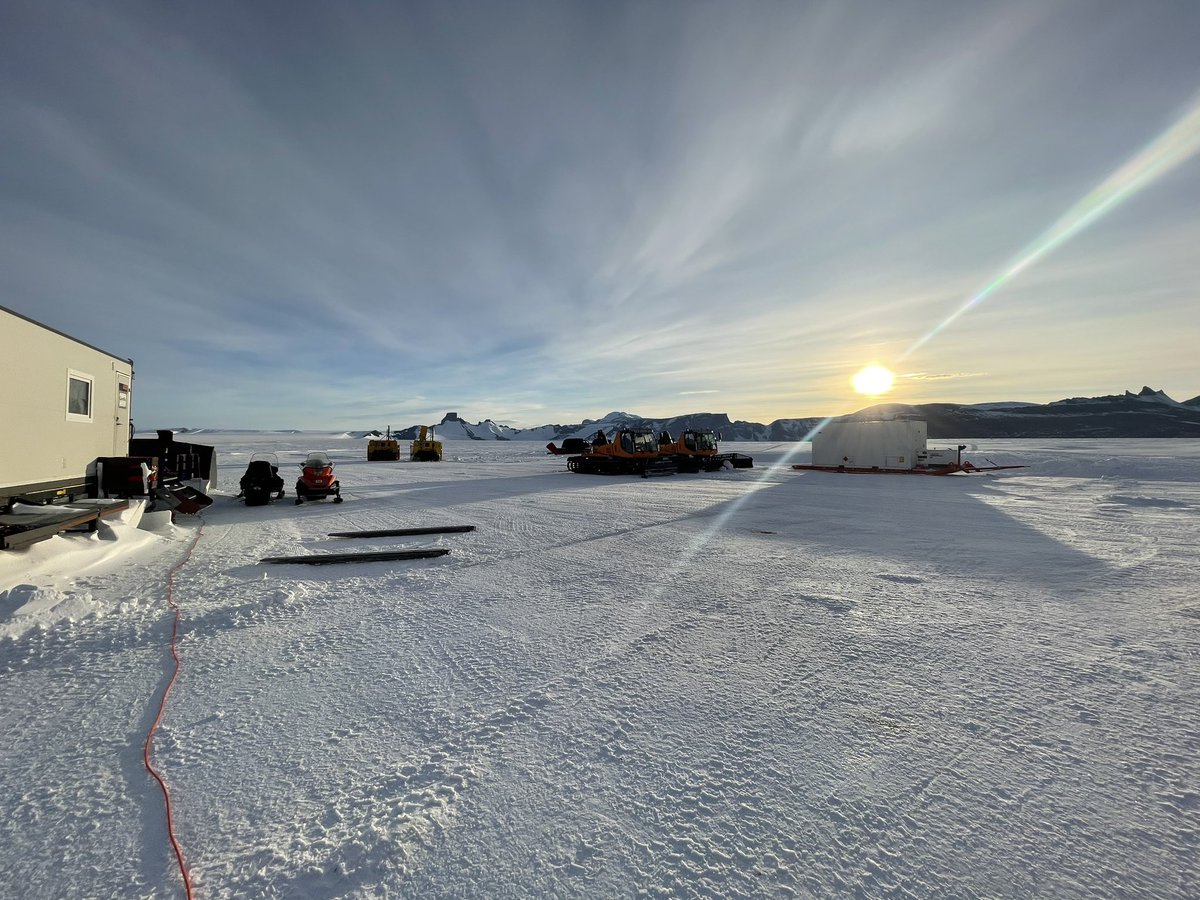
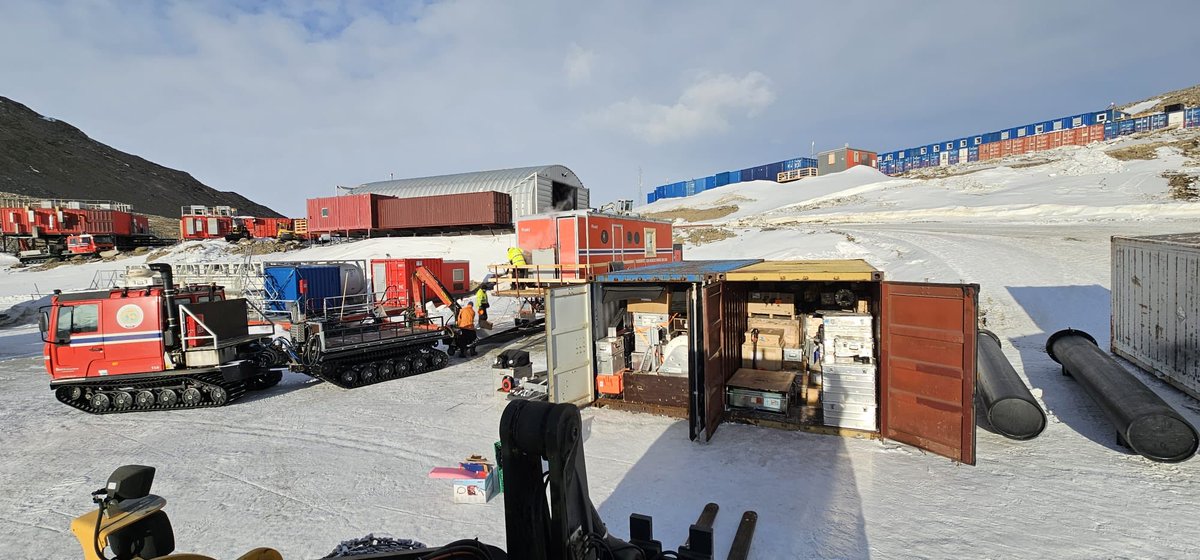
Taking advantage of the nice weather, the advance party are making great progress packing the equipment containers. These will be pulled out to our drill site on Fimbul Ice Shelf by tractors @BAS_News @OceanSeaIceNPI @NorskPolar
We are looking for a student to work on polar oceanography using glider data collected in the Antarctic oceans! 🇦🇶🌊🧊🤩 Please share this opportunity with any likely applicants. The deadline for applications is 15th November https://t.co/2mABPeMBlz
@GreyTash@CanadianSence@curryja The warming below Fimbulisen can be clearly attributed to warm water flowing below the ice shelf from outside the cavity. So I still don't get your point about subglacial rivers.
I'm very happy to share that my first first-author paper was published today! 🤩 We show how atmospheric and oceanic teleconnections cause an observed warming below an East Antarctic ice shelf. Check out the thread for more details!
New paper out today in @NatureGeosci: Lauber et al. show how large-scale anomalies in wind and sea ice contributed to an observed increase in water temperatures and basal melting below an East #Antarctic ice shelf after 2016: https://t.co/hHgEHNQ59o
Find more info below!
@ArgonneForest Thanks! We were hoping for some patterns that would provide an explanation for the temperature variability below the ice shelf, but we did not expect them to match that well :)