Episode 3 of my new podcast features Dr. Jacques Carolan (@JacquesCarolan), a founding Program Director at ARIA (@ARIA_research), the UK’s Advanced Research and Invention Agency. He directs two neurotech programs aimed at one of the most important opportunity spaces: developing tools and systems to interface, at scale, with the human brain.
One program is built on the idea that brain disorders are circuit problems, and funds tools to target those circuits with molecular precision across the whole brain. The other aims to deliver high-performance neurotech to the brain non-invasively or at most in a 30-minute outpatient procedure.
We dig into the engineering and biology behind both programs, potential scaling unlocks for the field, how ARIA programs drive breakthroughs, Jacques background, the role of media in shaping the future, and much more. I hope you enjoy the conversation!
Other links to this episode and references below.
Chapters
00:00:00 Introduction
00:01:22 Why 20 years of neurotech breakthroughs haven't reached patients
00:04:08 The two variables that determine whether any medical technology gets adopted
00:09:17 Brain disorders cost the UK £100B/year and we're barely treating them
00:16:15 Using stem cells and gene therapy to build better brain interfaces
00:21:40 Self-regulating gene therapy that helps the brain quiet its own seizures
00:24:03 The non-technical reasons transformative neurotech fail to reach patients
00:31:34 Watching a 30-second brain ablation stop severe tremors
00:38:11 The case for delivering brain implants and therapies without opening the skull
00:50:56 Why high technical uncertainty makes distributed teams better than vertical integration
01:02:55 Why the UK keeps producing world-class neuroscience but not world-class neurotech companies
01:11:04 What AI-driven hypothesis generation means for breakthroughs per pound
01:20:40 From quantum computing to improv comedy to running £119M government brain programs
We live in a golden age of biology. So why are people still dying from disease?
Because discovery and development move slower than they should.
Today, we’re partnering with Incyte to change that.
Kosmos is now the first agent that can compress months of drug development into weeks, from the earliest stages of scientific discovery through to FDA approval. @Incyte will be the first company to deploy it across their pipeline.
Work that used to take a team of scientists months now happens in weeks.
Patients can't wait, and neither can we.
NSF not only ran with the X-Labs concept, but committed $1.5B This is a bold and exciting opportunity. We want to find the scientists and entrepreneurs who want to make the most of this moment.
Today @NSF announced a major investment of $1.5B towards a new model for scientific research🚨
NSF X-Labs will fund independent teams of researchers, engineers, and entrepreneurs to pursue bold milestone-based scientific challenges.
This is how we revitalize America's scientific engine for the 21st century outside of traditional institutions, conducting science in a way that actually reflects the modern R&D ecosystem ⬇️
https://t.co/wAxo3hHw0b
Underlying all neurogenerative diseases is the general process of aging. We must strike at the root! In the short term, we should restore the health of the support systems of the brain. In the long term, we must build discovery platforms that fully capture human biology.
1/ How long do you want to live?
For most of human history, aging was inevitable.
It's now solvable.
Apply for LBF8 cohort program: longbiofellowship dot org
/THREAD🧵
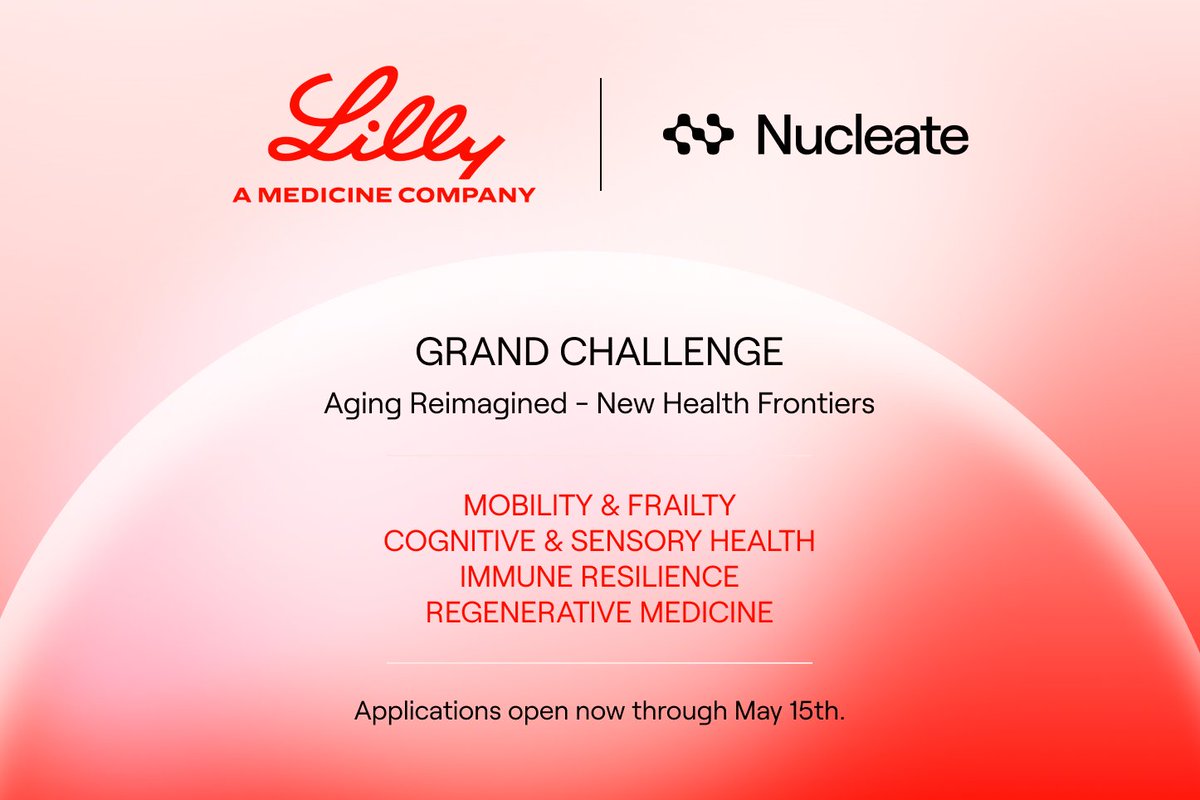
@NucleateHQ and @EliLillyandCo are launching a 100k non-dilutive grant for aging.
This is a pretty good opportunity if you're early and building around longevity.
Repost and tag a friend. Deadline: May 15
Details in the first comment.
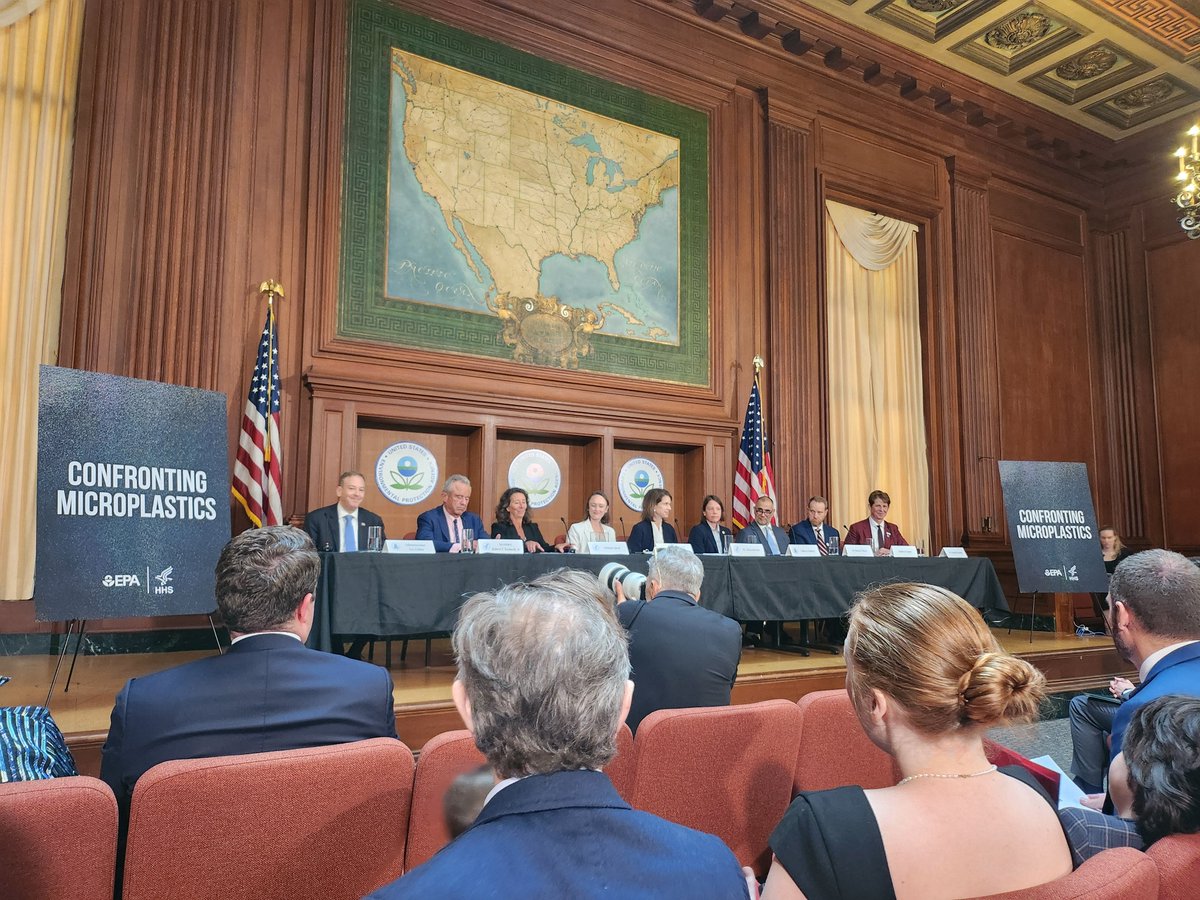
Microplastics are starting to attract the attention of #biotech. Looking for the latest trends?
I mapped the #microplastics landscape. See who and what got funded and where research overlaps with other pollutants.
https://t.co/Ge5LwWvu2g
Let’s stay at peak health without limits!
🧬 Vitalist Bay 2026 is T-30 days away
in Berkeley, CA from May 14-17.
Thanks to our partners, join this week & get:
🩸 Free @rythmhealth blood panel
🩻 Free @BodySpec DEXA scan
Full program @ https://t.co/7L5rUMtZdj
(+ a unique benefit ↓)
OpenAI Foundation is taking an end-to-end approach to tackling Alzheimer's with AI.
We're supporting the full spectrum of work — from early diagnosis and better understanding of the disease, to accelerating new drug discovery.
This month, we're finalizing over $100M in grants across six institutions to advance this comprehensive effort.
https://t.co/HsK5u00Uol
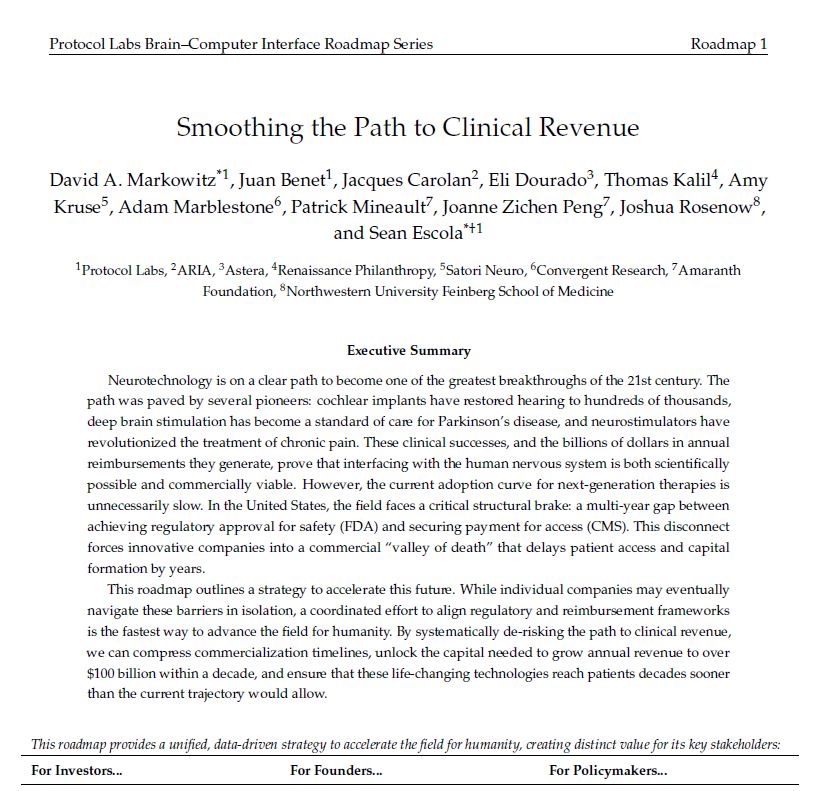
What is holding #neurotech back from being one of the greatest breakthroughs of our time?
Infrastructure.
We know neurotech works & the promise is huge, but getting from approval to access takes years — delaying both patient access & company capital.
Our goal at PL Neuro is to break these bottlenecks.
Here we share a roadmap for navigating this at the field level — because if we want to fix it, it’s going to be all hands on deck: https://t.co/lMHfPhev7i
@nicklegendre Indeed there are huge challenges in measurement across the board. That's kinda the point of the ARPA-H program. The first pillar is to create a gold standard for measurement by creating better sample standards and cross-referencing across different techniques.
Congrats @Sarah_I_Daniels on the launch of a new organization dedicated to pollution exposures for chronic health conditions, including neurological diseases!
📣 Homeworld’s Pollution Program is spinning out Engineered Resilience, led by @Sarah_I_Daniels, to address an overlooked driver of chronic disease: pollutant exposures. The goal is to translate the signals of pollutant-driven harm into biotech tools to curb chronic disease.
If you’re a funder or builder and want to learn more, please reach out. #Biotech #EngineeredResilience
🔗 https://t.co/7VFK8UlpHR
PL Neuro is officially live! https://t.co/JJ5BqOGzCR
We exist to break bottlenecks, accelerate progress in neurotech & NeuroAI, and to invest in innovations that benefit humanity.
This project of @protocollabs will focus on:
1. Neural augmentation
2. Biologically-inspired intelligence
3. Whole brain emulation
Today we’re launching American Wetware, a design studio for building with biology 🇺🇸💧
I’m doing this together with @thisischristina and @p_maverick_b
Our mission is to learn the design language of biology
NYC! Join us April 2 for a PsyMed Ventures neuro event, part of New York Deep Tech Week.
Featuring:
@MeganBlewett RNAi therapeutics & brain reprogramming
Dr. Ann DeSollar blindfold vision (+ live demo) @MindSeeIt@BobbyKasthuri whole-brain emulation
RSVP in 🧵