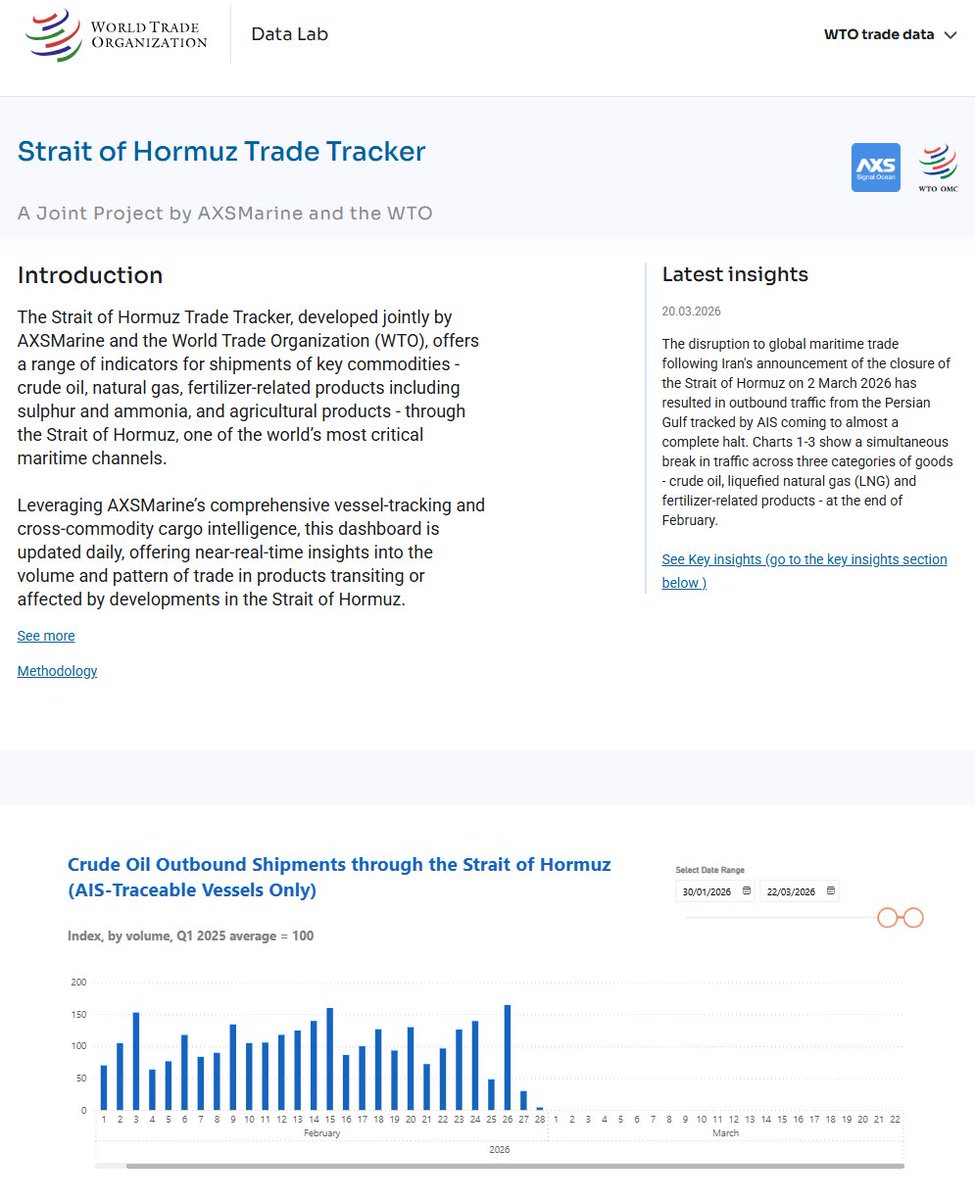
NEW: Visit the "Strait of Hormuz Trade Tracker" to monitor shipments of key commodities - crude oil, natural gas, fertilizer and agricultural products - through the Strait. Explore the WTO-AXSMarine dashboard here: https://t.co/XhcpaMcbqM
IPRI Podcasts|
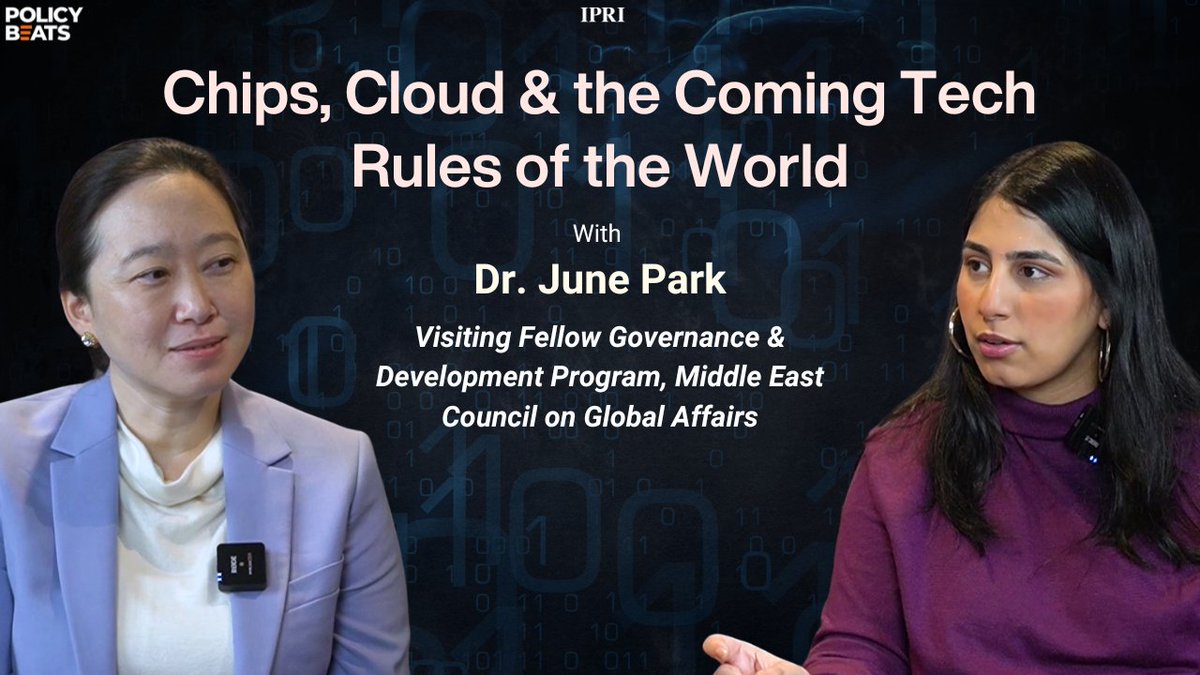
Chips, Cloud & the Coming Tech Rules of the World
Who will write the tech rules of tomorrow? From semiconductor dominance to cloud warfare and AI governance, the global struggle for technological supremacy is already reshaping geopolitics. The race for chips, data centers, and computing power is no longer just a tech competition — it’s a battle over national security, economic power, and global influence.
In this episode, Policy Advocacy Specialist, @JavairyahAatif & Visiting Fellow Governance & Development Program, Middle East Council on Global Affairs, Dr. @junepark
🔹 How semiconductor chokepoints are redefining global alliances
🔹 Why cloud infrastructure is becoming the new “geopolitical battleground”
🔹 The rise of AI power blocs and digital sovereignty 🔹 U.S.–China tech rivalry and the future of global standards
🔹 What the next decade of tech governance will look like
As chips get smarter, clouds get bigger, and AI gets faster — the nations controlling these systems will shape the world’s next political and economic order.
#DataCenters #Geopolitics #NationalSecurity
https://t.co/2zWKF6Abq0
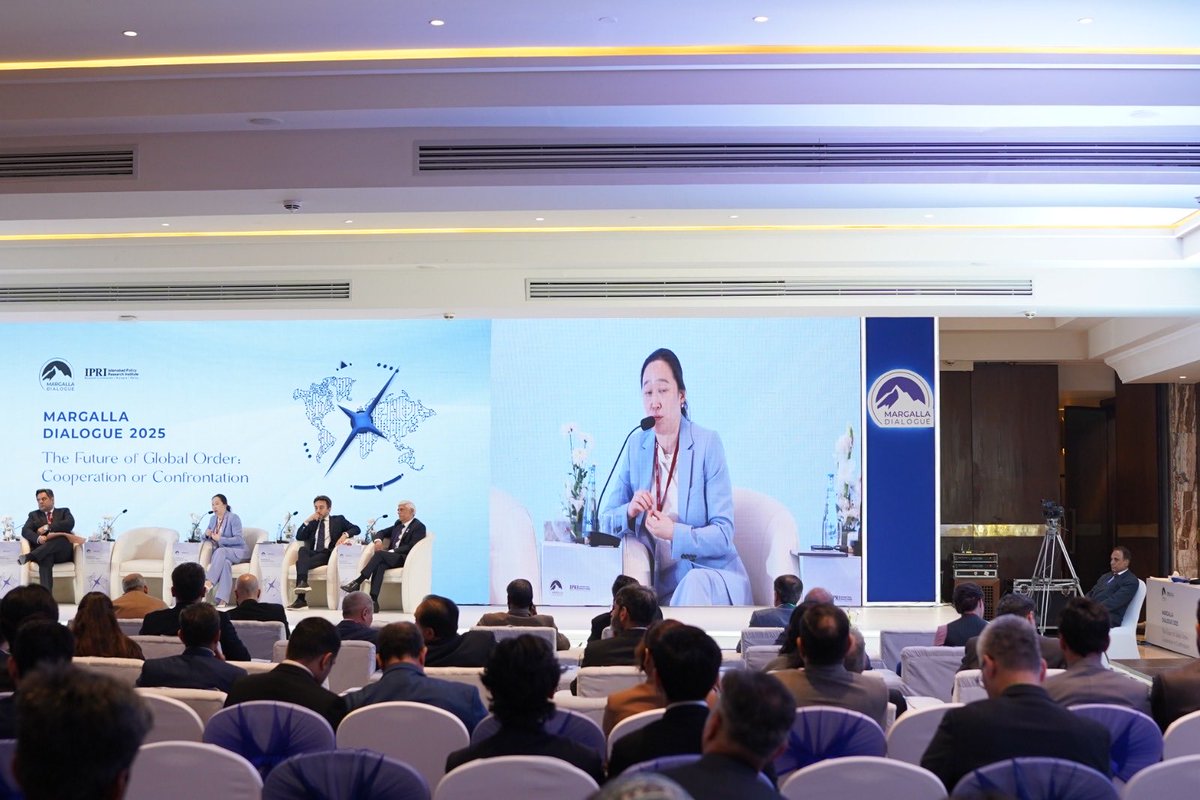
Dr June Park #MargallaDialogue25
one country alone cannot satisfy the needs for establishing sovereign AI. South Korea is heavily dependent on exporting chips but ours is a focus on foundry and yet to be on design and other elements.
#MD25|
Visiting Fellow, Governance & Development Program, Middle East Council on Global Affairs, Dr. @junepark is coming to the #MargallaDialogue2025 on November 11th & 12th, at the Marriott Hotel, Islamabad!
#IPRI
#MD25| Forum C
Dr. @junepark is a South Korean political economist focusing on digital trade, finance and emerging technologies, based in Doha, Qatar. She is a Visiting Fellow of the Middle East Council on Global Affairs (ME Council; formerly Brookings Doha Center).
#IPRI
He criticized Iranian opposition figures for failing to unite against the Islamic Republic.
"Unfortunately, much of their thinking is similar to the Islamic Republic's," he said. "Democracy doesn't mean you can speak and have freedom of speech only as long as you agree with me - otherwise you must be silent." #Iran
https://t.co/PSc9GWkHAe
Issue Brief: "EVs and Batteries in the Gulf: Industrial Policy amid Tariff Wars and the Battle for Market Access" by @junepark
This issue brief examines the relationship between a) industrial policies (focusing on EVs) that entail subsidies and tax exemptions for growth in China, b) overcapacity issues concerning EVs, and c) the subsequent subsidies and tariffs on Chinese EVs by the US and Europe. Analyzing the intersection of these issues sheds light on the factors that have led Chinese automakers to proactively pursue market access in the Gulf.
Read the full issue brief: https://t.co/jttpTTnxmZ
Arabic Version: https://t.co/DOjpxDTkwF
Let's go to the last part of the Miran's paper, which is currencies (Chapter 4 & 5).
Remember that his articulation of all the ills of the US trade imbalance is about the USD as a reserve currency & also the security support the US has to do (two burdens) that has grown, dwarfing the US economy RELATIVE size.
So let's talk about it. But before we even talk about, we have to go through a bit of economics history, if that is okay with you. We'll keep it pretty brief.
#US President Donald Trump responds to criticism over his increasing closeness to #Russia on Ukraine, saying the United States should worry “less” about Vladimir Putin.
https://t.co/W0bqLVkndA
People seem to really love this chart I made showing China's overlapping tech-industrial ecosystems. In my High Capacity piece, I pointed out two trends:
1. Chinese firms are expanding across these different domains
2. These tech-industrial ecosystems themselves are converging
In case you missed it, here's the piece again:
https://t.co/kHlPnLMtaj
Huawei CEO Ren Zhengfei
"Our previous worries about lack of core technology have eased, I firmly believe that a greater China will rise faster"
"China's advanced semiconductor manufacturing process can produce chips equivalent to 5.5nm, but TSMC and Samsung have already achieved mass production of 3nm process, leading by at least one generation.”
China called on the US to stop politicizing and weaponizing economic and trade issues, as Washington tries to limit overseas investments by Beijing in line with President Donald Trump’s “America First” policy. https://t.co/Mb9tQJFdVm
Do tech export controls cause China to more strongly and successfully pursue developing domestic alternatives? At a minimum, it’s obvious that export controls are neither a necessary nor a sufficient condition. Here is a a tiny subset of the long list of industries where U.S./Allied firms used to lead but China now dominates. In each case, no one ever applied export controls against China.
About five years after China began a crackdown on it’s most powerful private business owners, the nation’s billionaire tech entrepreneurs are suddenly back in vogue https://t.co/ZxE70rU2gE
The Trump Administration may not support Intel fabs being run by a foreign entity, Reuters reports, in response to an earlier story by Bloomberg that said TSMC execs met with White House officials and had been asked to take a controlling stake in Intel’s fabs as part of a chip manufacturing joint venture aimed at increasing the amount of advanced chips made in the USA. 1/5 $TSM $INTC #semiconductors #semiconductor https://t.co/6xUZccHHX4
Some thoughts the region in the coming year. ME Outlook 2025: Shifting Security Dynamics in the Gulf – NUS – Middle East Institute @MEI_NUS @junepark @GUQatar @guqdean @SmallStates_GUQ https://t.co/SDMURjrMWY
Trump plans to release an executive order elevating crypto as a policy priority and giving industry insiders a voice within his administration https://t.co/6k7pCJuQTa