From a standard ReAct (Reason + Act) loop to autonomous swarms, Partha Sarkar digs into the nitty-gritty details of working with advanced agentic architectural patterns. https://t.co/RBl8cOdQ1E
Anthropic Engineering: "At Anthropic, we don't write prompts anymore. we build loops"
in 42 minutes, she shows how the Claude team creates loops that prompt themselves
if this cost $400, people would call it the best agents course of the year
it's free
watch it, and Bookmark.
🚨 Anthropic just showed a 27-minute workshop on how to actually write prompts for Claude.
Taught by the people who built it.
Free. No registration. No paywall.
I've seen $300 courses that don't cover what they teach in the first 8 minutes.
Watch the session
Andrew Ng just dropped the best 2-hour course on Graph Engineering: from single agent to full automation
9:14 - your first agent
33:11 - loop engineering
1:02:46 - graph engineering
1:30:15 - agents that rewrite themselves
1:49:05 - full graph system
two hours, and it replaces every agent tutorial you bookmarked this year
Prompts → Agents → Loops → Graphs
most people will stop after the first agent and call it automation
he saves the last forty minutes for the graph that runs it without him
same model, same tokens, completely different week
watch it today
the step-by-step guide is below, save it while it is still early ↓
Banger paper from Google.
If you maintain a skill library for your agents, you might want to check this out.
(bookmark it)
This work separates three things that skill-evolution systems usually collapse into one. Raw execution traces, a persistent wiki of accumulated knowledge, and the executable skills themselves.
Experience gets consolidated into the wiki, and every later skill update builds on that wiki instead of on a scattered optimization history.
Ablations confirm the wiki is what carries a lot of the gain. Two results stand out in particular. Smaller models with evolved skills beat substantially larger models without them. And skills evolved by one model transfer across families, where skills evolved elsewhere sometimes beat self-evolved ones.
Paper: https://t.co/6qftGirTpE
Chat with Paper: https://t.co/rrVzkkR1ij
Just saw that the LLMs-from-scratch repository passed 100,000 stars on GitHub!
This is super cool and motivating. I am really happy to see that this open-source repo has helped so many people.
Thanks also to everyone who shared ideas and opened PRs with improvements!
Of course, I plan to keep adding new material, including new attention variants and architectures (while bigger projects like RL and Reasoning From Scratch live in their separate repositories).
I am also currently working on a larger applied custom “small” LLM project. It has been keeping me super busy this month, but I will share more on that soon.
If you are new to it, some of the highlights include
1. Of course, the complete code path from tokenization and attention to pretraining, classification, and instruction fine-tuning, etc. All of it FROM SCRATCH, of course! (RL lives in a companion repo.)
2. From-scratch implementations of Llama, Qwen, Gemma, and Olmo (smaller variants that run locally and can be plugged into the training scripts).
3. From-scratch implementations of attention alternatives and other architecture components, such as GQA, MLA, sliding-window attention, Gated DeltaNet, DeepSeek Sparse Attention, cross-layer KV sharing, and mixture-of-experts
4. Materials on KV caching, training performance, memory-efficient weight loading, DPO, evaluation, and LoRA
So, if you don’t have any weekend plans yet, happy tinkering!
managed deepagents is one of the launches ive been more excited about in a while
wrote a bit about the journey from early langchain to managed agents, and why i think they will be a step change in how easy it is actually run agents
Agentic Document Extraction just got much faster! From previous 135sec median processing time down to 8sec. Extracts not just text but diagrams, charts, and form fields from PDFs to give LLM-ready output. Please see the video for details and some application ideas.
Nemotron-CORTEXA just reached the top of the SWEBench leaderboard for using LLMs to solve software engineering problems, solving 68.2% of SWEBench GitHub issues!
It does so by using a multi-step problem localization and repair process, generating multiple proposal candidates and then choosing a final solution with an LLM.
The embedding model we built for this has been released, and code will be released soon. Paper will be at ICML 2025!
More information here:
https://t.co/uwIrC5j2nl
🚀Excited to share our latest work:
LLMs entangle language and knowledge, making it hard to verify or update facts.
We introduce LMLM 🐑🧠 — a new class of models that externalize factual knowledge into a database and learn during pretraining when and how to retrieve facts instead of memorizing them.
🧠Why LMLM?
• Learning to look up facts is easier than memorization
• Externalizing knowledge improves factual precision
• Enables instant machine unlearning by design
LMLM opens new directions for how future language models can manage and access knowledge.
📄 [ArXiv] https://t.co/CJFzyBtoiM
🌐 [Project Page] https://t.co/dt2t9m656V
💻 [Code] https://t.co/vIx1vKPNXC
🎤 [Talk] https://t.co/60CiOXfdEO
Huge thanks to my amazing collaborators:
@linxizhao4@sofianzalouk Christian Belardi Justin Lovelace @JinPZhou
And to our incredible advisors @KilianQW, @yoavartzi, and @JenJSun for their generous support and insight.
analyzed common prompt engineering strategies from several of the major AI assistants' system prompts for 18 cents with DocETL
it is insane how instructions like "Your goal is to leave the user feeling like no stone has been left unturned. Responses that are too short are lazy." (WhatsApp) underpin the modern AI economy
How does @GoogleDeepMind's AlphaEvolve "evolve" code? @labriataphd breaks down the intelligent prompting, creative mutation, and survival-of-the-fittest approach that allows AI to discover optimized solutions and even rediscover known mathematical theorems.
https://t.co/fLIhUauC7T
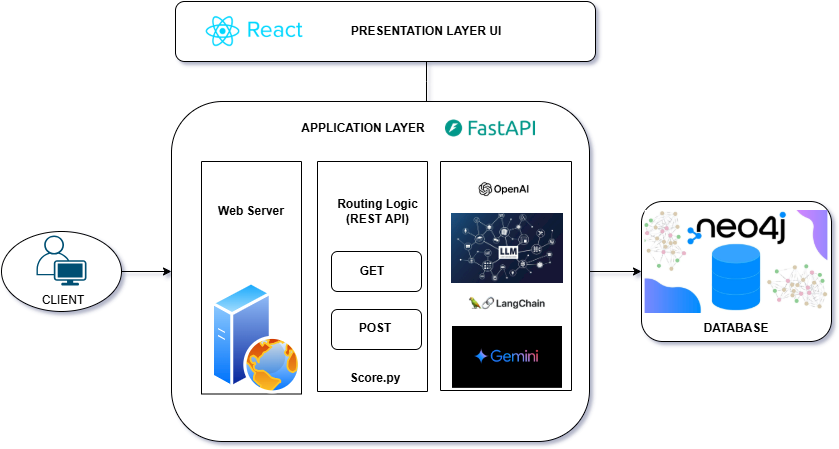
Turn messy files into queryable knowledge graphs — fast. ⚡
Part 4 of the Neo4j LLM Knowledge Graph Builder series shows how the back-end architecture and APIs make it happen.
Build smarter, scale faster 👉 https://t.co/7LSWgqRkwO
#Neo4j#KnowledgeGraphs#LLMs#GenAI