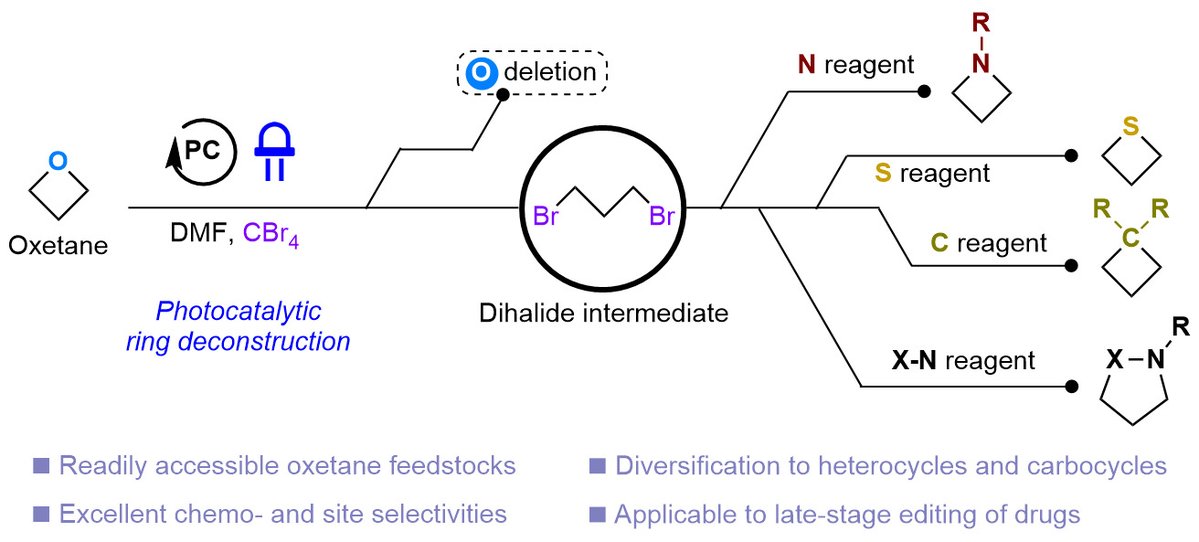
Atom-swapping in a saturated heterocycle? We report a photocatalytic transmutation strategy in @Nature that exchanges O within an oxetane for N, S, C & even dual atoms, simplifying access to a variety of non-aromatic cyclic pharmacophores & enabling late-stage editing of complex bioactive molecules. Great DFT insights from @XZhangChem. @ChemNUS@ResearchFoS@NUSResearch #skeletalediting #atomswap #photocatalysis #oxetanes #azetidines #thietanes #cyclobutanes #drugdiscovery https://t.co/IYSh3U4zIU
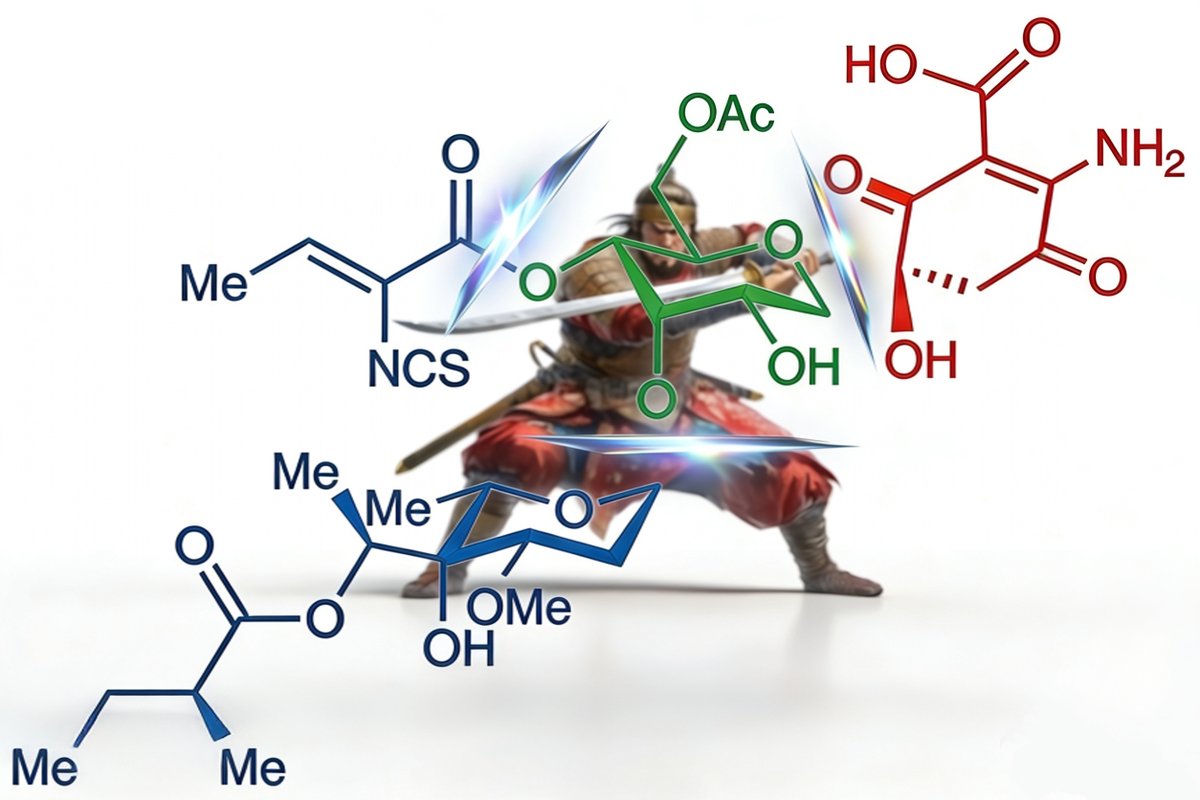
I really happy to share our lastest publication in @J_A_C_S
"Generation of Stereocenters via Single-Carbon-Atom Doping Using N-Isocyanides"
Huge congrats to everyone involved! And excited to see my first paper as a corresponding author!
https://t.co/K0cXCv9ehN
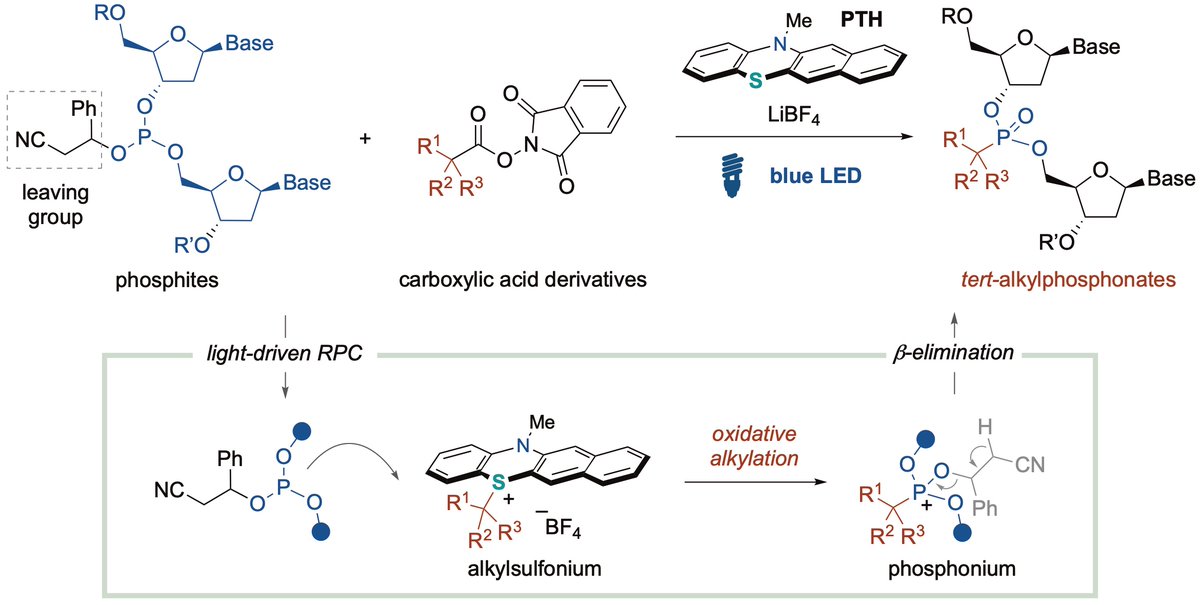
Our new paper on chemical modification of nucleotides "synthesis of tertiary alkylphosphonate oligonucleotides" by a collaborative work with @TakedaPharma and @segawagroup has been published to @NatureComms. Congratulations Kenji and all members! https://t.co/7jN21sXFtj
This is how I advise my #PhD students to write research manuscripts (in case someone finds it helpful).
General points:
1. Research questions addressed by your manuscript are key and should guide you.
2. Don’t view your manuscript as an article. See it as a STORY.
3. Pick the writing style that is easily understood by a broader community. Make reading easy.
4. Most of data should get into the paper. If some doesn’t support the hypothesis, it still must be in the Suppl. Information. It must show the reproducibility limits.
5. Make the paper shorter, not longer. Cut out things that may sound like ‘bluff’ or ‘decoration’ of the story. Use well-defined terminology, don’t invent it unless clearly necessary.
6. Focus on reporting & explaining the numbers. Minimize discussions of qualitative outcomes and your imagination.
▫️
Specific steps:
1️⃣ First, formulate and polish the key questions that your study addresses. It may take hours or even days (even though you've been doing research in this area for years). A single study should address no more than 1-3 key questions. It’s your perfect start for writing.
2️⃣ Write down the structure of your STORY first: Sections and Subsections that will answer those questions. Into each subsection, put 1-2 sentences that formulate the message(s) from this subsection. It will hugely help you navigate the manuscript later and save a lot of time.
3️⃣ Write approximate messages in the conclusion section. Usually, no more than 1-4 sentences.
▫️
At this point, SHARE your [structure+questions+messages] document with your advisor for feedback. Toss it back and forth until you both converge. You can also include major collaborators if needed.
▫️
4️⃣ Write the introduction part. Put down the paragraphs that introduce a reader into the key question(s) of the manuscript and the background of your story.
5️⃣ Write the main text for each section, smoothly and firmly. Each paragraph should add a separate value and end with a message-like sentence. Follow the “First… Second… Third…” structure for paragraphs when possible, it gives rigor and readability to your story.
6️⃣ Write the conclusions. Add a broader perspective that is justified and not generic.
7️⃣ Write the abstract. It must have simple terminology and clearly explain what readers can find inside the paper. It also should contain the key conclusions.
8️⃣ Write up 4-5 different titles and spend >30 mins with your team discussing which title sounds best.
Finally, iterate on the resulting draft within your team.
The number of drafts can easily exceed 20.
▫️
❗In addition, I always emphasize that a high quality of your research paper:
- sharpen your writing and analytical skills.
- shapes your reputation.
- shows who you are as a researcher and communicator.
▫️
p.s. Everyone has a different style of advising and writing. You can adopt only some specific steps if you find them helpful.
p.p.s. Another way that we sometimes use is by starting with figures ('story in figures' style).
#AcademicTwitter #AcademicChatter
Cobalt-Catalyzed Wagner-Meerwein Rearrangements with Concomitant Nucleophilic Hydrofluorination (Craig P. Johnston and co-workers) @TheJohnstonLab @StAndrewsChem#openaccess https://t.co/gGMnxxRuV3
We are delighted to share that our work on APEX has been published. This method provides rapid access to challenging polyaromatic hydrocarbons (PAHs). We thank @serbonline for the funding, computing facility “PARAMShakti” @IITKgp. @MdRajaSk1994@Arya @ Arpita @ChemShuv07