The perfect Father's Day message.
Pope Leo:
You’ve heard your whole life that God loves you.
But do you actually believe it?
You are precious in God’s eyes. You are unconditionally loved by Him.
♰❤️ June is the Month of the Sacred Heart of Jesus ❤️♰
Blessed be God.
Blessed be His Holy Name.
Blessed be Jesus Christ, true God and true Man.
Blessed be the Name of Jesus.
Blessed be His Most Sacred Heart.
Blessed be His Most Precious Blood.
Blessed be Jesus in the Most Holy Sacrament of the Altar.
Blessed be the Holy Spirit, the Paraclete.
Blessed be the great Mother of God, Mary most Holy.
Blessed be her Holy and Immaculate Conception.
Blessed be her Glorious Assumption.
Blessed be the name of Mary, Virgin and Mother.
Blessed be St. Joseph, her most chaste spouse.
Blessed be God in His Angels and in His Saints. Amen.
Cor Jesu Sacratissimum Miserere Nobis
June is dedicated to the Sacred Heart of Jesus: a time to remember Jesus' faithful and unconditional love for all humanity. This devotion springs from contemplating His pierced Heart, a symbol of a love that never tires of forgiving and healing each and everyone of us.
Jesus asked St. Margaret Mary Alacoque that devotion to His Sacred Heart be spread in order to make reparation for indifference and to respond with love to His self-giving on the Cross and in the Eucharist. During this month, the Church invites us to draw closer to Him through concrete acts of charity, prayer, and complete trust in His mercy.
“We must lovingly safeguard the grandeur of humanity bestowed upon us and revealed in its fullness in Christ, the splendor of which no machine can ever replace.” —Pope Leo XIV
Pastel de nata is a famous Portuguese egg custard tart with a flaky pastry crust, traditionally dusted with cinnamon or powdered sugar. Did you know it has Catholic origins?
Discover the world through the eyes of three precocious kids when you stream "Fork in the Road" on EWTN+!
https://t.co/yhUDIOh2te
Bishop Robert Barron delivered a keynote address at Rededicate 250 on Sunday May 17th, reminding us that human dignity begins with freedom — a freedom that comes from God, not government, and can never truly be taken away. “God could have made us robots or marionettes,” he says, but love only exists where there is free will. “If you’re forced to love, you’re not really loving.” We are made to choose God with our own hearts, because “love is what makes us fully alive” — we are children of God, created to love freely.
“AI can process information quickly, but it cannot replace human intelligence… AI can never replace the unique gift that you are to the world.”
At NCYC 2025 in Indiana, Pope Leo spoke to a stadium full of Gen Z youth and young adults and reminded them that no algorithm can pray, love, or wonder in their place. As the Church prepares to receive his new encyclical on AI, Magnifica Humanitas, this May 25, we remind the young generation of the Holy Father's words, to use tech in a way that helps you grow in holiness—not in a way that replaces your heart, your creativity, or your friendships.
Remember, no machine can replace the unique, unrepeatable gift that you are.
Hail, Holy Queen,
Mother of mercy,
our life, our sweetness and our hope.
To thee do we cry, poor banished children of Eve.
To thee do we send up our sighs,
mourning and weeping in this valley of tears.
Turn, then, most gracious advocate,
thine eyes of mercy toward us,
and after this, our exile,
show unto us the blessed fruit of thy womb, Jesus.
O clement, O loving, O sweet Virgin Mary.
Pray for us, O holy Mother of God.
That we may be made worthy of the promises of Christ.
Amen.
May 13 is the anniversary of the apparition of Our Lady to three shepherd children in the small village of Fatima in Portugal in 1917. She appeared six times to Lucia, 9, and her cousins Francisco, 8, and his sister Jacinta, 6, between May 13, 1917 and October 13, 1917.
The story of Fatima begins in 1916, when, against the backdrop of the First World War which had introduced Europe to the most horrific and powerful forms of warfare yet seen, and a year before the Communist revolution would plunge Russia and later Eastern Europe into six decades of oppression under militant atheistic governments, a resplendent figure appeared to the three children who were in the field tending the family sheep. “I am the Angel of Peace,” said the figure, who appeared to them two more times that year exhorting them to accept the sufferings that the Lord allowed them to undergo as an act of reparation for the sins which offend Him, and to pray constantly for the conversion of sinners.
Then, on the 13th day of the month of Our Lady, May 1917, an apparition of ‘a woman all in white, more brilliant than the sun’ presented itself to the three children saying “Please don’t be afraid of me, I’m not going to harm you.” Lucia asked her where she came from and she responded, “I come from Heaven.” The woman wore a white mantle edged with gold and held a rosary in her hand. The woman asked them to pray and devote themselves to the Holy Trinity and to “say the Rosary every day, to bring peace to the world and an end to the war.”
She also revealed that the children would suffer, especially from the unbelief of their friends and families, and that the two younger children, Francisco and Jacinta would be taken to Heaven very soon but Lucia would live longer in order to spread her message and devotion to the Immaculate Heart.
In the last apparition the woman revealed her name in response to Lucia’s question: “I am the Lady of the Rosary.”
That same day, 70,000 people had turned out to witness the apparition, following a promise by the woman that she would show the people that the apparitions were true. They saw the sun make three circles and move around the sky in an incredible zigzag movement in a manner which left no doubt in their minds about the veracity of the apparitions. By 1930 the Bishop had approved of the apparitions and they have been approved by the Church as authentic.
The messages Our Lady imparted during the apparitions to the children concerned the violent trials that would afflict the world by means of war, starvation, and the persecution of the Church and the Holy Father in the twentieth century if the world did not make reparation for sins. She exhorted the Church to pray and offer sacrifices to God in order that peace may come upon the world, and that the trials may be averted.
Our Lady of Fatima revealed three prophetic “secrets,” the first two of which were revealed earlier and refer to the vision of hell and the souls languishing there, the request for an ardent devotion to the Immaculate Heart of Mary, the prediction of the Second World War, and finally the prediction of the immense damage that Russia would do to humanity by abandoning the Christian faith and embracing Communist totalitarianism. The third “secret” was not revealed until the year 2000, and referred to the persecutions that humanity would undergo in the last century: “The good will be martyred; the Holy Father will have much to suffer; various nations will be annihilated'”. The suffering of the popes of the 20th century has been interpreted to include the assassination attempt on Pope John Paul II in 1981, which took place on May 13, the 64th anniversary of the apparitions. The Holy Father attributed his escape from certain death to the intervention of Our Lady: “... it was a mother's hand that guided the bullet's path and in his throes the Pope halted at the threshold of death.”
What is the central meaning of the message of Fatima? Nothing different from what the Church has always taught: it is, as Cardinal Ratzinger, now Pope Benedict the XVI, has put it, “the exhortation to prayer as the path of “salvation for souls” and, likewise, the summons to penance and conversion.”
Perhaps the most well known utterance of the apparition of Our Lady at Fatima was her confident decalaration that “My Immaculate Heart will triumph”. Cardinal Ratzinger has interpreted this utterance as follows: “The Heart open to God, purified by contemplation of God, is stronger than guns and weapons of every kind. The fiat of Mary, the word of her heart, has changed the history of the world, because it brought the Saviour into the world—because, thanks to her Yes, God could become man in our world and remains so for all time. The Evil One has power in this world, as we see and experience continually; he has power because our freedom continually lets itself be led away from God. But since God himself took a human heart and has thus steered human freedom towards what is good, the freedom to choose evil no longer has the last word. From that time forth, the word that prevails is this: “In the world you will have tribulation, but take heart; I have overcome the world” (Jn 16:33). The message of Fatima invites us to trust in this promise.
https://t.co/BhWlt6sGGr
On the anniversary of Our Lady's first apparition at Fatima, we recall the three secrets of Fatima--Our Lady's warning to humanity!
Our Lady of Fatima, Pray for us!
“I am with you always, even to the end of the age.” ✨☁️
Today we celebrate the Ascension of the Lord, the glorious moment when Jesus, having completed His earthly mission, was taken up into Heaven and seated at the right hand of the Father.
The Ascension is not a story of absence, but of a new and deeper presence. Christ does not abandon His Church; He enters the glory of the Father with His glorified humanity, opening for us the way to Heaven. He goes before us, so that where He is, we too may one day be.
Understanding the Mystery of the Ascension:
1️⃣ The End of His Visible Earthly Presence: For forty days after His Resurrection, Jesus appeared to His disciples, teaching them, eating with them, and confirming the reality of His victory over death. Then, before their eyes, He was taken up into Heaven.
2️⃣ Humanity Brought into Glory: As a cloud received Him from their sight, Christ’s glorified humanity entered forever into the presence of the Father. In Him, our human nature has been lifted up and called to share in the life of Heaven.
3️⃣ The Way Opened for the Righteous: Christian tradition sees in Christ the Savior who opens the gates of Heaven to the righteous who had awaited redemption. He is the victorious King who leads humanity back to the Father.
4️⃣ Seated at the Right Hand of the Father: The Ascension reveals Christ’s kingship and His priestly intercession for us. He is not far from us; He reigns, intercedes, and prepares a place for those who remain faithful to Him.
The Ascension reminds us that while our feet are on earth, our true citizenship is in Heaven. We live in hope, knowing that our Lord has gone before us and remains with His Church always.
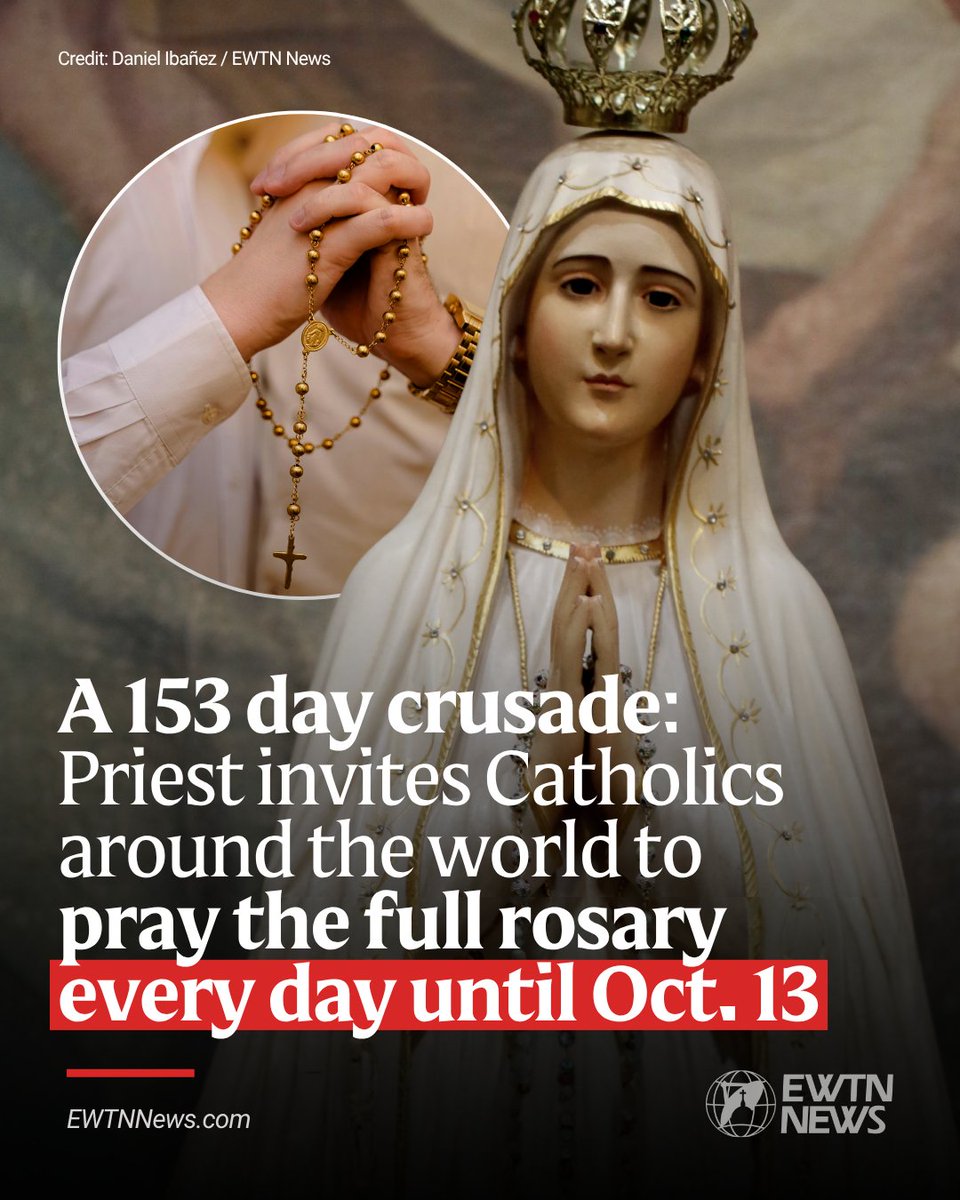
A Filipino-American priest of the Marians of the Immaculate Conception (MIC) is inviting Catholics around the world, beginning May 13, the feast of Our Lady of Fátima, to enter into a 153-day spiritual crusade: to pray the full rosary every day until Oct. 13 “for the salvation of souls.”
Father James Cervantes, MIC, known for his initiative calling for Eucharistic revival in the Philippines and co-launching the Philippine Rosary Crusade during the EDSA Revolutionʼs 40th anniversary, is calling the faithful to respond to what he described as heaven’s urgent appeal for our time.
“The premise is simple,” he said. “We are living in a time of deep moral confusion, widespread indifference to God, and a growing loss of souls. Our Lady has already given us the remedy. The answer is prayer, sacrifice, and the holy rosary.”
The initiative, called “The 153-Day Fátima Invitation,” asks the faithful to offer 153 Hail Marys a day for 153 days, from May 13 to Oct. 13 — the exact span of the apparitions of Our Lady of Fátima.
At Fátima in 1917, Our Lady appeared to three shepherd children and pleaded with the world: “Pray, pray much, and make sacrifices for sinners, for many souls go to hell because there is no one to sacrifice and pray for them.”
For Cervantes, that appeal remains as urgent today as ever.
“This is an act of love, an act of faith, and a great work of mercy for the salvation of souls,” he said. “It will be an intense time of spiritual harvesting, done with great love and sacrifice, to honor and console Our Lord and Our Lady and to heed their request to help save many souls.”
The number 153 is not arbitrary. Cervantes points to several striking spiritual and biblical connections.
First, Our Lady’s apparitions at Fátima lasted from May 13 to Oct. 13 — a span of exactly 153 days.
Second, at the time of the Fátima apparitions, the full traditional rosary consisted of 15 mysteries — the joyful, sorrowful, and glorious mysteries — containing 153 Hail Marys. The luminous mysteries were later added by Pope John Paul II in 2002.
Third, in the Gospel of John, after the Resurrection, the disciples cast their nets at Christ’s command and caught 153 large fish. According to St. Jerome, 153 represented all the known species of fish at the time — a symbol that all nations would be gathered into the net of the Church.
“It is a time of spiritual fishing,” Cervantes explained. “A time to cast the net for souls lost in the sea of sin and death. As the call of Jesus goes: ‘Come after me, and I will make you fishers of men.’”
He also noted another striking providence: Our Lady appeared in 1917, and the sum of the numbers from 1 through 17 equals 153.
“In subtle but beautiful ways,” he said, “heaven keeps pointing us back to 153.”
The invitation comes at a time when some Catholics sense that the world is entering deeper spiritual darkness.
Families are under strain. Faith is growing cold. Many young people are drifting from God. War, terrorism, and global instability dominate headlines. The battle is no longer merely social or cultural. At its core, it is spiritual, according to Cervantes.
“Our Lady of Fátima showed the children a vision of hell,” he said. “She warned that many souls are lost because there is no one to pray and sacrifice for them. That warning should move us.”
He added that the rosary is not merely a devotional practice but a spiritual weapon entrusted by heaven.
“The method to catch souls will be the holy rosary — a spiritual net,” he said. “For the next 153 days, we are being invited to do spiritual harvesting.”
Throughout history, saints and popes have spoken of the power of the rosary.
St. Louis de Montfort taught that God gave the rosary as a means to convert even the most hardened sinners.
St. Dominic called it one of heaven’s most powerful weapons for the conversion of souls.
Pope Pius X described the rosary as “the most beautiful and the richest in graces of all prayers.”
Blessed Pius IX famously declared: “Give me an army saying the rosary and I will conquer the world.”
And one of the children of Fátima, St. Francisco Marto, once said with childlike simplicity: “Oh, Our Lady! I’ll say as many rosaries as you want.” The children of Fátima were said to pray as many as nine rosaries a day.
Cervantes emphasized that the invitation is simple: Place prayer at the center of daily life.
“Step into a sacred rhythm of prayer,” he said. “For the next 153 days, place the rosary at the heart of your day and gently witness how God begins to move.”
The purpose is not merely personal devotion but a concrete response to Our Lady of Fátima’s request to help save souls through the power of the rosary.
“This is a great work of mercy for souls,” he said. “The harvest is abundant, but the laborers are few. Who will be the ‘few’ to respond?”
From May 13 to Oct. 13, Catholics are invited to pray the full rosary — the 15 traditional mysteries — offering 153 Hail Marys each day for sinners, for souls in danger, and for those who are far from God.
YouTube evangelizer Gabriel Castillo, featured in the National Catholic Register about his book “The Power of the Rosary” and his "Rosary Testimonies" documentary, has spoken extensively about the power of praying the full rosary every day versus only one or two a day.
In a world marked by confusion, moral relativism, and spiritual darkness, Cervantes said heaven’s answer remains astonishingly simple.
“Let us be the few who answer the call of Our Lord and Our Lady," he said.
https://t.co/EV2x8Jiukf
Catholic moral theology defines the virtues as habitual dispositions of the soul that incline a person to perform good actions and to live in accordance with reason and faith.
They are divided into two main categories: the theological virtues and the cardinal virtues.
The theological virtues are infused by God into the soul at Baptism and have God Himself as their direct object. They are supernatural and necessary for salvation. The theological virtues consist of:
Faith is the virtue by which we believe in God and accept as true all that He has revealed through Scripture and Tradition, as proposed by the Church.
Hope is the virtue by which we desire eternal happiness with God and trust confidently in His grace and promises to attain it.
Charity, also called love, is the virtue by which we love God above all things for His own sake and love our neighbor as ourselves for the love of God. It is the greatest of the virtues.
The cardinal virtues are the four principal moral virtues upon which all other moral virtues hinge. They can be acquired through human effort and are perfected by grace. The cardinal virtues are:
Prudence is the virtue that disposes practical reason to discern the true good in every circumstance and to choose the right means of achieving it. It is known as the ‘charioteer’ of the virtues.
Justice is the constant and perpetual will to render to each person what is due to them, including God and neighbor.
Fortitude, also called courage, is the virtue that ensures firmness in difficulties and constancy in the pursuit of the good, even in the face of obstacles or fear.
Temperance is the virtue that moderates the attraction of pleasures and provides balance in the use of created goods, especially those related to the senses.
The theological virtues orient the Christian life toward God, while the cardinal virtues govern moral life and help regulate human passions and actions. All virtues are interconnected, so that growth in one strengthens the others. The virtues are strengthened through prayer, the sacraments (especially the Holy Eucharist and Penance), and the habitual practice of good acts.
This framework, rooted in Sacred Scripture such as the First Letter to the Corinthians, chapter 13, and elaborated by Saint Thomas Aquinas in the Summa Theologica, forms the foundation of Catholic moral teaching.
Grace is understood as God's free, unmerited gift whereby human beings are elevated to share in the divine life itself. Wounded by original sin, humanity lost supernatural friendship with God that was intended from the first moment of creation. Grace restores and surpasses this original state, not by destroying human nature but by perfecting it from within. Through the redemptive work of Jesus Christ, grace is poured out abundantly by the Holy Spirit, making the baptized soul a partaker of the Trinity's inner life (2 Peter 1:4).
Catholic teaching distinguishes primarily between sanctifying grace, a habitual and permanent gift that inheres in the soul and renders it holy and justified before God, and actual graces, which are particular divine illuminations and inspirations that prompt and assist the will in performing specific good acts. Grace is ordinarily conferred through the sacraments, visible signs instituted by Christ that efficaciously communicate invisible realities. Baptism initiates this life of grace by forgiving sin and infusing sanctifying grace, while the other sacraments sustain, nurture, or restore it according to the needs of the Christian journey.
A hallmark of Catholic teaching on grace is the harmonious cooperation between divine initiative and human freedom. Although no one can merit the first grace of justification, the recipient must freely respond to and cooperate with God's ongoing assistance. This collaboration enables the performance of meritorious works that contribute to growth in holiness and final perseverance. Grace, therefore, empowers rather than supplants the human will, leading the Christian toward the fullness of charity and eventual union with God in the Beatific Vision.
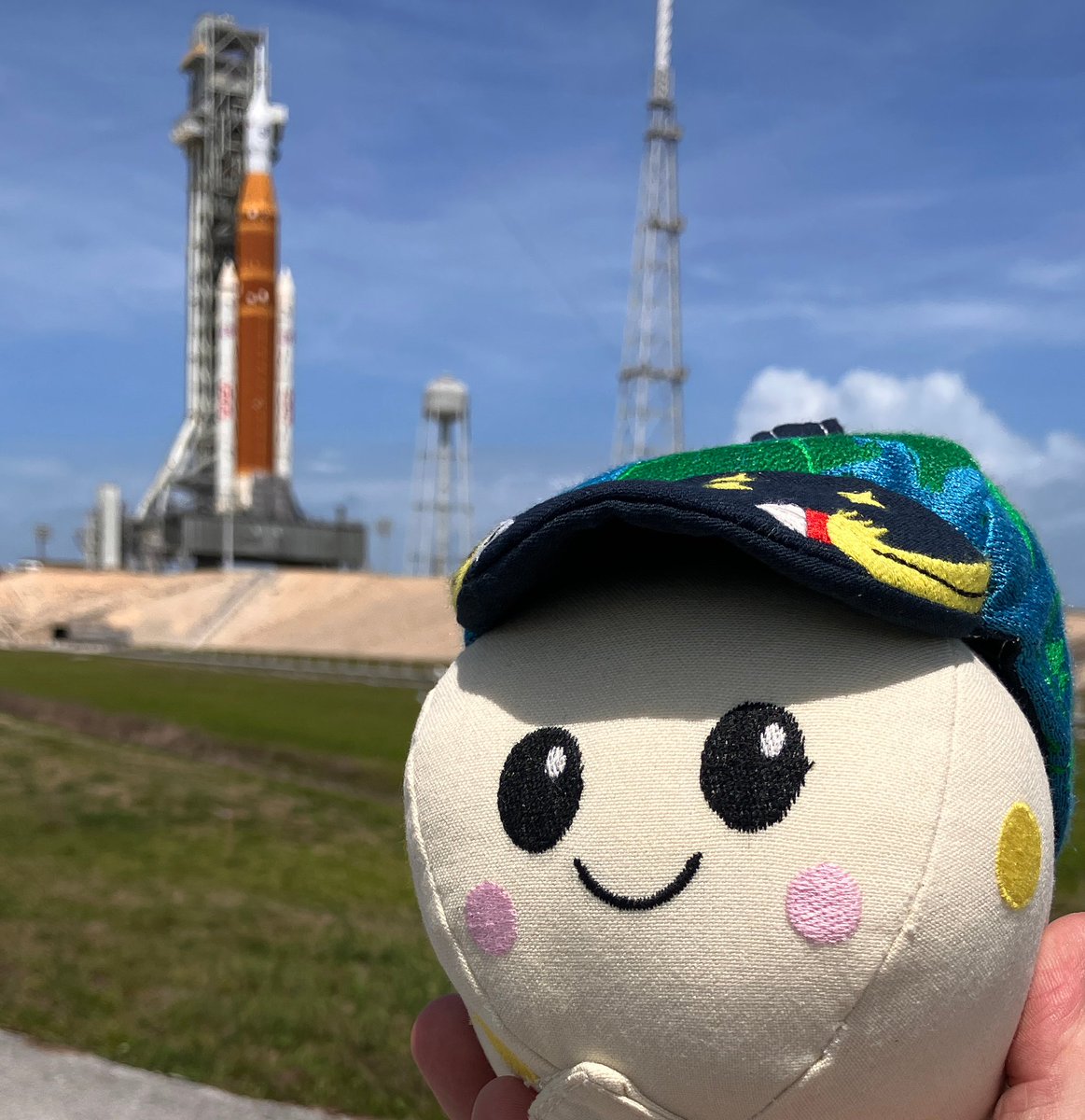
It's Rise's time to shine! 🌟
What’s it like to be a zero gravity indicator flying around the Moon with your astronaut besties? Find out as our favorite Moon Mascot takes over the @NASAArtemis account today. Follow along, and ask questions to learn about Rise's important role!