What is AI-Native, it's AI at the source of truth, wherever that may lie.
Not on top, not through an API, it's indistinguishable from the source of truth.
I believe there are 4 generations of TMS software:
Gen1 AS400: rigid, fast, gross
Gen2 On-premise: full custom & cost, 3 titans
Gen3 Cloud vertical software: opinionated, rigid, expensive
Gen4 AI Native: emerging!
Bonus:
Gen3.5 Platform cloud: best of Gen 2 & 3 e.g. Rose Rocket
Canada's outdated capital gains policies are driving entrepreneurs and investors away. We need competitive tax reform to keep talent and investment here, building the businesses of tomorrow.
Today, Canada has two policies to encourage builders to start businesses the Lifetime Capital Gains Exemption (LCGE) and a proposed Canadian Entrepreneur's Incentive (CEI). Together, these mean that instead of paying taxes on half their profits, business owners might only pay on one-third, or sometimes nothing at all—but only up to $3.25 million.
But, these policies simply can’t compete with the US. The USA’s Qualified Small Business Stock (QSBS) lets entrepreneurs avoid taxes on up to $15 million in profits or ten times their original investment. That's five times more than Canada's maximum.
What's more the QSBS excludes fewer categories of company and can be used per business rather than over the lifetime of a single individual. This means repeat entrepreneurs in Canada, who have a higher chance of building successful businesses are discouraged from trying again. While, entrepreneurs, early employees, and investors in the US can use the QSBS again and again for subsequent companies.
The good news is that for the largest exits the gap between Canada and the US decreases due to a more competitive basic capital gains inclusion rate in Canada. This means that if we match the QSBS’s capital gains limit and exclusions it could actually give the Canadian policy an edge driving more investment in the country and supercharging our SMB ecosystem.
However, if we leave the policy as it stands right now companies can never get started because investors and entrepreneurs are scared away.
If we want to keep our entrepreneurs, Canada’s capital gains policies must become competitive with US policies.
You can read the full memo at the link below:
At Rose Rocket, we are watching a quiet collapse.
Vertical SaaS is losing its edge.
What is replacing it? A new model we call Build Buy Both, powered by LLMs.
Here is what we are seeing from inside the Startup 3.0 shift
Vertical SaaS is dying.
In a few years, point solutions won't be a viable venture category.
LLMs, layoffs, and surplus SaaS talent are rewriting the rules.
Here is what replaces them and where the smart money is going 🧵
The future of software is ephemeral.
The platforms that win will be constant. Everything else will be rebuilt on demand.
Here is why point solutions are on the decline, and how Startup 3.0 companies will build differently
My 2 cents. B2B SaaS businesses are the same as flying commercial. No one would fly a plane without a pilot also putting their life on the line. Same with a buying software. We both look each other in the eye and say 'don't f'ck me'.
Current Era of startup thinking/culture/playbooks
Startup 1.0 - 1997-2008
Startup 2.0 - 2009-2023
Startup 3.0 - 2024-present
Who/what are the seminal examples and playbooks?
@karpathy described “vibe coding” as forgetting that code exists and surrendering to the vibes.
After doing it so many times, I realized Vibe Coding is teaching me a new skill—the art of controlling AI’s output to build exactly what I intend. 🧵
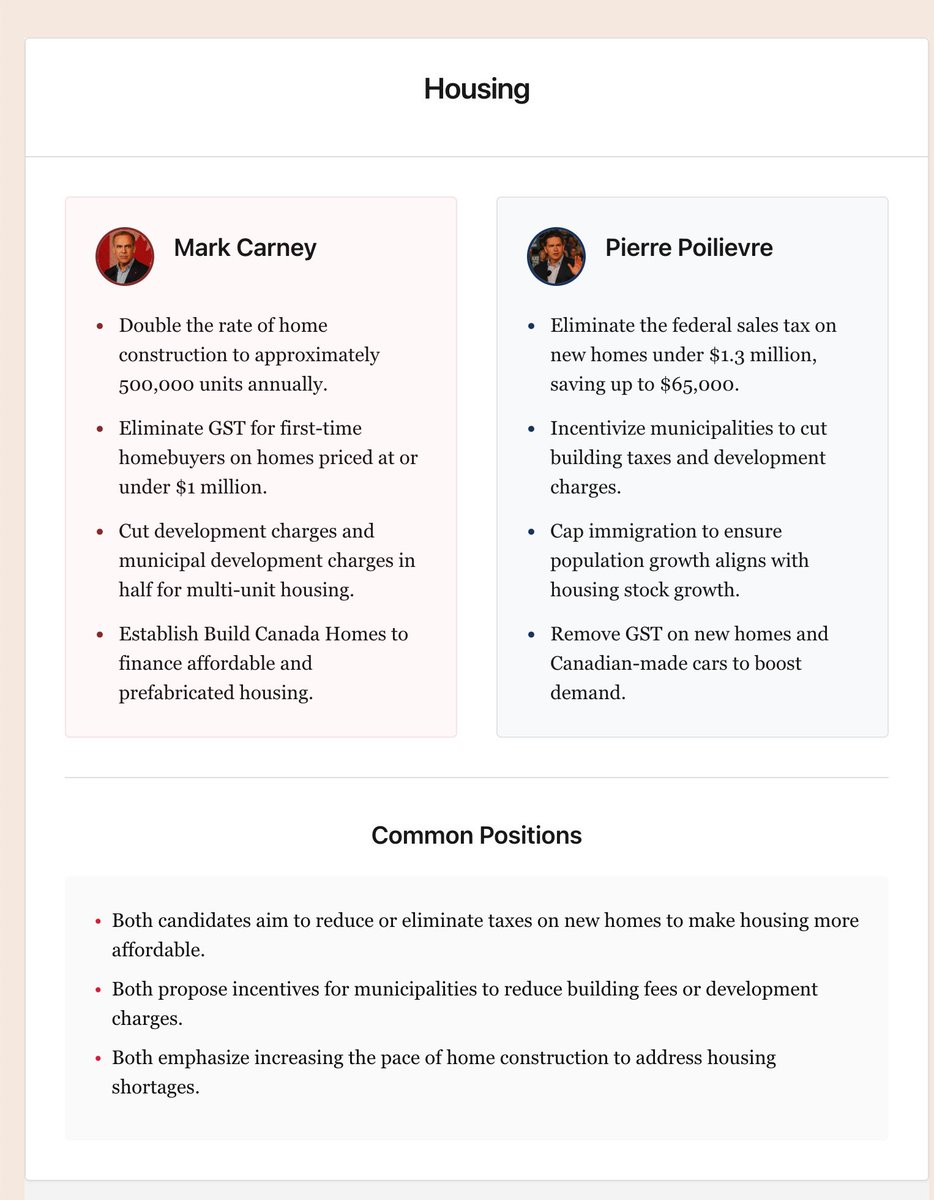
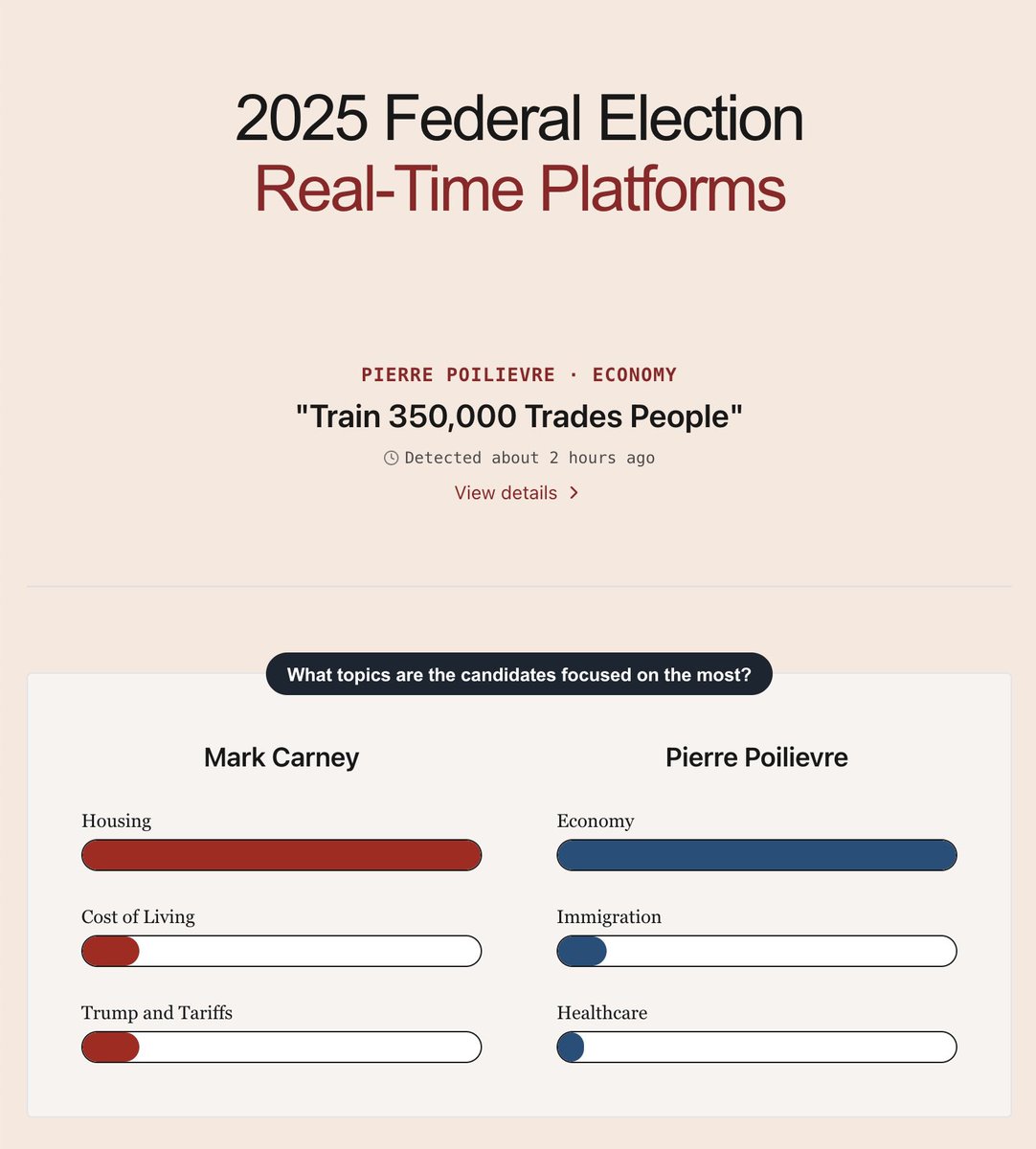
Introducing real-time Platform Tracker 🔎
- Track policies from major parties as they're announced
- Compare promises by category
- All cited back to the original source
Link below 👇
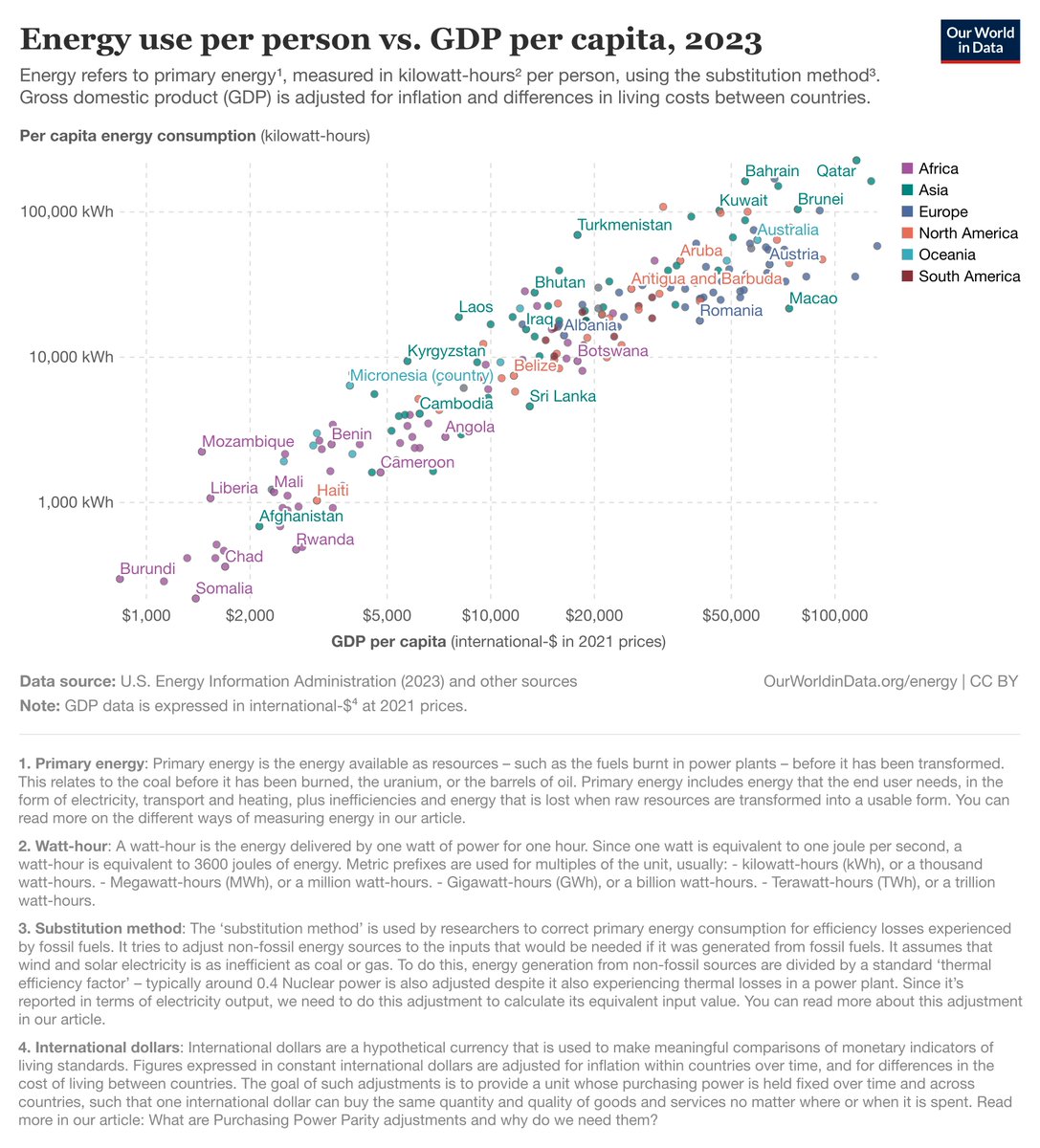
History demonstrates a clear pattern: transformative economic progress follows leaps in available energy. Coal and steam powered the Industrial Revolution; electrification reshaped manufacturing in the 20th century.
Energy abundance is needed for a prosperous future.
Canada's electricity demand is projected to at least double, and potentially triple, by 2050. Despite this urgency, Canada’s current regulatory environment makes it difficult to deliver the electricity infrastructure we need.
Over the past decade, dozens of major projects have been delayed or cancelled. For example, efforts to build interprovincial transmission like the "Atlantic Loop" have been repeatedly stalled in multi-year reviews.
There are many existing and new technologies that show promise in helping to meet Canada's needs – nuclear, geothermal, fusion.
Nuclear SMRs are a good example. These reactors offer remarkable energy density (requiring potentially hundreds of times less land than wind or solar for the same output). But one analysis showed that indirect costs and regulatory overhead extended project timelines from 5 to 12 years and increased costs by 6x.
Canada should be the world's leader in rapidly and efficiently deploying new generation technologies. We have the natural resources and skilled workforce to be it.
To achieve this, Canada needs to dismantle the barriers that currently inflate costs and delay deployment. Lengthy, uncertain regulatory reviews, fragmented permitting across jurisdictions, grid interconnection queues, supply chain bottlenecks all hinder our ability
Read more at the link below:
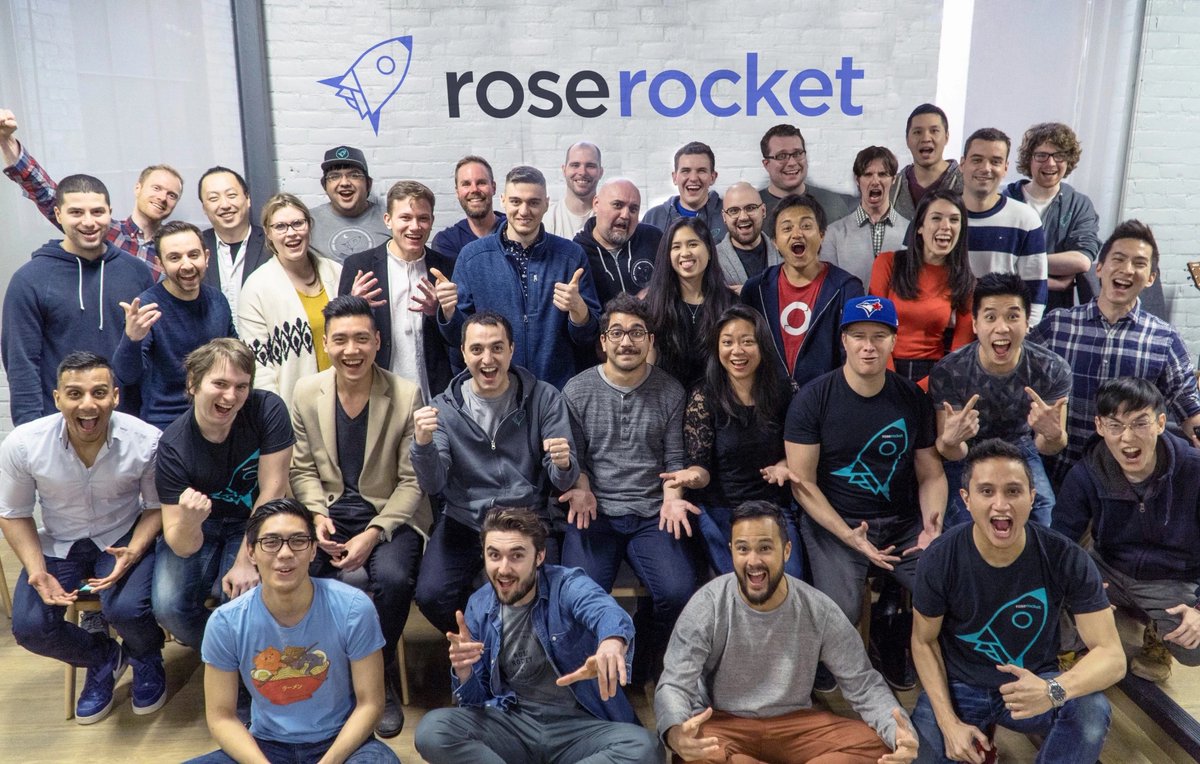
Startup School is coming to Toronto this summer!
Learn how to build a billion-dollar company from successful YC alumni and meet up with other Startup School founders at the @RoseRocketApp HQ!
Sign up today at https://t.co/o8zxmNYCvK.