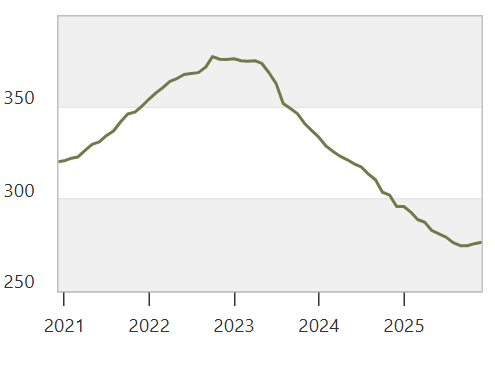
The Liv-ex Bordeaux 500 is the index for Bordeaux wines. it has corrected by 14% in nominal terms. considering the high cumulated inflation 2020, the "crisis" is historical. it looks like the new generation drink less alcohol and chinese becoming net exporters
#wines#bordeaux
Admittedly, they seem to have come up with one since then, and investors must think it’s a good one, given they’re raising capital at a $50 billion valuation about three months later. Must be one hell of a plan. (4/4)
IA a classical bubble (1/x)
While Palantir trades at 120 times sales, almost certainly higher than any other megacap company in history, Rigetti Computing and D-Wave Quantum trade at 1007 and 318 times sales, respectively.
If Donald Trump announces a tariff on Truth Social, but never actually imposes it, did it exist? If news that tariffs are coming prompts companies to “front-run” the levies, do they even need to happen? @shroedinger's cat
Price returns of the largest companies since the top of the dot-com bubble.
Only $MSFT has outperformed the S&P 500 since then; however, this analysis was run in March 2025, so $ORCL might not be far behind.
$CSCO, $INTC, and Lucent are under water on an absolute basis - $IBM has lagged on a relative basis.
French #smallcap relative valuation 1/2
Discount vs CAC 40 : 37% discount – same level since 2019 - 20% average discount over the period 2008-2015
Listed vs Private Discount: 40% discount since 2018 and nearly 40% at the end of 2024 - No discount before 2018
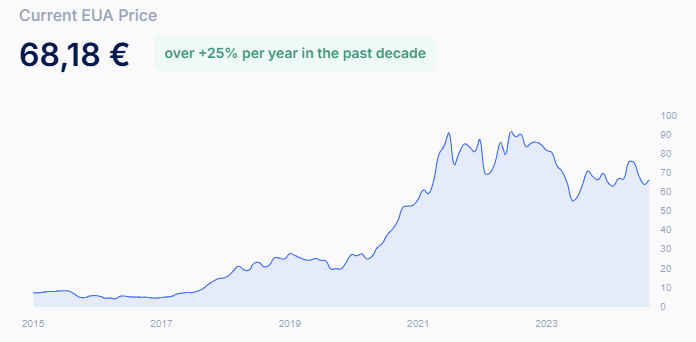
We expect that the CBAM will drive an increase in hedging demand for EUAs when it is implemented (outside of EU ETS compliance entities), adding to the already tightening balance and upwards price pressures.
#carbon#carbonremovals
#Carbon
European MPs adopted five key texts to achieve the goals of the Paris Agreement as part of the trilogue agreement reached last December. This agreement provides for the implementation of a carbon tax at the borders of Europe between 2026 and 2034
1/n
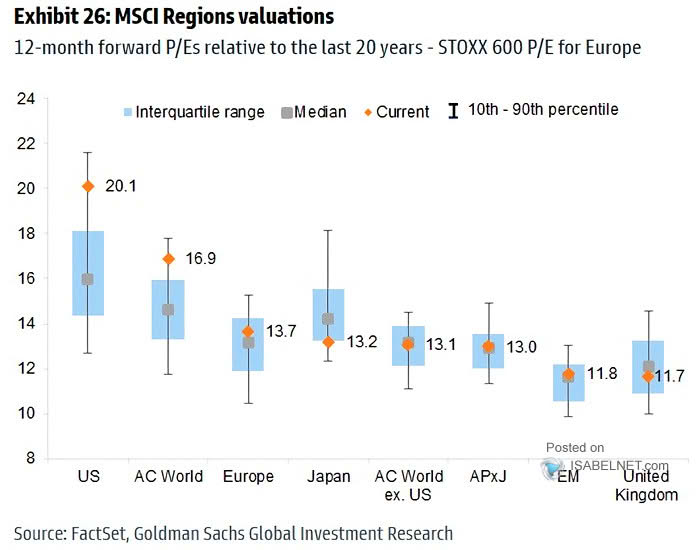
📌 Valuation
While non-US markets trade at lower valuations compared to the US, they remain near historical norms and do not yet offer the deep discounts typically associated with extraordinary buying opportunities
👉 https://t.co/14i5SQVCfd
ht @GoldmanSachs $spx #spx#equities
On July 11, 1804, two former Revolutionary allies faced off at dawn on the banks of the Hudson River. One would fire. One would fall. And America’s most famous political duel would change the course of history.
This is the story of Hamilton vs. Burr. 🧵🇺🇸 #AmRev
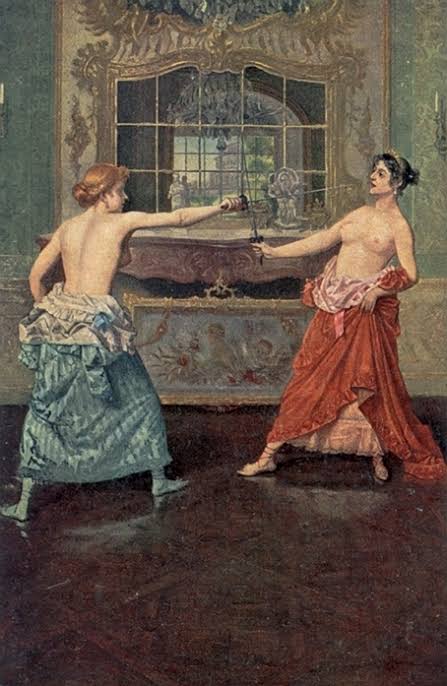
Princess vs Countess - a topless duel over flowers ...
Fencing topless wasn’t a new thing in 1892 AD. There are plenty of images with topless and nude female duelists from as early as 18th Century AD. But duel between Countess and Princess was different, because it wasn’t just duellists who were female, but also seconds and everyone else present. This type of female single combat is now known as an emancipated duel, because the duellists are topless for their own sake, and duel is fought for real reasons and is not displayed to entertain men.
In August of 1892, a duel took place in Liechtenstein. The two adversaries took the field armed with rapiers to take satisfaction in blood over an unpardonable outrage: a dispute over a flower arrangement.
The precise nature of disagreement has been lost in mists of time. All we know is that Princess Pauline Metternich, granddaughter of Napoleonic-era Austrian statesman Prince Klemens Wenzel von Metternich, and Countess Anastasia Kilmannsegg, wife of Statthalter of Lower Austria, had conflicting visions of how flowers should be arranged at Viennese International Exhibition of Music and Theater of 1892. Both of the ladies were high society fixtures in Paris and Vienna of late 19th Century. Both of them volunteered for a number of charitable organizations and were active supporters of the arts.
The Internationale Musik und Theaterwesenausstellung was the artistic event of fin de siècle Vienna, and while little remembered today, its influence was enormous and has played a foundational role in the perception of musical culture extending to the present. Inspired by the madly popular trend for world fairs launched by the Great Exhibition of the Works of Industry of All Nations at the Crystal Palace in London in 1851, the Viennese International Exhibition was a showcase of the greatest music Europe’s most musical city could offer and the first large-scale marketing blitz to monetize and promote that artistic output. It was the first and only world’s fair ever to focus exclusively on music and theater, and the very idea of “classical music,” defined as European music from the mid-16th Century through the end of 19th, was birthed there on May 7th, 1892. By the time the exhibition ended on October 9th, the notion was firmly established, as was the image of Vienna as the capital of European music.
Princess Pauline and Countess Kilmannsegg held important volunteer positions at this once-in-a-lifetime event. The Princess served as Honorary President, the Countess as President of the Ladies Committee. It was the Princess’ idea, in fact, the expand the purview of the festival to cover theater as well as music, and to make it international (in the Eurocentric sense) instead of a the original idea which was a far more modest exhibition dedicated to the history of Austrian music. Because of her operas like Ruggero Leoncavallo’s Pagliacci and Pietro Mascagni’s Cavalleria Rusticana were staged to great acclaim at the Exhibition. (Not in a single bill together, though. The classic CavPag pairing debuted at the Metropolitan Opera in New York a year later.)
The Princess also founded the Flower Parade down the main street of the Prater, a tradition she began in 1886 that continues to this day, and she was described in one paper (before the duel) as “having inherited a courage which borders on insanity from her father, Count Sandor, who was famous for his hair-brained extravagances.” So maybe that explains why whatever the Countess had to say about the flower arrangements at the International Exhibition so deeply appalled the Princess and why she was willing to take it to the point of bloodshed.
#archaeohistories