Šāds pasūtījums no Francijas bruņotajiem spēkiem ir ne tikai biznesa panākums. Tas ir uzticības apliecinājums Latvijas tehnoloģijām un mūsu aizsardzības industrijas spējai konkurēt ar Eiropas labākajiem. Apsveicu Origin Robotics! 🇱🇻
Tesla FSD (Supervised) is now officially approved in 13 Countries. Belgium has just announced their approval!
• U.S. 🇺🇸
• Canada 🇨🇦
• Mexico 🇲🇽
• Puerto Rico 🇵🇷
• The Netherlands 🇳🇱
• Australia 🇦🇺
• New Zealand 🇳🇿
• South Korea 🇰🇷
• China 🇨🇳 (partial rollout)
• Lithuania 🇱🇹
• Estonia 🇪🇪
• Denmark 🇩🇰
• Belgium 🇧🇪 (new)
🧵 China’s population collapse is now mathematically irreversible.
There simply aren’t enough women left of childbearing age.
Even if the fertility rate magically returned to replacement level (2.1 children per woman) tomorrow, the country would still lose more than 40% of its population by 2100.
It won't. The real number is 75%. There's nothing like it in history. 🧵
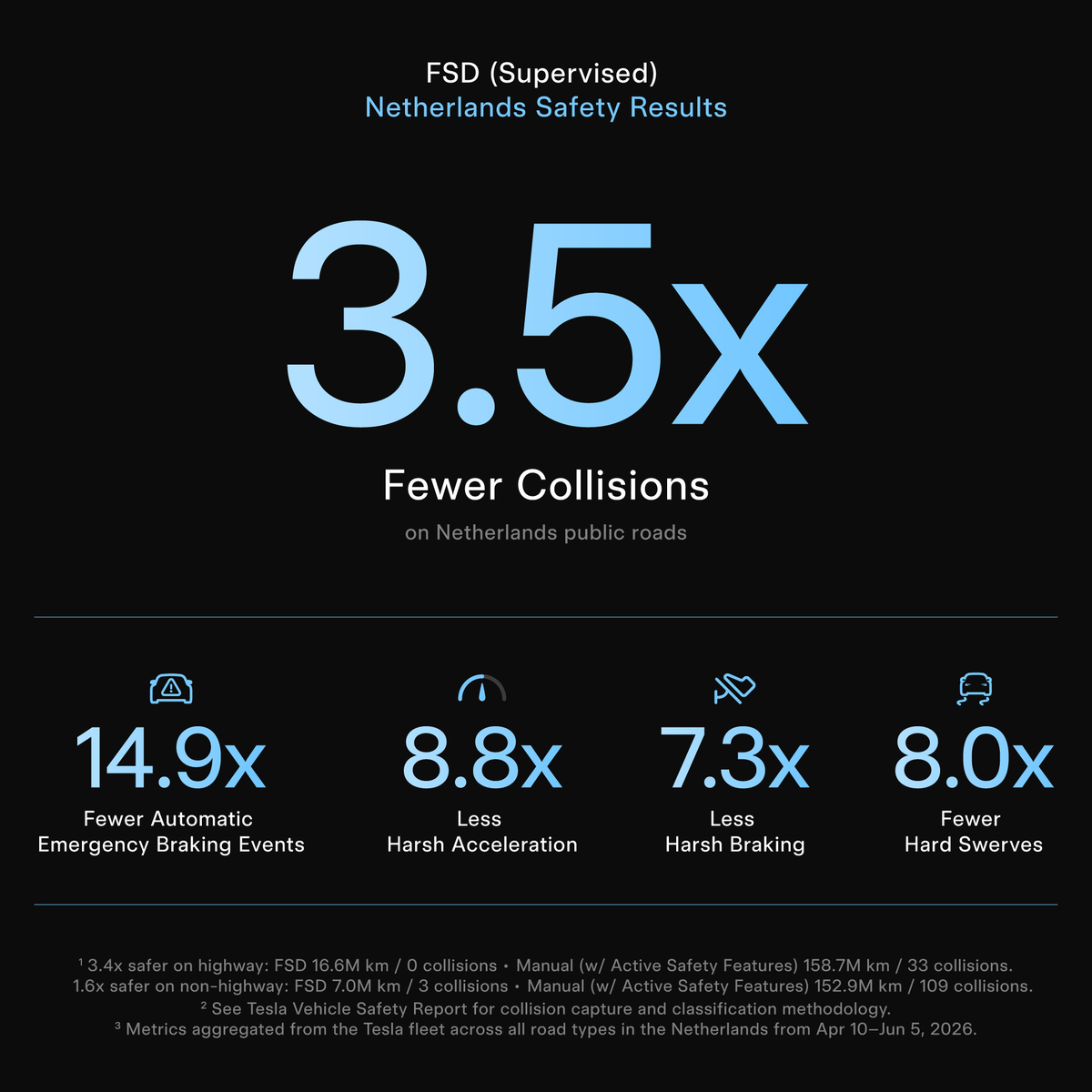
Tesla has released its first-ever FSD (Supervised) safety data from its Netherlands fleet.
• 3.5x fewer collisions
• 3.4x safer on highway: FSD 16.6M km/0 collisions
• 14.9x fewer automatic emergency braking events
• 8.8x less harsh acceleration
• 7.3x less harsh braking
• 8x fewer hard swerves
Tesla "Metrics aggregated from the Tesla fleet across all road types in the Netherlands from Apr 10-Jun 5, 2026."
SpaceX has just officially unveiled its AI1 satellite, the first generation of its AI satellite.
Overall Specs:
• 150 kW peak compute payload
• 120 kW average compute payload
• 70 kW per ton
• Compute provider interchangeable
Dimensions:
• Wingspan: 70 meters
• Deployed height: 20 meters
Thermal System:
• 110 m² deployable liquid radiator
• Redundant pumping loops
• Integrated micrometeoroid shielding
• Deployable liquid radiators
Solar Power System:
• 150 kW solar array
• 250 W/m²
• SpaceX-manufactured solar technology from Bastrop, Texas
Architecture:
• Centralized compute module
• Large deployable solar arrays
• Deployable liquid-radiator thermal management system
• AI-focused compute satellite design ("AI1 satellite")
Elon: "The AI satellite is much simpler than a Starlink satellite. The AI satellite is essentially a lot of solar cells, you still need some laser links, but you don't have all of the super complex antennas that you have on a Starlink satellite. The easier one to design for is the AI satellite. It's bigger. A lot of this is technology we've already made with the Starlink V3 satellites."
Okay folks, here's some BREAKING NEWS for you: we're going to make the paralyzed walk again.
ETH Zurich researchers just built living repair bots that can heal spinal cord injuries — injuries long considered permanent in mammals.
The team created NPCbots: tiny biohybrid microrobots made by pairing neural progenitor stem cells (derived from induced pluripotent stem cells) with magnetoelectric nanoparticles. These 6-micrometer devices are guided to the injury site with external magnetic fields. Once there, the nanoparticles convert those magnetic signals into precise electrical impulses that stimulate the stem cells to differentiate into nerve cells and promote regeneration — all without any implanted electrodes or wires.
In zebrafish with spinal injuries, the bots restored near normal swimming and behavior in just three days. In mice with completely severed spinal cords — a model where natural regeneration does not occur — treated animals showed nerve reconnection across the injury site after 28 days, along with clear improvements in gait, coordination, stride length, and exploratory behavior. The treatment was well tolerated with no immune rejection.
The microrobots are produced scalably on lab-on-a-chip systems and dissolve after doing their job, leaving the nanoparticles behind.
This represents a major leap beyond current stem cell therapies, which often suffer from poor cell survival, integration, and the need for invasive hardware. It opens a path toward minimally invasive, precisely controlled regenerative treatments for spinal cord injuries and potentially many other conditions.
We're not quite there yet, but the path forward looks a lot clearer now.
📸 ETH Zurich
Sources:
1) https://t.co/OJ8SD99mO2
2) https://t.co/CBw7sPYl4x
Welp, that happened faster than I predicted. Thought it would be end of 2027, then early 2027, but agentic traffic growing so fast that bots have now passed human traffic online for the first time in the Internet's history. https://t.co/2zX5bHdhsa
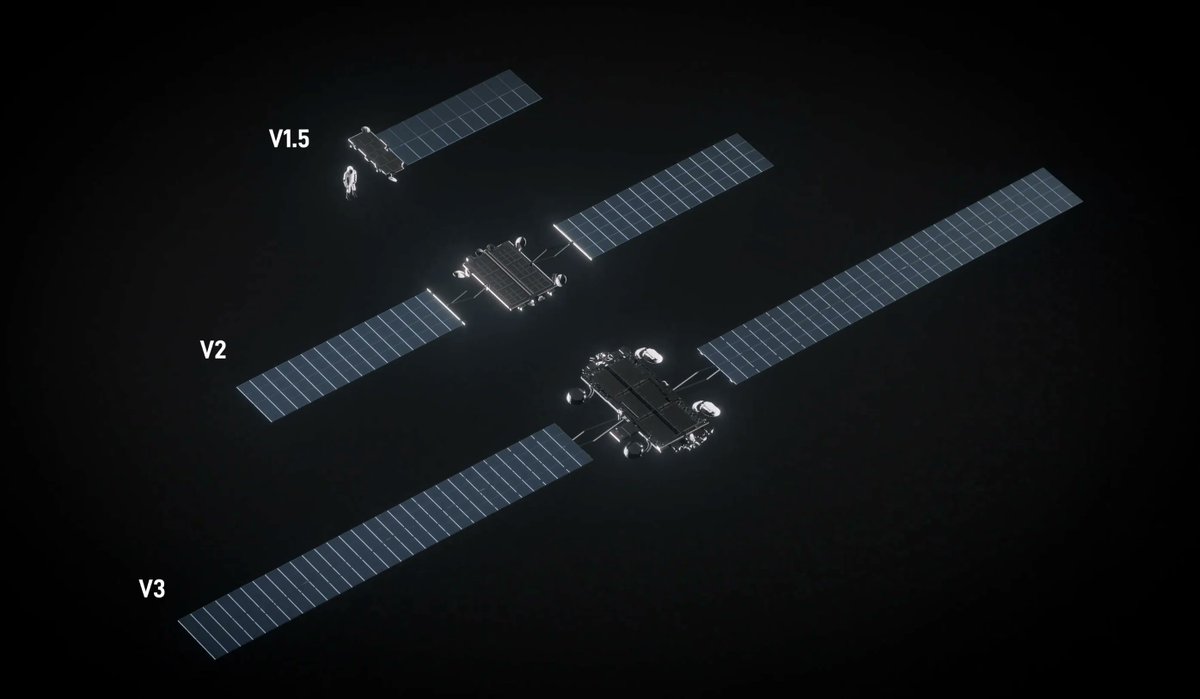
Starlink V3 satellites
Bandwidth per Satellite:
• V2: 96 Gbps
• V3: 1,024 Gbps
Bandwidth per Launch:
V2: 2,600 Gbps
V3: 61,000 Gbps
Deployment per Launch:
• V2: 27 satellites (on Falcon 9)
• V3: 60 (on Starship)
Starlink V3 satellites will begin to be deployed in late 2026 on Starship.
Super excited to announce seven new world-class MAI models today. They represent what we consider a new era in AI designed to keep you in control and on the frontier.
First is our text foundation model, MAI-Thinking-1, exceptionally strong on reasoning and SWE tasks.
- It’s a 35B active parameter MoE with a 256K context window. Independent human raters on Surge prefer it for overall quality in blind side-by-sides versus Sonnet 4.6, and it’s achieved 97% on AIME 2025, the key measure of its general-purpose reasoning abilities.
- It's at 53% on SWE Bench Pro, placing it right alongside Opus 4.6 on one of the toughest coding benchmarks.
- And since we co-designed our models with our own silicon, MAI-Thinking-1 is optimized on our MAIA 200 chip. Benchmarking head-to-head against the GB200, we see 30% better performance per dollar as well as a 1.4x performance-per-watt gain when running our MAI models on the MAIA 200 end-to-end.
Next is MAI-Image-2.5 and its Flash variant. Two super strong models now at #2 on the leaderboards, surpassing the score of Nano Banana 2 on image editing.
Last for now is MAI-Code-1-Flash, our new inference efficient coding model, especially tuned for VS Code and GitHub Copilot CLI.
- Code-1-Flash achieves 51% on SWE Bench Pro, despite having just 5B parameters, putting it closer to Haiku in size but cheaper in cost.
All of this is the foundation for Microsoft Frontier Tuning. It lets you customize our models to create custom, company-specific agents that only you control. You can make our model, your model. Your data. Your agents. Your moat.
Early adopters are already seeing a difference. When we tuned our models for McKinsey’s tasks, MAI delivered the highest win rate, outperforming GPT-5.5 on quality, while being 10x lower on cost.
Also really excited to be collaborating with the amazing team at Mayo Clinic to jointly train a new frontier AI model for healthcare.
Our announcements today mark another milestone on the road to humanist superintelligence. You can learn more and about our other new models in our latest blog: https://t.co/v65eop5Ixq
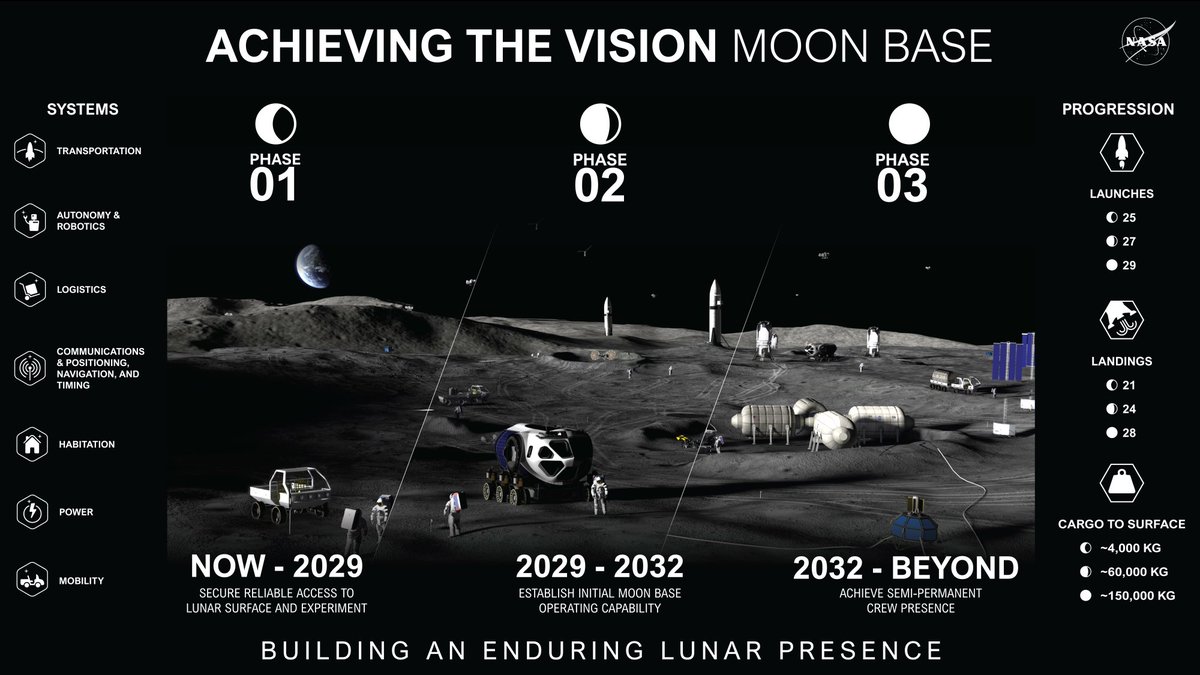
NASA just officially unveiled their master plan for a permanent Moon Base at the lunar South Pole
This is not just about flags and footprints. NASA is moving to establish an enduring, sustained human presence, and they are heavily relying on commercial innovators to build it
The roadmap is highly aggressive:
• Phase 1: Heavy robotic missions and commercial payload deliveries
• Phase 2: Semi-permanent infrastructure, including fission surface power and lunar drones
• Phase 3: A sustained, permanent human outpost
The most important takeaway is NASA explicitly stated this base is the ultimate proving ground to prepare humanity for missions to Mars
While legacy aerospace companies are still struggling to reliably get a small capsule to the ISS, NASA is setting the stage for massive lunar infrastructure....which is exactly the kind of heavy-lift planetary deployment SpaceX’s Starship was designed for
The multi-planetary economy is officially kicking off
A mic drop moment @ycombinator tonight
@sama just offered $2M in OpenAI tokens to EVERY YC startup in the current batch in exchange for equity
Just like Yuri Milner offering to invest in every startup back when Sam was a YC partner
I can't wait to see what's unlocked when you let the most driven, creative and formidable founders tokenmaxx
🧵 THREAD: How one Tesla owner cracked European FSD bureaucracy (and caught Tesla off guard) 🇱🇹🔥
Part 1/5
Yesterday, @TeslaEurope officially announced that FSD (Supervised) is rolling out in Lithuania — making it the 2nd country in Europe after the Netherlands. But the real story behind this is wild. This wasn’t a top-down strategic move by Tesla HQ; it was the work of a single Reddit user: andriuslink. 👇
SpaceX is such a bad ass company. In their IPO filing, they wrote this:
• The first private company to develop and launch a liquid-fuel rocket to reach orbit (2008)
• The first private company to successfully dock a private spacecraft with the International Space Station (2012)
• The first to successfully propulsively land (2015) and refly orbital-class rocket boosters (2017)
• The first to begin deploying a large-scale LEO broadband satellite constellation (2019);
• The first private company to transport astronauts to orbit, returning America's ability to fly astronauts to and from the International Space Station (2020)
• The first to manufacture consumer-grade phased-array user terminals at scale (2022);
The first to deploy a large-scale LEO satellite-to-mobile constellation (2025)
• The first to build a gigawatt-scale Al training cluster and largest coherent supercomputer (2026)
• The first gigawatt-scale Megapack battery installation (2026); and
• The only company capable of building orbital AI compute at scale.
BOOM.
€18 940 000 – veloceliņiem gar valsts autoceļiem.
€19 640 000 - visām 65 patvertnēm Latvijā.
Šie nav izdomāti skaitļi. Tie ir skaitļi par ES fondu apguvi no Finanšu ministrijas atbildes dokumenta uz maniem uzdotajiem jautājumiem, ko šodien publicēju pilnā apjomā.
Latvijas ES kohēzijas programma 2021–2027 satur €3,25 miljardus ES finansējuma. Lūk, kā šī nauda sadalīta:
🟢Zaļais kurss, klimats, vide: €1092 miljoni (33,6%)
🔴 Aizsardzība + civilā aizsardzība - €96 miljoni (2,9%)
Tikai skaitļi.
Eiropas Parlamentā es biju referents aizsardzības mini-omnibus regulai - instrumentam, kas dalībvalstīm dod tiesības ES kohēzijas naudu pārcelt uz aizsardzību, militāro mobilitāti un civilās aizsardzības infrastruktūru, turklāt ar 100% ES līdzfinansējumu. Krievijas izvērstā kara apstākļos tas ir pareizs instruments. Latvija to praktiski nav izmantojusi.
Uz katru 1 eiro aizsardzībai – 11 eiro zaļajam kursam. Tas ir plāns, kas tika rakstīts 2021. gadā – citā ērā, pirms kara Eiropā. Tagad ir 2026. gads. Šis plāns nav mainīts.
Ko valdība ir pārcēlusi?
Pēc 2025. gada maija "drošības pārdalīšanas" - €171 miljoni (~5% no programmas). Pēc 2026. gada marta papildinājuma - vēl €25,5 miljoni. Kopā aptuveni 6%. Mini-omnibus regulā ir paredzēts bonusa priekšfinansējums valstīm, kas pārceļ vismaz 15%. Igaunija, Lietuva un Polija to dara aktīvāk. Latvija – nē.
Un svarīgākais: uz šo dienu 461 projekts par €563 miljoniem vēl nav parakstīti. Šo naudu var pārcelt šodien – bez jauniem politiskiem lēmumiem Briselē, bez regulas grozījumiem, bez papildu sarunu kārtām.
Konkrēti projekti.
Projektu saraksts ir publiski pieejams – pats vari pārbaudīt katru rindiņu. Lūk, kas mani uztrauc:
🔹 €37,8 miljoni – pēcdoktorantūras pētījumu programma (Latvijas Zinātnes padome, pasākums 1.1.1.9). Tas ir 9,6 reizes vairāk nekā militārajai mobilitātei (Vienības tilts Daugavpilī – €4,3 miljoni).
🔹 €10,3 miljoni – Izglītības un zinātnes ministrija sev pašai par "efektīvāku zinātnes politikas pārvaldību" (pasākums 1.1.1.1). Ministrija ir gan projekta iesniedzējs, gan īstenotājs. Birokrātija finansē birokrātiju.
🔹 €54,86 miljoni – specializēta osta vēja turbīnu ražošanai Kundziņsalā (Rīgas brīvostas pārvalde). Vēja turbīnu ražošanas nozares Latvijā nav. Šī osta varētu būt divējāda lietojuma NATO loģistikai. Bet tā nav.
🔹 €94 miljoni – lielākais neparakstītais projekts, satiksmes ministrijas iesniegts (pasākums 2.4.1.3). Pieteicēja vārds un projekta nosaukums: slēpts – "Publiskojams pēc lēmuma pieņemšanas". 94 miljoni eiro sabiedrībai rādīti kā "anonīms".
Pāris secinājumi
Finanšu ministrs Ašeradens saņēma manu jautājumu 9. februārī. Atbildi saņēmu 25. februārī. Tajā ir izklāstīts, ka viss notiek kārtībā, ka progress ir stabils, ka N+3 nosacījumi tiks izpildīti. Par elastību, ko sniedz mini-omnibus – gandrīz nekas.
Šodien Latvijā gan mūsu, gan sabiedroto spēki aizstāv Eiropas austrumu flangu. Baltijas valstis prasa NATO klātbūtni, lūdz sabiedrotos, tērē aizsardzībai rekordlielus apjomus no IKP. Un tajā pašā laikā no ES fonda €563 miljoni stāv neparakstīti – un daļa no tiem plūst veloceliņos, anonīmos projektos un ministrijās, kas raksta paši sev efektivitātes plānu.
Instruments pastāv. Nauda pastāv. Politiskā griba – acīmredzot nē.
Jaunajai valdībai būs vairāki mēneši līdz Saeimas vēlēšanām. Šis laiks ir jāizmanto, lai pārceltu neparakstīto naudu uz aizsardzību, militāro mobilitāti un patvertnēm, saņemtu 100% ES līdzfinansējumu un atslogotu nacionālo budžetu, ko Latvija nospriegojusi līdz maksimālajai robežai, lai sasniegtu vajadzīgos 5% no IKP aizsardzībai.
📎 Projektu pilns saraksts – šajā saitē. Lasi, pārbaudi, vērtē pats: https://t.co/H4LqKv3aHd
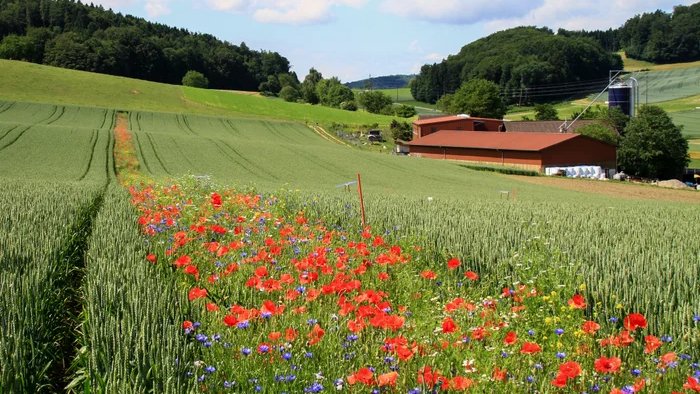
Farmers have figured out that the cheapest pesticide is a strip of flowers.
When you plant wildflowers through a crop field, not just around the edge but in strips running through the middle, you get ladybugs, lacewings, hoverflies, and parasitic wasps living in the field instead of visiting it.
They eat the aphids, the caterpillars, and the mites for free, all summer long.
In controlled trials, fields with tailored flower strips had leaf-beetle numbers 40 to 50% lower and crop damage cut by around 60%, enough to drop below the threshold where spraying was even considered worth it.
The flowers attract a standing army to our fields.
We spent decades engineering chemicals to kill the insects eating the crop, when the insects that eat those insects would have worked for the price of seed.