This is exactly the direction I explored with Kaelis.
I took confidential tokens a step further into a practical distribution layer: encrypted allocations for
→ Payroll
→ Vesting
→ Grants and
→ Airdrops.
with selective disclosure and Human Passport for Sybil resistance.
The important shift: confidentiality isn't just about encrypting the workload.
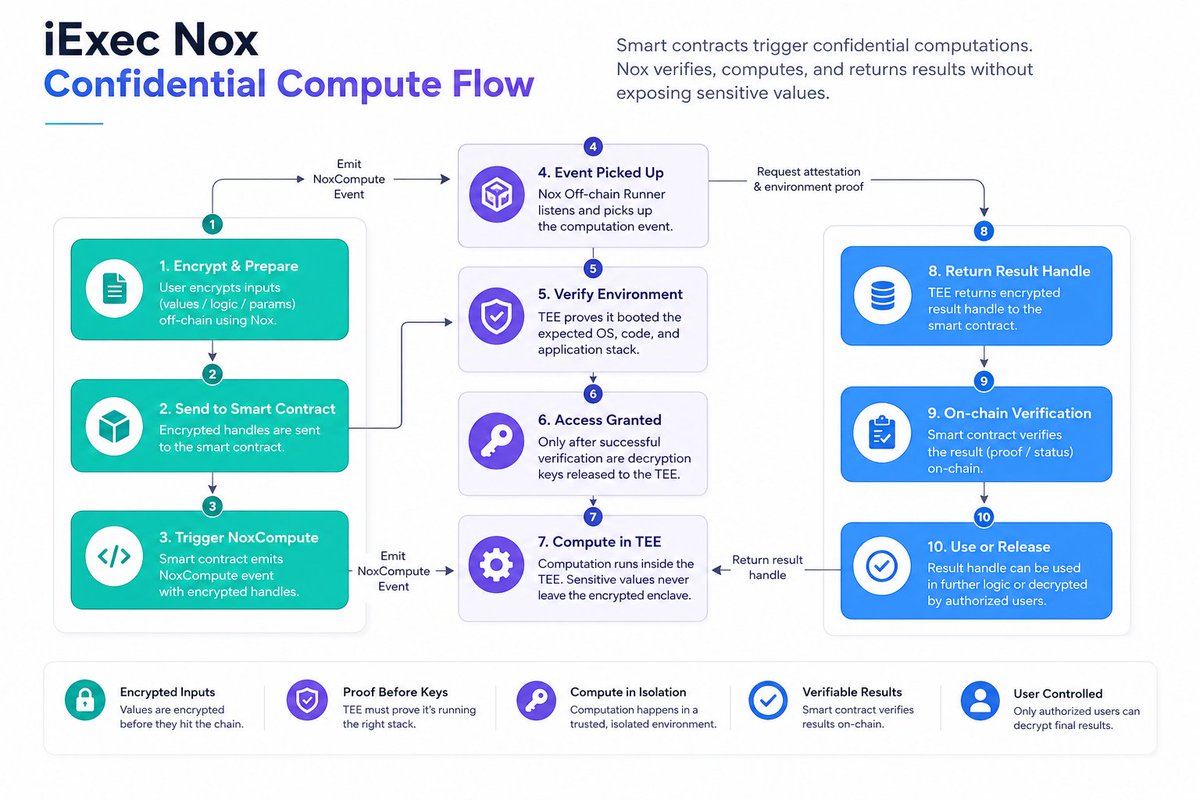
It's about proving what is actually running before trusting it with the secrets.
That's where hardware-backed attestation becomes powerful.
The future of token distributions isn't public spreadsheets on-chain.
It's confidential, Sybil-resistant, and verifiable.
That's why we built Kaelis with @HumnPassport and @iEx_ec .
For private payroll, vesting, grants, and airdrops without sacrificing trust.
Just scrolling through the WTF Hackathon submissions and this one from @agwuchikwendu caught my eye ♨️
Kaelis does confidential airdrops, vesting, payroll and grants on iExec Nox: amounts stay encrypted, only the right people can decrypt them, and Human Passport @HumnPassport keeps the Sybil attacks out.
These are the kind of practical Privacy builds the space actually needs. More of these please 🤝
$RLC #CryptoSecurity
https://t.co/eJeGWECbLk is refreshed.
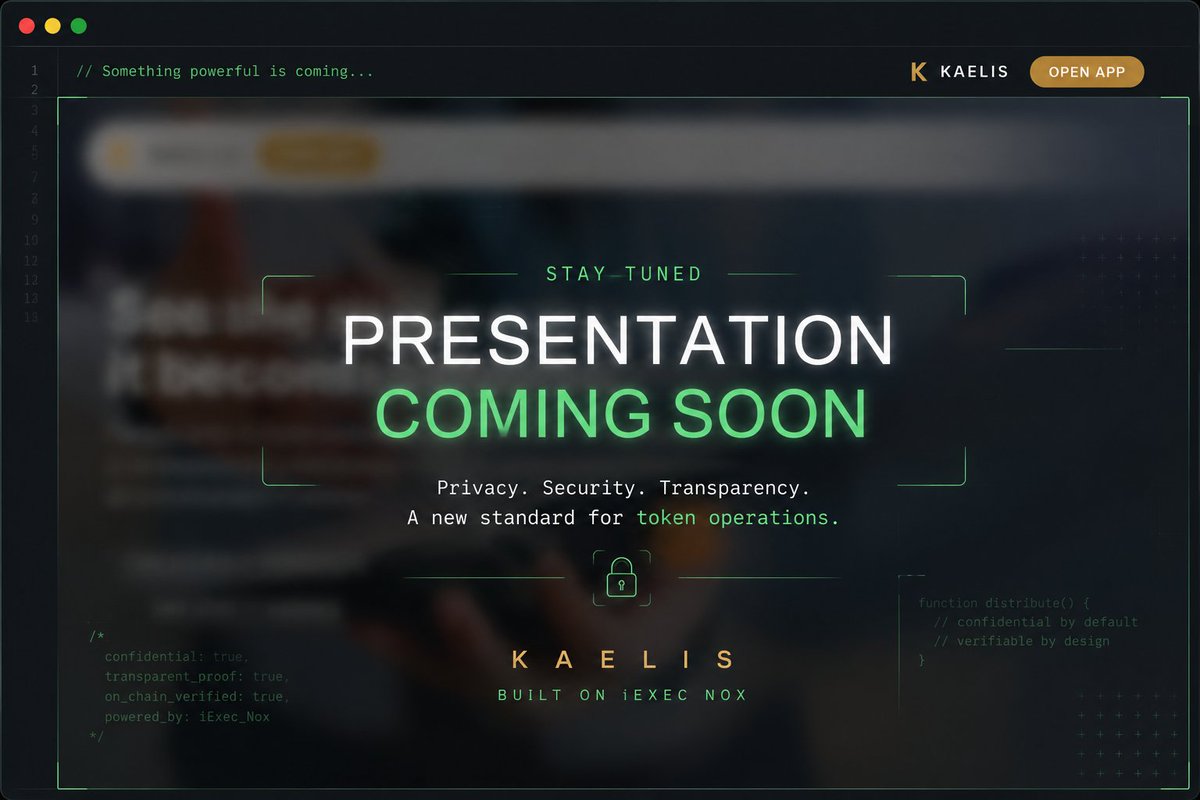
Confidential on-chain finance. Selective disclosure. Verifiable execution.
The clearest statement of what we build 👇
Web3 made transparency the default.
Kaelis asks a different question: what if sensitive allocations could stay private while everything remained verifiable?
@HumnPassport + @iex makes that possible. 🔐
Nobody tells you that Web3 privacy is about control.
@KaelisdApp combines @HumnPassport + @iEx_ec to make token distributions confidential by default.
Verify who can claim, encrypt what they receive, and keep every transaction verifiable.
Privacy, without sacrificing trust.
In February, we said onchain finance needs confidentiality.
Six months later, that's no longer a contrarian take. It's the direction the whole industry is moving.
Here's the recap of how we got here 👇
Compatible, trustless, and permissionless. But what else does onchain confidentiality need to deliver?
That’s what @0xNatc explained during our recent live session with @COTInetwork, hosted by @amateo 👇
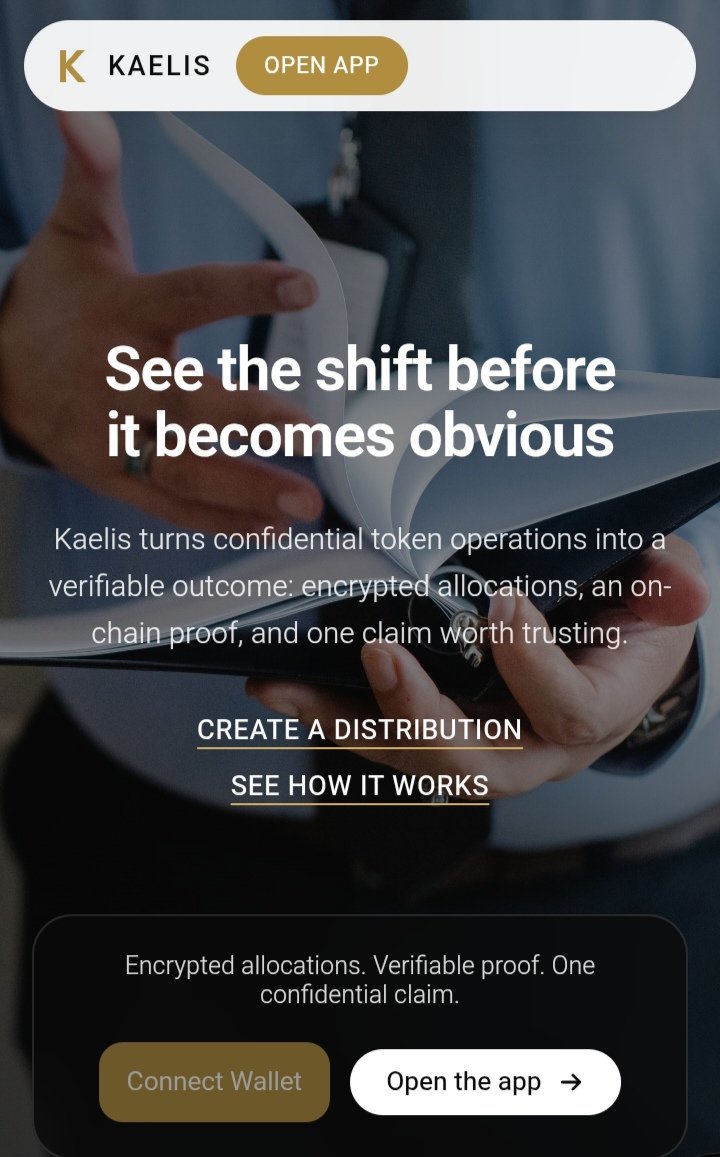
Kaelis is confidential infrastructure for Web3 token distributions.
@HumnPassport verifies who can claim.
@iEx_ec protects what they receive.
Payroll, vesting, grants, and airdrops become private, Sybil-resistant, and fully verifiable on sepolia.
https://t.co/2Qhqh2zLds
Privacy is necessary because public blockchains permanently exposed financial activity, while privacy let's people and organizations protect sensitive information like salaries, airdrops, grants while still proving every transaction is legitimately recorded onchain.
How do you prove, right now, that a Nox component is running the expected code inside a genuine Intel TDX Trust Domain?
Not at boot. Right now.
That's runtime attestation. Our very own Aghiles just wrote a deep dive on how Nox surfaces it through the Attestation UI 👇