스테이블코인이 일정 규모를 넘으면 지급결제 인프라가 됩니다.
그래서 원화 스테이블코인은 처음부터 인프라로 설계됐습니다. 네트워크, 스마트컨트랙트, 발행·상환 엔진, 그리고 돈의 흐름에 연결된 컴플라이언스.
국가 통화라면 이 정도 기준은 돼야 합니다.
Won For All · 3화
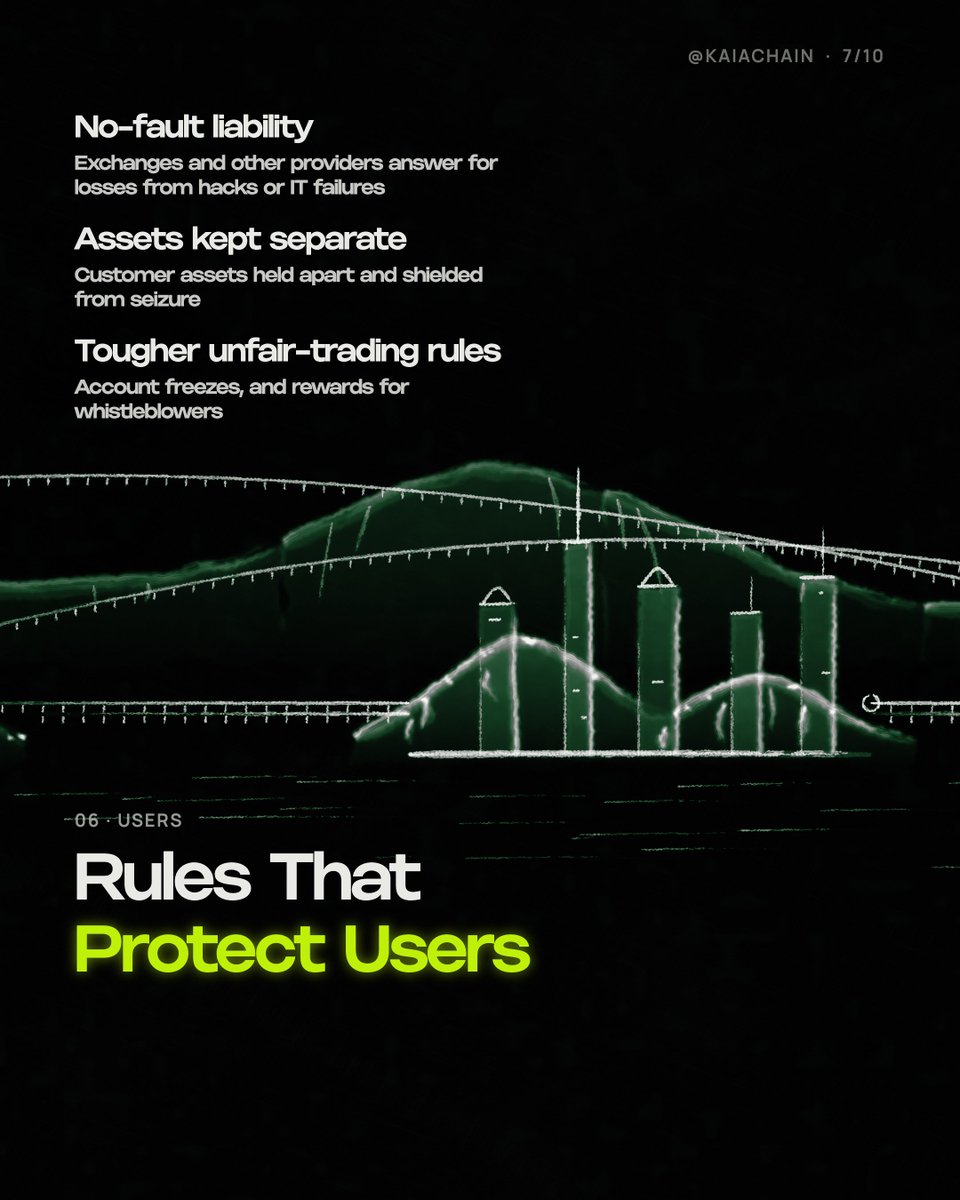
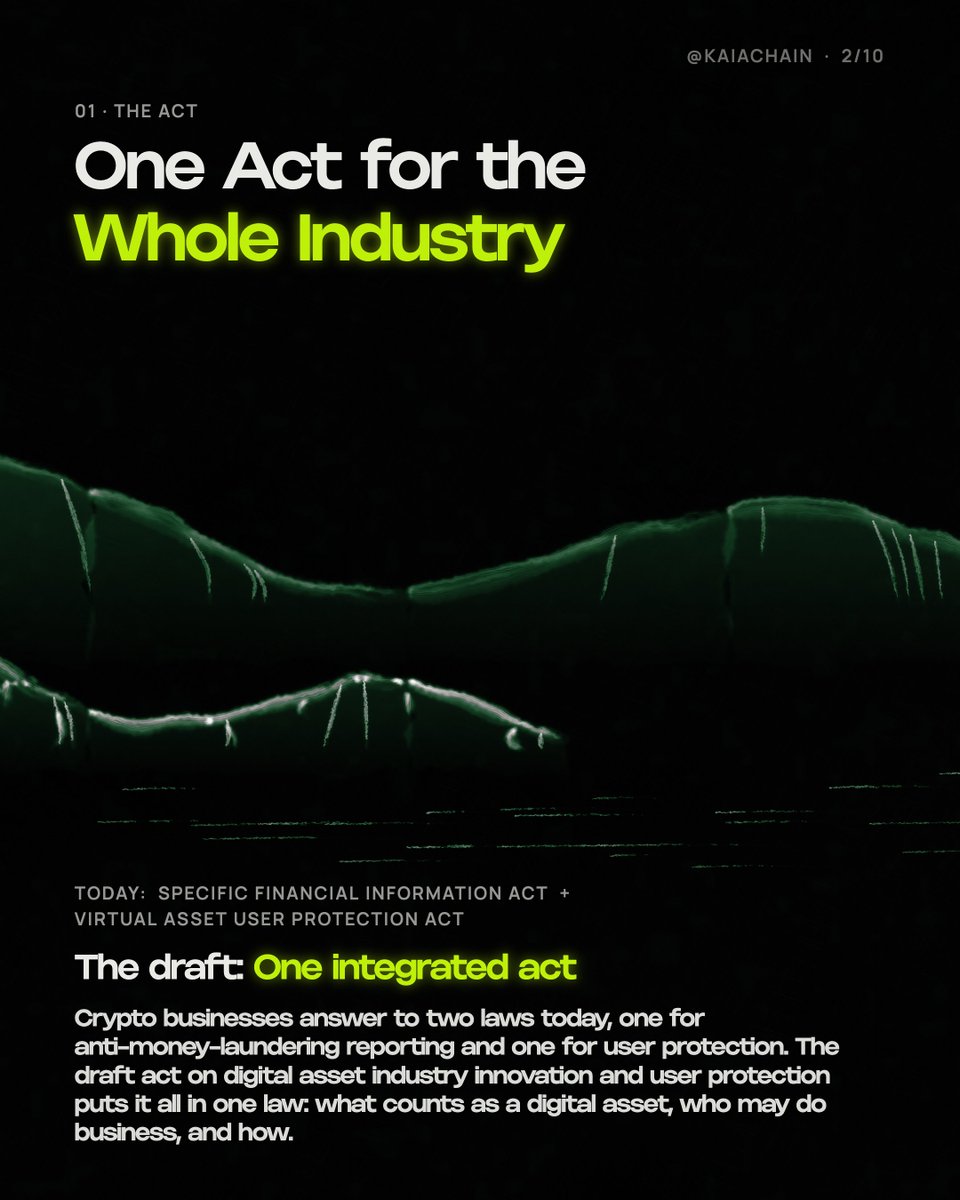
Korea's government has published its draft digital asset bill, the law many have called DABA.
For more than a year the debate was about who gets to issue a won stablecoin. The draft answers it: licensed issuers, bank-majority consortiums first, and room for a fintech or tech company to be the largest shareholder.
Issuance is the starting line. A won stablecoin matters when people and businesses use it, at home and across borders. @KaiaChain is built to carry it, whoever issues it.
Read the ten slides to see what the draft means for stablecoins in South Korea, and what happens next in the National Assembly.
Three launch campaigns run alongside our staking launch:
Deposit & Buy opens first, on Nov 24. Flash Deal starts with flexible staking on Nov 27, and the Staking Bonus arrives with the limited 60-day plan on Dec 14. Unstaking takes 7 days.
Rates, dates and full terms are on @OKCoinJapan:
- Staking launch: https://t.co/wdhuaHJdfF
- Campaign details: https://t.co/79fbz4ieH6
OKJでKAIAのステーキングが始まります。
Kaia keeps moving deeper into Japan's onchain economy.
JPYC already runs on Kaia, and from today, KAIA holders can stake directly on @OKCoinJapan. 👇
@idrx_co@ojkindonesia Good step.
A regulated path through OJK's sandbox is what lets Indonesian businesses use a Rupiah stablecoin with confidence. @idrx_co
@chainlink Tokenizing €22 trillion is half the job.
The other half is distribution: reaching investors across Asia with local-currency settlement and different rules in each market.
@tiger_research_@ktain030@Payoneer@USOCC The DABA draft is the one to watch this week.
Its rules on issuance, custody and exchanges will shape how a KRW stablecoin gets built and who can offer it.
@ZeusRWA Agreed. Where someone lives is often the whole answer.
For many investors in Asia, the case for a tokenized asset is simply access they didn't have before.
@centrifuge@itsbhaji Moving from exploring to building usually starts with one existing fund brought onchain.
What comes next depends on distribution, and investors in Asia are a big part of that question.
@scottmelker Screening standards that are published and applied consistently help compliant providers plan.
The detail to watch is how transfers to personal wallets end up being treated.
@Marspective@RWA_xyz@FourPillarsFP The represented versus distributed split is a useful lens. A deed onchain proves who owns the building.
Only a transferable share gives someone a stake they can hold and move.
@Defi_Warhol@DinariGlobal Voting rights and dividends are what make a tokenized share a share.
Registering as a transfer agent first is the slower route, and the one that holds up when the rules arrive.
@scottmelker Collateral eligibility is the step that moves tokenized assets from pilots into daily treasury use.
June 2027 gives issuers a clear date to build toward.
Won For All 3화 '신뢰를, 설계하다'를 공유합니다.
2026년 3월, 카이아 재단이 이끄는 컨소시엄이 원화 스테이블코인 설계도를 공개했습니다. 이번 편은 그 설계를 네 개의 층으로 나눠 보여줍니다.
설계도는 공개돼 있으니, 영상과 함께 직접 읽어보셔도 좋겠습니다.
A stablecoin at scale is payment infrastructure, and infrastructure runs on reliable data. Proud to be building the oracle layer on @KaiaChain as Korea works toward a won stablecoin rail 👇
At scale, a stablecoin stops being a token and becomes payment infrastructure.
So the won blueprint has four layers: network, smart contracts, an issue and redeem engine, and compliance wired into the money flow.
That's the bar for a national currency.
Won For All · Ep 3/4
스테이블코인이 일정 규모를 넘으면 지급결제 인프라가 됩니다.
그래서 원화 스테이블코인은 처음부터 인프라로 설계됐습니다. 네트워크, 스마트컨트랙트, 발행·상환 엔진, 그리고 돈의 흐름에 연결된 컴플라이언스.
국가 통화라면 이 정도 기준은 돼야 합니다.
Won For All · 3화