Russia's five-hospital quarantine, FSB involvement, and reported hazmat use in response to the death of a single researcher at a weapons-lineage Irkutsk lab are inconsistent with a lab-acquired plague infection, which would have been treated with prophylactic antibiotics.
1/4
The Lancet staff are going on strike for the first time in the journal’s 200-year history.
Is it surprising? I don’t think so.
Authors produce the research and write the papers. Reviewers provide scientific evaluation, mostly for free. Editors carry much of the burden of keeping the system running. Then the same academic community pays thousands of dollars in APCs to make its own work open access.
Yet staff are now striking over pay, while the publisher’s scientific, technical and medical division reports more than £1 billion in annual adjusted operating profit.
So there is a simple question: where does all that money go?
Authors, reviewers, editors, and institutions are carrying an ever-growing burden. I don’t think the current academic publishing model is sustainable.
https://t.co/4ulBOarZD1
Cannabis is detrimental to sperm: even if they can fertilize, there can be DNA damage. Many miscarriages and (in the case of IVF) “day 3 crashes” which is when paternal DNA normally kicks in, are cannabis related. Dr Natalie Crawford on the Huberman Lab podcast out now.
“Among adults 75 years of age or older, the risk of death from causes other than CRC greatly exceeded the risk of diagnosis or CRC-specific death, regardless of prior adenoma status.”
This must blow @drjohnm mind. 😉
https://t.co/e1GZZqICej
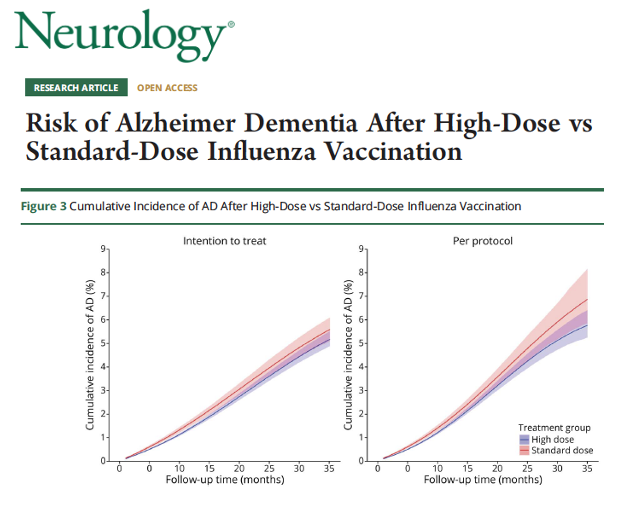
High-dose flu shot and Alzheimer’s risk: does more immune stimulation matter? Immunogenic means how strongly a vaccine activates the immune system. Bukhbinder and colleagues describe in a new paper in Neurology how high-dose vs standard-dose influenza vaccines relate to Alzheimer dementia risk in adults age 65 and older.
Key Points:
- High-dose influenza vaccination was associated w/ a lower risk of Alzheimer dementia compared to standard-dose vaccination over the follow-up period.
- The reduction in risk appeared early and persisted for up to about 2 years, w/ a number needed to treat of roughly 185 at peak effect.
- The benefit signal was stronger and more consistent in women compared to men.
My take: This study adds to a growing body of evidence that vaccines may do more than prevent infections, they may also shape brain health. The difference between high-dose and standard-dose flu vaccines suggests that the magnitude of immune activation may matter. Importantly, recent data on the shingles vaccine has shown a signal for dementia risk reduction, reinforcing the idea that immune system training could influence neurodegeneration. We should be cautious, as this is observational data and not a randomized trial.
Here are 5 points that resonated w/ me:
1- Vaccination may be an accessible tool we could use for brain health and dementia prevention.
2- Stronger immune responses from higher-dose vaccines may translate into greater protection beyond infection.
3- The consistent signal across multiple vaccine studies including influenza and zoster raises a potentially compelling biological hypothesis.
4- Sex differences may matter. Is it possible that women may derive greater cognitive protection from immune-based strategies?
5- Health care providers should consider the possibility of viewing some vaccinations not just as infection prevention, but as part of a broader brain health strategy.
https://t.co/A93dyR0AA8 #alzheimers @alzassociation
So thankful to CAPJ for getting John Mearsheimer and me together to talk about Trump and Israel's illegal war with Iran. Few people are as clear-eyed and elegant in their analysis as John Mearsheimer.
https://t.co/w0KiO3T0ks
A San Diego startup just made whole genome sequencing cost $100.
It used to cost $1 billion +
The Human Genome Project took 13 years (1990-2003), billions of dollars, and an international consortium of 20+ institutions to sequence one genome.
My PhD advisor, @s_batzoglou, was one of the first MIT PHDs who worked on it. He helped build the computational foundations that made it possible. His career spans the entire arc — from assembling the first human reference genome to making sequencing routine.
The 10,000,000x cost drop isn't just a number. It's the difference between a moonshot national project and a routine lab test.
Previous generation proved it was possible. This generation proved it could be cheap.
The question now: what happens when everyone's genome is a $100 blood test?
The implications for medicine, privacy, insurance, human identity? We're not ready.
Link: https://t.co/pjQiC3UUkW
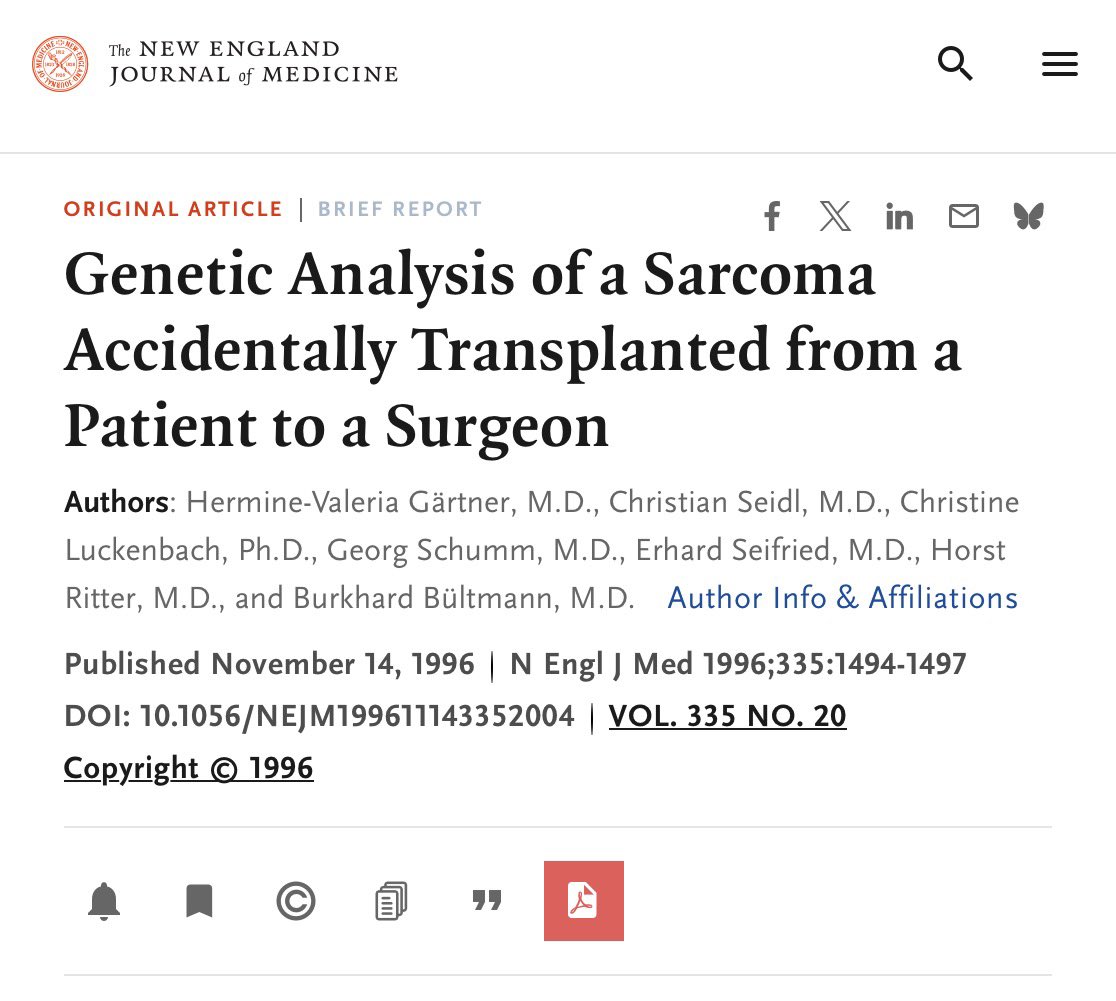
A rare case where a surgeon accidentally developed his patient’s cancer
Cancer is not considered contagious. If cancer cells from another person enter your body, your immune system is supposed to destroy them.
But in very rare situations, biology doesn’t follow the rules.
A 32-year-old man underwent emergency surgery for an aggressive soft-tissue cancer called malignant fibrous histiocytoma. Sadly, he died shortly after the operation due to complications.
During the surgery, the 53-year-old surgeon accidentally injured the palm of his left hand while placing a drain. The wound was small, immediately cleaned, and properly dressed. No one thought much of it.
Five months later, the surgeon noticed a hard lump growing at the exact spot where his hand had been injured. It slowly enlarged to about 3 cm, roughly the size of a large coin.
The lump was surgically removed.
The diagnosis was shocking.
It was malignant fibrous histiocytoma, the same rare cancer the patient had.
The surgeon was otherwise healthy. Tests showed no immune deficiency. So how could this happen?
The DNA answered the question
Pathologists compared both tumors under the microscope and found them to be identical in appearance. But the real proof came from DNA testing.
Using genetic markers and HLA typing (a way of identifying tissue origin), doctors showed that the tumor in the surgeon’s hand carried genetic material from the patient.
This meant only one thing:
👉 The cancer had been accidentally transplanted from patient to surgeon during surgery.
Cancer cells likely entered through the small hand injury and managed to survive long enough to form a tumor.
Fortunately, the tumor was completely removed.
At two-year follow-up, the surgeon was healthy, with no recurrence and no spread.
Why this case is so remarkable:
This case does not mean cancer spreads through touch or casual contact. It shows that direct implantation of living cancer cells, under very specific conditions, can rarely lead to tumor growth, even in a healthy person.
It’s a rare exception that reminds us:
- Cancer isn’t contagious, but biology has loopholes
- The immune system is powerful, not perfect
- Medicine still encounters situations that challenge long-held beliefs
I recently took @tszzl and @RichardHanania (true story lolz-and both advisors to my new venture in full disclosure) to one of the countries largest academic medical centers.
@tszzl has since wrote a viral X thread thats worth reading again https://t.co/2LCP2VOVdg
It speaks for itself. I'll just add if he's surprised by the missing data .....he'd be further surprised by the data we do capture: fragmented, delayed, and built for billing, not clinical insight. It tells us very little about human disease and how to truly treat it.
Epic Systems is at the center of this monumental failure.
Simply put: AI cannot reach its full potential in medicine while Epic Systems controls the underlying data architecture. The ideas are fundamentally oppositional at their core.
I explain why Epic's culture, regulatory inertia, and the staggering $1B sunk costs of its clients do not guarantee its dominance but if anything bring a slow march into irrelevance.
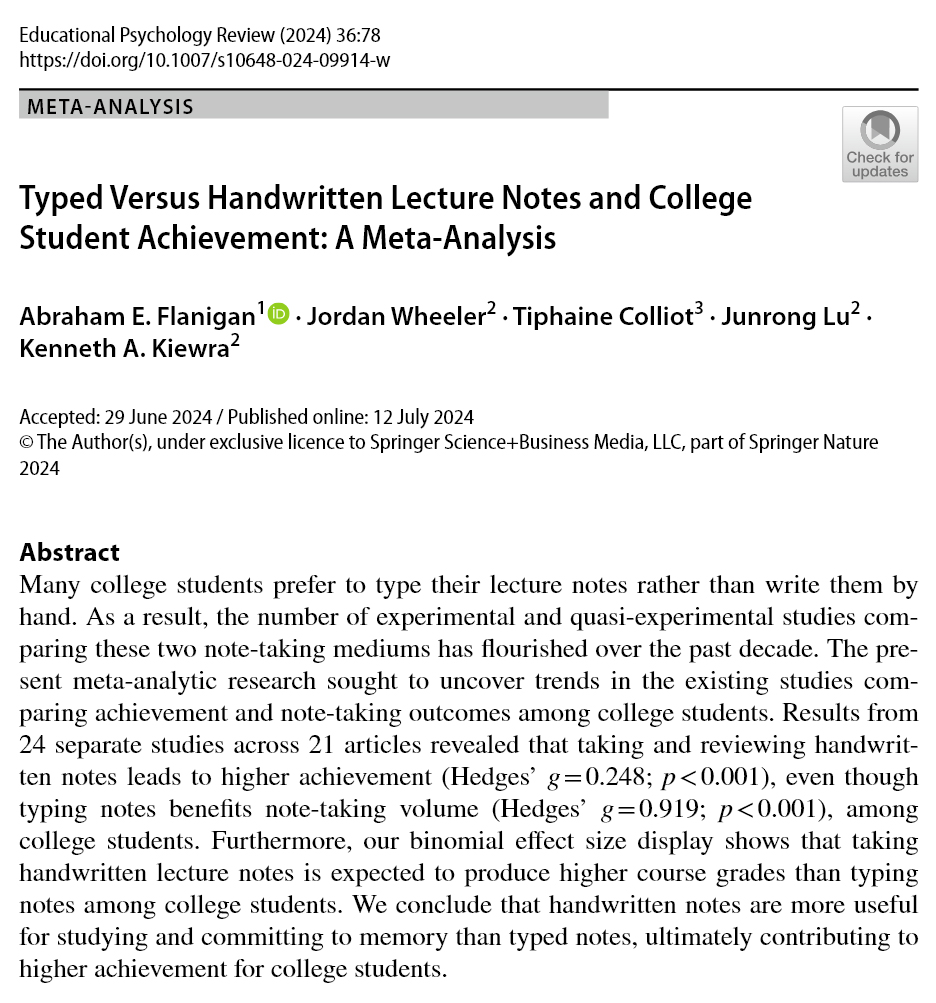
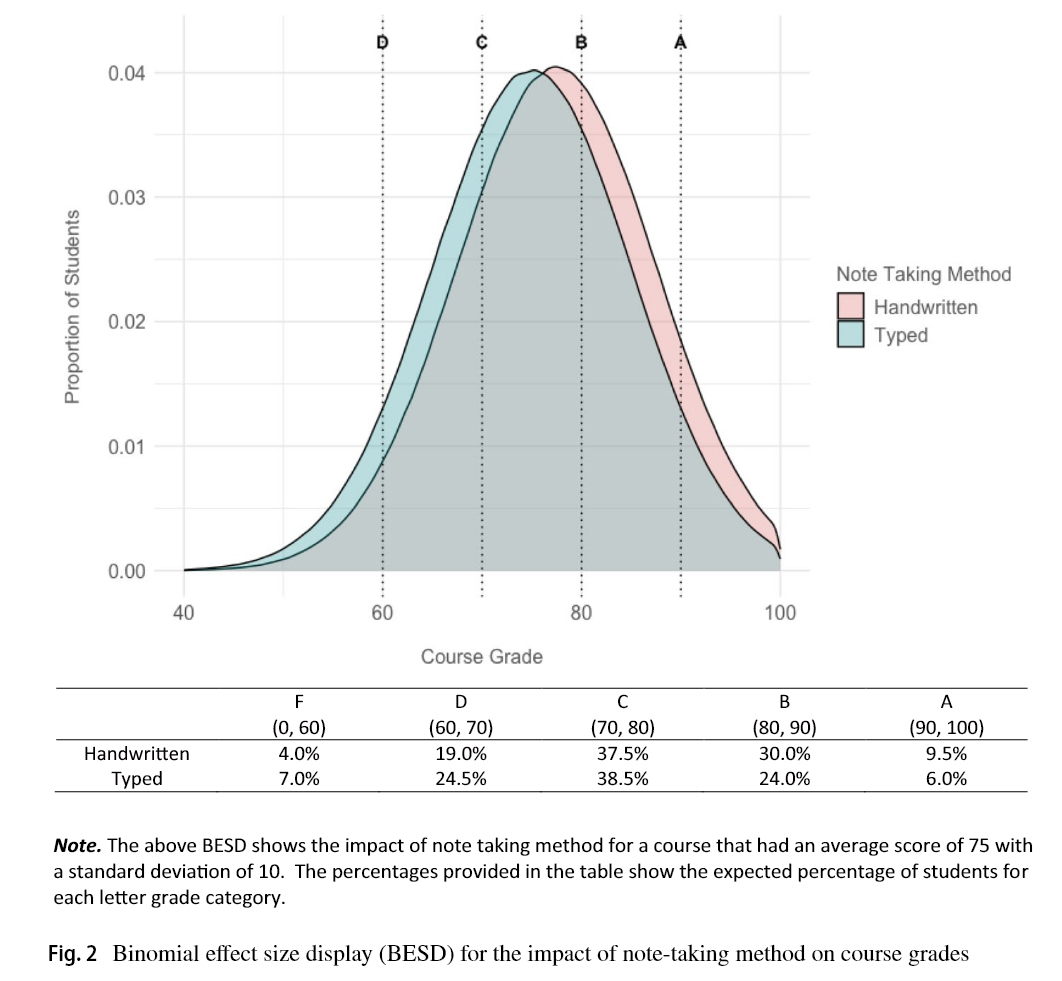
It's time to remove laptops from classrooms.
24 experiments: Students learn more and get better grades after taking notes by hand than typing. It's not just because they're less distracted—writing enables deeper processing and more images.
The pen is mightier than the keyboard.
Stanford paid 35,000 people to quit social media.
This was the largest study on emotional health in history.
The results were so shocking, scientists called it "comparable to therapy."
Here's what happens when you break free from the algorithm:
🧵
Here's a tale of two Olympian swimmers setting new world records.
Pan Zhanle, a Chinese male swimmer capturing the gold and new world record, beating his next competitor by 1.08 seconds. The reaction, especially Westerner, is in shock. Not because of /
https://t.co/bXIjs1yalz
Preprint: Immunity from mRNA vaccines wanes more rapidly due to inability to induce long lived plasma cells in bone marrow. This seems unique to current mRNA, and less for the adenovirus vector (J&J, AZ) and protein-based (Novavax) options
https://t.co/7fPtzQoOne
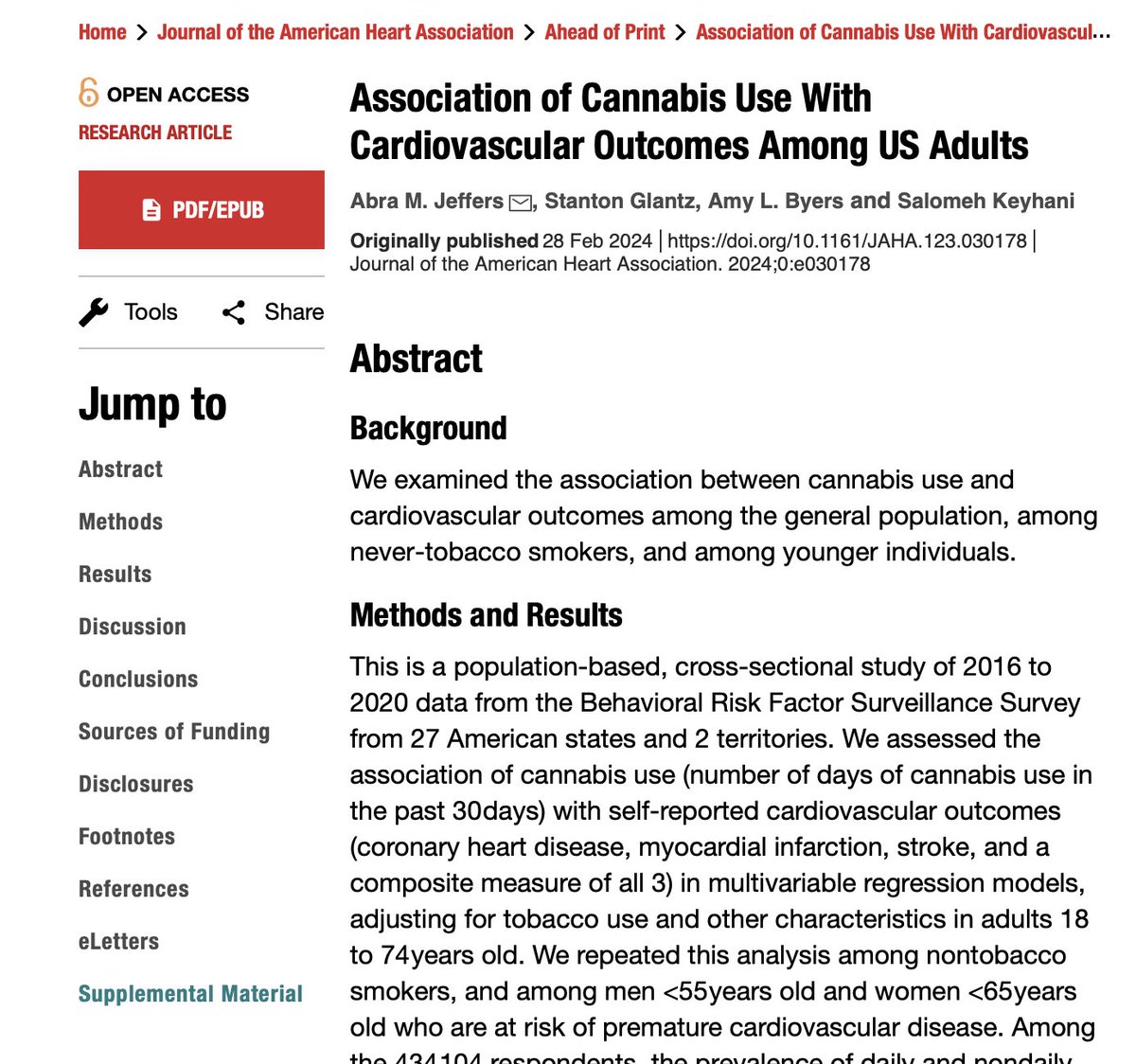
New study finds: Daily use of weed, mostly via smoking, was tied to a 25% increased chance of heart attack and a 42% increased chance of stroke compared with not using weed. Weekly use was tied to a 3% increased chance of heart attack and a 5% increased chance of stroke. https://t.co/C3GUZdTX5i
1/ First, the complaint clearly lays out the claim of copyright infringement, highlighting the 'access & substantial similarity' between NYT's articles and ChatGPT's outputs. Key fact: NYT is the single biggest proprietary data set in Common Crawl used to train GPT.