The last attempt of Idi Amin Dada to return to Africa.
In 1989. This was the last time Amin visited Africa. He is seen here in Zaire on a plane that was to send him back after Mobutu’s government rejected his visit and detained him for one week.
Amin’s travels began on New Year’s Day, when he appeared unannounced at the airport in Lagos, Nigeria, on a flight from his home in Jeddah, Saudi Arabia.
Using an assumed name and carrying a Zairean passport, Amin swept through the airport in long, pink-flowered robes. He stayed briefly at the Lagos Sheraton, where he waved enthusiastically at Nigerians who recognized him.
Then he continued on to nearby Gabon and his apparent final destination, Zaire. It is not clear what Amin hoped to accomplish in Zaire, where he had family and scattered supporters.
The French news agency Agence France-Presse, reporting from Kinshasa, the Zairean capital, quoted "reliable sources" as saying there was "no doubt" Amin was hoping to get back to Uganda via Zaire. The two countries share a long, sparsely populated border.
An Air Zaire pilot, however, recognized Amin as he got off the plane in Kinshasa. He was consequently arrested and held for more than a week at a military airport in the capital.
He was questioned about his passport, which was discovered to have been part of a batch stolen from a Zairean government office several years back.
A Zairean official was quoted in Nairobi newspapers as saying that Amin’s presence was a problem. "We cannot allow him in without endangering our relations with our neighbor Uganda, where Idi Amin is still considered an outcast."
Diplomats in Kinshasa were quoted as saying that Amin’s presence was "an embarrassment" to Zairean President Mobutu Sese Seko, who once had close links with him.
After being held for one week, Zairean officials put Amin on a Zairean government plane and flew him to Senegal, where he was supposed to board a flight back to Saudi Arabia.
That night, however, Saudi officials refused to allow Amin on the plane. The authorities gave no explanation, but one source was quoted as saying he lacked the necessary visas.
After being stopped in Senegal by officials Thursday, Amin reportedly reboarded the Zairean jet that brought him there and returned to Zaire before being allowed to enter Saudi Arabia again. In Uganda, news of Amin’s travels sparked mild interest but little fear.
Ugandan President Yoweri Museveni said Amin should be brought back to Uganda to face trial. He added that the Ugandan government was in contact with Zaire, and that it was "high time" his country demanded that Saudi Arabia turn Amin over to Ugandan justice.
Political observers in Uganda regarded Amin as a spent political force. He was considered much less threatening to the Museveni government than former president Obote, who was in exile in Zambia. Some claimed Obote’s troops carried out abuses that equaled or exceeded those of Amin’s army.
This was not the first time Amin had ventured out of exile. In 1980, a year after invading Tanzanian forces chased him out of Uganda, he reportedly made a brief visit to Zaire.
In 1985, apparently thinking the time was right for a return to power, Amin left Saudi Arabia for southern Sudan, announcing that he intended to lead guerrilla forces against then-president Milton Obote. Amin never entered Uganda, however, and when he returned to Saudi Arabia, officials there greeted him coolly and stripped him of his VIP status.
Amin had lived with some of his family in the port of Jeddah from the time he was toppled. His expenses were catered for by the Saudi government as an act of Islamic charity to a fellow Muslim.
He was known in Jeddah for his habit of sitting down for chats at local teahouses.
On 21 March 1968 , Oginga Odinga arrived at Nairobi Airport for his trip to the US.
He had been invited by Boston University to open a symposium on 'Revolution as Understood in Newly Emerging African States.'
To accompany him to the US, he chose JD Kali (right), a revolutionary son of Ukambani. Kali had been detained during the Emergency in 1952, became a KANU member of parliament for Nairobi East in 1963, and walked out of the government with Odinga in 1966 to form the KPU after they disagreed with Kenyatta over government policies.
The two arrived at Nairobi airport well on time for the trip to the US via London. But just before they boarded the aircraft, immigration officers arrived and confiscated all their passports.
The officers then handed Odinga a letter from Vice President and Minister for Home Affairs Daniel Arap Moi , telling him:
"I regret the Government cannot allow you and Mr. J. D. Kali (an aide de camp) to go out of the country. This is the right time for planting. Trips overseas at this time of the year are not necessary."
Although Odinga told journalists that he would still make further attempts to seek permission from the government so that he could travel to the US , all his requests were rejected, and the trip never happened.
Both Kali and Odinga were arrested the following year after the government banned the KPU. Kali was released in 1970 and later became the MP for Kilungu .
African ancestors had a profound way of dealing with P.T.S.D. (Post Traumatic Stress Disorder).
It was believed that after a war when a man had returned from war, before he could be accepted back into society, he had to live with a shaman for 3 months to do some spiritual cleansing.
It was said that after war, the human spirit was off balance and required to undergo some ritual in order to restore it back in harmony with nature and the community.
A horn was used to draw out stagnant and dysfunctional blood to the surface. This is one of the ritual that was performed on the warriors to cleanse them of any mental illness and trauma that they might experience later on in life after the war.
This process was carried out by Africans long ago before it was allegedly deemed a Chinese invention. It was called "African suction cup," by the colonizers.
This is one of the many practices that have been lost due to African slavery and colonization.
Switzerland is the only country in the world with enough bunker capacity to shelter its entire population, with roughly 370,000 facilities equipped with air filtration systems, toilets, bunk beds, food and water supplies, and backup power sources.
Switzerland has upheld the principle of “a shelter for every inhabitant” since a 1963 federal law required that all residents have access to a protected space near their home. As of 2026, the country maintains around 370,000 shelters, offering more than 9 million total spaces—enough to cover over 100% of its permanent population. This makes Switzerland unique in having infrastructure capable of housing its entire population in the event of armed conflict or nuclear war.
These shelters are built to standardized specifications, typically featuring reinforced concrete structures, blast doors, and NBC (nuclear, biological, chemical) filtration systems to ensure breathable air during emergencies. While the law mandates essentials such as bunk beds, toilets, and water reserves, individuals are generally responsible for supplying food and medical provisions. In peacetime, many of these shelters are repurposed as storage areas, wine cellars, or laundry rooms, though regulations require they can be converted back into fully operational shelters within five days if ordered by the government.
Although Switzerland leads in total coverage, countries like Finland and Sweden also maintain substantial civil defense systems, with Finland capable of sheltering about 85% of its population. As of early 2026, Switzerland has invested roughly $1.2 billion to modernize its network, focusing on upgrading filtration systems and improving large public bunkers to keep the system effective against modern threats.
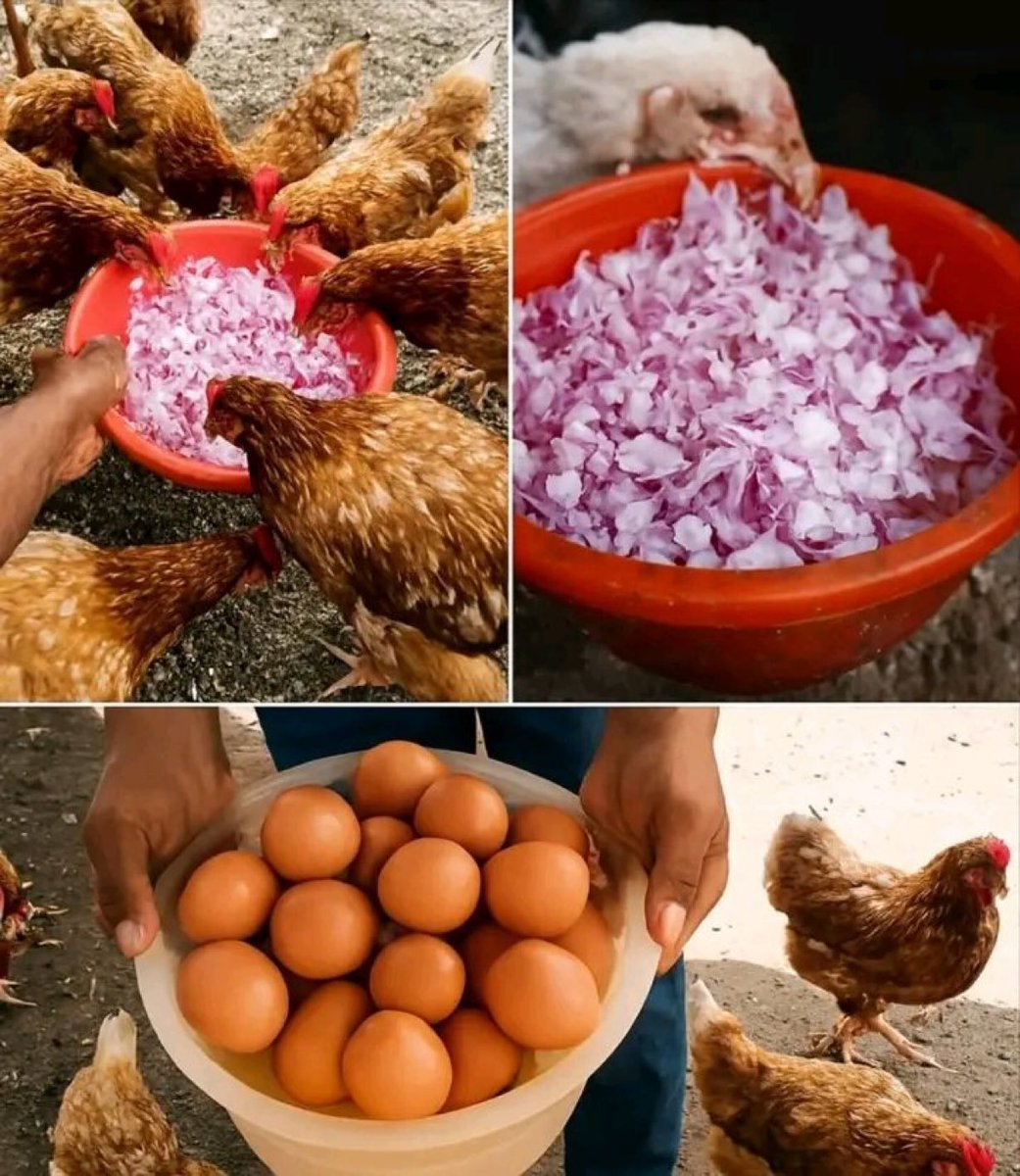
Onions in Poultry Farming: Benefit or Hidden Risk?
Onions are often mentioned as a natural way to support chicken health, but the truth is more balanced than most people think.
Yes, onions contain compounds with mild antibacterial and antioxidant properties. When given in very small amounts, they may slightly support digestion, stimulate appetite, and contribute to general vitality. However, these benefits are limited and should not be exaggerated.
What many farmers do not realize is that onions also contain substances called thiosulfates. In higher amounts, these can be harmful to chickens. Excess consumption may damage red blood cells, reduce performance, affect egg production, and even alter the taste of eggs. This means that what might help in very small quantities can quickly become harmful if overused.
It is also important to understand that onions are not a substitute for proper poultry management. They cannot replace vaccination, good hygiene, balanced feeding, or disease control. If birds are getting sick, the root cause is usually management, not the absence of onions in the diet.
If a farmer chooses to use onions, they should only be given occasionally and in small quantities, mixed into the feed rather than offered in large portions. They should never be relied upon as a treatment or primary health solution.
In reality, strong and productive chickens come from consistent care: quality feed, clean water, proper housing, and effective disease prevention. Onions may play a very small supportive role, but they are not a magic solution.
Source: own research
This metal was used during the slavery period for 3 main reasons;
1. Sometimes the slàve màsters would forced an apple (a whole) into the mouths of enslaved before they wore the metal mask on them with the padlocks so that they couldn't talk.
2. To stop the enslaved from chanting our African spiritual songs. Not only that those our spiritual and war songs affected the slàve masters, it also motivated some enslaved to rèbel and fight back!
3. Last but not the least, to starve enslàved as a punishment in the slàve camps. The màsk prevented them from eating or drinking!
Gone but not forgotten! 💔😭
In the early 60s, Senior Chief Njiiri Karanja was a VW Beetle “influencer”, used to promote the car to fellow Africans.
Note the text in the ad.
F3: He sits outside his Murang’a homestead, flanked by members of his large family - and VW.
🚨🗣️ Michael Olise, “saha ritüeli” hakkında konuştu. 👀
“İnsanların farklı şeyler söylediğini görüyorum… aslında o kadar derin bir şey değil.
Benim için mesele sahayı anlamak. Her zemin farklı. Bazıları kuru, bazıları yumuşak, bazıları topu daha fazla tutuyor.
Ben sadece zemini doğru şekilde hissetmek istiyorum ki nasıl oynayacağıma karar verebileyim… hatta bazen hangi kramponu giyeceğime bile.
Ama bu aynı zamanda benim için her şeyi yavaşlatma anı. Gürültü yok, baskı yok… maç başlamadan önce sadece ben ve saha.
İnsanlar buna ne derse desin, benim için bu sadece bir hazırlık.” ✨
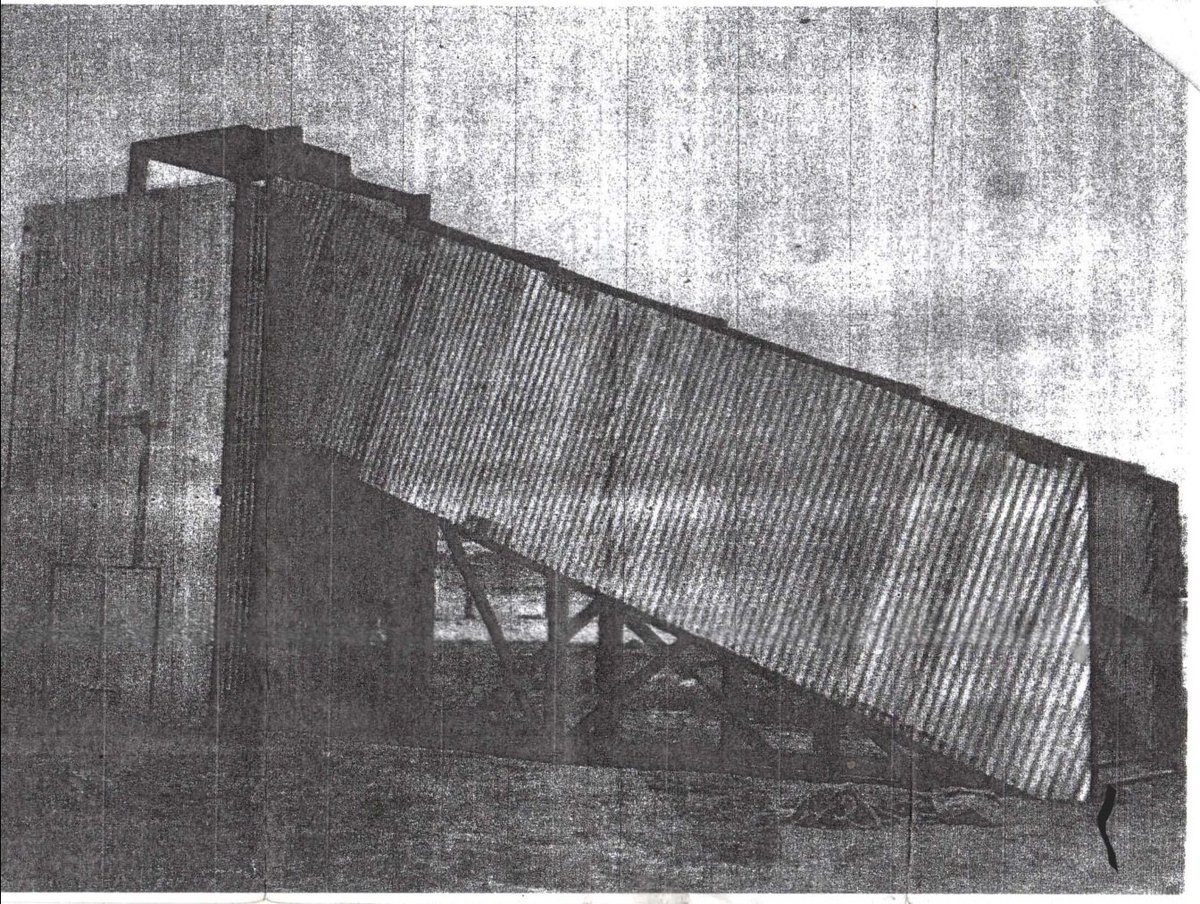
I managed to convince the 94 year old Mzee Ng'ote of Githunguri to scan for me a copy of the Guillotine which the British government used to massacre 54 Kenyans during the State of Emergency from 1952.