Toyota Motor North America has decades of manufacturing knowledge, but using it with AI came with one requirement: it had to stay inside Toyota’s environment
Pinecone BYOC runs there, while we manage upgrades and scaling without inbound access.
BYOC is now GA 🔗 https://t.co/QIeJltHYRo
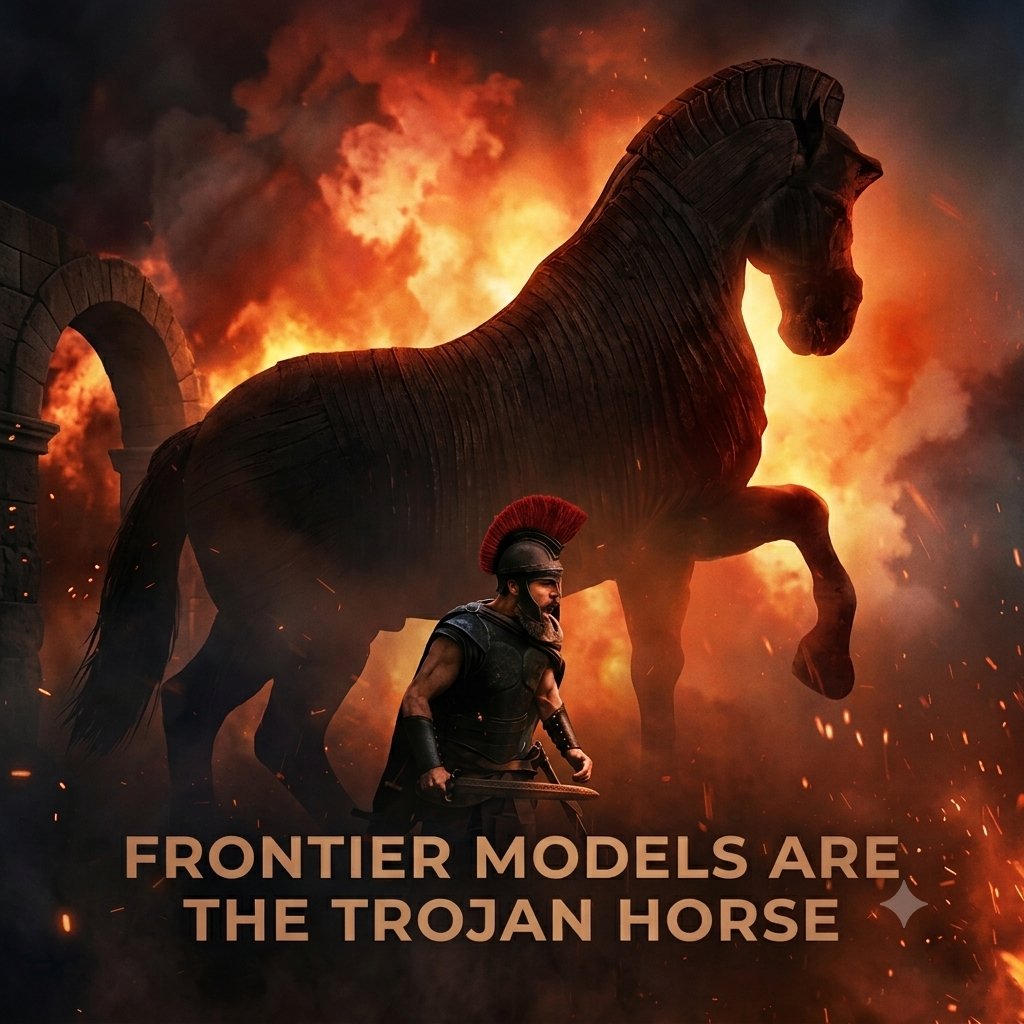
Frontier models are a Trojan horse.
They arrive as a gift, then quietly extract your exceptions, decisions, and context, one prompt at a time.
The model is a commodity. Your knowledge isn't. And you're giving it away.
Keep it: your own knowledge layer + open-weight models, inside your boundary.
Pinecone Nexus is in Public Preview.
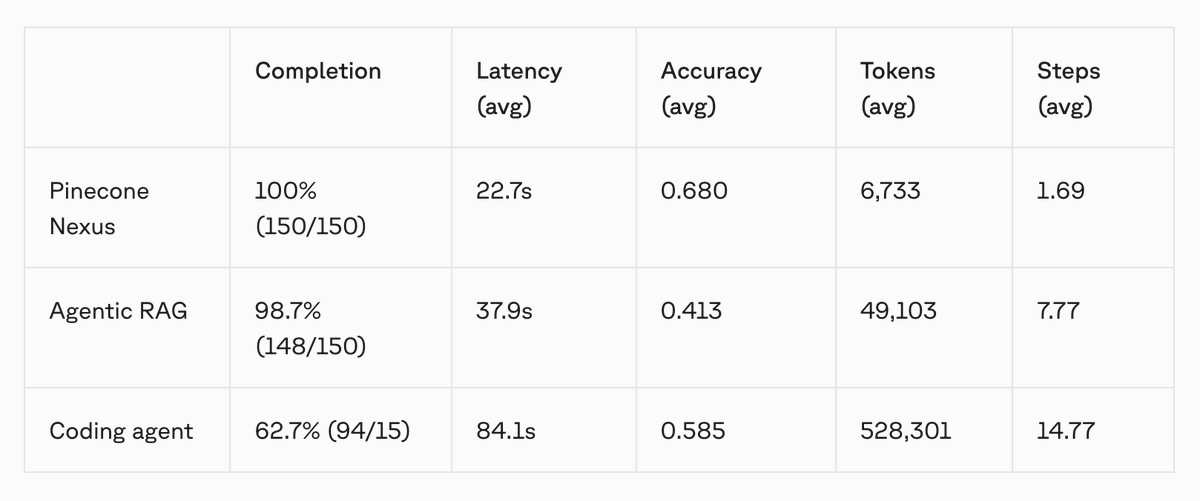
A knowledge engine that compiles untapped, distributed enterprise data into a layer agents query directly. Answers get faster, cheaper, and more accurate.
Read more: https://t.co/7cEu1tfM2Z
"Compile once, read many" is a classic performance pattern:
- Interpreters → compilers
- Origin requests → CDNs
- Full-table scans → indexes
- Path discovery → routing tables
Nexus is the same move for AI agents: knowledge retrieval shifts from query time to compile time.
Hit me up if this is a problem you want to solve.
Recently @pinecone introduced Nexus – a new knowledge-engine layer for AI agents that reduces token use by up to 90%.
It’s built on top of a vector database, but shifts reasoning earlier in the pipeline: from retrieval at query time to knowledge compilation before the agent even asks for information.
Instead of giving agents raw files, Nexus prepares task-optimized representations in advance.
These representations include artifacts – structured forms of information tailored to each agent’s specialization and workflow.
For example, a finance agent gets only billing schedules, pricing rules, and usage thresholds.
Pinecone’s VP of Product Jeff Zhu explains it like this:
"The artifact representation can range from markdown files to extracted entities to tables. These artifacts are then indexed for retrieval within Pinecone’s database which support both semantic, sparse, and full text search capabilities so that the right artifacts are retrieved during query time and then composed for the final structured output response from Nexus."
So vector databases are evolving from passive storage layers into active knowledge engines for agents.
Read this to learn what distinguishes vector database in the Agentic Era: https://t.co/B20aFqw7Yd
Introducing Pinecone Nexus. A knowledge engine for agents.
The bottleneck for production agents isn't the model. It's the per-query work of searching, stitching, parsing tables, normalizing labels. Nexus compiles that work ahead of time into typed, governed artifacts. Agents query through KnowQL.
90% fewer tokens. >90% task completion. 30x faster.
Early access open.
https://t.co/FMAjWmQOMJ
The agentic era doesn't fit inside the old infrastructure category. So we built a new one.
This week we're unveiling the largest release in the history of @pinecone : a new language for agents, a new engine to compile context, a new marketplace, new economics, and new reach.