Step inside the Lion’s den.
The 26/27 Chelsea home kit is here. Created with @NikeFootball.
The Pride hunts together.
#CantTameUStep inside the Lion’s den.
The 26/27 Chelsea home kit is here. Created with @NikeFootball.
The Pride hunts together.
#CantTameUStep inside the Lion’s den.
The 26/27 Chelsea home kit is here. Created with @NikeFootball.
The Pride hunts together.
#CantTameUStep inside the Lion’s den.
The 26/27 Chelsea home kit is here. Created with @NikeFootball.
The Pride hunts together.
#CantTameUStep inside the Lion’s den.
The 26/27 Chelsea home kit is here. Created with @NikeFootball.
The Pride hunts together.
#CantTameUs
Come and visit London’s Home of Trophies. 🏆
Book your Stadium Tour at Stamford Bridge now. ⭐️⭐Come and visit London’s Home of Trophies. 🏆
Book your Stadium Tour at Stamford Bridge now. ⭐️⭐Come and visit London’s Home of Trophies. 🏆
Book your Stadium Tour at Stamford Bridge now. ⭐️⭐Come and visit London’s Home of Trophies. 🏆
Book your Stadium Tour at Stamford Bridge now. ⭐️⭐Come and visit London’s Home of Trophies. 🏆
Book your Stadium Tour at Stamford Bridge now. ⭐️⭐Come and visit London’s Home of Trophies. 🏆
Book your Stadium Tour at Stamford Bridge now. ⭐️⭐️
Folks, I write a regular newsletter on agricultural economics and trade matters, primarily focused on South Africa and the region. If you want to receive these in your inbox, please subscribe for free.
SOUTH AFRICA’S MAIZE HARVEST REVISED TO A NEW RECORD HIGH 🇿🇦
South Africa’s 2025-26 maize production estimate is 17.1 million tonnes, up 2% from last season, and the largest harvest on record.
Moody’s Ratings revised South Africa’s credit outlook to positive, citing the country’s improving fiscal position and commitment to reforms https://t.co/4MALEg1fLX
"We got rid of our HR team.”
Bolt CEO Ryan Breslow defended sweeping workforce cuts at Bolt—including a recent layoff affecting roughly 30% of employees—as well as his decision to eliminate the company’s HR team.
#FortuneWorkplaceSummit | https://t.co/8iLEhnNoWf
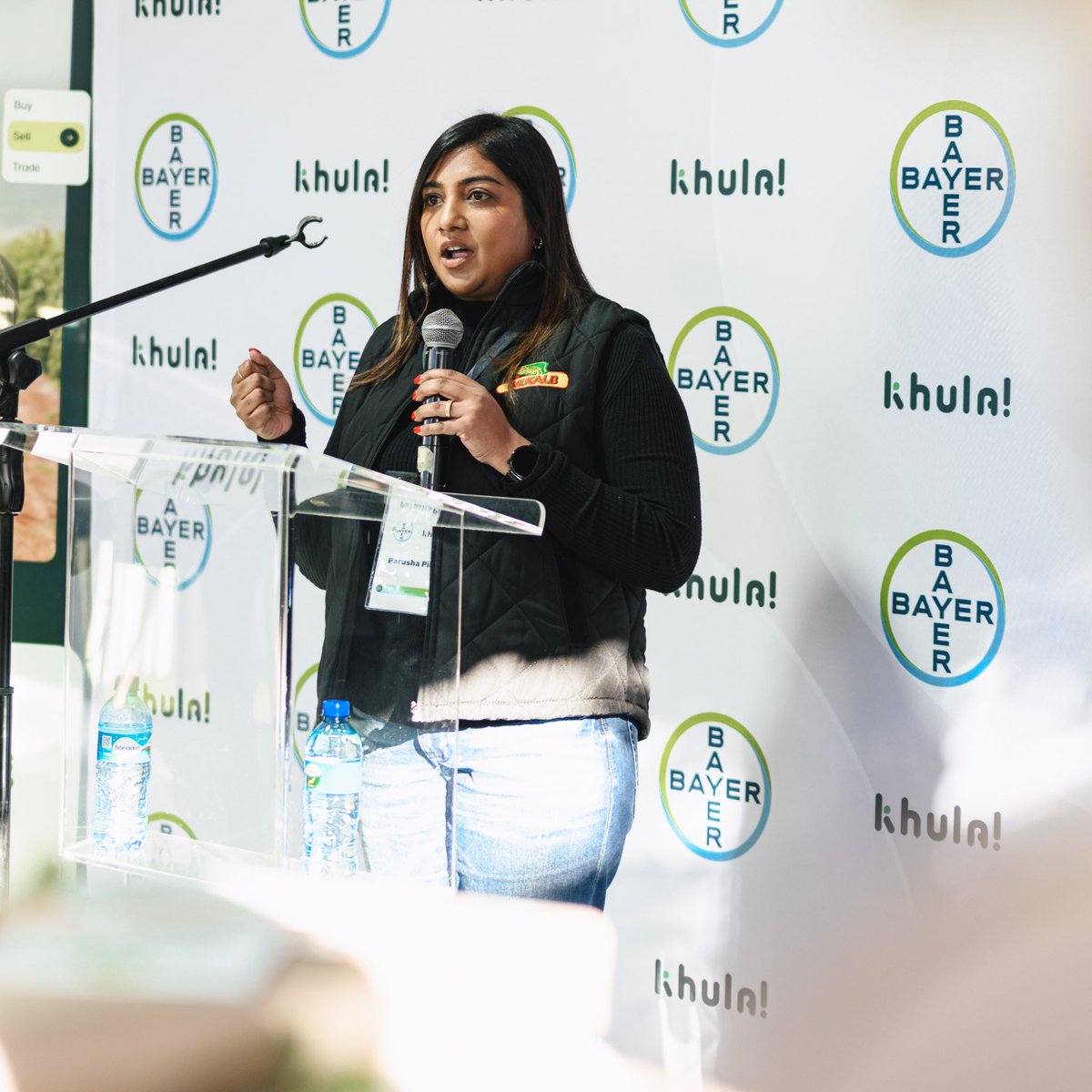
We are proud to announce an exciting partnership with @Bayer4Crops. This will be aimed at supporting 50 emerging farmers across South Africa’s to build capability, access finance and connect to markets.
We are proud to announce an exciting partnership with @Bayer4Crops. This will be aimed at supporting 50 emerging farmers across South Africa’s to build capability, access finance and connect to markets.
Last week at Nampo we deepened our relationship with @Bayer4Crops_SA even further! We announced a R7.5M partnership aimed at supporting at least 50 emerging farmers over the next 12 months to access production finance & participate meaningfully in formal markets
ZIMBABWE WAS THE MAJOR BUYER OF SOUTH AFRICAN MAIZE IN THE 2025-26 MARKETING YEAR
When the South African maize industry began its 2025-26 marketing year in May last year, there was optimism that it would be a bumper harvest year with a large surplus for export markets.
Indeed, we ended the year with a large harvest of about 16.5 million tonnes, supported by the La Niña rains and decent plantings. Such an ample harvest clearly showed that the exports would be significant, as it far surpassed South Africa’s domestic maize needs of about 12.0 million tonnes.
In doubt about how much demand would be in the market, various grain analysts, including ourselves, placed South Africa’s maize export forecast for the 2025-26 marketing year, which ended recently in April 2026, at 2.4 million tonnes.
The size of these exports also meant large volumes would carry over into the following year as carryover stock. But as the year progressed, we encountered weaker-than-usual demand. By the time the 2025-26 marketing year ended in April, exports were only about 2.0 million tonnes, well below the industry's conservative export forecast of 2.4 million tonnes set at the start of the season. The typical buyers of South African maize in the Far East markets, such as Vietnam, Taiwan, and South Korea, were just not as active in the market.
Rather, we saw strong demand for South Africa’s maize emanating from the Southern Africa region. In fact, Zimbabwe was the major buyer of South African maize, accounting for 39% of South Africa’s 2.0 million tonnes of maize exports. This was about 780,770 tonnes, primarily driven by a lower domestic harvest and growing demand. The volume included both white and yellow maize.
The reason for lower demand in some of South Africa’s typical export markets, particularly those in the Far East, was, amongst other things, ample supplies of more affordable maize in the world market. This lessened the need for imports from as far as South Africa.
We are now starting the 2026-27 maize marketing year in South Africa, which begins in May 2026. As with the previous season, the supplies are plentiful. South Africa’s 2025-26 maize production estimate is 16.8 million tonnes, up 1% from last season, and the largest harvest on record. For clarification, the 2025-26 production season corresponds with the 2026-27 marketing year. Therefore, this record crop of 16.8 million tonnes comes into this new marketing year and will run through to April 2027.
The large harvest is on the back of expanded planting area and expected high yields. About 9.1 million tonnes of white maize, with 7.7 million tonnes being yellow maize. Again, such a maize crop, combined with likely large carryover stocks from the current season, signals that South Africa will yet again remain a net exporter of maize in the 2026-27 marketing year. But this new year, the exports may not be as soft as the previous season.
We are approaching an El Niño weather event in the season ahead, which means that, aside from the season we are ending with a record harvest, supplies, at least in Southern Africa, may not be as plentiful as in past seasons going into 2027. This means that, in addition to Zimbabwe being the only significant buyer of South African maize, we may see more buyers of maize in the region. It is also likely that, with a possible slight increase in global maize prices in the coming months, we may see a return of Far East maize buyers. When such demand gains momentum, South Africa will still be better placed to meet it.
So, while we have ended the 2025-26 marketing year with a slight downbeat mood from the start, when there was anticipation of strong exports, the new year may be different. The demand may be revived not only in the Southern Africa region but also among South Africa’s typical maize buyers. Such a possibility would raise maize prices slightly from current low levels, where South African maize prices are down 20-30% from a year ago due to the large harvest and subdued demand. We are early in the year, and the months ahead will provide more guidance about where we could end up, but we remain optimistic.
--Wandile Sihlobo