New chapter! I'm joining @usponline as a postdoctoral researcher, supported by @AgenciaFAPESP, to investigate the molecular mechanisms of sexual reproduction in Leishmania in sand fly vectors. Excited to be back in Brazil and diving into parasite biology!
🚨 Call for Papers 🚨
We're excited to announce a special collection on Insect Chemical Ecology within the #OneHealth context! 🌍🐝
Submit your research on how chemical signals drive insect behavior and impact animal, plant, and ecosystem health.
@Xavi_ChiribogaM@juarena_
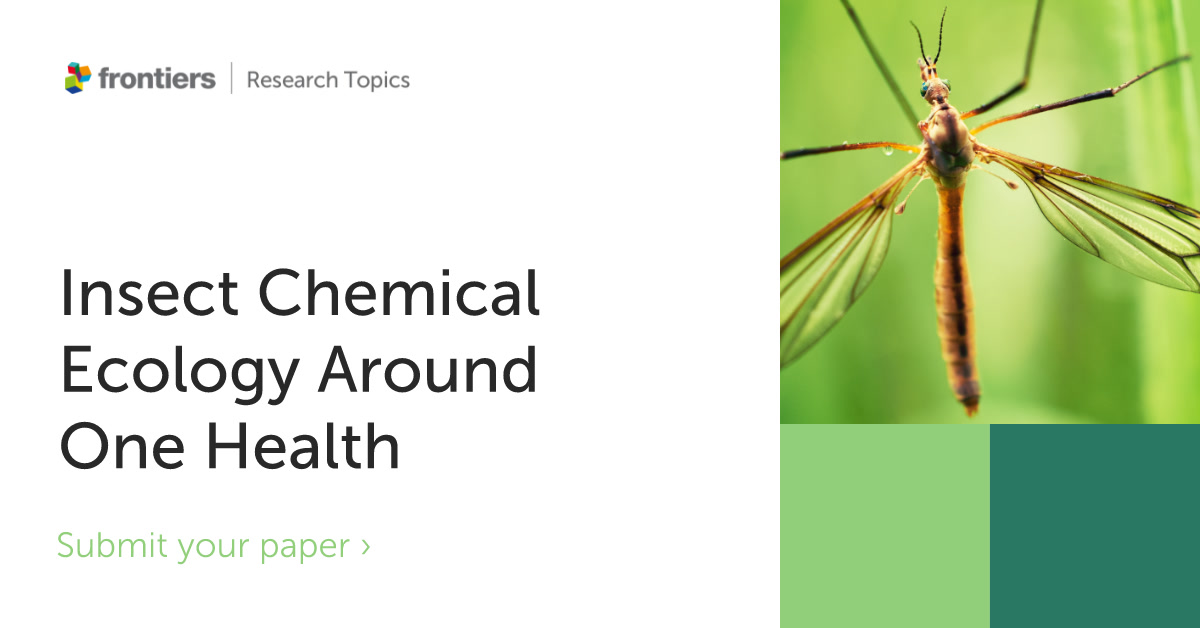
Our new Research Topic, Insect Chemical Ecology Around One Health, is now open for submissions. 🦟🌱
Manuscript summary deadline: 9th December 2024
Manuscript deadline: 9th March 2025
Read more here➡️: https://t.co/R62MNgXHM2
Thrilled to share our latest research in @NatureComms.
We performed single-cell analysis to computationally define new “driver genes” and study gene regulatory networks involved in male and female cell fate in Plasmodium falciparum gametocytes.
https://t.co/Yacf91mMyp
Rosenbergiella_YN46 is a natural #bacterium isolated from Aedes albopictus #mosquitoes that acidifies the lumen of their gut, inactivating #flavivirus virions and disabling viral invasion of epithelial cells https://t.co/Xaa4VP3qUt
#INSPIEsInnovación
El INSPI invita a participar en la charla virtual “Interacciones mosquitos-microbiota: de la biología al control vectorial” ⤵️
🗓️miércoles 26 de julio
⏰ 14h00 - 15h00
Link inscripciones➡️ https://t.co/hGh4iLIVJY
I'm happy to share our new study on bacterial communities associated with Anopheles darlingi immature stages and their breeding sites 🦟🦠🧵
https://t.co/x27ZOPRx1N
Comparative assessment of the bacterial communities associated with Anopheles darlingi immature stages and their breeding sites in the Brazilian Amazon https://t.co/pSyl8LZccX
Mosquito-microbiota interactions can impact early-stage development as well as adult fitness & vector competence. Understanding the factors shaping mosquito microbiota could contribute to explaining pathogen transmission in specific populations.
The microbiota associated with mosquito immature forms is largely acquired from their aquatic environments. It is known that some bacterial partners can be transstadially transmitted to adults.