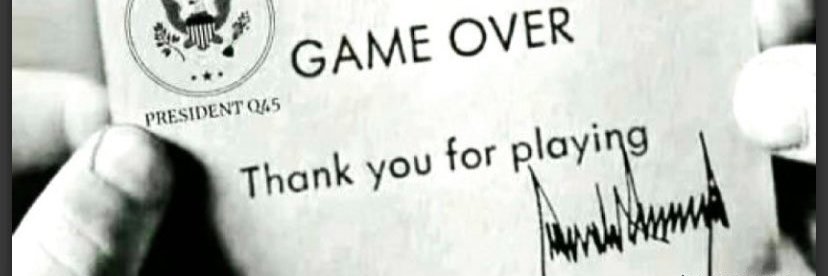
"Next- you build a bridge to retreat across, by offering them something that will benefit their country while creating a sense of victory for everyone."
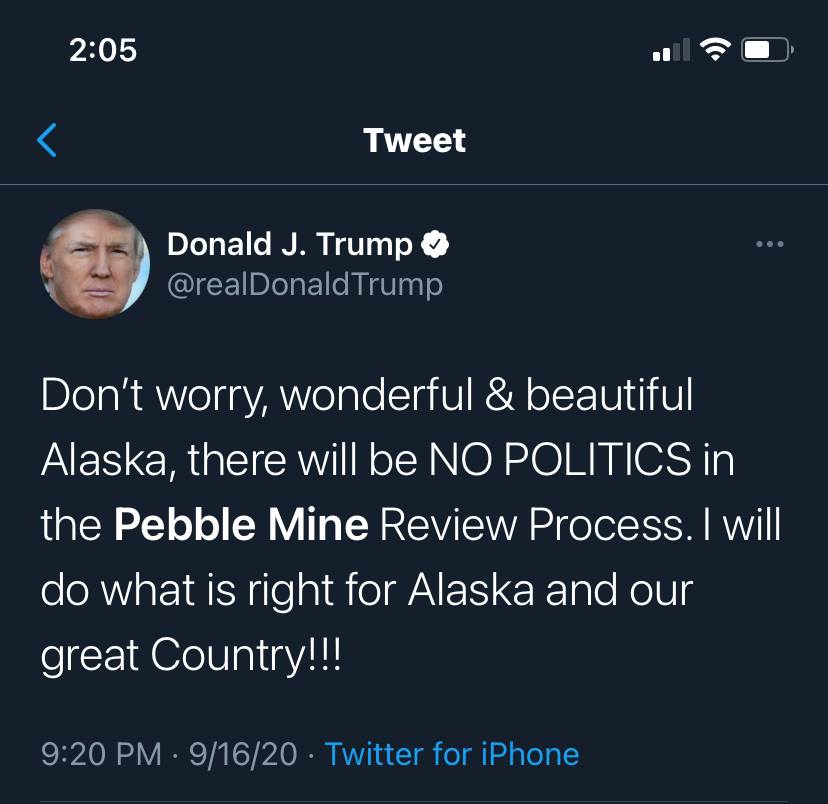
This is Pebble Mine. Only when America wins, will Patriots also win. A fight for our country! $NAK
@realDonaldTrump
Exactly 17 musicians
in the U.S. military band.
Blow the trumpets...President Trump.
Feels Historical & Biblical…
🎺Since ancient times, musicians with trumpets and drums marched out front to lead armies, processions and ceremonies. They set the pace, signal commands and inspire the troops.
🎺God commanded silver trumpets and ram’s horn trumpets to lead assemblies, marches and battle.
I am so in for this one.
Brad Pitt. Alaska. A plane crash. A retired Special Forces operator. One loyal combat dog. No CGI multiverse nonsense, no superheroes, no forced plot twists—just survival, grit, and man versus nature.
The fact that it’s directed by David Ayer and reunites him with Brad Pitt after Fury makes me even more bullish. Everything coming out of the early previews suggests it’s less of an action movie and more of a story about resilience, loyalty, grief, and survival.
“One last mission” is exactly the vibe.
Not saving the world.
Not stopping an alien invasion.
Just a broken warrior and the only partner he trusts trying to make it home.
That’s the kind of movie Hollywood forgot how to make.
September can’t get here fast enough. 🐺🏔️🐕🦺
Naval Ravikant reveals why getting rich has never been easier in human history and why most people are playing the wrong game:
1. status games are zero sum. wealth creation is not. in hunter gatherer times there was no stored wealth so status was the only game worth playing. high status meant you ate first. today you can build a product, scale it, and create abundance for millions of people without taking anything from anyone. i can be wealthy and you can be wealthy at the same time. you cannot both be number one.
2. there has never been an easier time in history to create wealth. a few hundred years ago you were born a serf and you died a serf. there was almost no way out. that has changed entirely. the leverage available today through technology, code, and media means wealth creation is accessible to more people than at any point in human history. it is still hard. it will not fall in your lap. but it is possible.
3. status is hardwired into us because wealth creation is evolutionarily new. we spent hundreds of thousands of years in hunter gatherer societies where status determined survival. wealth only became real with the agricultural revolution, accelerated with the industrial revolution, and exploded with the information age. your brain has not caught up. it still craves the ranking ladder.
4. get rich first. then go for fame and status if you still want it. trying to build a following to then monetize it is a much harder path than building wealth first and trading some of it for status later. rich people go to davos, donate to nonprofits, start appearing in films. they trade money for status because once you have money that is what you want next. do it in that order not the other way around.
5. you can reach a point where you are satisfied with your wealth. you cannot reach that point with status. the leaderboard never ends. youtube shows you your likes going up and down every single day and keeps you running on the treadmill forever. wealth has a finish line. status does not.
🚨 BOOM! TRUMP THROWS AMERICAN FISHERMEN A LIFELINE!
For years, Washington bureaucrats tied their hands with insane regulations and closed off waters.
Now President Trump is UNLEASHING opportunity, more fishing grounds, more jobs, and a stronger American seafood industry.
Let our fishermen do what they do best… Dominate the seas and feed the nation!
GREAT JOB, MR. PRESIDENT!
🔥🚨 LMAO! President Trump calls Sen. Lisa Murkowski an "IMPEDIMENT" to the state of Alaska.
TRUMP: "I've done SO MUCH for Murkowski!"
*Turns to Alaska's governor, Mike Dunleavy*
TRUMP: "Governor, have I done alot for Alaska? Has there been anyone who has done more for Alaska?"
DUNLEAVY: "You have been the BEST presdient for Alaska in HISTORY! I've said that many times!"
Trump wasn't just talking about fish... he was talking about a country reclaiming the ability to use what it already possesses...
The fish were there...
The waters were there...
The fleets were there...
What stood in between was policy...
That distinction matters because the same dynamic has played out across energy, timber, mining, agriculture, and manufacturing...
A nation blessed with extraordinary abundance gradually found more distance between resources and production...
Now that distance is shrinking... that is the signal, the fishing grounds are simply where it surfaced...
The deeper story is America reconnecting with the assets that built its strength in the first place and restoring the productive capacity that turns natural abundance into economic power...
🏔️ NAK Nation 🏔️
Welcome back to The Veto Unravels.
Chapter 10: What Will Judge Gleason Actually Ask
Fourteen days until oral argument.
Over the past five chapters I walked you through the five legal arguments the plaintiffs are making before Judge Gleason. In Chapter 9 I explained what oral argument actually looks like and how to read it in real time.
Today I want to give you something even more specific. A practical guide to the questions Judge Gleason is likely to ask on June 25, and what each question would signal about where the case is heading.
What follows is the product of careful analysis of the arguments, the briefing record, Judge Gleason's documented judicial style, and the specific analytical tensions we have identified across this series. Think of it as a translation guide for June 25.
One important framing note before we begin. As I explained in Chapter 9, federal judges regularly ask difficult questions of both sides regardless of where they are leaning. A hard question directed at DOJ does not automatically mean Gleason is ruling for the plaintiffs. A hard question directed at the plaintiffs does not automatically mean she is ruling for EPA. What matters is the pattern of questioning across the entire hearing and which issues she returns to most persistently. Use these predicted questions as a framework for understanding what you are watching. Not as a scorecard.
Questions Gleason Is Likely To Ask DOJ
The first likely question, on fishery areas.
Counsel, your brief describes EPA's interpretation of fishery areas as reasonable if not the best reading of the statute. Under current Supreme Court doctrine this court must independently determine the best reading. Can you explain why EPA's interpretation represents the best reading of the statutory text rather than simply a reasonable one.
This question matters because it goes directly to the Loper Bright tension we identified in Chapter 6. DOJ's own brief used Chevron-era reasonableness framing even though Judge Gleason must now independently interpret the statute. Watch for DOJ to pivot toward the ecosystem connectivity argument or the downstream fishery dependency argument. EPA has genuine arguments available here. The parenthetical including spawning and breeding areas does signal Congress intended some upstream reach. The challenge is whether DOJ can articulate why that upstream reach has a limiting principle grounded in the statutory text.
The second likely question, on fishery areas.
If EPA's ecosystem connectivity theory is correct, what principle grounded in the statutory text limits its geographic reach. Why does that principle stop where EPA drew it rather than extending across the far larger Bristol Bay watershed or beyond.
This is the limiting principle question we identified in Chapter 6. Congress wrote fishery areas including spawning and breeding areas. It did not write watershed or ecologically connected system. If DOJ struggles to articulate a limiting principle grounded in the statutory text, that could increase the difficulty of defending EPA's interpretation under the post-Loper Bright framework, where courts must determine the best reading and not merely a reasonable one.
The third likely question, on jurisdiction.
Your Response to Comments states that at least some waters within the defined area qualify as waters of the United States. The Supreme Court in Sackett held that jurisdiction requires a continuous surface connection for specific features. Can you identify where in the administrative record EPA conducted the more rigorous jurisdictional analysis that standard requires.
EPA's jurisdictional analysis predates Sackett and relied on connectivity concepts that DOJ will argue remain distinguishable in the Section 404c context, but that plaintiffs contend became substantially more difficult to sustain after Sackett. Watch how DOJ responds. They will argue the full administrative record provides a more complete showing than any single passage reflects, and that Sackett's direct holding concerned WOTUS permitting jurisdiction under a different statutory context. Whether Gleason finds those distinctions persuasive is one of the key analytical unknowns heading into June 25.
The fourth likely question, on the waiver defense.
Your waiver argument is directed at PLP. How does that argument address the State of Alaska's independent jurisdictional challenge. Alaska's rights under the Statehood Act were not subject to the Army Corps permitting process in any way that created a jurisdictional concession. Does your waiver argument reach Alaska's claims at all.
This question probes an important limitation in EPA's waiver defense, because Alaska's independent claims are analytically distinct from PLP's permitting history. EPA will argue that waiver does not need to defeat every plaintiff and that Alaska's claims may still fail on independent grounds. Whether Gleason finds that response adequate or presses further will be analytically revealing.
The fifth likely question, on analytical consistency.
EPA relied on broad ecological connectivity to establish that remote headwater streams qualify as fishery areas and to extend veto authority across the defined area. The analysis justifying the specific geographic boundary EPA chose is considerably narrower. How does EPA reconcile the breadth of the ecological lens used to establish authority with the rigor applied to justifying the particular reach it settled on.
This is the analytical consistency tension we developed across Chapters 6, 7, and 8, and I want to state it precisely, because precision matters here. EPA did not ignore costs altogether. It weighed a broad range of advantages and disadvantages in an alternative basis within the determination and concluded the result held. So the plaintiffs' argument is not that EPA did no cost analysis. It is the narrower and sharper point that EPA used an expansive ecological lens to establish its authority while applying less rigor to justifying the specific boundary that authority produced. Under State Farm, agencies must apply consistent reasoning across a single decision. Using one analytical standard to expand authority and a different one to justify its scope, inside the same action, is the type of internal tension courts scrutinize. A question in this area signals Gleason is probing for that inconsistency.
The sixth likely question, on the preemptive structure.
EPA issued this veto before PLP filed a completed permit application formally designating specific disposal sites. The modern history of Section 404c administration contains no close analogue. Can you identify where in Section 404c Congress authorized EPA to act before the ordinary permitting process concluded.
This goes to the historical novelty and outer boundary statutory authority arguments we covered in Chapter 8. EPA's answer will be that the statute does not expressly prohibit preemptive action and that Congress designed Section 404c as a preventative environmental safeguard. Whether Gleason finds that argument persuasive or presses further will reveal how much weight she is placing on the unprecedented structure of this specific veto.
The seventh likely question, on remedy.
If the court identifies defects in EPA's jurisdictional showing or its fishery areas analysis, what would reconsideration of those issues look like in practice given the current regulatory environment. Specifically, how would EPA's ongoing WOTUS rulemaking affect its ability to reconstruct portions of the jurisdictional analysis on remand.
A question in this area would suggest Gleason is thinking carefully about how any remedy would operate within the current post-Sackett regulatory environment. Here the asymmetry we have flagged throughout the series matters. A narrowing WOTUS framework could complicate EPA's ability to reconstruct the wetland portions of the jurisdictional analysis on remand. It does much less to the documented salmon streams at the mine site, which remain jurisdictional under virtually every plausible version of the rule. So, the remand exposure runs to the wetland and outer-watershed base, not to the stream core. EPA also has options on remand, including arguing that Section 404c authority is distinguishable from ordinary WOTUS permitting jurisdiction, narrowing rather than abandoning the veto, or revising specific jurisdictional findings. How DOJ addresses those possibilities would be analytically revealing.
Questions Gleason Is Likely To Ask The Plaintiffs
The first likely question, on fishery areas.
You argue EPA's ecosystem connectivity theory has no limiting principle. But the Clean Water Act's inclusion of spawning and breeding areas signals Congress intended some upstream reach. Where exactly would you draw the line, and what statutory language supports drawing it there.
This is the limiting principle question directed at the plaintiffs. PLP's answer will likely focus on waters where fish populations are directly and substantially supported rather than merely incrementally affected. Watch for Gleason to press on where exactly that line sits in the statutory text. The plaintiffs have a stronger argument about where EPA's line is wrong than about precisely where the correct line should be drawn. That asymmetry is real, and Gleason may probe it directly.
The second likely question, on jurisdiction.
Even if EPA's at least some waters showing was inadequate under Sackett, isn't it possible that some waters within the defined area do satisfy the continuous surface connection standard. If so, wouldn't the appropriate remedy be remand for a more rigorous jurisdictional analysis rather than vacatur of the entire veto.
This is an important remedial question Gleason is likely to press on. Watch carefully how PLP responds. Their answer needs to address why vacatur rather than remand is appropriate even if some qualifying waters may still exist. Under Ninth Circuit precedent, vacatur is often treated as the ordinary remedy when serious legal defects are identified. That said, the Ninth Circuit's remand without vacatur doctrine is more flexible than a simple presumption implies, particularly in environmental and regulatory cases where equitable balancing and potential disruption carry substantial weight. PLP will also likely emphasize that DOJ itself never requested remand without vacatur, which places the burden of justifying that softer remedy on the intervenors rather than EPA.
The third likely question, on waiver.
PLP participated extensively in the Army Corps permitting process and treated these waters as jurisdictional throughout. Why shouldn't that conduct constitute a waiver of the right to challenge jurisdiction now.
This is EPA's strongest defense, and Gleason will want to hear PLP address it directly. Watch for PLP to emphasize that the preliminary jurisdictional determinations were non-binding and that Sackett fundamentally changed the governing legal standard after the Corps process concluded. PLP will likely also emphasize Alaska's independent standing as a plaintiff whose jurisdictional challenge survives entirely independent of the waiver question.
The fourth likely question, on severability.
If the court finds the Restriction's boundary justification inadequate or the fishery areas interpretation too broad, why wouldn't severability preserve at least the Prohibition covering the specific mine site. What is the argument against severing the two components and addressing them separately.
This is a genuinely difficult question for the plaintiffs, and it may be the most consequential question in the entire hearing. EPA structured the Prohibition and the Restriction to operate independently, and the Prohibition's core rests on documented salmon streams that survive the jurisdictional narrowing. So if Gleason is inclined to sever the two and treat them differently, the plaintiffs need a compelling answer for why that approach is inadequate. Watch for PLP to argue that the Prohibition and Restriction share the same jurisdictional and statutory interpretation foundations and that severability cannot cure problems that infect the entire veto's analytical basis. Whether that argument succeeds against EPA's independent-findings structure is, in my view, the single biggest variable in how the mine-blocking component fares.
The fifth likely question, on statutory authority.
What specific statutory language prohibits EPA from issuing a preemptive veto before the permitting process is complete. If Congress intended to restrict the timing of Section 404c actions, where did it say so.
This is a genuinely difficult question for the plaintiffs on the preemptive nature argument. EPA will argue the statute is silent on timing and that silence should not be read as a restriction. The plaintiffs need to explain why the structure and history of Section 404c implies a timing requirement Congress never explicitly stated. Watch for PLP to lean heavily on the modern administrative history argument rather than on specific statutory text, since the textual case for a timing restriction is less clean than the historical novelty argument.
The sixth likely question, on scientific deference.
Even after Loper Bright, doesn't EPA retain substantial expertise on ecological and scientific questions. Why shouldn't the court give significant weight to EPA's scientific judgment about Bristol Bay fishery connectivity even while independently interpreting the statutory text.
This is an important question about the limits of Loper Bright. Loper Bright eliminated Chevron deference on statutory interpretation questions. It did not eliminate agency expertise on factual and scientific determinations. PLP needs to clearly distinguish between EPA's scientific conclusions about ecological connectivity, which courts still respect, and EPA's legal conclusion about whether that ecological connectivity extends veto authority to remote headwater streams, which is a statutory interpretation question Gleason must decide independently.
Questions That Would Signal The Most About Her Thinking
If Gleason asks both sides about severability between the Prohibition and the Restriction, that signals she is considering treating the two components differently in her ruling. That kind of targeted ruling avoids resolving every broader statutory question while still addressing the most documented analytical gaps. This is the signal I would watch above all others, because it maps directly onto the most likely shape of a split outcome.
If Gleason asks detailed questions about the new WOTUS rule and its specific effect on the wetland types in the veto area, that suggests she is thinking carefully about how a remand would actually function in the current regulatory environment.
If Gleason asks DOJ about the absence of a remand without vacatur request in their brief, that signals she has identified the procedural gap and wants to understand whether EPA believes the court has discretion to impose that remedy even without a developed request from the primary defending party.
If Gleason pivots to remedy questions relatively early in the hearing, that can sometimes indicate the court is seriously considering whether some defect exists and is thinking through possible consequences rather than waiting until the end.
If Gleason asks very few sustained questions on any particular argument, that can mean she has already reached her conclusions on those issues. A brief exchange on any argument is not necessarily good or bad for either side. It may simply mean the judge already knows where she is going on that issue.
The Document 252 Connection
On May 19 2026, Judge Gleason ordered the full scientific and technical record into the complete public record rather than the isolated excerpts EPA preferred. Her stated reasoning was that the import of the cited material could be lost if only the cited page itself, and not the surrounding pages, was available to the public.
That ruling tells us something about how she approaches a complex technical record. She wants full contextual completeness rather than selective presentation. That instinct is likely to manifest in the questions she asks. Watch for questions that probe the full context of EPA's ecological and hydrological reasoning rather than accepting EPA's summary characterizations. Questions that press DOJ on what the complete scientific record actually demonstrates, rather than what EPA selected to highlight, are consistent with everything we know about her approach to record-intensive APA cases. That said, this is a window into her method, not a prediction of her merits ruling, and it should be read that way.
The Opening Fifteen Minutes
The issues Gleason addresses first often provide useful clues about which questions she considers most important to resolve. Though she may sometimes begin with threshold or procedural questions, the opening exchanges frequently reveal where her deepest analytical concerns lie.
If she opens on fishery areas, the limiting principle and statutory interpretation question is at the top of her list.
If she opens on jurisdiction, the Sackett showing and the at least some waters language are leading.
If she opens on the 309 square mile boundary, she may be looking for the narrowest procedural path to a ruling.
If she opens on remedy, she may already be assuming some defect exists and is thinking through what to do about it.
Pay attention to not just what she asks but how she asks it, and which issues she returns to after moving on. Persistence across the hearing tells a more complete story than any single exchange.
Coming Monday, The Administrator's Regulatory Philosophy
Monday I cover something most people following this story have not fully absorbed. EPA Administrator Lee Zeldin has, across several public settings, described a regulatory philosophy that lines up closely with the doctrinal tensions we have been building throughout this series.
He never mentioned Pebble Mine by name. I want to be careful and precise about what that does and does not mean, because it tells you about the current EPA's interpretive posture, which is a different thing from how a court will rule. But the overlap with the doctrine at issue is striking, and it is worth examining carefully.
Stay locked in NAK Nation. 🇺🇸🏔️
#NAKNation #PebbleMine #TheVetoUnravels #JudgeGleason #June25 #OralArgument #CleanWaterAct #LoperBright #Sackett
Normies be like:
“Idk man, $63,000 for a Bitcoin sounds risky…”
Then go finance a Kia Soul at 14% APR
While eating seed oil and cricket paste
In a house they don’t own
With money they don’t have
To impress people who think The Bachelor is real.
They’ll call Bitcoin a bubble
Then spend 40 years making minimum payments to a bank with marble floors.
Bitcoin isn’t risky, idiot.
Your ENTIRE LIFE is a leveraged buyout by people who hate you.
There it is:
🚨🚨Investigative journalist @laralogan Logan Drops A BOMBSHELL, Trump went after Maduro—knowing Venezuela coordinated with Iran and the CCP and helped overthrow the United States government on November 3, 2020. And the intelligence community covered it all up.
In other words: Sidney Katherine Powell VINDICATED ONCE MORE: Precisely why the regime went after her:
@SidneyPowell1: “I can hardly wait to present all the evidence we’ve collected on Dominion—starting with the fact that it was created to produce and alter voting results in Venezuela for Hugo Chávez, and then shipped internationally to overthrow governments, including this one the United States government.”
Venezuelan Military Intelligence whistleblower CONFIRMS that the Central Intelligence Agency outsources its election rigging software and voting machines [smartmatic] to multiple countries, including the U.S., from Venezuela.
"My name is Hugo Carvajal Barrios. For many years, I was a high-ranking member of the Venezuelan regime...
…Smartmatic was born as an electoral tool of the Venezuelan regime…I know this because I placed the head of IT of the National Electoral Council (CNE) in his position, and he reported directly to me. The Smartmatic system can be altered-this is a fact. This technology was later exported abroad, including to the United States. Regime operatives maintain relationships with election officials and voting-machine companies inside your country..."
REPORT: Dominion deleted 2.7 million Trump votes nationwide.
Data analysis finds 221,000 Pennsylvania votes were switched from President Trump to Biden.
941,000 Trump votes were deleted.
States using Dominion Voting Systems switched 435,000 votes from Trump to Biden.
I just released a 4 hour rip with @mattkratter on my new YouTube channel.
https://t.co/BaScahX4Ex
Matt covers a lot of ground in this one. Check it out and subscribe!