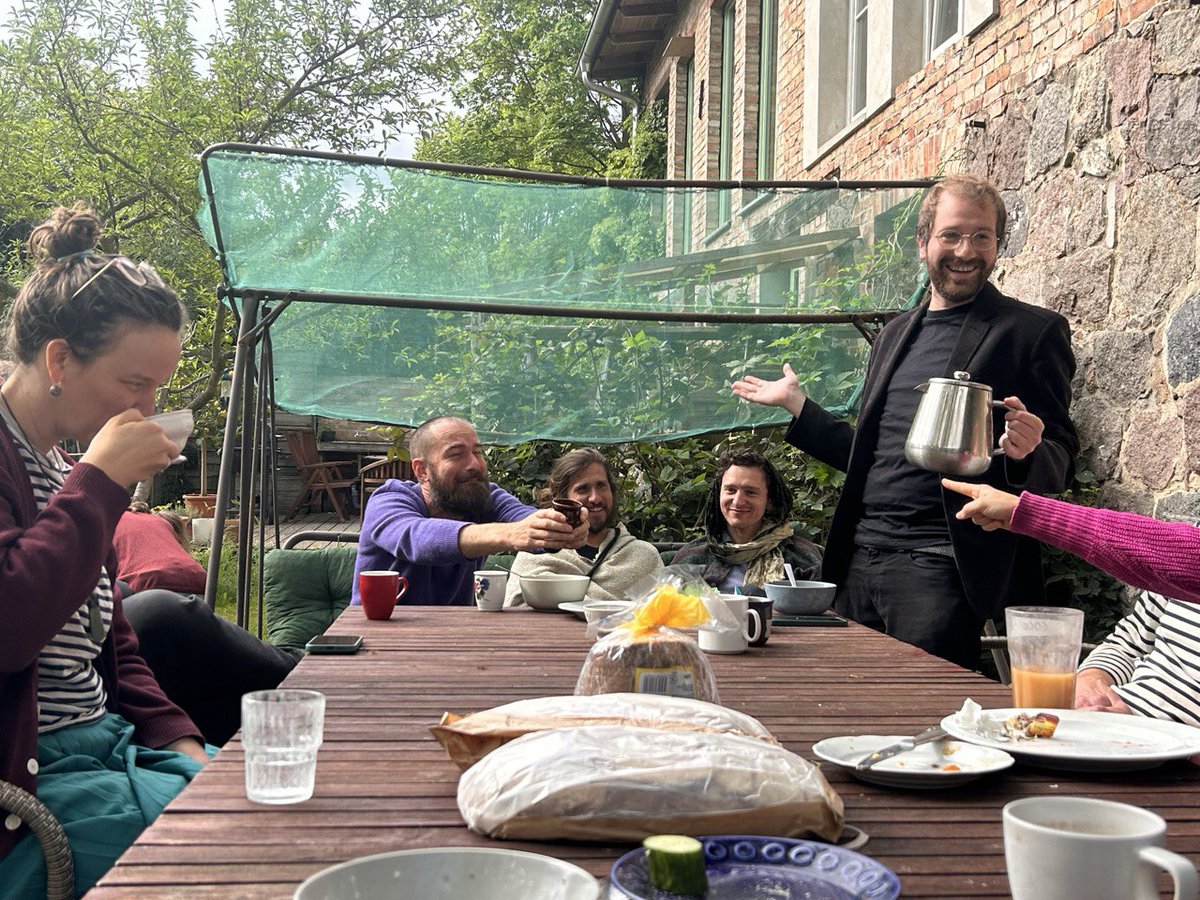
Everybody talks about the patterns and rules of (good) community building—but once you see it in action, when it really works, so many of those things feel unnecessary
Have you ever heard of Enspiral? Here are some reflections from our last European retreat
"Businessmen became politicians and were acclaimed as statesmen, while statesmen were taken seriously only if they talked the language of successful businessmen."
— Hannah Arendt, The Origins of Totalitarianism
@lucasvo@JusNode 'Projects that prioritize structure, compliance, and decentralization will be best positioned to attract institutional capital and drive the long-term growth of the sector.'
The public don’t understand that the olive oil price is skyrocketing because crops in Europe have been devastated by extreme drought because of climate change, and that it’s going to get much worse - or that David Attenborough warns the collapse of the food system is on the horizon which means extreme violence… https://t.co/wJrrqNWkuz The public don’t understand because the media aren’t interested and aren’t telling them. More about it here: https://t.co/CahvjaCj5o
Quick thoughts around why I recently changed my mind about RWAs:
Long term:
RWAs will exist on-chain long term. I have always believed this. Question is how they get on chain.
Why I wasn't bullish RWAs in 2018:
In 2018, many projects were putting real estate on chain, price tracking US equities for investors in other countries (e.g. giving the rest of the world access to the S&P 500, Apple stock, etc), or creating debt markets for real-world borrowers.
But there were many obstacles:
-- Institutions and high-net worth individuals make up the bulk of the demand, but did not want these products on-chain because they did not lack access. Institutional players & HNWI could already access real estate, bonds, and US equities, so they would not change their processes. Putting these assets on-chain was only incrementally beneficial and most of the real benefits (access to defi, composability, etc) couldn’t be realized because there wasn’t infra for it yet.
--Supply was sporadic & had negative self selection. Supply of real estate for example was usually a single building or small cluster of buildings. Few people with real supply were putting it on chain. Usually, the type of assets that came on-chain were those that could not get demand in the real world, and so there was a negative self selection of assets that were available on-chain. This further made it harder to generate demand.
-- Legal issues / enforcement issues.
-- UX & custody issues. Most of demand was coming from non-crypto natives. Crypto UX and custody were a big blockers. Few had the capability to safely self-custody millions in assets.
Why now:
-- The US interest rate environment changed from 0% to 5%. This means (1) dollars on chain want access to real-world yield and (2) there is now demand off-chain for low APR loans.
-- Defi matured. We now have stablecoins, lending markets, exchanges on-chain. The “theoretical” benefits of putting real world assets from 2018 can now be realized.
-- Not all RWAs will “make it” this cycle. Simple, fungible assets like t-bills will make it first. Bonds are in the middle. Real estate will still lag and may not happen in the next few years.
-- UX and custody are no longer huge issues. Crypto-natives want real world yield. Orgs who are already familiar with operating on-chain want access to cheaper dollars. Both parties have familiarity with crypto and also custody and UX have improved a lot since 2018.
Crypto will be the backbone to our global financial system. It taking its first steps toward real world assets today.
@centrifuge, progressively decentralizing w effective governance:
-Not giving up on community
-Working w @cassidydaly@lucasvo@Gbbigbuy@FinTech_Khan@rhano_rhan to design dynamic gov systems: decisions can be fast, expertise utilized
-Always learning: other DAOs/DGov orgs
Active Contributors and Mandated Groups in the Centrifuge DAO drive our protocol and define its future.
Reviewing the past year of governance milestones, @kbeecroft explores how the DAO is building a better financial system 🌎
https://t.co/EgFxss2ozL
Brilliant blog about Centrifuge and credit
"Real talk: Without real world assets and efficiently allocating credit this industry will not grow beyond a (fun) theme park"
Came back to Twitter to share the first public piece I've written about crypto in half a decade, about @centrifuge and the future of defi
https://t.co/8JHcifspF3
⚡️ Introducing Centrifuge Prime.
Centrifuge Prime offers the services and tech that DAOs, stablecoins, and protocols need to onboard real-world assets.
Across on-chain, legal, risk, assets, and more, we bring RWAs to DeFi-native organizations.
https://t.co/IRBIEny1AN
…“the verb ‘deposit’ creates a noun: ‘deposit’ (“the flood deposited silt, now there’s a silt deposit”) we deposit (verb) money into a bank, so the subsequent ‘deposit’ (noun) must be the thing we put into the bank..”right? @Suitpossum: “No!” https://t.co/PyKZgUirEj
Governance systems where we pause, learn, discuss & design rather than just rushing in repeating the same old stuff. Gov Group @Gbbigbuy@Rhano72834065 & @cassidydaly are building key infrastructure & the culture that these things called DAOs need: less bureaucracy, more dynamism
1/ It's an exciting time for Centrifuge Governance 🏛
In the last 6 months, we've seen tremendous growth, with more proposals and clearer processes than ever.
Read our latest blog post to catch up — and to learn how you (yes, you!) can get involved!
https://t.co/HBgpyqvHkj
I basically think you become an embodied expression of the states of consciousness you spend the most time in, so you should choose them wisely, and that this is a much more effective way of guiding yourself to grow than considering your strengths/charms/weaknesses/flaws