I'm starting a façade restoration and painting business in Lisbon since beginning March. My business partner and I are both 27 and doing it all from scratch.
We got our first small job from an acquaintance who later referred us to 2 slightly larger clients (around 5k+vat each), 7,5% referral fee to the acquaintance. For now we are doing the work ourselves, getting experience and testing out a few different hires. We are trying to grow our team asap.
The goal is to make it big enough that we can be wealthy and automate management (1M net roughly, roughly 2-3 €50k jobs per month). Our positioning is premium market, we actually know what we're doing, we import quality materials (out of necessity) and just solve the client's problem in exchange for money.
I have engineering background and have experience owning/running a small hotel business I inherited in Africa, and my business partner is jewish (funny way to say he's an entrepreneur, very organized and a great salesman)
My main worry is conveying our value to people who may be used to take the cheap option, and to put ourselves in front of the type of clients we would like to have. I would greatly appreciate your advice
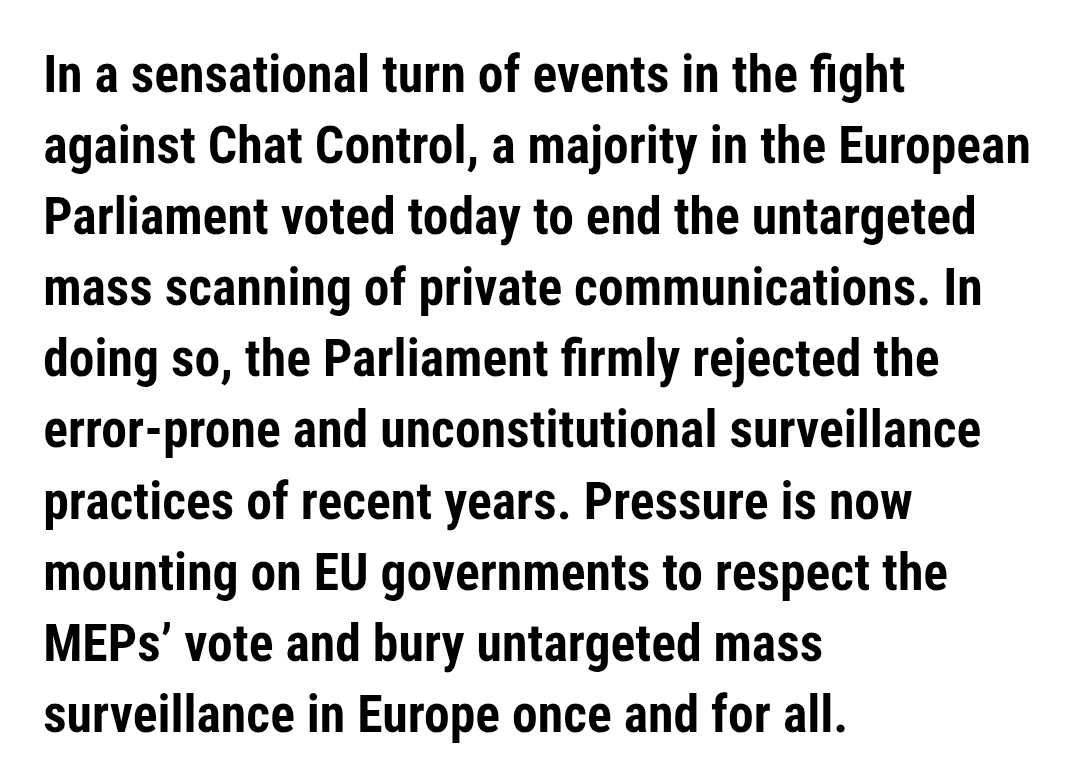
BREAKING: The EU Parliament has adopted a stance that prohibits mass surveillance in the EU.
Going against the EU countries which have been lobbying within the EU council to implement Chat-Control, the Democratic part of the EU has decided to stand up for European citizens. 🇪🇺
@nosilverv@RomeoStevens76 I'm really curious about this!
Did "productive" things like decision making, starting to work and clearing things start to feel different or have a different meaning?
And to what extent was the book a result of that?
Every time I speak with a tenant I am evicting, all of them without exception want me (the lawyer) to know they are a good person.
The strong human desire to be heard. It's not something I expected when I first started focusing on evictions.
Tenants will dive into intimate details about what happened, give me 10-year timelines, go back to the time they signed the lease, etc... Meanwhile I just want to talk to them about the upcoming trial or try to settle the case. Doesn't matter - they want to tell me their truth first. It's a necessary part of the ritual.
It doesn't matter if it has any impact on the case, on the negotiation, many times it's not even relevant to anything. They want to be heard.
Sometime this desire to be heard drives people to go to trial and not settle. People want their day in court, they want the judgment of their peers (or so they think).
It's important to them to know that I heard them and understand that they are not bad people. They take an exceptionally long time to tell me their version of the events. Why they didn't pay rent, how my client is the actual scumbag, and how it impacted their life.
Nothing in their story makes me changes my position. If anything, giving me more information about you gives me an advantage later. But they need to let it out. They carry the story as a burden and someone has to listen to them unload it.
It's not unique to tenants. It's true to almost every party I represented in litigation. I participated in dozens in mediations. And almost each and every time, my client takes 30-40 minutes to explain to the mediator in detail how the other side wronged them. At first I tried to tell my clients "mediator is not a fact finder, we paid for 4 hours, don't waste it in trying to convince the mediator on your version". It doesn't help, each side needs to get it out of their system. They want to tell the mediator everything.
Sometimes it happens on a phone call with a tenant when we first talk settlement. Sometime it happens in the courtroom hallway right before trial. It happens a lot in front of a judge when we are just setting a trial date. They just can't help themselves - the story is not relevant to setting a trial date but they dive into a tirade they've been practicing for days before the hearing. They want to tell the law and motion judge, the courtroom, everyone, why they didn't pay rent for 6 months. Their version of the story of why they are a good, decent person.
The judge respectfully listens, lets them finish and then says "thank you ma'am but that's not relevant to the hearing today".
I had to learn (and still working on it) how to give them space to unload and tell me the story. I am still working on that.
It makes me think that maybe people just need to be heard. I wonder how many parties will not file/sue if they are offered the opportunity to be heard by someone, anyone really.
I tracked my stolen phone across Vienna for 24 hours, skipped my flight to New York, and hired a Serbian bodyguard named Milovan to help me confront the thief.
Here's how it went down: I went with friends to a public swimming pool in the mountains of one of Vienna's nicest districts, and after a fun day of swimming I went to the changing room to put clothes on.
While doing so I left my phone outside on a table for barely a minute, but when I returned, someone had taken my phone and disappeared. No one saw anything.
Not knowing what else to do, we rushed home with a taxi to get to my computer. And there we saw the thief moving my device through the city to EVERY part of town for many hours.
There was no way I could chase this car down.
I had a hard deadline: A flight the next morning.
Around 1am the phone finally came to rest at a residential address, but what was I going to do: Storm an apartment in the middle of the night?
At 7am I took my flight to New York via Berlin, but when I landed in Berlin at 8am I almost got a heart attack: My stolen phone had returned to the scene of the crime: Back at the public outdoor pool in Döbling in the idyllic mountains of Vienna.
That's when it hit me—my phone had been taken by an employee. There was no way I was letting this go: I skipped my flight to New York and instead took the first flight back to Vienna.
At the Airport I booked a taxi driver from Serbia named Milovan on an hourly rate to be my bodyguard, and called a friend who had been at the pool with me the day before to come as well.
When I got to the pool, my phone tracker showed me where my phone was: Big fat letters spelling "NOW" right next to a group of employees. We called the police!
One of the employees wanted to kick me out and ban me from this public pool ran by the city of Vienna for life for making accusations.
It later turned out that employee was the thief. But I persisted until the police showed up.
Apple's Find My network detects other devices by exchanging signals between all surrounding devices. The more devices there are nearby, the more accurate the location.
The pool was an outdoor open air area, but all I knew was that the phone was there NOW, but not exactly where. Extremely frustrating.
But I had one more ace up my sleeve: I told the police the address where the phone had gone to rest the night before.
It turned out one of the employees lived exactly where I knew my phone had stayed over night, and so now they had a suspect after interviewing the staff. The police followed him without tipping him off, and noticed he had behaved suspiciously.
After the suspicious employee went to the bathroom, they searched it and
THEY FOUND MY PHONE.
This was an intense 24 hours, and I've had no sleep yet, but I'm incredibly thankful to the extremely professional Viennese police who helped me get my phone back, and to the employees who were patient and helped even though I accused one of their colleagues.
Sometimes maintaining a high-trust society means actually chasing down the thieves who abuse it.
24 hours. No sleep. One recovered phone. Worth it.
My wife had our first child in the middle of her medical residency so we knew that figuring out sleep was critical for her to be able to go back to work.
Here's what worked for us with our 2mo daughter who sleeps 12 hours a night and naps without needing to be held/nursed:
My Updated Guide To The "Live Near Friends" Movement
Some people wanna live near their friends and family. They had it in college, and then in dense cities post college. Then maybe they move to the suburbs. And their friends move to other cities for jobs or relationships. But then they aren't near their existing friends, and it's less walkable. Just at the time when they most start to care about it being walkable because maybe they have kids! They want it to be car-minimal and nature-rich.
So maybe they think about getting their friends to move near them, moving to a more walkable city together, buying land and building together, going back to the city near them, etc.
My biggest wish is for the people that want this to have more options. More: car-minimal housing developments, sets of houses built around shared mini parks, family friendly buildings in the city built around playgrounds and parks, etc. This is my updated guide from what I've discovered so far for people who want that kind of "bestie row" "living near friends" "village vibe".
Places that are particularly suitable for this:
Year round
1. Parts of Stockholm, Germany, Denmark, Netherlands, Spain (search YT for '[city name] walking tour')
2. Escondido Village at Stanford (Graduate student housing for families, "Family Courtyard Communities" - ground floor units built around a shared playground)
3. Culdesac (@ryanmjohnson) in Arizona, Santa Barbara State St, Serenbe in Georgia USA
4. Co-housing communities in Denmark (search on YT for denmark cohousing)
Pop up
5. Edge City (@JanineLeger, @timourxyz)
Future
6. CA Forever (@jansramek)
7. Esmeralda (@devonzuegel)
More
8. https://t.co/JR7bV9Uu7Q
Options
1. Rent/buy near friends in a walkable neighborhood
2. Buy a plot of land together and build houses (or one house with multiple wings and only one kitchen, if laws make separate houses a no-go)
3. Join an existing third space
4. Create/rent a third space with friends (a clubhouse)
What else?
I hope for more:
1. Town squares (e.g. Healdsburg Plaza)
2. Walkable car-free main streets (e.g. State Street in Santa Barbara)
3. Sidewalk cafes and restaurants
4. Courtyard apartment blocks with shared gardens and zero parking lots
5. Narrow tree-shaded or building-shaded streets
6. Walkable places with lots to do and no cars - Disneyland, college campuses, but we need more
7. Shopping malls with walkable car-free parks in the center
8. Places that add a lot of nice touches for residents (e.g. apts where you can't hear neighbors or street noise, great signage for deliveries, etc. list: https://t.co/TG3WilQY64)
9. Housing developments with houses on the outside and a park on the inside
10. Rings of houses built around a shared playground (car-free center) in kid-friendly areas
Project ideas for anyone looking:
1. A video directory of the coolest most walkable places worldwide
2. Interviews with developers (and funders) of walkable projects (perhaps video interviews while walking around things they've developed)
3. Interviews with people who work in the city planning depts with tips on getting regulations changed
4. A site that lists the regulations in each town, so motivated citizens can see the current status in their town, and the easiest wins and how to fix them (more things like UrbanForm)
5. A directory with photo examples aimed at developers, so they know what is possible in their country, can discover local architects. Photos, site plans etc of beautiful walkable places
6. A kickstarter for coordinating moves
7. Regular cohort classes for people that want to live in a setup like this
8. A volunteer led group with local chapters that works on changing development regulations in their city to make it easier to build nice walkable places (Coby tells me that private civic organizations spearheaded a lot of the regulation improvements in Santa Barbara, Charleston, and Santa Fe) (wishlist of changes: https://t.co/idcSK47mBM)
Observations:
1. Demand seems strongest after leaving college (if not walkable to college friends) and then once someone has toddlers
2. People tend to move for jobs, to go to a bigger house, for a relationship, to move near family, for college, and for their kids' school
3. Most people are location locked due to their job, their kids' school, their relatives, and perhaps their visa/citizenships
4. The most flexible are self-employed people who homeschool or plan to homeschool
The bottoms up approach
1. More things like Fractal U (@Prigoose, @__drewface, @TylerAlterman)
2. Network states (@balajis)
3. Live Near Friends (@levin_phil)
4. Host lots of events in your existing neighborhood (@nickgraynews)
5. Join or rent an existing third space first (a clubhouse)
Resources
1. Supernuclear by @gillianim and @levin_phil
2. Co-housing books by Durrett (co-housing is basically - private houses, plus shared common-spaces, as opposed to co-living which is more often a roommates type situation without private spaces)
People to follow who tweet about walkable places
@AustinTunnell@Cobylefko@berkie1@damonhemmerding@Tesho13@bobbyfijan@devonzuegel@levin_phil@aaron_lubeck@jansramek@davegordon14@JonathanHillis@Chris_Smeder@UrbanCourtyard
One pathway
1. Host lots of events in your city
2. Find a walkable area in your city
3. Move there
4. Invite your family members and friends to move to within walking distance of you
5. Repeat for a few years, continuing the event hosting, and the inviting people to move
Or more simply: move somewhere walkable, then invite old friends and new friends to rent or buy within walking distance.
Is there an easier path I'm missing?
When picking your next house and area to move to, ask
1. "How many spots that you'd enjoy visiting on a ~daily basis are within a 15 min walk?"
2. If you have kids or might soon: "How many spots where I could safely let my kids run around are within a 15 min walk?"
3. "How easy and safe (i.e. from cars) is it to walk from my house to the spots, with toddlers and/or strollers?"
Questions:
1. Why aren't there 100s of these (courtyard blocks in cities, car-minimal housing developments in suburbs, friends buying plots and building together, communities acting as kind of within-walking-distance villages, etc)? Is it a lack of demand (and willingness to pay a premium) from renters and buyers, is it a lack of developers building these things, is it a regulation issue?
2. How could we get 100s of these? What are the highest leverage things that'd get more places like this? Coordinating legal changes (regulation), coordinating people who want this (demand), helping developers coordinate (supply), something else?
3. Why aren't there more shopping malls with car-free interiors? There are some, but not that much greenery. It'd be awesome to have the parking on the outside, then the shops around the edge, then a park in the inside. Is it a cost thing?
4. What'd be needed for a volunteer citizen group with local chapters to successfully update local development regulations in local towns?
5. What types of people are most compelled to live like this - is it location-independent (e.g. self-employed types who plan to homeschool kids and aren't locked to a city due to a job) people who want to move somewhere more walkable and kid friendly now that they are starting a family? If you're actively looking for or making this in your city, what's your situation, when did it go from a nice-to-have to a must-have?
6. Is it just a coordination problem? Are there lots of families that'd wanna move walkable to each other, and could logistically move (no location-specific job), but just don't because it's hard to coordinate?
7. Have pop up villages like Edge done 3+ month or even year-long villages? Why/why not?
8. What aspects and questions and resources am I missing?





![chrisbarber's tweet photo. My Updated Guide To The "Live Near Friends" Movement
Some people wanna live near their friends and family. They had it in college, and then in dense cities post college. Then maybe they move to the suburbs. And their friends move to other cities for jobs or relationships. But then they aren't near their existing friends, and it's less walkable. Just at the time when they most start to care about it being walkable because maybe they have kids! They want it to be car-minimal and nature-rich.
So maybe they think about getting their friends to move near them, moving to a more walkable city together, buying land and building together, going back to the city near them, etc.
My biggest wish is for the people that want this to have more options. More: car-minimal housing developments, sets of houses built around shared mini parks, family friendly buildings in the city built around playgrounds and parks, etc. This is my updated guide from what I've discovered so far for people who want that kind of "bestie row" "living near friends" "village vibe".
Places that are particularly suitable for this:
Year round
1. Parts of Stockholm, Germany, Denmark, Netherlands, Spain (search YT for '[city name] walking tour')
2. Escondido Village at Stanford (Graduate student housing for families, "Family Courtyard Communities" - ground floor units built around a shared playground)
3. Culdesac (@ryanmjohnson) in Arizona, Santa Barbara State St, Serenbe in Georgia USA
4. Co-housing communities in Denmark (search on YT for denmark cohousing)
Pop up
5. Edge City (@JanineLeger, @timourxyz)
Future
6. CA Forever (@jansramek)
7. Esmeralda (@devonzuegel)
More
8. https://t.co/JR7bV9Uu7Q
Options
1. Rent/buy near friends in a walkable neighborhood
2. Buy a plot of land together and build houses (or one house with multiple wings and only one kitchen, if laws make separate houses a no-go)
3. Join an existing third space
4. Create/rent a third space with friends (a clubhouse)
What else?
I hope for more:
1. Town squares (e.g. Healdsburg Plaza)
2. Walkable car-free main streets (e.g. State Street in Santa Barbara)
3. Sidewalk cafes and restaurants
4. Courtyard apartment blocks with shared gardens and zero parking lots
5. Narrow tree-shaded or building-shaded streets
6. Walkable places with lots to do and no cars - Disneyland, college campuses, but we need more
7. Shopping malls with walkable car-free parks in the center
8. Places that add a lot of nice touches for residents (e.g. apts where you can't hear neighbors or street noise, great signage for deliveries, etc. list: https://t.co/TG3WilQY64)
9. Housing developments with houses on the outside and a park on the inside
10. Rings of houses built around a shared playground (car-free center) in kid-friendly areas
Project ideas for anyone looking:
1. A video directory of the coolest most walkable places worldwide
2. Interviews with developers (and funders) of walkable projects (perhaps video interviews while walking around things they've developed)
3. Interviews with people who work in the city planning depts with tips on getting regulations changed
4. A site that lists the regulations in each town, so motivated citizens can see the current status in their town, and the easiest wins and how to fix them (more things like UrbanForm)
5. A directory with photo examples aimed at developers, so they know what is possible in their country, can discover local architects. Photos, site plans etc of beautiful walkable places
6. A kickstarter for coordinating moves
7. Regular cohort classes for people that want to live in a setup like this
8. A volunteer led group with local chapters that works on changing development regulations in their city to make it easier to build nice walkable places (Coby tells me that private civic organizations spearheaded a lot of the regulation improvements in Santa Barbara, Charleston, and Santa Fe) (wishlist of changes: https://t.co/idcSK47mBM)
Observations:
1. Demand seems strongest after leaving college (if not walkable to college friends) and then once someone has toddlers
2. People tend to move for jobs, to go to a bigger house, for a relationship, to move near family, for college, and for their kids' school
3. Most people are location locked due to their job, their kids' school, their relatives, and perhaps their visa/citizenships
4. The most flexible are self-employed people who homeschool or plan to homeschool
The bottoms up approach
1. More things like Fractal U (@Prigoose, @__drewface, @TylerAlterman)
2. Network states (@balajis)
3. Live Near Friends (@levin_phil)
4. Host lots of events in your existing neighborhood (@nickgraynews)
5. Join or rent an existing third space first (a clubhouse)
Resources
1. Supernuclear by @gillianim and @levin_phil
2. Co-housing books by Durrett (co-housing is basically - private houses, plus shared common-spaces, as opposed to co-living which is more often a roommates type situation without private spaces)
People to follow who tweet about walkable places
@AustinTunnell
@Cobylefko
@berkie1
@damonhemmerding
@Tesho13
@bobbyfijan
@devonzuegel
@levin_phil
@aaron_lubeck
@jansramek
@davegordon14
@JonathanHillis
@Chris_Smeder
@UrbanCourtyard
One pathway
1. Host lots of events in your city
2. Find a walkable area in your city
3. Move there
4. Invite your family members and friends to move to within walking distance of you
5. Repeat for a few years, continuing the event hosting, and the inviting people to move
Or more simply: move somewhere walkable, then invite old friends and new friends to rent or buy within walking distance.
Is there an easier path I'm missing?
When picking your next house and area to move to, ask
1. "How many spots that you'd enjoy visiting on a ~daily basis are within a 15 min walk?"
2. If you have kids or might soon: "How many spots where I could safely let my kids run around are within a 15 min walk?"
3. "How easy and safe (i.e. from cars) is it to walk from my house to the spots, with toddlers and/or strollers?"
Questions:
1. Why aren't there 100s of these (courtyard blocks in cities, car-minimal housing developments in suburbs, friends buying plots and building together, communities acting as kind of within-walking-distance villages, etc)? Is it a lack of demand (and willingness to pay a premium) from renters and buyers, is it a lack of developers building these things, is it a regulation issue?
2. How could we get 100s of these? What are the highest leverage things that'd get more places like this? Coordinating legal changes (regulation), coordinating people who want this (demand), helping developers coordinate (supply), something else?
3. Why aren't there more shopping malls with car-free interiors? There are some, but not that much greenery. It'd be awesome to have the parking on the outside, then the shops around the edge, then a park in the inside. Is it a cost thing?
4. What'd be needed for a volunteer citizen group with local chapters to successfully update local development regulations in local towns?
5. What types of people are most compelled to live like this - is it location-independent (e.g. self-employed types who plan to homeschool kids and aren't locked to a city due to a job) people who want to move somewhere more walkable and kid friendly now that they are starting a family? If you're actively looking for or making this in your city, what's your situation, when did it go from a nice-to-have to a must-have?
6. Is it just a coordination problem? Are there lots of families that'd wanna move walkable to each other, and could logistically move (no location-specific job), but just don't because it's hard to coordinate?
7. Have pop up villages like Edge done 3+ month or even year-long villages? Why/why not?
8. What aspects and questions and resources am I missing?](https://pbs.twimg.com/media/GyKNunjaEAALtoT.jpg)
![chrisbarber's tweet photo. My Updated Guide To The "Live Near Friends" Movement
Some people wanna live near their friends and family. They had it in college, and then in dense cities post college. Then maybe they move to the suburbs. And their friends move to other cities for jobs or relationships. But then they aren't near their existing friends, and it's less walkable. Just at the time when they most start to care about it being walkable because maybe they have kids! They want it to be car-minimal and nature-rich.
So maybe they think about getting their friends to move near them, moving to a more walkable city together, buying land and building together, going back to the city near them, etc.
My biggest wish is for the people that want this to have more options. More: car-minimal housing developments, sets of houses built around shared mini parks, family friendly buildings in the city built around playgrounds and parks, etc. This is my updated guide from what I've discovered so far for people who want that kind of "bestie row" "living near friends" "village vibe".
Places that are particularly suitable for this:
Year round
1. Parts of Stockholm, Germany, Denmark, Netherlands, Spain (search YT for '[city name] walking tour')
2. Escondido Village at Stanford (Graduate student housing for families, "Family Courtyard Communities" - ground floor units built around a shared playground)
3. Culdesac (@ryanmjohnson) in Arizona, Santa Barbara State St, Serenbe in Georgia USA
4. Co-housing communities in Denmark (search on YT for denmark cohousing)
Pop up
5. Edge City (@JanineLeger, @timourxyz)
Future
6. CA Forever (@jansramek)
7. Esmeralda (@devonzuegel)
More
8. https://t.co/JR7bV9Uu7Q
Options
1. Rent/buy near friends in a walkable neighborhood
2. Buy a plot of land together and build houses (or one house with multiple wings and only one kitchen, if laws make separate houses a no-go)
3. Join an existing third space
4. Create/rent a third space with friends (a clubhouse)
What else?
I hope for more:
1. Town squares (e.g. Healdsburg Plaza)
2. Walkable car-free main streets (e.g. State Street in Santa Barbara)
3. Sidewalk cafes and restaurants
4. Courtyard apartment blocks with shared gardens and zero parking lots
5. Narrow tree-shaded or building-shaded streets
6. Walkable places with lots to do and no cars - Disneyland, college campuses, but we need more
7. Shopping malls with walkable car-free parks in the center
8. Places that add a lot of nice touches for residents (e.g. apts where you can't hear neighbors or street noise, great signage for deliveries, etc. list: https://t.co/TG3WilQY64)
9. Housing developments with houses on the outside and a park on the inside
10. Rings of houses built around a shared playground (car-free center) in kid-friendly areas
Project ideas for anyone looking:
1. A video directory of the coolest most walkable places worldwide
2. Interviews with developers (and funders) of walkable projects (perhaps video interviews while walking around things they've developed)
3. Interviews with people who work in the city planning depts with tips on getting regulations changed
4. A site that lists the regulations in each town, so motivated citizens can see the current status in their town, and the easiest wins and how to fix them (more things like UrbanForm)
5. A directory with photo examples aimed at developers, so they know what is possible in their country, can discover local architects. Photos, site plans etc of beautiful walkable places
6. A kickstarter for coordinating moves
7. Regular cohort classes for people that want to live in a setup like this
8. A volunteer led group with local chapters that works on changing development regulations in their city to make it easier to build nice walkable places (Coby tells me that private civic organizations spearheaded a lot of the regulation improvements in Santa Barbara, Charleston, and Santa Fe) (wishlist of changes: https://t.co/idcSK47mBM)
Observations:
1. Demand seems strongest after leaving college (if not walkable to college friends) and then once someone has toddlers
2. People tend to move for jobs, to go to a bigger house, for a relationship, to move near family, for college, and for their kids' school
3. Most people are location locked due to their job, their kids' school, their relatives, and perhaps their visa/citizenships
4. The most flexible are self-employed people who homeschool or plan to homeschool
The bottoms up approach
1. More things like Fractal U (@Prigoose, @__drewface, @TylerAlterman)
2. Network states (@balajis)
3. Live Near Friends (@levin_phil)
4. Host lots of events in your existing neighborhood (@nickgraynews)
5. Join or rent an existing third space first (a clubhouse)
Resources
1. Supernuclear by @gillianim and @levin_phil
2. Co-housing books by Durrett (co-housing is basically - private houses, plus shared common-spaces, as opposed to co-living which is more often a roommates type situation without private spaces)
People to follow who tweet about walkable places
@AustinTunnell
@Cobylefko
@berkie1
@damonhemmerding
@Tesho13
@bobbyfijan
@devonzuegel
@levin_phil
@aaron_lubeck
@jansramek
@davegordon14
@JonathanHillis
@Chris_Smeder
@UrbanCourtyard
One pathway
1. Host lots of events in your city
2. Find a walkable area in your city
3. Move there
4. Invite your family members and friends to move to within walking distance of you
5. Repeat for a few years, continuing the event hosting, and the inviting people to move
Or more simply: move somewhere walkable, then invite old friends and new friends to rent or buy within walking distance.
Is there an easier path I'm missing?
When picking your next house and area to move to, ask
1. "How many spots that you'd enjoy visiting on a ~daily basis are within a 15 min walk?"
2. If you have kids or might soon: "How many spots where I could safely let my kids run around are within a 15 min walk?"
3. "How easy and safe (i.e. from cars) is it to walk from my house to the spots, with toddlers and/or strollers?"
Questions:
1. Why aren't there 100s of these (courtyard blocks in cities, car-minimal housing developments in suburbs, friends buying plots and building together, communities acting as kind of within-walking-distance villages, etc)? Is it a lack of demand (and willingness to pay a premium) from renters and buyers, is it a lack of developers building these things, is it a regulation issue?
2. How could we get 100s of these? What are the highest leverage things that'd get more places like this? Coordinating legal changes (regulation), coordinating people who want this (demand), helping developers coordinate (supply), something else?
3. Why aren't there more shopping malls with car-free interiors? There are some, but not that much greenery. It'd be awesome to have the parking on the outside, then the shops around the edge, then a park in the inside. Is it a cost thing?
4. What'd be needed for a volunteer citizen group with local chapters to successfully update local development regulations in local towns?
5. What types of people are most compelled to live like this - is it location-independent (e.g. self-employed types who plan to homeschool kids and aren't locked to a city due to a job) people who want to move somewhere more walkable and kid friendly now that they are starting a family? If you're actively looking for or making this in your city, what's your situation, when did it go from a nice-to-have to a must-have?
6. Is it just a coordination problem? Are there lots of families that'd wanna move walkable to each other, and could logistically move (no location-specific job), but just don't because it's hard to coordinate?
7. Have pop up villages like Edge done 3+ month or even year-long villages? Why/why not?
8. What aspects and questions and resources am I missing?](https://pbs.twimg.com/media/GyKNorSbsAAeB9U.jpg)
![chrisbarber's tweet photo. My Updated Guide To The "Live Near Friends" Movement
Some people wanna live near their friends and family. They had it in college, and then in dense cities post college. Then maybe they move to the suburbs. And their friends move to other cities for jobs or relationships. But then they aren't near their existing friends, and it's less walkable. Just at the time when they most start to care about it being walkable because maybe they have kids! They want it to be car-minimal and nature-rich.
So maybe they think about getting their friends to move near them, moving to a more walkable city together, buying land and building together, going back to the city near them, etc.
My biggest wish is for the people that want this to have more options. More: car-minimal housing developments, sets of houses built around shared mini parks, family friendly buildings in the city built around playgrounds and parks, etc. This is my updated guide from what I've discovered so far for people who want that kind of "bestie row" "living near friends" "village vibe".
Places that are particularly suitable for this:
Year round
1. Parts of Stockholm, Germany, Denmark, Netherlands, Spain (search YT for '[city name] walking tour')
2. Escondido Village at Stanford (Graduate student housing for families, "Family Courtyard Communities" - ground floor units built around a shared playground)
3. Culdesac (@ryanmjohnson) in Arizona, Santa Barbara State St, Serenbe in Georgia USA
4. Co-housing communities in Denmark (search on YT for denmark cohousing)
Pop up
5. Edge City (@JanineLeger, @timourxyz)
Future
6. CA Forever (@jansramek)
7. Esmeralda (@devonzuegel)
More
8. https://t.co/JR7bV9Uu7Q
Options
1. Rent/buy near friends in a walkable neighborhood
2. Buy a plot of land together and build houses (or one house with multiple wings and only one kitchen, if laws make separate houses a no-go)
3. Join an existing third space
4. Create/rent a third space with friends (a clubhouse)
What else?
I hope for more:
1. Town squares (e.g. Healdsburg Plaza)
2. Walkable car-free main streets (e.g. State Street in Santa Barbara)
3. Sidewalk cafes and restaurants
4. Courtyard apartment blocks with shared gardens and zero parking lots
5. Narrow tree-shaded or building-shaded streets
6. Walkable places with lots to do and no cars - Disneyland, college campuses, but we need more
7. Shopping malls with walkable car-free parks in the center
8. Places that add a lot of nice touches for residents (e.g. apts where you can't hear neighbors or street noise, great signage for deliveries, etc. list: https://t.co/TG3WilQY64)
9. Housing developments with houses on the outside and a park on the inside
10. Rings of houses built around a shared playground (car-free center) in kid-friendly areas
Project ideas for anyone looking:
1. A video directory of the coolest most walkable places worldwide
2. Interviews with developers (and funders) of walkable projects (perhaps video interviews while walking around things they've developed)
3. Interviews with people who work in the city planning depts with tips on getting regulations changed
4. A site that lists the regulations in each town, so motivated citizens can see the current status in their town, and the easiest wins and how to fix them (more things like UrbanForm)
5. A directory with photo examples aimed at developers, so they know what is possible in their country, can discover local architects. Photos, site plans etc of beautiful walkable places
6. A kickstarter for coordinating moves
7. Regular cohort classes for people that want to live in a setup like this
8. A volunteer led group with local chapters that works on changing development regulations in their city to make it easier to build nice walkable places (Coby tells me that private civic organizations spearheaded a lot of the regulation improvements in Santa Barbara, Charleston, and Santa Fe) (wishlist of changes: https://t.co/idcSK47mBM)
Observations:
1. Demand seems strongest after leaving college (if not walkable to college friends) and then once someone has toddlers
2. People tend to move for jobs, to go to a bigger house, for a relationship, to move near family, for college, and for their kids' school
3. Most people are location locked due to their job, their kids' school, their relatives, and perhaps their visa/citizenships
4. The most flexible are self-employed people who homeschool or plan to homeschool
The bottoms up approach
1. More things like Fractal U (@Prigoose, @__drewface, @TylerAlterman)
2. Network states (@balajis)
3. Live Near Friends (@levin_phil)
4. Host lots of events in your existing neighborhood (@nickgraynews)
5. Join or rent an existing third space first (a clubhouse)
Resources
1. Supernuclear by @gillianim and @levin_phil
2. Co-housing books by Durrett (co-housing is basically - private houses, plus shared common-spaces, as opposed to co-living which is more often a roommates type situation without private spaces)
People to follow who tweet about walkable places
@AustinTunnell
@Cobylefko
@berkie1
@damonhemmerding
@Tesho13
@bobbyfijan
@devonzuegel
@levin_phil
@aaron_lubeck
@jansramek
@davegordon14
@JonathanHillis
@Chris_Smeder
@UrbanCourtyard
One pathway
1. Host lots of events in your city
2. Find a walkable area in your city
3. Move there
4. Invite your family members and friends to move to within walking distance of you
5. Repeat for a few years, continuing the event hosting, and the inviting people to move
Or more simply: move somewhere walkable, then invite old friends and new friends to rent or buy within walking distance.
Is there an easier path I'm missing?
When picking your next house and area to move to, ask
1. "How many spots that you'd enjoy visiting on a ~daily basis are within a 15 min walk?"
2. If you have kids or might soon: "How many spots where I could safely let my kids run around are within a 15 min walk?"
3. "How easy and safe (i.e. from cars) is it to walk from my house to the spots, with toddlers and/or strollers?"
Questions:
1. Why aren't there 100s of these (courtyard blocks in cities, car-minimal housing developments in suburbs, friends buying plots and building together, communities acting as kind of within-walking-distance villages, etc)? Is it a lack of demand (and willingness to pay a premium) from renters and buyers, is it a lack of developers building these things, is it a regulation issue?
2. How could we get 100s of these? What are the highest leverage things that'd get more places like this? Coordinating legal changes (regulation), coordinating people who want this (demand), helping developers coordinate (supply), something else?
3. Why aren't there more shopping malls with car-free interiors? There are some, but not that much greenery. It'd be awesome to have the parking on the outside, then the shops around the edge, then a park in the inside. Is it a cost thing?
4. What'd be needed for a volunteer citizen group with local chapters to successfully update local development regulations in local towns?
5. What types of people are most compelled to live like this - is it location-independent (e.g. self-employed types who plan to homeschool kids and aren't locked to a city due to a job) people who want to move somewhere more walkable and kid friendly now that they are starting a family? If you're actively looking for or making this in your city, what's your situation, when did it go from a nice-to-have to a must-have?
6. Is it just a coordination problem? Are there lots of families that'd wanna move walkable to each other, and could logistically move (no location-specific job), but just don't because it's hard to coordinate?
7. Have pop up villages like Edge done 3+ month or even year-long villages? Why/why not?
8. What aspects and questions and resources am I missing?](https://pbs.twimg.com/media/GyKNmjTaEAEEAQW.jpg)



![chrisbarber's tweet photo. My Updated Guide To The "Live Near Friends" Movement
Some people wanna live near their friends and family. They had it in college, and then in dense cities post college. Then maybe they move to the suburbs. And their friends move to other cities for jobs or relationships. But then they aren't near their existing friends, and it's less walkable. Just at the time when they most start to care about it being walkable because maybe they have kids! They want it to be car-minimal and nature-rich.
So maybe they think about getting their friends to move near them, moving to a more walkable city together, buying land and building together, going back to the city near them, etc.
My biggest wish is for the people that want this to have more options. More: car-minimal housing developments, sets of houses built around shared mini parks, family friendly buildings in the city built around playgrounds and parks, etc. This is my updated guide from what I've discovered so far for people who want that kind of "bestie row" "living near friends" "village vibe".
Places that are particularly suitable for this:
Year round
1. Parts of Stockholm, Germany, Denmark, Netherlands, Spain (search YT for '[city name] walking tour')
2. Escondido Village at Stanford (Graduate student housing for families, "Family Courtyard Communities" - ground floor units built around a shared playground)
3. Culdesac (@ryanmjohnson) in Arizona, Santa Barbara State St, Serenbe in Georgia USA
4. Co-housing communities in Denmark (search on YT for denmark cohousing)
Pop up
5. Edge City (@JanineLeger, @timourxyz)
Future
6. CA Forever (@jansramek)
7. Esmeralda (@devonzuegel)
More
8. https://t.co/JR7bV9Uu7Q
Options
1. Rent/buy near friends in a walkable neighborhood
2. Buy a plot of land together and build houses (or one house with multiple wings and only one kitchen, if laws make separate houses a no-go)
3. Join an existing third space
4. Create/rent a third space with friends (a clubhouse)
What else?
I hope for more:
1. Town squares (e.g. Healdsburg Plaza)
2. Walkable car-free main streets (e.g. State Street in Santa Barbara)
3. Sidewalk cafes and restaurants
4. Courtyard apartment blocks with shared gardens and zero parking lots
5. Narrow tree-shaded or building-shaded streets
6. Walkable places with lots to do and no cars - Disneyland, college campuses, but we need more
7. Shopping malls with walkable car-free parks in the center
8. Places that add a lot of nice touches for residents (e.g. apts where you can't hear neighbors or street noise, great signage for deliveries, etc. list: https://t.co/TG3WilQY64)
9. Housing developments with houses on the outside and a park on the inside
10. Rings of houses built around a shared playground (car-free center) in kid-friendly areas
Project ideas for anyone looking:
1. A video directory of the coolest most walkable places worldwide
2. Interviews with developers (and funders) of walkable projects (perhaps video interviews while walking around things they've developed)
3. Interviews with people who work in the city planning depts with tips on getting regulations changed
4. A site that lists the regulations in each town, so motivated citizens can see the current status in their town, and the easiest wins and how to fix them (more things like UrbanForm)
5. A directory with photo examples aimed at developers, so they know what is possible in their country, can discover local architects. Photos, site plans etc of beautiful walkable places
6. A kickstarter for coordinating moves
7. Regular cohort classes for people that want to live in a setup like this
8. A volunteer led group with local chapters that works on changing development regulations in their city to make it easier to build nice walkable places (Coby tells me that private civic organizations spearheaded a lot of the regulation improvements in Santa Barbara, Charleston, and Santa Fe) (wishlist of changes: https://t.co/idcSK47mBM)
Observations:
1. Demand seems strongest after leaving college (if not walkable to college friends) and then once someone has toddlers
2. People tend to move for jobs, to go to a bigger house, for a relationship, to move near family, for college, and for their kids' school
3. Most people are location locked due to their job, their kids' school, their relatives, and perhaps their visa/citizenships
4. The most flexible are self-employed people who homeschool or plan to homeschool
The bottoms up approach
1. More things like Fractal U (@Prigoose, @__drewface, @TylerAlterman)
2. Network states (@balajis)
3. Live Near Friends (@levin_phil)
4. Host lots of events in your existing neighborhood (@nickgraynews)
5. Join or rent an existing third space first (a clubhouse)
Resources
1. Supernuclear by @gillianim and @levin_phil
2. Co-housing books by Durrett (co-housing is basically - private houses, plus shared common-spaces, as opposed to co-living which is more often a roommates type situation without private spaces)
People to follow who tweet about walkable places
@AustinTunnell
@Cobylefko
@berkie1
@damonhemmerding
@Tesho13
@bobbyfijan
@devonzuegel
@levin_phil
@aaron_lubeck
@jansramek
@davegordon14
@JonathanHillis
@Chris_Smeder
@UrbanCourtyard
One pathway
1. Host lots of events in your city
2. Find a walkable area in your city
3. Move there
4. Invite your family members and friends to move to within walking distance of you
5. Repeat for a few years, continuing the event hosting, and the inviting people to move
Or more simply: move somewhere walkable, then invite old friends and new friends to rent or buy within walking distance.
Is there an easier path I'm missing?
When picking your next house and area to move to, ask
1. "How many spots that you'd enjoy visiting on a ~daily basis are within a 15 min walk?"
2. If you have kids or might soon: "How many spots where I could safely let my kids run around are within a 15 min walk?"
3. "How easy and safe (i.e. from cars) is it to walk from my house to the spots, with toddlers and/or strollers?"
Questions:
1. Why aren't there 100s of these (courtyard blocks in cities, car-minimal housing developments in suburbs, friends buying plots and building together, communities acting as kind of within-walking-distance villages, etc)? Is it a lack of demand (and willingness to pay a premium) from renters and buyers, is it a lack of developers building these things, is it a regulation issue?
2. How could we get 100s of these? What are the highest leverage things that'd get more places like this? Coordinating legal changes (regulation), coordinating people who want this (demand), helping developers coordinate (supply), something else?
3. Why aren't there more shopping malls with car-free interiors? There are some, but not that much greenery. It'd be awesome to have the parking on the outside, then the shops around the edge, then a park in the inside. Is it a cost thing?
4. What'd be needed for a volunteer citizen group with local chapters to successfully update local development regulations in local towns?
5. What types of people are most compelled to live like this - is it location-independent (e.g. self-employed types who plan to homeschool kids and aren't locked to a city due to a job) people who want to move somewhere more walkable and kid friendly now that they are starting a family? If you're actively looking for or making this in your city, what's your situation, when did it go from a nice-to-have to a must-have?
6. Is it just a coordination problem? Are there lots of families that'd wanna move walkable to each other, and could logistically move (no location-specific job), but just don't because it's hard to coordinate?
7. Have pop up villages like Edge done 3+ month or even year-long villages? Why/why not?
8. What aspects and questions and resources am I missing?](https://pbs.twimg.com/media/GyKNyDgaEAA7JfL.jpg)