The short version:
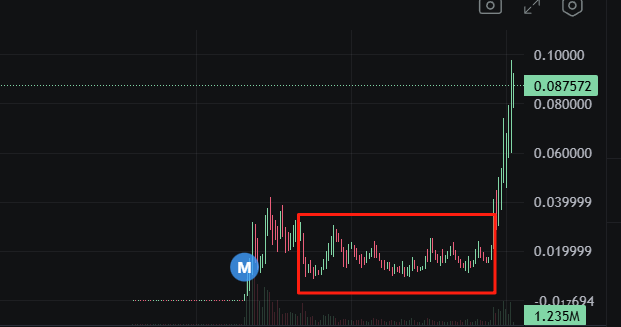
$GSD isn’t a memecoin - it’s an example of how influence can be monetized as it emerges, not after it’s institutionalized. If Substack let writers own newsletters and GitHub let devs own code, this shows how creators can own momentum itself.
The long version:
Think about @official_taches' path in traditional business terms:
-He builds a product (Get Shit Done) that dramatically lowers friction for a new class of users (non-technical vibe coders).
-Distribution explodes organically (6.5k stars, 32k downloads in a less than a month).
-A third party recognizes the signal of value faster than institutions can.
-That signal is financialized in real time.
-The creator is invited in after the fact and given a revenue share.
That’s not speculation - that’s instant royalty infrastructure.
Most creators historically hit this sequence instead:
1. Build something cool
2. Get traction
3. Monetize later via ads, SaaS, sponsorships, or acquisition
4. Capture value after the growth phase has already done the work
GSD flipped steps 3 and 4.
This is interesting because it monetizes belief itself.
Owning $GSD is expressing confidence that:
-Claude-based tooling keeps accelerating
-Non-technical builders become a massive new dev class
-@official_taches remains a cultural node in that movement
That’s much closer to goodwill or brand equity than purely meme speculation.
In TradFi terms, this looks less like a stock and more like:
-a royalty on cultural relevance
-a real-time index of mindshare
-a liquid version of “backing the founder early”
The most important detail isn’t that @official_taches has made over $75k in less than a week.
It’s how he made it:
-No paywall
-No upsell
-No VC deck
-No SaaS billing
He keeps shipping value while the market prices the impact.
That’s radically different from:
-YouTubers chasing CPMs
-Open-source devs begging for sponsors
-Creators turning into merch companies just to survive
This mechanism lets creators stay creators.
Crypto as attention plumbing
If you squint, Bags (or enter you favorite launchpad) looks like:
-Shopify for cultural assets
-Stripe for attention
-A "cap table" that forms after traction instead of before it
The GitHub login to revenue share flow is especially telling. It’s identity-native monetization.
In business terms, it means:
-Proof of authorship is automatic
-Revenue attribution is programmatic
-Middlemen disappear
That’s an existential improvement over the current creator stack.
Where this goes
If this pattern repeats, a few things likely happen:
1. Creators stop waiting to be monetized - They assume financial primitives will form around them naturally if the work matters.
2. Audiences become stakeholders, not just consumers - The line between “fan,” “user,” and “investor” blurs in a lightweight, opt-in way.
3. Open source becomes economically viable at the edges - Not because of licenses or foundations, but because attention itself becomes yield-bearing.
4. Early cultural signals get priced faster than incumbents can react - By the time platforms or enterprises notice, value has already accrued to the community.
A clean way to evangelize $GSD:
“This is what happens when creators can capture value the moment they matter."
$GSD isn’t interesting because it exists. It’s interesting because it emerged without permission, attached itself to real usage, and routed upside back to the creator automatically.
That’s not a fad.
That’s a structural shift.
If the old creator economy was:
Build an audience -> beg for monetization -> sell ads
This new model looks like:
Create value -> generate belief -> let markets express conviction -> share upside natively
$GSD just happens to be one of the first clean examples where all of this has clicked at once.
And historically, these moments are worth paying attention to.
If you wanna stop losing money in crypto, the first thing you should do is STOP day trading.
Because RETAIL day trading is structurally a SCAM.
This is a long post but if you just give me 120 seconds of your time, I swear you'll thank me in a few years.
I’ve been trading since I was a teenager.
I’ve had wins that made me feel I’m Batman and losses that genuinely broke pieces of me I’m still putting back together.
I tried EVERY STRATEGY myself as retail could ever find.
I even day traded for a year thinking it would finally save me, and I failed so painfully it still stings every time I remember it.
> My PNL was so shit to the point that my grandma, who I HELPED set up an AUTO BUY on BTC for, made more money than me.
> Then I became a low-frequency swing trader who barely touches positions, who GETS THE F OUT and STOPS TRADING for a while after a winning move.
> ONLY THEN did my life get better and everything finally start to click.
I’m not a saint. I’m writing this to save the younger, dumb, naive, and painfully impulsive version of me.
First, as a RETAIL DAY TRADER, you’re trading high-frequency with zero real information advantage (no real order flow, no true liquidity map, no market maker positioning, no execution advantage, nothing).
> Do it a few times each quarter, you survive.
> Do it 10+ times a week?
> Even if you have the strongest “discipline” and “risk management” skills in the world, the math will still burry you alive.
Retails don’t fail because they (we) never win.
We fail because we NEVER STOP, and high frequency only has one final outcome.
RUIN.
> This is literally why I built a punishment system for myself if I exceed my quarterly trade limit.
> Every major loss I’ve ever taken happened after a big win where I kept going instead of stopping.
> And every major win I’ve ever taken (and actually kept the money for a long time) was because I caught a big move and then CHILLED.
> Pattern is so obvious it hurts.
Winning is NOT you suddenly made big money.
Winning is keeping that money and not fking losing it next year.
> I’m seeing 14 year olds on TikTok calling themselves day traders, drawing lines on TradingView, thinking they unlocked some daily executable system after buying a guru’s course or Discord.
> It sickens me because if they knew it was gambling I wouldn’t care. At least they’re aware of the game.
> But this day trading meta is bigger than the dropshipping wave in 2016 and 2017. And we all know how that ended.
> People underestimate the difficulty of trading and massively overestimate their ability.
> The issue isn’t just the math. Yes the more you trade and the less you stop the harder consistent profitability becomes.
> But the real problem is younger retail traders GENUINELY believe that with “discipline” and “risk management” they are not gambling at all. They think day trading is a "skill" you can execute like a daily routine.
This isn’t just crypto day trading. The same logic applies to US equities and basically every market.
High frequency only works inside institutions.
> Take US equities for example.
> Do you know what institution traders don’t even look at? Candlestick charts and TradingView.
> They’re on Bloomberg terminals with data retail will never see.
Well, you of course knows this. BUT the 14 to 18 year olds don’t know that. They think their indicators are what all traders use.
And that’s the real danger.
> If you know you’re gambling, at least a part of you knows when to walk away.
> But once you believe it’s a “system”, you never stop.
> You keep clicking until the market empties you completely.
It really is just like a casino in disguise.
> When you walk into Vegas or Macau, you know EXACTLY what you’re stepping into.
> You see the lights, the tables, the dealers, the noise. Your brain knows this is gambling.
> But day trading today is a casino disguised as a COFFEE SHOP.
> New traders walk in thinking they’re here to “learn a skill”, not realizing they just sat down at a table designed to drain them slowly.
So they don’t stop.
That’s the whole tragedy.
Not the losing.
The fact that they genuinely believe they’re not gambling, which makes them keep going until there’s nothing left to lose.
> And those retail traders (like me) you see who look like they’re “winning”… honestly most of them just caught a big move.
> They had luck at the right moment, plus enough discipline beaten into them by previous losses that they finally learned how to stop after a win.
And even then, this tiny group is less than one percent of all retail.
It’s not hard to make money in trading.
It’s just unbelievably hard to keep it.
fyi, $usd1 being now minted on Solana doesn't mean there's any liquidity for it yet - so, if it takes some time to get liquidity, the beta launchpad will have it where you can launch tokens with $aol as the pair in the meantime, so long as I can get that confirmed by the dev team (I'm 99% sure)