“Western democracies are adept at technological innovation but behind the times on its security implications." Striking Back explains how to catch up with the times.
The prestigious journal @Nature names it one of the best new science books.
https://t.co/d3X4DByqqA
A plausible contrarian view defying reductive assumptions about Russia’s military threat to Europe:
“An attack on Germany would be more important for Russia strategically and propagandistically than getting bogged down in border fighting with NATO over the Suwałki Gap or Estonia’s Narva. It would also be easier to carry out, because pro-Russian sympathies there are strong and the will to resist the threat is weak.” @KoortErkki
https://t.co/IF9mxkuDWF
Readworthy:
„Russia’s Easiest Target Is Not Where the West Thinks“ -
@The_Ba_Se interview with @KoortErkki (Estonian Academy of Security Sciences).
https://t.co/xmw71tZMoh
Polish and Baltic officials have reacted furiously to what they perceive as former German Chancellor Angela Merkel’s partly blaming them for Russia’s invasion of Ukraine.
https://t.co/R5xEwCIQ7x
In parts of Germany's political class, Ostpolitik refuses to die. Putin's expansionism in Ukraine was a deliberate Kremlin policy – not as Merkel suggests something Europe might have averted with more "face to face" niceties.
@_FriedrichMerz gets it: tougher on Moscow, backed by major defence spending.
This is a new and unfortunately very low point from Angela Merkel: to blame the Baltic states and Poland for triggering Russia’s imperial war.
Sadly, this casts a shadow over her entire period as Germany’s chancellor. I won’t even start talking about Nord Stream here.
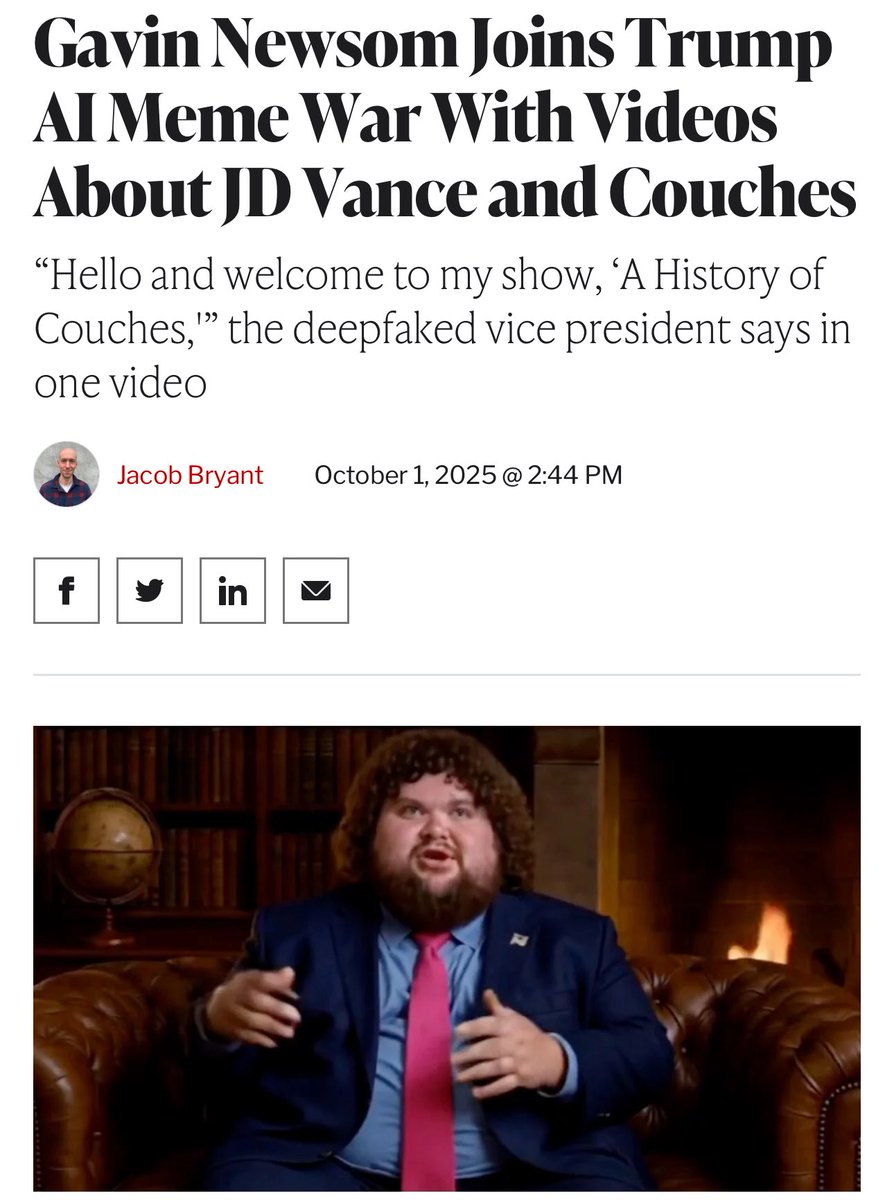
AI generated videos have entered mainstream American politics. Trump’s deepfakes of Chuck Schumer and Hakeem Jeffries – replayed by the White House - and counter-fakes by Democrats like Gavin Newsom signal something new: the dawn of synthetic political theatre.
https://t.co/htzxA13rNp
This recalls 2007 when at NATO HQ Germany would not accept that the massive DDOS attacks on Estonia were perpetrated by Russia.
The least digital country in Europe telling the most digital that it didn't know what it was talking about.
For some reason NSA and GCHQ thought differently.
"Unfortunately, dealing with any imperialist power like Russia, diplomacy hardly helps," Finnish Foreign Minister @elinavaltonen told @dwnews on the sidelines of UNGA.
WHEN WILL RUSSIA RUN OUT OF MONEY?
It's a crucial q and for my money (literally: I subscribe to @thebell_io), @amenka and @kolyandr are the best people to answer it.
September 30, 2025, at 9:00 AM EDT/ 15:00 CET, for subscribers only
https://t.co/KUimCHOQC0
Here's the Russian game:
"Shoot down a plane – war."
"Shoot down our drones over your cities – war."
"Sink a ship cutting cables or laying mines – war."
"Fire at 'little green men' crossing your border – war."
"Destroy our tanks and missile factories – *nuclear* war."
That's escalation dominance: Moscow keeps raising the stakes until you fold – or escalate back.
Russia threatens NATO with war if Russian planes are shot down
"If NATO shoots down a Russian plane, it will mean the beginning of a military conflict. It will be war," said Russia's ambassador to France, Alexey Meshkov, in an interview on RTL radio.
How terrifying! I remember when Turkey shot down a Russian military plane that violated its airspace, Moscow made some noise but quickly backed down. Why? Because the Kremlin understands only the language of power.
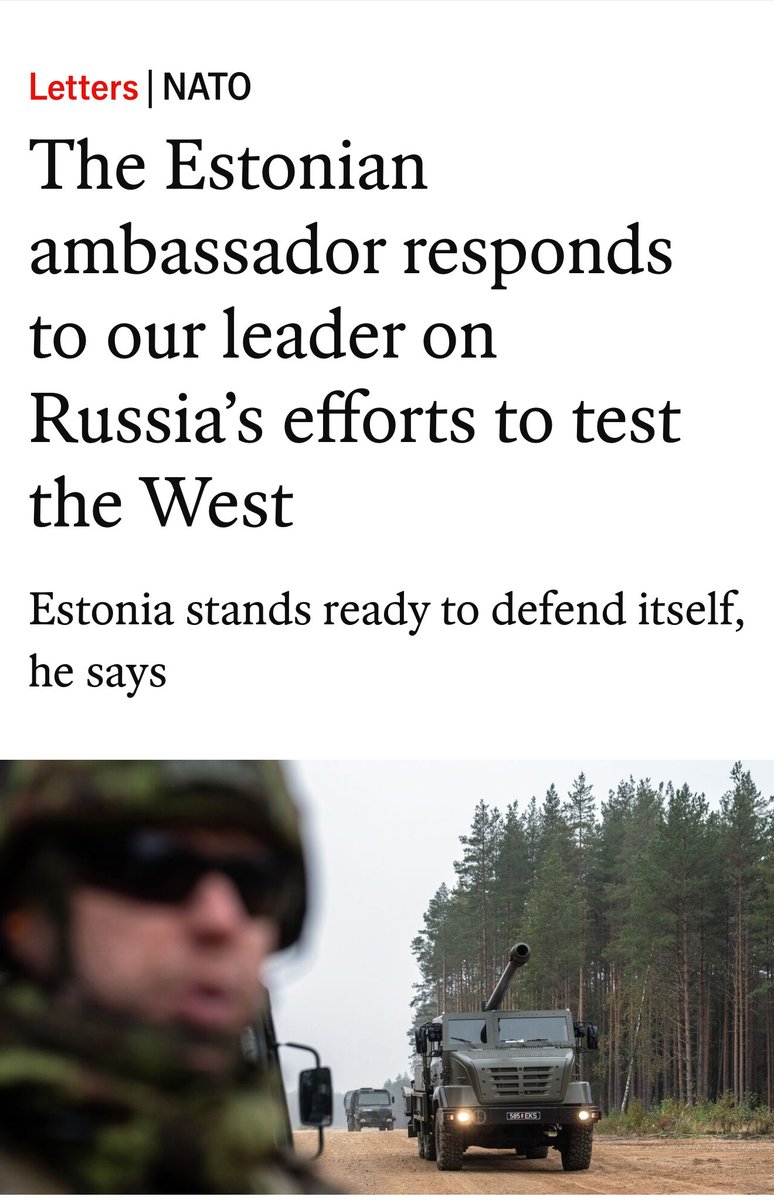
Now, the Russians are trying to intimidate the Europeans with the threat of war. But here's the problem: if they see that NATO isn't ready to defend its airspace, they will draw conclusions and, sooner or later, there will be war.
All these provocations from the Kremlin, which have intensified recently, are about testing the waters — they're watching Europe's reaction. It's like a thug from an alley who will push weaker targets but will back off if he sees determination.
And yes, for Russia, there's an ideal way to ensure their planes are not shot down: they just need to stay out of other countries' airspace.
What would Russia do? So should NATO do – only stronger.
Games of escalation dominance are won through strength, not meekness.
https://t.co/JLrlMm9dvb @politico
A nuance to add: Russia escalates not only when the West withholds support for Ukraine but also when it seems poised to give it.
The solution is to close the gap – rhetorical and temporal – between promise and delivery.
BREAKING:
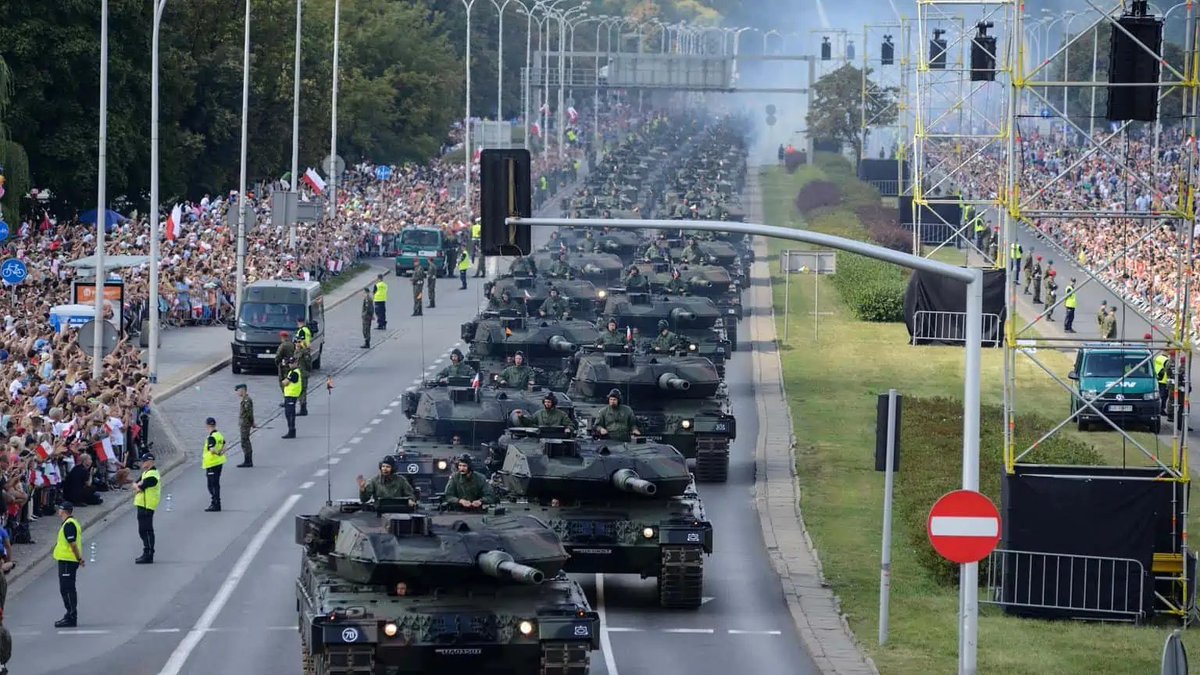
Poland sends 40,000 troops to its border with Belarus and Russia after Russian drone attacks, TVP World reports.
Meanwhile, France and the UK are ready to send Rafale and Eurofighter jets, while the Netherlands will provide two Patriot air defense systems.
These measures come as Russia and Belarus launch large-scale “Zapad-2025” drills, which include practicing the use of nuclear weapons and the “Oreshnik” missile system.
This, this. @edwardlucas is right: the 'Narva is next' storyline devalues Estonian/NATO capacity to resist, the likely warning we'd have, and also the degree to which Russian-speaking Estonians may grumble but hardly want to exchange EU citizenship for serfdom under Putin
Invading Finland in 1939 was the one military blunder Stalin openly admitted: worse in his eyes than failing to anticipate Hitler's 1941 invasion of the Soviet Union. A reminder that Moscow misreads small nations on its periphery at its peril.
Russia's rhetoric towards Finland is getting tougher by the day and just like they did towards Ukraine, they are questioning the existence of the Finnish state.
Rhetorically, we are already at war.
Some of the latest propaganda and threats from ryssä🧵
Rallying words from @donaldtusk:
“At a time when Russia’s aggressive intentions leave no doubt, do not look for an enemy in the west. The one real enemy we have in the east is enough.”
https://t.co/w73Gh3MlvN @TheEconomis